

As an Amazon Associate and eBay Partner, toptenpick.com earns from qualifying purchases. Prices and availability are subject to change.
Both the original Zoom H4n and H4n Pro accept two external XLR/TRS combo inputs, while the H4n Pro also has a 3.5 mm stereo mic input with 2.5 V plug-in power. The XLR inputs can supply 24 V or 48 V phantom power for condensers, or take a dynamic microphone with phantom switched off. That makes an XLR microphone the safest common route across both recorders; do not buy a USB-only microphone expecting it to record directly into an H4n. Choose the pickup pattern for the job, then use a balanced XLR cable and set gain by watching the recorder rather than relying on a microphone’s marketing sensitivity.
| # | Product | Price | Where to buy |
|---|---|---|---|
| 1 | Shure SM58 | $95-$110 | Amazon · eBay |
| 2 | Shure SM57 | $95-$110 | Amazon · eBay |
| 3 | RØDE NTG2 | $250-$300 | Amazon · eBay |
| 4 | Audio-Technica AT875R | $160-$190 | Amazon · eBay |
| 5 | Audio-Technica AT2020 | $100-$130 | Amazon · eBay |
| 6 | RØDE NT1 Signature Series | $150-$170 | Amazon · eBay |
| 7 | AKG P170 | $90-$110 | Amazon · eBay |
| 8 | RØDE M3 | $130-$160 | Amazon · eBay |
| 9 | Audio-Technica PRO 70 | $140-$180 | Amazon · eBay |
The picks, in detail

Shure SM58
A cardioid dynamic vocal microphone with a standard XLR output; connect it directly to INPUT 1 or 2 on either H4n model with phantom power off.
- dynamic cardioid capsule
- balanced XLR output
- no phantom power required
- Rugged choice for close speech or live music
- Less room pickup than a sensitive condenser
- Needs closer placement and more recorder gain than a condenser

Shure SM57
A cardioid dynamic XLR microphone for instruments, amps and close speech; it uses the H4n/H4n Pro’s XLR input without phantom power.
- dynamic cardioid design
- balanced XLR connector
- instrument and speech use
- Good fit for loud guitar amps and percussion
- No battery or phantom requirement
- Not a distant-dialogue solution

RØDE NTG2
An XLR shotgun microphone for directional boom or camera-adjacent work. It can run from the recorder’s 48 V phantom power or from its own AA battery.
- supercardioid shotgun pattern
- XLR output
- 48 V phantom or AA battery power
- Flexible power options for a portable recorder
- Directionality suits controlled dialogue placement
- A shotgun still needs close, aimed placement to sound natural
Audio-Technica AT875R
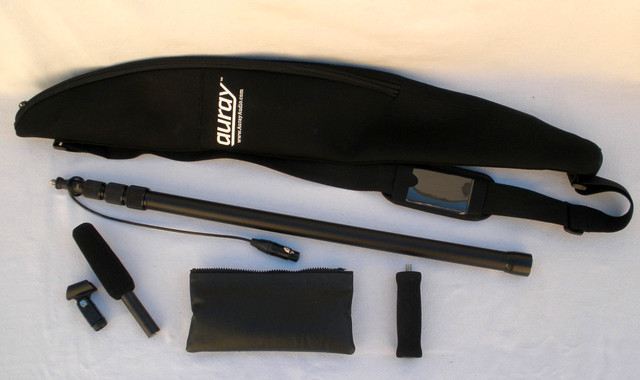
A short shotgun with balanced XLR output for a boom, stand or camera rig. It requires 11-52 V phantom power, so use the H4n’s phantom setting and monitor battery draw.
- line-plus-gradient shotgun
- balanced XLR output
- 11-52 V phantom power
- Compact length suits small rigs
- Useful for focused speech or effects capture
- Not suitable for the H4n’s 3.5 mm plug-in-power socket

Audio-Technica AT2020
A large-diaphragm cardioid condenser with XLR output for voice, acoustic instruments and quieter indoor sources; it needs the H4n/H4n Pro’s 48 V phantom power.
- large-diaphragm cardioid condenser
- XLR output
- 48 V phantom power
- Affordable studio-style XLR condenser
- Clear option for a treated or quiet room
- Sensitive to room reflections and handling noise

RØDE NT1 Signature Series
A low-self-noise cardioid XLR condenser for vocals and instruments, supplied as an analogue XLR microphone rather than a USB-only device.
- large-diaphragm cardioid condenser
- XLR connection
- 48 V phantom power required
- Very low self-noise suits quiet sources
- Supplied accessories make a practical vocal setup
- Captures room sound too, so placement and acoustics matter

AKG P170
A small-diaphragm cardioid condenser with XLR output, useful for acoustic guitar, overheads and detailed instrument recording through the H4n’s phantom-powered inputs.
- small-diaphragm cardioid condenser
- XLR output
- 48 V phantom power
- Compact instrument-focused condenser
- More detailed high-frequency capture than a typical dynamic
- Requires careful gain staging around loud sources

RØDE M3
A cardioid condenser that can use either phantom power from the H4n or an internal 9 V battery, giving it a useful fallback for portable recording.
- cardioid condenser
- XLR output
- 24/48 V phantom or 9 V battery
- Dual-power design suits recorder work
- High-pass filter and pad add flexibility
- Handheld or stand placement still needs shock isolation

Audio-Technica PRO 70
A wired lavalier system supplied with an XLR power module; it can use phantom power from the H4n or its AA-powered module, making it useful for clipped interview dialogue.
- omnidirectional lavalier capsule
- XLR power module
- phantom or AA battery operation
- Close mic placement improves dialogue consistency
- Works via XLR rather than a computer USB interface
- Cable routing and clothing rustle need attention
Buying tips
- Use XLR microphones for the broadest original-H4n and H4n Pro compatibility. The H4n Pro’s 3.5 mm mic input is for an analogue mic requiring plug-in power, not a USB microphone.
- Enable phantom power only for a condenser that needs it; switch it off for conventional dynamics such as the SM58 and SM57.
- Record a short test with headphones before the take. Mic distance, wind protection and room noise usually matter more than changing between similarly priced microphones.
As an Amazon Associate and eBay Partner, toptenpick.com earns from qualifying purchases. Prices and availability are subject to change.