

As an Amazon Associate and eBay Partner, toptenpick.com earns from qualifying purchases. Prices and availability are subject to change.
Djent lives or dies on how tight the low end feels through a high-gain amp, and a full-blown distortion pedal usually mushes it up. What actually works is a low-to-medium-gain overdrive or clean boost stacked in front of an already-dialed-in amp: it tightens the pick attack, adds upper-mid presence to cut through low tunings, and leaves the amp doing the real gain work. Here are 10 pedals players in this space actually reach for, from tight-focused metal-specific boosts to the classic transparent overdrives that started the trend.
| # | Product | Price | Where to buy |
|---|---|---|---|
| 1 | Horizon Devices Precision Drive | $170-$230 | Amazon · eBay |
| 2 | Fortin 33 (Fredrik Thordendal Signature) | $230-$250 | Amazon · eBay |
| 3 | Maxon OD808 | $115-$140 | Amazon · eBay |
| 4 | Ibanez TS9 Tube Screamer | $85-$100 | Amazon · eBay |
| 5 | MXR Timmy (CSP027) | $155-$165 | Amazon · eBay |
| 6 | Wampler Tumnus Deluxe | $170-$200 | Amazon · eBay |
| 7 | JHS Morning Glory V4 | $150-$200 | Amazon · eBay |
| 8 | Way Huge Green Rhino MkIV | $135-$160 | Amazon · eBay |
| 9 | EarthQuaker Devices Plumes (Small Signal Shredder) | $100-$130 | Amazon · eBay |
| 10 | Boss SD-1 Super Overdrive | $60-$70 | Amazon · eBay |
The picks, in detail

Horizon Devices Precision Drive
Built by a metal guitarist specifically to tighten palm mutes and add a clean, aggressive boost in front of a high-gain amp — the closest thing to a purpose-made djent pedal.
- Voice switch (Tight/Fat low-end response)
- Bright switch
- Dedicated boost footswitch
- True bypass
- Designed around exactly this tight-low-gain metal use case
- Boost function stacks a second gain stage on demand
- Pricier than the classic Tube Screamer-style options
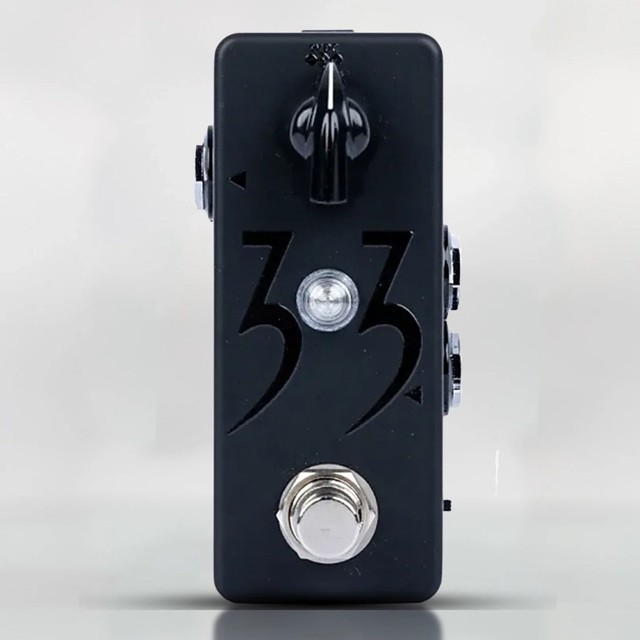
Fortin 33 (Fredrik Thordendal Signature)
A Meshuggah-approved clean boost (technically not an overdrive) with up to +22dB of clean gain, built to push an amp into djent territory without coloring the tone, especially useful in low tunings like Drop G.
- +22dB max clean gain
- Designed with Fredrik Thordendal (Meshuggah)
- Simple single-knob gain control
- True bypass
- Tightens low-tuned riffs without adding its own grit
- Signature pedigree from one of the genre’s foundational guitarists
- Expensive for what is essentially a boost, not a full overdrive circuit

Maxon OD808
The current-production reissue of the original Tube Screamer circuit Maxon built for Ibanez — mid-hump overdrive that’s a go-to for tightening high-gain amps before a solo or riff section.
- Original op-amp Tube Screamer circuit
- Drive, Tone, Level controls
- Made in Japan
- The source circuit the whole Tube Screamer family is built on
- Classic mid-forward push that cuts through a dense mix
- Same mid-hump voicing as every other TS-style pedal on this list — pick one, not several
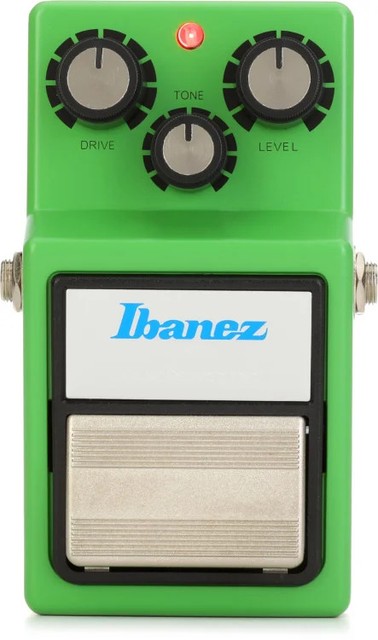
Ibanez TS9 Tube Screamer
The budget-friendly, still-in-production Tube Screamer reissue — same mid-boost formula as the OD808 at a lower price point, and the most commonly recommended low-gain boost for metal rhythm tone.
- Classic TS9 op-amp circuit
- Drive, Tone, Level controls
- Battery or 9V adapter
- Cheapest way into the Tube Screamer sound
- Huge secondhand and mod-parts ecosystem
- Less low-end tightening than pedals voiced specifically for metal

MXR Timmy (CSP027)
Paul Cochrane’s famously transparent overdrive circuit in MXR’s compact housing — adds almost no coloration of its own, which is exactly why tight-riff players use it as a pure boost.
- Active baxandall-style EQ (bass/treble)
- Transparent, low-coloration clipping
- Compact MXR housing
- Stays out of the way of the amp’s own voicing
- Flexible EQ shaping unusual for a pedal this size
- Less aggressive midrange push than a Tube Screamer-style circuit if that’s what you’re after

Wampler Tumnus Deluxe
A klon-style transparent overdrive/boost with added tone-shaping controls, popular for adding clean gain and upper-mid clarity ahead of a high-gain metal amp.
- Klon-style clipping circuit
- Added Bass and Treble controls over the original Tumnus
- Internal DIP switches for clipping options
- More tone-shaping flexibility than the original mini Tumnus
- Transparent boost that layers well with amp gain
- Bigger footprint than the mini Tumnus if pedalboard space is tight
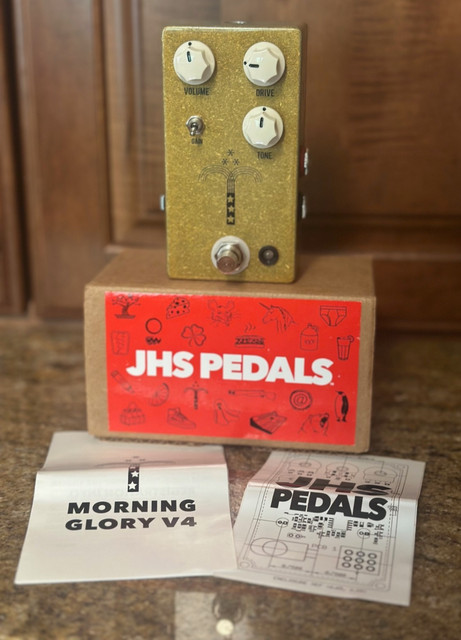
JHS Morning Glory V4
JHS’s take on the transparent, amp-like overdrive — often used as an always-on boost to tighten and focus a high-gain amp’s front end.
- Low-compression, amp-like overdrive circuit
- Drive, Volume, Tone controls
- Internal clipping-diode toggle (V4)
- Feels more like turning up a good amp than stacking a pedal
- Internal switch adds flexibility between two clipping modes
- Subtler voicing than dedicated metal-boost pedals like the Precision Drive

Way Huge Green Rhino MkIV
A thicker, more mid-scooped overdrive than a Tube Screamer, with dedicated 100Hz and 500Hz controls for shaping low end before it hits the amp.
- Dedicated 100Hz and 500Hz EQ controls
- Classic switch for original Green Rhino voicing
- Volume, Tone, Drive controls
- Built-in low-end shaping is genuinely useful for tightening low tunings
- More versatile tone-shaping than most TS-style pedals
- Bigger and more expensive than a basic Tube Screamer clone

EarthQuaker Devices Plumes (Small Signal Shredder)
A modern, low-cost Tube Screamer-style circuit with a 3-way clipping toggle, giving more headroom and gain-stacking options than a stock TS-style pedal.
- 3-position clipping mode switch (LED/silicon/off)
- Level, Tone, Gain controls
- True bypass, made in USA
- Clipping switch gives more flexibility than fixed-diode TS clones
- Strong value at its price point
- Still fundamentally a mid-hump TS-style voicing at its core
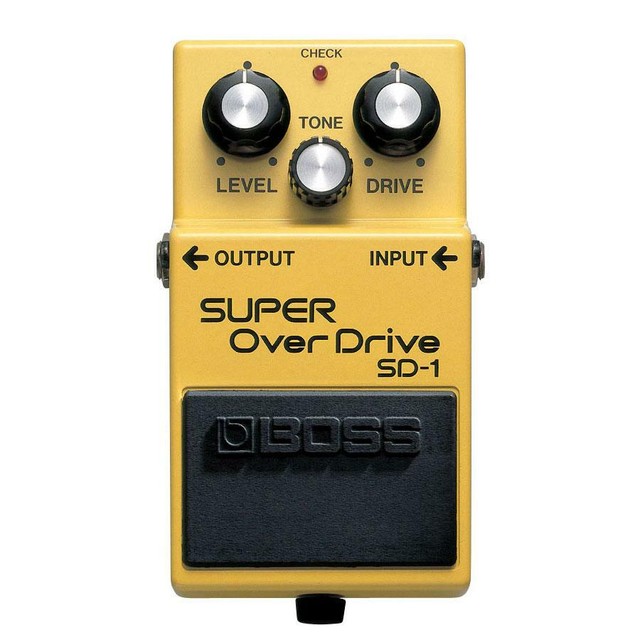
Boss SD-1 Super Overdrive
The budget classic — asymmetrical clipping gives a slightly different, more amp-like breakup than a Tube Screamer, and it’s cheap enough to keep as a dedicated always-on boost.
- Asymmetrical clipping circuit
- Drive, Tone, Level controls
- Boss’s rugged compact chassis
- Least expensive pedal on this list
- Durable, road-proven Boss build quality
- Less refined/transparent than the boutique options above it
Buying tips
- Set the pedal’s own gain low — its job is to tighten and boost, not add distortion on top of an already-high-gain amp channel.
- A Voice or EQ control that lets you scoop or tighten low end (like the Precision Drive’s Voice switch or the Green Rhino’s 100Hz knob) matters more for djent than raw gain on tap.
- Run the pedal always-on into a dialed-in high-gain channel first, then reach for the boost footswitch (if it has one) for lead sections.
As an Amazon Associate and eBay Partner, toptenpick.com earns from qualifying purchases. Prices and availability are subject to change.