

As an Amazon Associate and eBay Partner, toptenpick.com earns from qualifying purchases. Prices and availability are subject to change.
Metal drummers buy crash cymbals for the wrong reason more often than any other group of players, and the reason is a single word: volume. The logic seems sound — the guitars are loud, so buy the biggest cymbal you can. It is the wrong model of what is actually happening. In a high-gain mix the guitars are scooped: enormous in the low mids and the low end, and comparatively thin from about 2 kHz upwards. That upper region is a hole, and a cymbal that lands in it will be heard at a fraction of the effort. A cymbal that sits in the low mids will not be heard at all, however hard you hit it, because the guitars have already filled that space to the ceiling.
That single fact rearranges the whole shopping list. A big, thin 20-inch crash produces a low fundamental, a long wash and a slow attack — which is exactly what disappears under a wall of downtuned rhythm guitar, no matter how much air it moves. A heavier 16 or 18 with a higher pitch and a fast, bright attack produces far less total energy and yet it is the one you hear on the record. Cutting power is a frequency argument, not a size argument. Weight matters for the same reason: a heavier cymbal has a shorter, more defined attack transient, and the transient is what survives compression and a dense mix.
There is a durability argument stacked on top of it. Thin cymbals crack under heavy sticking because a thin bow flexes more at the edge, and metal playing is almost by definition heavy sticking with a lot of edge contact. So the cymbal that cuts better is usually also the cymbal that lasts longer, which is an unusually convenient alignment.
The ten picks below run from genuine professional B20 cymbals down to B8 and brass options that are honest about what they are. Every one of them is chosen for attack definition and pitch rather than raw size, and where a cymbal is a bad idea for metal despite being an excellent cymbal, that is said plainly.
| # | Product | Price | Where to buy |
|---|---|---|---|
| 1 | Sabian AAX X-Plosion Crash | $230-$340 | Amazon · eBay |
| 2 | Meinl Classics Custom Dark Crash | $170-$260 | Amazon · eBay |
| 3 | Zildjian A Custom Crash | $280-$400 | Amazon · eBay |
| 4 | Paiste 2002 Crash | $260-$380 | Amazon · eBay |
| 5 | Meinl Mb20 Heavy Crash | $250-$360 | Amazon · eBay |
| 6 | Sabian B8X Crash | $70-$130 | Amazon · eBay |
| 7 | Zildjian A Custom Projection Crash | $300-$430 | Amazon · eBay |
| 8 | Meinl Classics Custom Trash Crash | $180-$270 | Amazon · eBay |
| 9 | Sabian HHX Complex Crash | $320-$450 | Amazon · eBay |
| 10 | Cymbal Sleeves, Felts and Wing Nuts | $8-$25 | Amazon · eBay |
The picks, in detail

Sabian AAX X-Plosion Crash
The most on-the-nose recommendation in this category and deservedly so. The X-Plosion is a medium-thin crash built with an aggressive, bright attack and a controlled decay — it does not sprawl the way a thinner crash does, so fast crash-heavy playing stays legible instead of turning into a continuous hiss. The 18-inch is the usual choice, and it is often the first cymbal drummers reach for as an alternative to the Zildjian A Custom. Brilliant and natural finishes both exist; the difference is cosmetic and marginal tonally.
- B20 bronze, AAX series
- Medium-thin weight with a bright, explosive attack
- Controlled sustain rather than a long wash
- Common in 16, 17, 18 and 19 inch
- Cuts through high-gain guitars with very little effort
- Decay is short enough for fast crash patterns
- Widely available used, so a cheap way into B20
- Too bright for anyone wanting a darker, more complex voice
- The name oversells it — it is explosive, not uncontrollably loud
Meinl Classics Custom Dark Crash
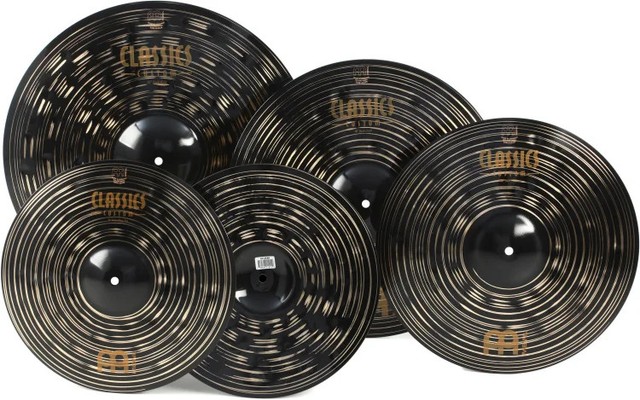
Meinl’s B12 alloy line, and the one that changed a lot of minds about non-B20 cymbals for heavy music. The Classics Custom Dark is deliberately built to open up at loud dynamics rather than at conversational ones, so it behaves well under the exact conditions metal drummers play in. The darker voicing keeps it from getting shrill at volume while the alloy keeps the attack fast. It is also markedly cheaper than a comparable B20, which matters if you are buying three crashes rather than one.
- B12 bronze (88% copper, 12% tin)
- Dark, smoky finish with a matching voice
- Designed to open at high dynamics
- Available from 16 up to 20 inch
- Real cutting power without the brittle top end of a bright cymbal
- Substantially cheaper than a B20 crash of the same size
- Distinctive look that does not read as a budget cymbal
- Less tonal complexity than a hand-hammered B20
- The dark finish shows stick marks

Zildjian A Custom Crash
The cymbal most people are thinking of when they picture a modern recorded cymbal sound, and it has earned that position across an extraordinary number of records. Bright, glassy, fast to speak and quick to get out of the way — which is precisely the behaviour that works in a dense mix. For metal specifically, it is a safer choice than the darker K lines because it puts its energy where the guitars are not. The 18 is the workhorse; a 16 alongside it gives you two clearly distinct voices rather than two shades of the same one.
- B20 cast bronze, brilliant finish
- Thin to medium-thin weights
- Fast attack with a shimmering, bright decay
- 16, 17, 18, 19 and 20 inch sizes
- Instantly recognisable modern cymbal voice
- Speaks quickly, so it stays clear at speed
- Holds resale value well
- Thin weights are vulnerable to cracking under heavy edge hits
- Brilliant finish needs cleaning to stay looking new
Paiste 2002 Crash
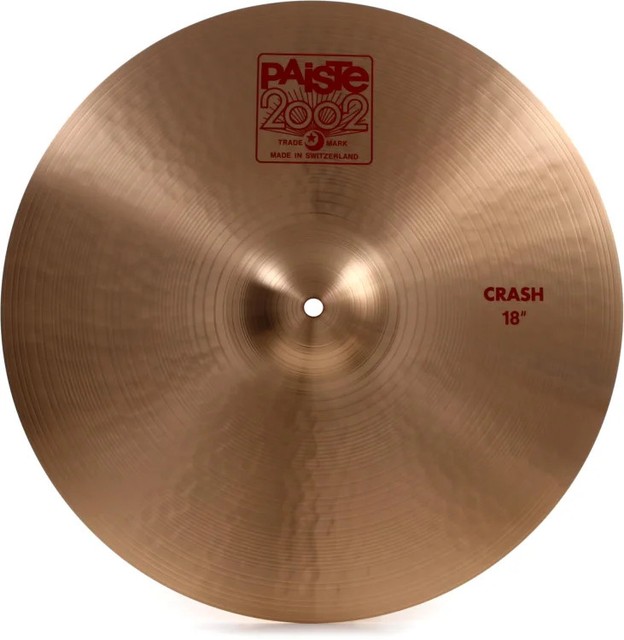
The classic hard rock and early metal cymbal, and still one of the most efficient cutting crashes made. Paiste’s 2002 line is bright, immediate and very consistent — the company machine-lathes to tight tolerances rather than chasing the variation hand-hammered cymbals prize, so two 18-inch 2002s sound far more alike than two hand-hammered cymbals will. For metal that consistency is a feature: it means the crash you replace sounds like the crash you lost. Loud, unsubtle, and completely unapologetic about it.
- CuSn8 bronze, Paiste 2002 formula
- Bright, penetrating attack with a broad wash
- Very consistent unit-to-unit
- Sizes from 14 to 20 inch
- Enormous cut for its size
- Predictable — replacements match your existing cymbals
- Proven across decades of hard rock and metal records
- Wash is long, which can clutter very fast crash patterns
- Not remotely a dark or complex cymbal

Meinl Mb20 Heavy Crash
Meinl’s explicitly loud B20 line, designed for exactly this application. The Mb20 heavy crash is a genuinely heavy cymbal, and heaviness here buys two things: a short, sharp attack transient that punches through a compressed mix, and enough material at the edge that hard edge sticking does not open a crack. If you have cracked thin crashes before and are tired of it, this is the direct answer. The trade-off is honest — it needs a decent amount of force to open up, so it is a poor choice for quiet playing.
- B20 cast bronze, heavy weight
- Very short, defined attack transient
- Built for high-volume playing
- 16, 18 and 20 inch
- Among the most crack-resistant crashes at this price
- Attack survives heavy mix compression
- Loud without becoming harsh
- Needs real force to open — unforgiving at low volume
- Heavier cymbals are physically more tiring to play all night

Sabian B8X Crash
The sensible budget entry, and the one to buy instead of a no-name cymbal at the same price. B8 bronze is a harder, brighter alloy than B20, which in most contexts is a limitation but for metal happens to push the cymbal into the frequency band that cuts. The B8X is sheet-formed rather than cast, so it will not develop the complexity a cast cymbal does over the years — but it is loud, bright, consistent and genuinely durable. A first metal kit set up with B8X crashes will be heard; that is not guaranteed at this price point.
- B8 bronze, sheet-formed
- Bright, fast attack
- Available singly and in packs
- 14, 16 and 18 inch crashes
- The cheapest crash that genuinely cuts through distorted guitar
- Hard alloy resists cracking
- Sold in kit packs with matching hats and ride
- One-dimensional next to a cast cymbal
- Does not develop or improve with age

Zildjian A Custom Projection Crash
The A Custom with the brief made explicit. The Projection is heavier than the standard A Custom and hammered differently, aimed at players who need a crash to be heard over a loud band rather than to blend into one. In practice that means a stronger attack, a slightly higher fundamental and a shorter decay than its sibling. For a drummer already using A Customs who finds the 18 vanishing under the guitars, this is the same voice with the problem solved — a better move than simply buying a larger size.
- B20 cast bronze, heavier than a standard A Custom
- Distinct hammering pattern for projection
- Strong attack, shorter decay
- 16, 18 and 20 inch
- Solves the disappearing-crash problem without changing cymbal families
- More durable than a thin A Custom
- Blends with an existing A Custom setup
- Premium price on an already premium line
- Stocked less widely than the standard A Custom
Meinl Classics Custom Trash Crash
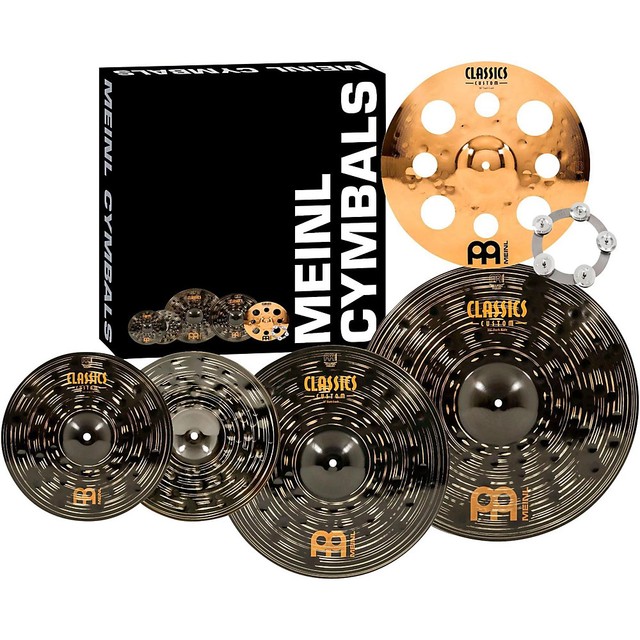
The specialist pick, and a very useful one in modern metal. A trash crash is drilled with holes, which kills the sustain and leaves a short, dry, aggressive burst — closer to an effects cymbal than a ride-and-wash crash. In a mix it occupies almost no space in time, so it can be used for accents that would turn to mud with a conventional crash. This is not a first crash. It is the third or fourth cymbal, and it earns its place on breakdowns and syncopated accents where a normal crash simply smears.
- B12 bronze with cut-out holes
- Very short sustain, dry attack
- Classics Custom dark voicing
- Usually 16 or 18 inch
- Cuts cleanly through the densest passages
- Takes up almost no time in the mix
- Stackable with a conventional crash for a hybrid voice
- Far too specialised to be a main crash
- The holes make it a love-or-hate sound

Sabian HHX Complex Crash
Included with a caveat, because it is a superb cymbal that many metal drummers should not buy. The HHX Complex is dark, warm and penetrating with a lot of tonal depth — genuinely one of the best crashes made. But its energy sits lower than a bright crash, and against scooped high-gain guitar it will be felt more than heard. Where it comes into its own is progressive, atmospheric and post-metal material with cleaner guitar passages and more dynamic range, and for a drummer recording with good mics who wants character rather than raw cut.
- B20 cast bronze, hand-hammered HHX series
- Dark, warm voice with complex overtones
- Thin to medium weight
- Commonly 18 and 20 inch
- Outstanding character and depth on a recording
- Excellent for dynamic, atmospheric material
- Rewards controlled playing
- Loses the fight against a wall of scooped rhythm guitar
- Thinner weights are not built for heavy edge sticking

Cymbal Sleeves, Felts and Wing Nuts
The least glamorous entry here and the one that saves the most money. Almost every cracked cymbal in metal fails at the hole, not the edge, and the cause is metal-on-metal contact: a missing plastic sleeve, a compressed felt, or a wing nut tightened down hard so the cymbal cannot swing when it is struck. A bag of sleeves and felts costs less than a restaurant meal and directly prevents a repeat of a three-hundred-dollar failure. Replace the felts when they flatten, and leave the wing nut loose enough that the cymbal moves freely.
- Plastic sleeves to isolate the cymbal from the stand
- Replacement felt washers in assorted thicknesses
- Quick-release or standard wing nuts
- Sold in multipacks
- Prevents the most common cause of cymbal failure
- Costs a fraction of a single cymbal
- Loose mounting also improves how the cymbal speaks
- Cheap sleeves split and need replacing periodically
- Easy to forget until something cracks
Buying tips
- Choose for pitch, not diameter. High-gain guitar fills the low mids completely and leaves a gap above roughly 2 kHz. A cymbal whose fundamental sits in that gap is heard easily; one that sits below it is not heard at any volume. This is why a heavier 16 often cuts better than a thin 20 — and why buying a bigger cymbal to be louder usually makes the problem worse rather than better.
- Heavier cymbals last longer under heavy sticking. A thin bow flexes more at the edge, and repeated flexing is what starts an edge crack. Metal playing involves a lot of hard edge contact by definition, so the medium and heavy weights that cut best in this genre are also the ones you will replace least often. That alignment does not hold in every genre, but it holds here.
- Buy two crashes of clearly different sizes, not two of the same. A 16 and an 18 give you two audibly distinct accents. A 17 and an 18 give you one accent and a slightly different one, which is a waste of a cymbal and a stand. If the budget only reaches one good crash, buy the 18 and add the 16 later rather than buying two mediocre cymbals now.
- Crack prevention is mounting, not technique. Check that every stand has an intact plastic sleeve, that the felts are not crushed flat, and that the wing nut is loose enough for the cymbal to swing. A cymbal clamped tight has nowhere to put the energy of a hit except into its own metal. Replacement sleeves and felts cost a few dollars and prevent the great majority of failures.
- Hit the edge at an angle, never straight down on it. A glancing blow across the edge with the shoulder of the stick puts the cymbal into its natural motion. A direct perpendicular strike concentrates the force into a small area of the edge and is the fastest way to start a crack. This is the one piece of technique that measurably extends cymbal life.
- B8 and B12 alloys are not automatically the wrong choice here. The received wisdom that cast B20 is always better is true for jazz and for nuanced playing, where complexity matters. For metal, the harder alloys sit brighter and cut more efficiently, which is exactly the requirement. A Meinl Classics Custom Dark or a Sabian B8X will be heard in a mix that swallows a more expensive dark B20.
- Used cast cymbals are one of the best values in drumming — with one check. Run a fingernail slowly around the whole edge and around the bell hole, feeling for a snag. Hairline cracks are nearly invisible and they always grow. A clean used A Custom or AAX at half price is an excellent buy; a cracked one is worth nothing, because drilling a stop hole changes the sound permanently.
- Try before you commit, if there is any way to. Cymbals vary far more between individual examples than drums do, especially in hand-hammered lines, and a room with no band in it tells you very little about how a cymbal behaves against distorted guitar. If you cannot get to a shop, buy from a seller with a real return policy and test the cymbal at rehearsal volume in the first week.
As an Amazon Associate and eBay Partner, toptenpick.com earns from qualifying purchases. Prices and availability are subject to change.