

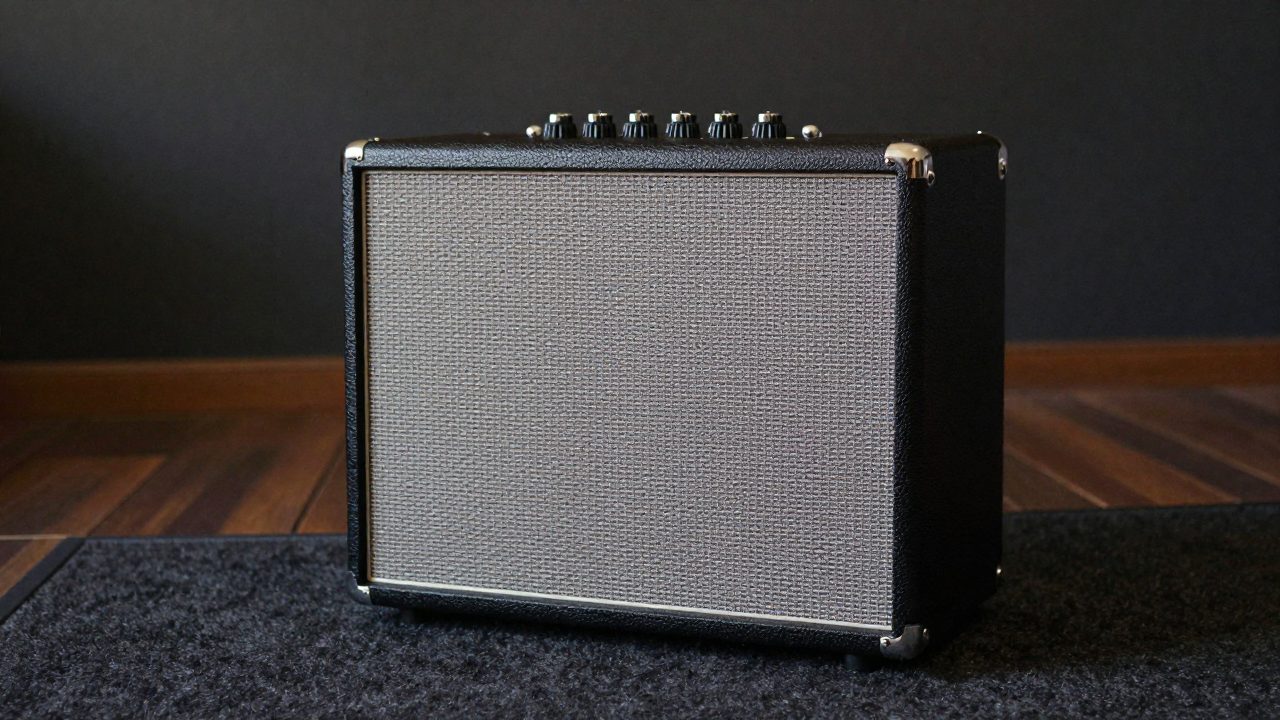
As an Amazon Associate and eBay Partner, toptenpick.com earns from qualifying purchases. Prices and availability are subject to change.
Jazzmaster pickups look like P-90s under the chrome cover, and plenty of amp-buying advice treats them as the same pickup — they aren’t. A P-90 uses a bar magnet and a higher-inductance coil, around 6.45 henries, that pushes a fat, midrange-forward signal suited to an amp built for grit and push. A Jazzmaster pickup uses rod magnets like a Stratocaster’s and measures a lower 4.54 henries, which reads bright, airy, and glassy instead. An amp chosen for its midrange punch will often make a Jazzmaster sound thin and harsh rather than shimmering, because it’s compensating for a problem the Jazzmaster doesn’t actually have.
That top-end-forward voice is also why clean headroom matters more here than it does with most guitars. Whatever reverb you use, a built-in spring tank or an outboard pedal, adds a wet signal on top of the dry one, and an amp without much headroom compresses and darkens under the combined load right when you want the reverb tail to stay open. The same logic amp builders give for any pedal platform applies directly to reverb: more preamp headroom means the wet signal passes through clean instead of getting squashed along with everything else.
Fender’s own reverb-tank combos remain the default pairing for a reason beyond brand matching — the blackface-era circuit was voiced around exactly this kind of bright single-coil. Vox’s chimier Top Boost circuit is a real alternative, though several longtime Jazzmaster owners warn it can tip into an overly icy top end faster than a Fender-voiced amp does, given how bright the pickup already reads. A couple of options below take a different approach entirely: more headroom for less weight, or a dead-clean solid-state platform that never touches tube compression at all.
The list runs from a 12-watt bedroom tube combo up to a 200-watt modeling amp built to gig loud without needing two people to lift it, plus a Class A boutique option and a solid-state clean platform built around a completely different circuit. Every amp below is current production, and every price comes from an actual retail listing rather than a guess.
| # | Product | Price | Where to buy |
|---|---|---|---|
| 1 | Fender Tone Master Twin Reverb | $1,400–$1,500 | Amazon · eBay |
| 2 | Fender Tone Master Deluxe Reverb | $1,200–$1,470 | Amazon · eBay |
| 3 | Fender Tone Master Princeton Reverb | $1,050–$1,150 | Amazon · eBay |
| 4 | Fender ’65 Deluxe Reverb Reissue | $1,450–$1,700 | Amazon · eBay |
| 5 | Fender ’65 Princeton Reverb Reissue | $1,550–$1,600 | Amazon · eBay |
| 6 | Fender ’68 Custom Deluxe Reverb | $1,650–$1,700 | Amazon · eBay |
| 7 | Fender Blues Junior IV | $650–$820 | Amazon · eBay |
| 8 | Vox AC15C1 | $650–$700 | Amazon · eBay |
| 9 | Supro Saturn Reverb (1648RT) | $499–$900 | Amazon · eBay |
| 10 | Roland JC-40 Jazz Chorus | $699–$770 | Amazon · eBay |
The picks, in detail

Fender Tone Master Twin Reverb
A 200-watt class-D power section built to match the sheer clean headroom of the original tube Twin Reverb, at barely two-thirds the weight. The digital convolution reverb and tremolo are modeled from the real vintage circuit rather than approximated from scratch. If you need to stay glass-clean at real stage volume with a wet reverb signal on top, this is the amp with the most room to spare.
- 200W class-D power section
- Two Jensen N-12K neodymium 12-inch speakers
- Digital convolution modeling of the original spring reverb and tremolo
- About 42 lb, versus roughly 64 lb for a tube Twin Reverb
- The most clean headroom of any amp on this list
- Far lighter to gig with than the tube amp it emulates
- Reverb and tremolo modeled from the real circuit, not just approximated
- Solid-state power section means no natural tube sag if you do push it into breakup
- The biggest, loudest amp here is overkill for bedroom or small-room use

Fender Tone Master Deluxe Reverb
Takes the tone of the beloved 22-watt tube Deluxe Reverb and puts it behind a 100-watt class-D power section, so there’s meaningfully more clean headroom on tap than the original ever had. It weighs roughly half what the tube version does, with the same modeled spring reverb and tremolo. The tradeoff is no real tube sag if you do decide to push it into breakup.
- 100W class-D power section modeling a 22W tube Deluxe Reverb
- Single Jensen N-12K neodymium 12-inch speaker
- Onboard convolution spring reverb and tremolo
- Roughly half the weight of the tube original
- More clean headroom than the tube amp it emulates
- Much easier to carry to gigs than a tube Deluxe Reverb
- Consistent tone night to night with no tube aging
- No dedicated overdrive channel — a clean-and-effects platform, not a dirt amp
- Purists chasing real tube compression at the edge of breakup won’t get it here

Fender Tone Master Princeton Reverb
The smallest and lightest amp on this list, built around a single 10-inch speaker, but with more usable clean headroom than the tiny tube Princeton Reverb it’s modeled on thanks to its class-D power section. A realistic choice for players who actually need to carry an amp to small gigs rather than just talk about it. No dirt channel, same as the rest of the Tone Master line.
- Class-D power section modeling the original 12W tube Princeton Reverb
- Single 10-inch speaker
- Digital convolution reverb and tremolo
- Roughly a third the weight of a comparable tube combo
- Smallest and lightest amp on this list, realistic to actually carry
- More clean headroom on tap than the small tube amp it emulates
- Priced under $1,100
- One 10-inch speaker can’t move air like the Twin or Deluxe versions in a louder room
- No dirt channel — same clean-and-effects-only limitation as the rest of the line

Fender ’65 Deluxe Reverb Reissue
Real tube compression and sag from an all-tube 22-watt circuit built to the original blackface Deluxe Reverb spec, with the actual spring tank most surf reverb tones are measured against. Every guitar tech in the country knows this circuit, which matters when something eventually needs service. Heavier than the Tone Master equivalent and needs periodic tube replacement, which a modeling amp simply doesn’t.
- All-tube 22W circuit, blackface Deluxe Reverb spec
- Single 12-inch speaker
- Real spring reverb tank and tube-driven tremolo
- 6V6 power tube pair
- Real tube compression and sag when pushed
- The reverb tank most surf tones are measured against
- Widely serviceable — every amp tech knows this circuit
- Heavier than the Tone Master version of the same amp
- Needs periodic tube replacement and biasing that a modeling amp doesn’t

Fender ’65 Princeton Reverb Reissue
A smaller, more affordable point of entry into real all-tube blackface reverb than the Deluxe or Twin reissues, with genuine spring reverb and tube tremolo in a cabinet light enough to move without help. It breaks up earlier than the bigger reissues if you push it for stage headroom, and the single 10-inch speaker gives less low-end body than the 12-inch options on this list.
- All-tube 12W circuit, blackface Princeton Reverb spec
- Single 10-inch speaker
- Real spring reverb and tube tremolo
- Smaller cabinet than the Deluxe Reverb reissue
- Enough clean headroom for home and small-club use in true tube territory
- More affordable entry into real tube reverb than the Deluxe or Twin reissues
- Compact enough to move without help
- Breaks up earlier than the Deluxe or Twin reissues if you push the volume for stage headroom
- Single 10-inch speaker gives less low-end body than the 12-inch options here

Fender ’68 Custom Deluxe Reverb
Two selectable channels on one 22-watt tube chassis: a standard vintage voicing and a Custom channel with a Bassman-style tone stack and reduced negative feedback for quicker, more touch-sensitive breakup. It’s built around the same reverb tank the rest of Fender’s reissue line uses, so you’re not giving up the classic sound to get the extra channel. The most expensive combo tube amp here, with more controls to learn.
- 22W all-tube, two selectable channels
- 12-inch Celestion G12V-70 speaker
- Custom channel with Bassman-style tone stack and reduced negative feedback
- Tube-driven spring reverb and tremolo
- Reduced negative feedback on the Custom channel gives quicker, touch-sensitive breakup as an option
- Two distinct voicings in one amp instead of being locked to one tone stack
- Still built around the classic reverb tank surf tone is measured against
- The most expensive combo tube amp on this list
- Two channels mean more front-panel controls to learn than the simpler single-channel reissues

Fender Blues Junior IV
The least expensive real-tube reverb amp on this list: 15 watts, a single 12-inch Celestion speaker, and genuine spring reverb for a fraction of the reissue-line price. Small and light enough for practice or small-room gigs. It runs out of clean headroom sooner than any of the bigger reissues above if you want to stay fully clean at real volume — this is a bedroom-to-small-club amp, not a stage-headroom one.
- 15W all-tube combo
- 12-inch Celestion speaker
- Onboard spring reverb
- Single channel with a Fat-boost switch
- Least expensive real-tube reverb amp on this list
- Small and light enough for practice or small-room gigs
- Genuine Fender tube reverb character at a fraction of the reissue-line price
- Runs out of clean headroom sooner than the bigger reissues above at real volume
- Single channel offers less tonal flexibility than the two-channel ’68 Custom

Vox AC15C1
A genuinely different clean platform from anything Fender-voiced on this list: the Top Boost channel gives a chimier, more scooped-mid clean, and the Celestion Greenback speaker has its own well-documented character. Several longtime Jazzmaster owners report the AC15’s top end can turn icy or brittle faster than a Fender amp does, which matters given how bright the pickup already reads — worth testing with your own guitar before buying.
- 15W all-tube, two channels (Normal and Top Boost)
- 12-inch Celestion G12M Greenback speaker
- Built-in spring reverb and tremolo
- Independent volume per channel
- Top Boost circuit gives a distinctly chimier clean than any Fender-voiced amp here
- Celestion Greenback speaker has its own well-documented character
- A real alternative for players who want a non-Fender clean platform
- Several longtime Jazzmaster owners report the top end can turn icy or brittle faster than a Fender amp
- 15W ceiling means less headroom than the Fender reissues above it in price
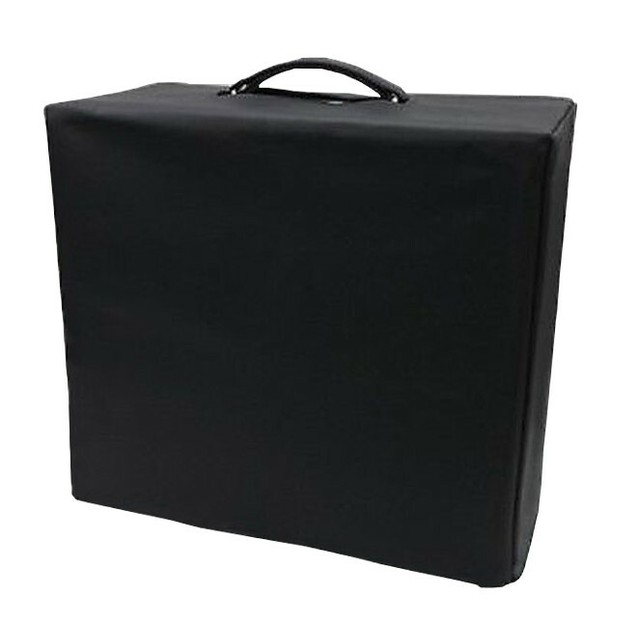
Supro Saturn Reverb (1648RT)
A 15-watt Class A, cathode-biased circuit that multiple Jazzmaster owners specifically single out in gear forums as an unusually good pairing for the guitar. It breaks up earlier and more musically than a push-pull design if that’s what you want, with a distinct voicing from every Fender or Vox amp here. Prices vary widely by retailer and condition, so it pays to shop around before assuming the low end of the range.
- 15W Class A, cathode-biased circuit
- Pair of 6973 power tubes
- Custom-voiced 12-inch Eminence speaker
- Onboard spring reverb and tremolo
- Specifically praised by Jazzmaster owners in gear forums as an unusually good pairing
- Class A circuit breaks up earlier and more musically than a push-pull design
- A genuinely distinct voicing from every Fender or Vox amp on this list
- Prices vary widely by retailer and condition — shop around before assuming the low end
- Smaller company than Fender or Vox means fewer authorized repair options

Roland JC-40 Jazz Chorus
A 40-watt solid-state combo widely regarded as one of the cleanest, most headroom-rich platforms available at this price, with true stereo chorus built in as a genuinely different texture option. Nothing to bias or re-tube, ever. The reverb is digital rather than a real spring tank, so it won’t sound identical to the Fender, Vox, or Supro tanks on this list — a deliberate tradeoff for reliability and headroom.
- 40W solid-state, two 10-inch speakers
- True stereo chorus and vibrato built in
- Onboard digital reverb
- Stereo effects loop
- One of the cleanest, most headroom-rich platforms available at this price
- Stereo chorus is a genuinely different, non-Fender-style texture
- Solid-state reliability with nothing to bias or re-tube
- No tube compression or sag at all, which some players specifically want from a surf amp
- Onboard reverb is digital, not a real spring tank, so it won’t match the Fender/Vox/Supro tanks here
Buying tips
- Match your reverb source to your headroom, not the other way around — if you’re running an outboard reverb pedal into a low-wattage amp, back off the amp’s own volume before adding wet signal or it will compress and dull the top end.
- A Jazzmaster’s bright voice means a Fat or mid-boost switch, like the one on the Blues Junior IV, is often more useful than a bass boost — the guitar rarely needs help getting brighter.
- If you’re chasing a specific vintage reverb-tank sound, buy a real tube combo with a spring tank rather than a modeling amp — the digital convolution amps are close but not identical.
- If weight is the deciding factor for gigging, the Tone Master line gives roughly the headroom of the tube original at under half the weight.
- Test any Vox-style Top Boost amp with your actual guitar before buying — the icy top end some players report with Jazzmasters is real for some rigs and not others, and it depends on your specific pickups and playing style.
- Set the amp’s own reverb fairly low and let an outboard pedal do the heavy lifting if you want independent control over decay time, which most built-in spring tanks don’t offer.
- Budget for periodic re-tubing and biasing on any all-tube amp on this list — it’s a real ongoing cost that a solid-state or modeling amp doesn’t carry.
- Don’t assume more wattage means more usable headroom for your situation — a 15W tube amp at full volume in a small room can out-clean a 40W amp turned down, because tube amps compress differently than solid-state ones as they approach their ceiling.
As an Amazon Associate and eBay Partner, toptenpick.com earns from qualifying purchases. Prices and availability are subject to change.