

As an Amazon Associate and eBay Partner, toptenpick.com earns from qualifying purchases. Prices and availability are subject to change.
A baritone guitar’s extended scale and low B-to-B (or A-to-A) tuning push more low-frequency energy into an amp than a standard guitar, which is why forum consensus consistently points to amps with a large speaker (12″ or bigger, ideally two), a closed or semi-closed back, and enough headroom to stay tight instead of muddying up. These 9 real, currently-sold amps run from a $299 practice combo to a $2,199 Fender vintage reissue.
| # | Product | Price | Where to buy |
|---|---|---|---|
| 1 | Positive Grid Spark 40 | $299 | Amazon · eBay |
| 2 | Boss Katana-100 Gen 3 | $399-$449 | Amazon · eBay |
| 3 | Roland JC-22 Jazz Chorus | $477-$594 | Amazon · eBay |
| 4 | Peavey Bandit 112 TransTube | $375-$500 | Amazon · eBay |
| 5 | Marshall DSL40CR | $578-$750 | Amazon · eBay |
| 6 | Vox AC15C1 | $650-$1,050 | Amazon · eBay |
| 7 | Orange Rocker 32 | $925-$1,580 | Amazon |
| 8 | Fender Hot Rod Deluxe IV | $1,050 | Amazon · eBay |
| 9 | Fender ’65 Twin Reverb Reissue | $1,890-$2,199 | Amazon · eBay |
The picks, in detail

Positive Grid Spark 40
A modeling practice amp that covers a huge range of amp voicings through its app, giving baritone players an affordable way to test different amp characters before committing to a single tube amp.
- 40W modeling combo
- 100k+ tones via Spark app
- USB recording and Smart Jam
- Extremely versatile for the price
- Easiest way to experiment with amp voicing before buying
- Not a substitute for a large-speaker tube amp’s low-end headroom

Boss Katana-100 Gen 3
A 100-watt 1×12 solid-state/modeling combo with genuine headroom and a big single 12″ speaker — the clean, tight low end forum threads specifically recommend for baritone.
- 100W, 1×12 combo
- Multiple amp voicings
- Built-in effects
- Plenty of clean headroom for extended-range tuning
- Big single 12″ speaker handles low end well
- Solid-state/modeling tone rather than true tube warmth

Roland JC-22 Jazz Chorus
A compact version of Roland’s legendary clean-headroom Jazz Chorus, with dual speakers and the tight, defined clean tone steel-players and baritone players alike lean on for extended-range tunings.
- 30W, 2×6.5″ stereo combo
- Signature JC clean tone
- Built-in chorus and reverb
- Famous for staying clean and tight at low tunings
- Compact and portable
- Smaller speakers than a 12″ combo, less low-end punch

Peavey Bandit 112 TransTube
A budget workhorse combo with a single 12″ speaker and Peavey’s TransTube circuit, long recommended in player forums as a loud, clean solid-state option for baritone and pedal-steel work.
- 100W, 1×12 combo
- TransTube analog tube-feel circuit
- Multiple channels
- Very loud and clean for the price
- Long track record with steel and baritone players
- Solid-state tone lacks true tube compression
Marshall DSL40CR
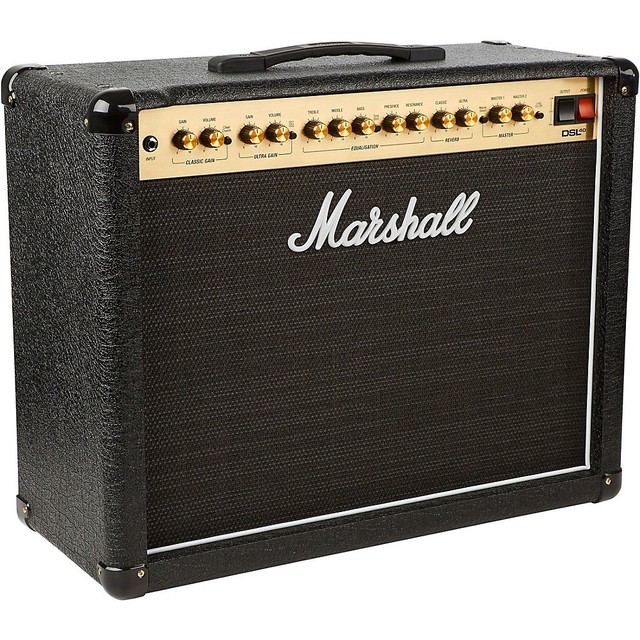
A 40-watt all-tube combo with a single 12″ Celestion speaker and two footswitchable channels, giving enough clean headroom on the clean channel to keep a baritone’s low end defined before pushing into crunch.
- 40W all-tube, 1×12 combo
- Two footswitchable channels
- Celestion Seventy 80 speaker
- Genuine tube headroom on the clean channel
- Versatile clean-to-crunch range
- Single 12″ speaker versus 2×12 options here

Vox AC15C1
A 15-watt all-tube combo with a single 12″ Celestion Greenback, prized for a chimey, defined clean tone that keeps extended low tunings articulate rather than woolly.
- 15W all-tube, 1×12 combo
- Celestion Greenback speaker
- Built-in tremolo and reverb
- Articulate, chimey clean tone suits low tunings
- Genuine tube dynamics
- Lower headroom than the 40W+ amps here at full band volume
Orange Rocker 32
A 30-watt stereo tube combo with two 10″ speakers and onboard power scaling, giving baritone players a stereo spread and the option to drop to 15 watts for home use without losing tone.
- 30W all-tube stereo combo, 2×10″
- Power scaling to 15W
- Tube-driven effects loop
- Stereo dual-speaker spread
- Power scaling for bedroom-to-stage flexibility
- Limited-run availability has fluctuated; confirm current stock before buying
Fender Hot Rod Deluxe IV
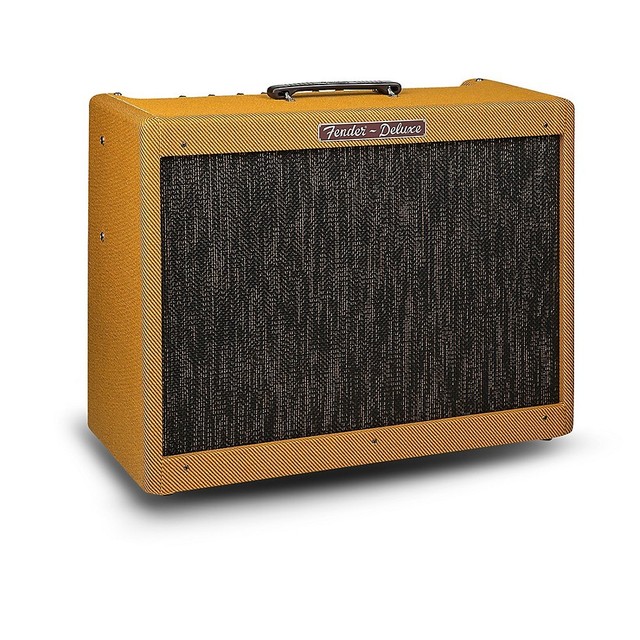
A perennial recommendation across baritone forum threads — a single 12″ Celestion in an all-tube 40-watt combo with enough clean headroom to keep a baritone’s extended low end tight before breakup.
- 40W all-tube, 1×12 combo
- Celestion Vintage 30 speaker
- Three-channel design
- Widely cited by baritone players specifically
- Strong clean headroom
- Single 12″ rather than the 2×12 setup some forum threads consider ideal

Fender ’65 Twin Reverb Reissue
The gold standard forum recommendation for baritone and steel guitar alike — an 85-watt, 2×12 all-tube combo with the huge clean headroom needed to keep a baritone’s low end defined at full band volume.
- 85W all-tube, 2×12 combo
- Blackface-style clean headroom
- Dual 12″ speakers
- Best-in-class clean headroom for extended-range tuning
- Dual 12″ speaker configuration forums specifically recommend
- Most expensive amp on this list by a wide margin
Buying tips
- Look for a 12″ speaker or larger, ideally two — baritone’s extended low end needs more cone area than a standard guitar amp’s 10″ speaker to stay defined.
- Clean headroom matters more than gain here; an amp that breaks up too early will turn a baritone’s low B into mush instead of a clear note.
- A closed or semi-closed back cabinet (like the Twin Reverb or Hot Rod Deluxe) tightens up low-end response versus a fully open-back combo.
- If you mainly play at home, power scaling (Orange Rocker 32) or a smaller wattage amp (Vox AC15) lets you get tube compression without stage volume.
As an Amazon Associate and eBay Partner, toptenpick.com earns from qualifying purchases. Prices and availability are subject to change.