

As an Amazon Associate and eBay Partner, toptenpick.com earns from qualifying purchases. Prices and availability are subject to change.
Fender’s Bass VI (and its reissues and clones) tunes a full octave below a standard guitar, so it needs an amp built to actually handle real low end without falling apart — either a guitar amp with serious clean headroom, or a proper bass combo. Both routes are legitimate and players are genuinely split on which sounds more like ‘the instrument.’
| # | Product | Price | Where to buy |
|---|---|---|---|
| 1 | Fender ’65 Twin Reverb | $1,600-$1,900 | Amazon · eBay |
| 2 | Fender ’65 Deluxe Reverb | $1,300-$1,500 | Amazon · eBay |
| 3 | Fender Rumble 500 V3 | $550-$650 | Amazon · eBay |
| 4 | Fender Rumble 40 V3 | $180-$220 | Amazon · eBay |
| 5 | Hartke HD500 | $500-$600 | Amazon · eBay |
| 6 | Ampeg Rocket Bass RB110 | $200-$260 | Amazon · eBay |
| 7 | Orange Crush Bass 50 | $220-$280 | Amazon · eBay |
The picks, in detail

Fender ’65 Twin Reverb
An 85W all-tube guitar combo with huge clean headroom — the classic ‘run a Bass VI through a guitar amp’ choice for players who want it to sound like an especially deep, chimey guitar.
- 85W all-tube, two 12″ Jensen speakers
- Blackface-style two-channel preamp
- Built-in spring reverb and tremolo
- Faithful reissue of the original 1965 circuit
- Huge clean headroom handles a Bass VI’s low E without breaking up
- Classic surf/jangle tone the instrument was originally built around
- Heavy and expensive for a single-instrument amp
- No dedicated bass EQ voicing; it’s a guitar amp through and through

Fender ’65 Deluxe Reverb
A smaller, 22W tube combo that gives the Bass VI’s low guitar tone at a lower volume and a fraction of the Twin’s weight.
- 22W all-tube, one 12″ Jensen speaker
- Two-channel (Normal/Vibrato) preamp
- Built-in reverb and tremolo
- Compact 1×12 combo format
- Much lighter and cheaper than the Twin Reverb while keeping the same blackface voicing
- Breaks up earlier for a grittier low-end tone if that’s the goal
- Less clean headroom than the Twin for the Bass VI’s low frequencies
- Single 12″ speaker moves less air

Fender Rumble 500 V3
A 500W bass combo for players who’d rather run the Bass VI through an amp actually voiced for low frequencies, with headroom to spare.
- 500W solid-state, two 10″ speakers plus tweeter
- 4-band EQ with Bright/Contour/Vintage voicing switches
- Very lightweight for its power output
- Aux in and headphone out
- Enormous clean headroom for the Bass VI’s extended range
- Dedicated bass EQ shapes low end more precisely than any guitar amp
- No tube warmth or natural breakup
- Voiced for bass, so the ‘low guitar’ character some players want isn’t there

Fender Rumble 40 V3
A smaller, practice-and-small-gig bass combo that still has enough headroom for the Bass VI’s low string without the Rumble 500’s size or price.
- 40W solid-state, one 10″ speaker
- 3-band EQ with Overdrive and Contour
- Aux in and headphone out
- Compact, light combo
- Far more affordable and portable than the Rumble 500
- Plenty loud for home or small-room use
- Runs out of headroom faster than the 500W model at higher volumes
- Single 10″ speaker has less low-end weight than the Rumble 500
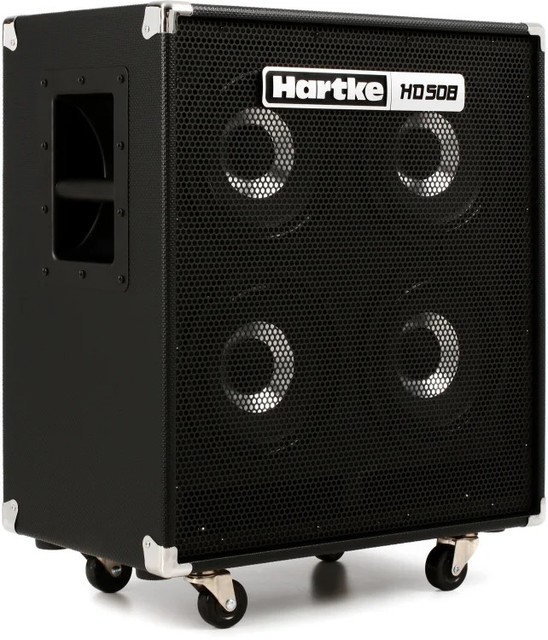
Hartke HD500
A 500W bass combo built around Hartke’s HyDrive aluminum/paper speakers, tuned for both attack and low-end growl.
- 500W class-D power, two 10″ HyDrive speakers
- Hartke Shape control plus 3-band EQ
- Class-D power section keeps weight down
- Alternative bass-amp voicing to the Fender Rumble line
- Aluminum/paper HyDrive cones add top-end attack that a plain paper cone lacks
- Genuine alternative tone to the ubiquitous Rumble series
- Less common than Fender in stores, so trying before buying is harder
- No tube option in this line

Ampeg Rocket Bass RB110
A classic-voiced Ampeg bass combo with an XLR direct output, useful if the Bass VI ever needs to go through a PA or interface.
- Solid-state, one 10″ speaker
- XLR direct output for live/recording use
- Ampeg’s signature bass EQ voicing
- Compact combo format
- Ampeg’s bass tone is a genuinely different flavor from Fender or Hartke
- XLR out is handy beyond just amp-in-the-room use
- Single 10″ speaker has less low-end headroom than the Rumble 500 or Hartke HD500
- Solid-state, no tube option in this model

Orange Crush Bass 50
A mid-power bass combo from Orange with an XLR output, offering a third distinct bass-amp voicing beyond Fender and Ampeg.
- 50W solid-state, one 12″ speaker
- XLR direct output
- Orange’s distinctive bass EQ voicing
- Compact combo format
- 12″ speaker gives more low-end air than the smaller 10″ combos on this list
- A third genuinely different tonal option beyond the Fender/Ampeg norm
- 50W is modest next to the Rumble 500 or Hartke HD500 for headroom
- Less common secondhand if something needs servicing
Buying tips
- Decide which side of the Bass VI’s identity you want first: a guitar amp (Twin/Deluxe Reverb) gives a deep, chimey ‘baritone guitar’ tone, while a bass amp (Rumble, Hartke, Ampeg, Orange) gives a cleaner, more headroom-heavy low end.
- Whichever route you pick, prioritize speaker size and wattage over on-paper features — the Bass VI’s extended low string is what blows out an underpowered amp, not anything about its tone controls.
- If budget allows only one amp and you play more guitar than bass, the Twin or Deluxe Reverb is the more versatile choice since it still works as a normal guitar amp for other instruments.
As an Amazon Associate and eBay Partner, toptenpick.com earns from qualifying purchases. Prices and availability are subject to change.