

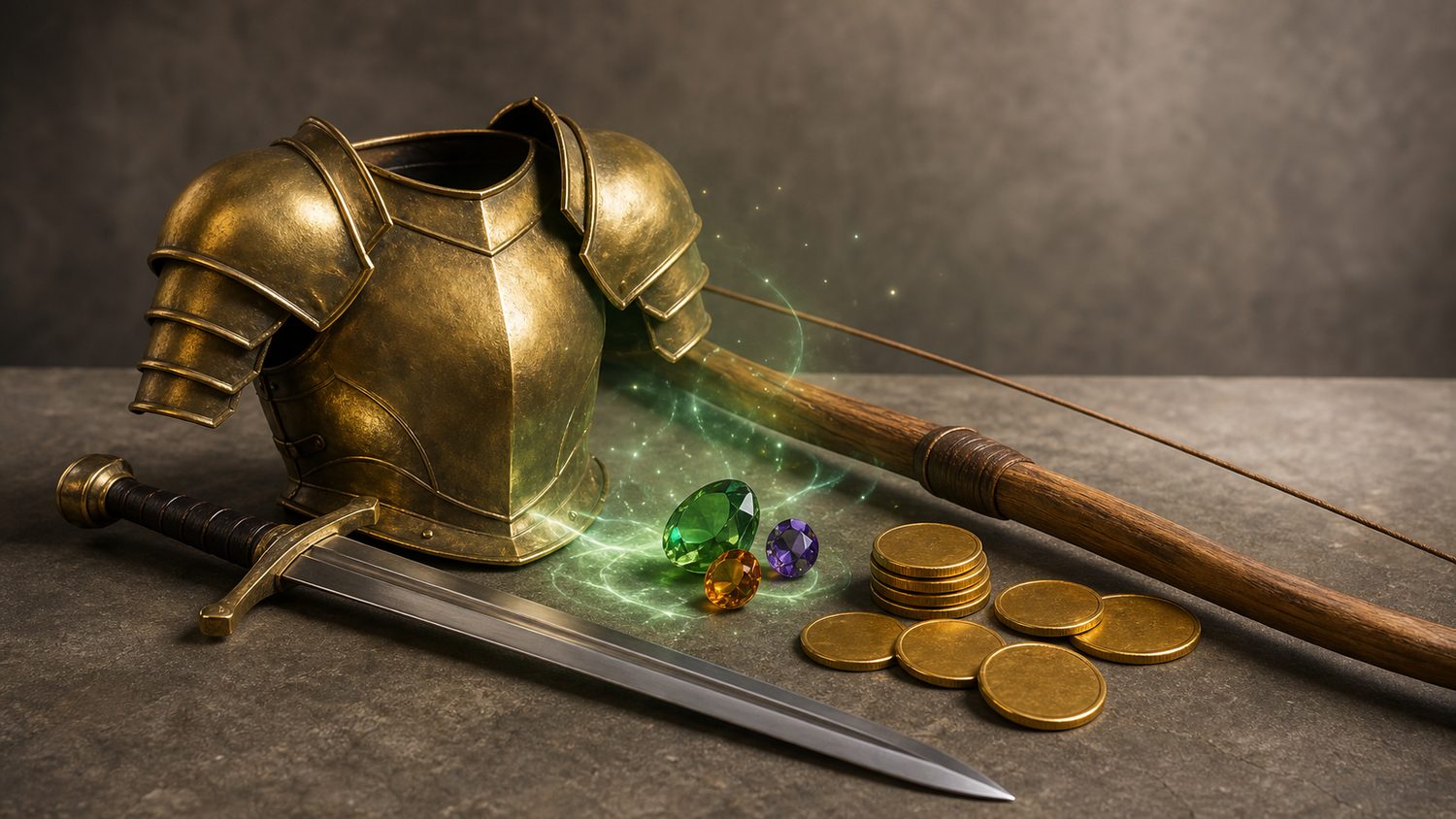
The best items to High Level Alchemy in Old School RuneScape are the items that are profitable when you buy them, not a permanent list of rune equipment or bows. Grand Exchange prices and Nature rune costs move, while an item’s alchemy return is tied to its fixed in-game value. That makes live comparison the only reliable answer. A rune platebody can be excellent during one buying window and a loss after a price move; the same is true of every popular alchable.
High Level Alchemy requires level 55 Magic and gives 65 Magic experience per cast. It turns an inventory item into coins equal to 60% of that item’s value, not 60% of its Grand Exchange price. The spell uses five Fire runes and one Nature rune. If a fire staff or another valid source covers the Fire runes, the repeat cost to include is the Nature rune. Start from that rule, then use a live Grand Exchange price source immediately before placing offers.
The margin calculation that matters
Calculate the expected result for one cast as: High Alchemy return minus the price actually paid for the item minus the Nature rune cost. If the result is positive, it is a possible profitable alch. If it is negative, do not buy it for alchemy merely because an old list called it a staple. A small positive number is not automatically worthwhile either: it can disappear if the offer fills above the last quoted price, if the Nature rune price changes, or if only a handful of items are available at that price.
The OSRS Wiki’s Grand Exchange Market Watch alchemy page is useful because it combines changing GE data with each item’s High Alchemy return, profit, return on investment, buy limit, and volume. Treat it as a shortlist, not a guarantee. The page itself explains that profit is calculated with a Nature rune price and that the displayed values can need a refresh. Check the time and the actual buy offer before committing capital.
Best item types to scan first
Use the live calculator to scan a few broad families instead of chasing a single legendary item. Common categories include metal armour and weapons, dragonhide bodies, battlestaves, jewellery, and strung bows. These categories are worth checking because many are made, dropped, or traded in volume, giving them regular market activity. They are not permanently profitable categories. The actual item, price, limit, and available quantity decide the result at the moment you buy.
For a low-capital scan, look at inexpensive items with a reasonable displayed margin and enough volume to fill a small test offer. Steel and mithril equipment, lower metal platebodies, and common crafted gear may appear in a live table. For a larger bankroll, investigate higher-value armour, weapons, battlestaves, or crafted pieces only after checking how much cash is tied up by the four-hour limit. A bigger margin per cast can still be worse than a modest margin on an item that fills reliably and leaves enough cash for other offers.
Names such as rune med helm, rune scimitar, adamant platebody, green dragonhide body, and battlestaff are examples to enter into a current calculator, not recommendations to buy blindly. Their fixed alchemy values make them possible candidates, but their live GE prices decide whether they are profitable. This distinction prevents a common mistake: buying a full limit after seeing a screenshot or a guide written during a different market.
How to make a live shortlist
- Open a current alchemy margin page. Use a source that shows High Alchemy value, current GE price, Nature rune cost, buy limit, and volume.
- Choose a minimum margin. A player who wants Magic experience may accept a small gain; a player doing it mainly for coins should require more room for price movement.
- Check volume and limit. A high percentage return on a tiny limit is not a large money-maker. A fast-trading item with a smaller margin can be more practical.
- Place a small test offer. The shown price is market data, not a promise that an instant buy will fill there. Test before committing the maximum limit.
- Recalculate using the actual fill price. If the offer fills higher than planned, deduct the difference from every item’s margin before continuing.
- Repeat after the limit resets. Recheck rather than assuming the previous item’s profit is still present.
Runes, speed, and opportunity cost
Do not leave rune cost out of the calculation. A common source of loss is comparing an item’s purchase price only with its High Alchemy return, then discovering that one Nature rune per cast erased the apparent profit. The standard spell also consumes Fire runes unless a staff or other setup supplies them. The wiki lists a five-tick casting speed, which is one cast every three seconds. That means alching is often selected because it can train Magic conveniently, including during some other activities, rather than because it is the highest standalone money-maker.
Noted items can be alched one at a time, which makes bank withdrawals simpler. Keep the notes in a consistent inventory position and use the normal spell interface. Never use automation or an input repeater: the convenience of a repeated action is not permission to automate it. The right pace is the one you can sustain while actually watching the screen and avoiding a costly misclick.
Protect valuable items
High Level Alchemy destroys the item. Set the valuable-item warning before beginning, especially when the inventory contains gear, clue rewards, or a stack that was not meant for alchemy. The OSRS Wiki notes that the warning can use Grand Exchange value and that the threshold is configurable from the spell’s warning options. A warning is a safeguard, not a reason to click through without reading it.
Keep alchables in a separate bank tab or withdraw only the noted stack intended for the session. If an item has a high GE value but a low alchemy value, it can be an especially damaging mistake. Double-check the item name and current offer price before every new batch.
What to choose today
- Best for a new alcher: a low-cost, high-volume item that is currently positive after the Nature rune.
- Best for Magic training: an item that breaks even or earns a small margin while fitting the desired training activity.
- Best for a larger cash stack: several live-positive items with separate buy limits, rather than all capital in one volatile candidate.
- Best item to avoid: any item chosen solely from an old profit list or an untested guide price.
The best OSRS alch item is the one whose live purchase price leaves a real margin after every rune cost and whose volume and buy limit suit the available cash. Let the current calculator find candidates, test a small offer, and recheck every batch. That method stays useful when the next market movement makes today’s item list obsolete.