

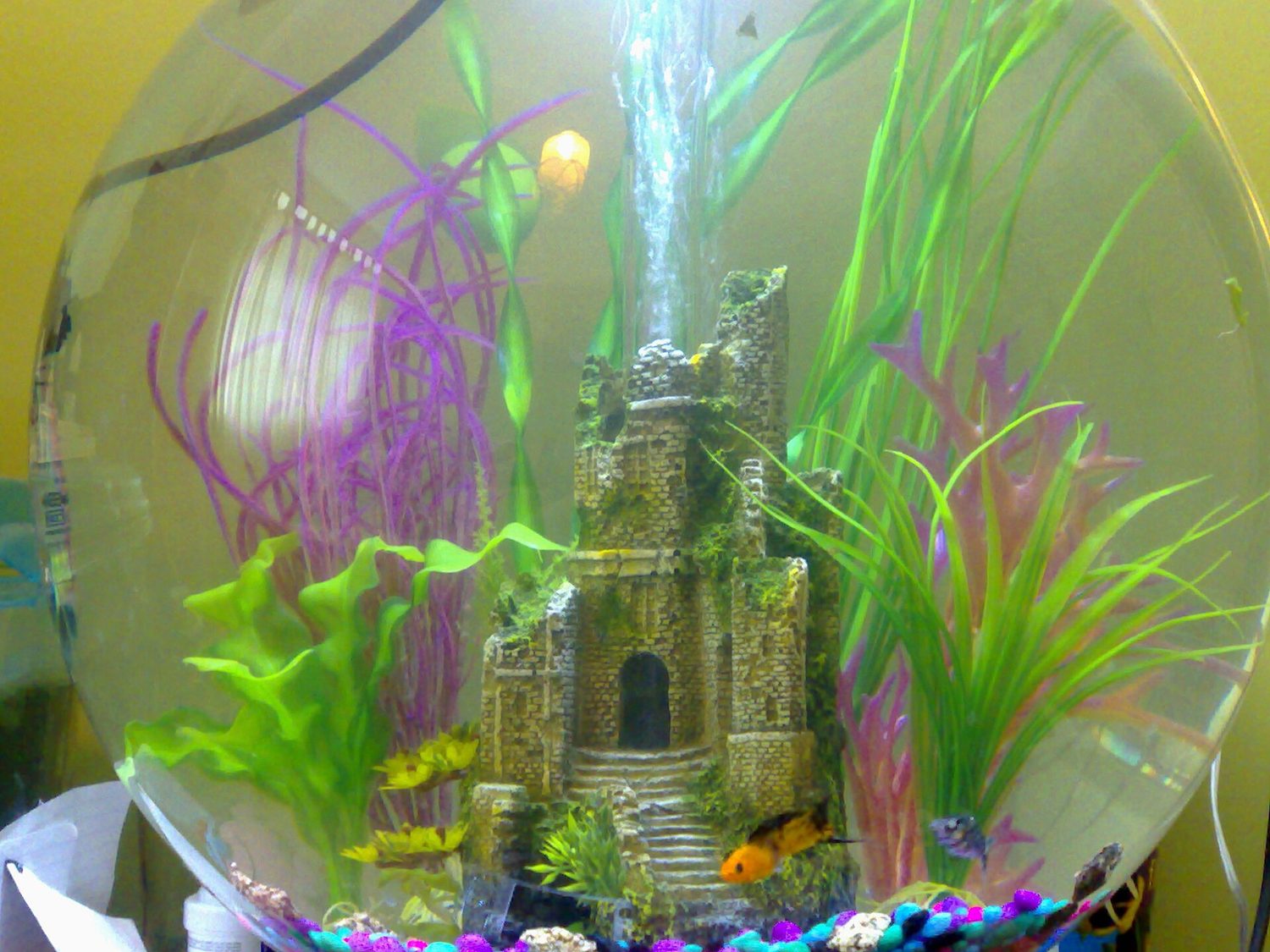
A biOrb LIFE 60 holds about 60 litres, or 16 US gallons. Its tall portrait shape is approximately 62 × 42 × 28 cm, so the headline volume does not tell the whole stocking story: the horizontal swimming run is modest. The best fish plan is not the one that makes every part of the display look busy. It is the one that leaves enough space and filtration capacity for adult fish, their social needs and routine maintenance. Treat this as a welfare-first guide, not a list of animals to buy.
Understand the LIFE 60’s shape and filtration
The LIFE 60 is taller than it is long. That can make it visually striking and useful for plants and vertical décor, but it does not turn it into a long community tank. Fast, wide-ranging or large-bodied fish need horizontal room to turn, school and establish normal behaviour. A fish that is physically small at purchase may still be unsuitable when its adult size, activity level or group requirement is considered.
biOrb systems use bottom filtration with a cartridge and ceramic media. The media provide a surface for beneficial bacteria; the cartridge is part of the mechanical and chemical filtration routine. That system needs maintenance, but filtration does not erase waste production or make overstocking safe. Follow the manufacturer’s maintenance schedule, avoid replacing every biological surface at once, and test the water rather than assuming the tank is healthy because it looks clear.
Cycle before adding fish
Set up the aquarium, run the equipment and establish the nitrogen cycle before adding fish. In a fishless cycle, an ammonia source feeds the bacteria that convert ammonia to nitrite and then nitrate. The practical target before stocking is zero ammonia and zero nitrite on a reliable aquarium test kit after the system processes the chosen ammonia source; nitrate is managed through water changes and sensible stocking. This takes time. Adding fish to “start” the cycle exposes them to toxic ammonia and nitrite instead of allowing the filter to mature first.
Test regularly during cycling and again after every stocking change. A spike, cloudy water or a fish behaving abnormally is a reason to pause additions and diagnose the water, not to buy another animal that is said to clean the tank. Temperature, pH and hardness also need to be measured before choosing species. Stability within a species’ acceptable range is more valuable than chasing a number with frequent chemical adjustments.
Build around adult size, schooling and bioload
Every candidate needs four checks: adult size, horizontal activity, social group size and waste output. Schooling fish need the security of their own group; solitary fish can need individual territory; and all fish create biological load even when they are small. A species that requires a school of eight or ten is not automatically a fit because one specimen seems tiny in a shop. Likewise, mixing several partial groups usually creates a crowded tank with stressed fish rather than a diverse community.
For a heated, fully cycled LIFE 60 with suitable stable water, one modest route is a single school of six small, peaceful nano fish chosen for the actual water parameters, with no additional fish at the start. That is deliberately conservative. Observe the school, maintain the water and allow the system to settle before deciding whether any compatible invertebrate or plant is appropriate. It is not a universal prescription: a species’ published temperature, hardness, adult size and group needs must match the individual tank.
Why popular fish may be poor choices here
Goldfish are not suitable for this tank. They grow larger than many first-time keepers expect, produce substantial waste and need more water volume and swimming space than a 60-litre portrait aquarium provides. Large cichlids, plecos, large catfish, silver dollars, angels and other fish that grow large or need a long run are also poor matches. “It fits today” is not an adult-care standard.
Avoid trying to compensate for a short tank by increasing the number of tiny fish. Overcrowding reduces the margin for feeding mistakes, a missed water change, filter disruption or illness. It can also lead to persistent ammonia or nitrite readings, aggressive behaviour and oxygen stress. Bottom-oriented fish and algae-eaters are not cleanup devices; they have their own adult-size, group and feeding needs, and must be evaluated as full livestock additions.
Acclimation, quarantine and observation
When the cycle is stable and a compatible school has been selected, add livestock gradually rather than all at once. Match temperature carefully, acclimate to the aquarium water, and avoid pouring shop water into the display. Quarantine is useful when practical because it lets a keeper observe new arrivals before a disease or parasite reaches the main aquarium. Ask a qualified aquatic professional for help if fish show rapid breathing, clamped fins, flashing, lesions, persistent refusal to eat or unusual swimming.
Do not rely on a single visual inspection. Observe fish at feeding time and at different times of day. A fish that hides continuously, is excluded from a group, gasps near the surface or loses condition may be signalling a compatibility, water-quality or health problem. Testing ammonia, nitrite, nitrate and temperature gives useful evidence before changing food, décor or stocking.
Keep maintenance predictable
Feed lightly enough that food is consumed promptly, remove obvious leftovers and make partial water changes on a regular schedule based on test results and stocking. Weekly testing is a sensible routine for a small aquarium, particularly after a new fish, a filter service or a change in feeding. Use dechlorinated water at a similar temperature for water changes, and avoid cleaning filter media in untreated tap water because chlorine or chloramine can harm beneficial bacteria.
Plants, hardscape and thoughtful lighting can make the LIFE 60 look complete without increasing fish load. Leave room for maintenance access and for fish to retreat from constant view. The sustainable result is a lightly stocked aquarium with stable zero ammonia and nitrite, manageable nitrate, compatible water requirements and fish whose adult needs remain met. If there is doubt about a particular species, choose the more conservative stocking plan and seek current, species-specific advice before bringing it home.