

As an Amazon Associate and eBay Partner, toptenpick.com earns from qualifying purchases. Prices and availability are subject to change.
Most aquarium bio media only supports aerobic bacteria on its outer surface; reducing nitrate to nitrogen gas needs an oxygen-starved core deep inside the media where anaerobic bacteria can live. These ten are media genuinely engineered with that deep porous structure or anaerobic-specific design, plus a biopellet reactor product that achieves the same denitrification goal by a different route.
| # | Product | Price | Where to buy |
|---|---|---|---|
| 1 | Seachem Matrix | $18-$45 (by size) | Amazon · eBay |
| 2 | Biohome Ultimate Filter Media | $25-$60 (by size) | Amazon · eBay |
| 3 | Eheim Substrat Pro | $25-$45 (by size) | Amazon · eBay |
| 4 | Sera Siporax Professional | $18-$30 (by size) | Amazon · eBay |
| 5 | MarinePure Biofilter Media | $20-$50 (by size/shape) | Amazon · eBay |
| 6 | Brightwell Aquatics Xport NO3 | $25-$40 | Amazon · eBay |
| 7 | Two Little Fishies NPX Bioplastics | $18-$29 (by size) | Amazon · eBay |
| 8 | Seachem De*Nitrate | $8-$18 (by size) | Amazon · eBay |
| 9 | Maxspect Nano-Tech Anaerobic Block | $25-$40 (starter set) | Amazon |
| 10 | Kent Marine Nitrate Sponge | $18-$20 (1 gallon) | Amazon |
The picks, in detail

Seachem Matrix
A pumice-based media whose deep macropores stay anoxic at the center, letting denitrifying bacteria convert nitrate into harmless nitrogen gas.
- Porous pumice structure with anoxic core
- Supports both nitrifying and denitrifying bacteria
- No replacement needed, permanent media
- Widely used, well-documented denitrification performance
- Needs a reasonably slow flow rate through the media to keep the anoxic core effective

Biohome Ultimate Filter Media
A heat-treated silica media designed to handle all three stages of the nitrogen cycle, ammonia, nitrite, and nitrate, in one product.
- Non-toxic, inert heat-treated silica sand base
- Colonizes aerobic bacteria on the surface and anaerobic bacteria deep inside
- Freshwater and marine versions available
- Handles the full nitrogen cycle rather than just ammonia/nitrite
- Premium price per liter versus basic ceramic rings
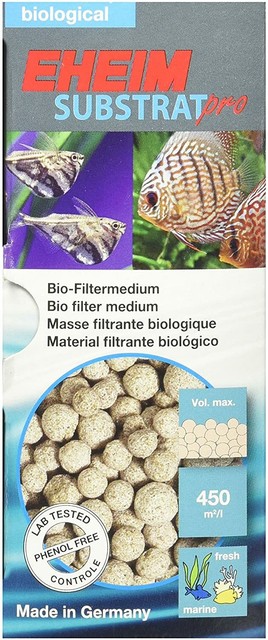
Eheim Substrat Pro
Sintered glass media with a genuinely porous internal structure, a step up from Eheim’s standard Substrat for anaerobic colonization.
- Sintered glass construction
- High internal surface area
- Long-lasting, doesn’t break down
- Long service life, effectively permanent
- Priced above Seachem Matrix for a similar function

Sera Siporax Professional
Sintered-glass sphere media purpose-built with an anoxic core for nitrate reduction alongside standard biological filtration.
- Sintered glass spheres
- Marketed specifically for nitrate reduction
- Multiple pack sizes for different tank volumes
- Explicitly sold and tested for denitrification, not just general bio filtration
- Smaller pack sizes cost more per liter than buying in bulk
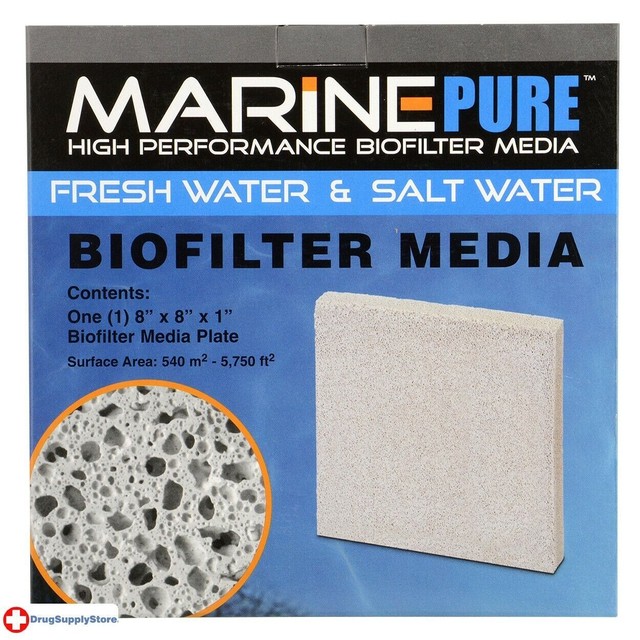
MarinePure Biofilter Media
A ceramic biomedia (sold as blocks, rocks, or gems) with an extremely high internal surface area for both aerobic and anaerobic colonization.
- High-porosity ceramic structure
- Sold in block, rock, or gem shapes for different filter types
- Freshwater and marine use
- Flexible form factors fit sumps, canisters, and reactors alike
- Blocks/rocks take up more physical space than loose media of similar bio-capacity
Brightwell Aquatics Xport NO3
An ultra-porous ceramic media infused with elemental sulfur specifically to accelerate nitrate reduction, aimed at marine and hard freshwater tanks.
- Ultra-porous ceramic with elemental sulfur
- Over 100,000 sq ft of surface area per brick claimed
- Marine and hard freshwater use
- Sulfur boost targets nitrate reduction more aggressively than plain ceramic media
- Sulfur-based denitrification needs monitoring; can affect pH if overdosed
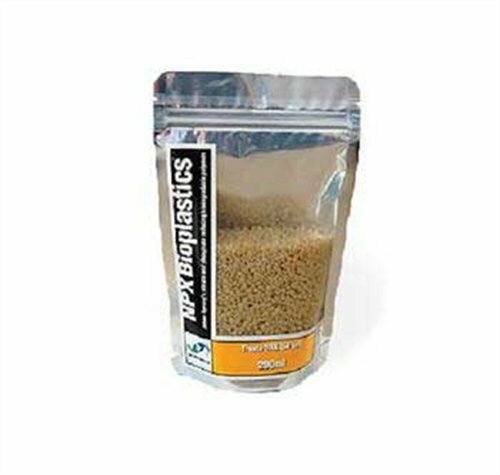
Two Little Fishies NPX Bioplastics
A different route to the same goal, biodegradable pellets used in a fluidized reactor where bacteria feed on the slow-releasing plastic and are then skimmed out along with the nitrate and phosphate they absorbed.
- Biodegradable polymer pellets
- Used in a fluidized biopellet reactor, not a passive media basket
- Reduces both nitrate and phosphate
- Works without needing a deep anaerobic media core at all
- Requires a dedicated fluidized reactor, an extra piece of equipment
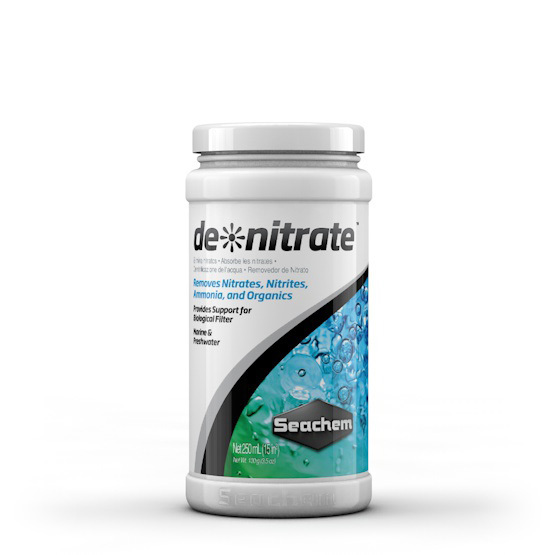
Seachem De*Nitrate
A separate Seachem media from Matrix, a naturally porous material whose pore geometry gives aerobic nitrification near the surface and anaerobic denitrification in the core at slow flow rates.
- Highly porous natural media
- Functions as both aerobic and anaerobic media below ~50 GPH flow
- Removes ammonia, nitrite, and nitrate
- One of the cheapest dedicated denitrifying media on this list
- Only functions anaerobically below a fairly slow stated flow rate (under 50 GPH)
Maxspect Nano-Tech Anaerobic Block
A block-form media paired with a denitrification catalyst, purpose-built as an anaerobic block rather than a general bio media that happens to work anaerobically.
- Pre-formed anaerobic block media
- Sold with a denitrification catalyst additive
- Designed specifically for a low-flow anaerobic reactor setup
- Built from the ground up as an anaerobic-only product, not a dual-purpose media
- More specialized setup (block plus catalyst plus low-flow reactor) than dropping media into an existing filter
Kent Marine Nitrate Sponge
A granular zeolitic media that adsorbs ammonia while its porous structure fosters anaerobic bacterial denitrification, a longer-running budget option.
- Granular zeolite structure
- Adsorbs ammonia and fosters anaerobic denitrifying bacteria
- Sold in bucket and bulk sizes
- Dual-action: ammonia adsorption plus anaerobic bacterial colonization
- Zeolite-based adsorption capacity is finite and needs periodic renewal, unlike inert ceramic/glass media
Buying tips
- Standard ceramic rings and bio balls (the kind that ship with most filters) do NOT support anaerobic bacteria, their pores aren’t deep enough to stay oxygen-starved at the center; you need media specifically engineered for it, like the picks above.
- Denitrifying media works best at a moderate, not fast, flow rate; too much flow keeps oxygen penetrating the whole pellet and the anoxic core never forms. Seachem De*Nitrate states this explicitly (under ~50 GPH for anaerobic function).
- If you’d rather not add anaerobic media at all, a biopellet reactor (Two Little Fishies NPX) achieves nitrate reduction through bacteria feeding on the pellets instead of a porous media core.
As an Amazon Associate and eBay Partner, toptenpick.com earns from qualifying purchases. Prices and availability are subject to change.