

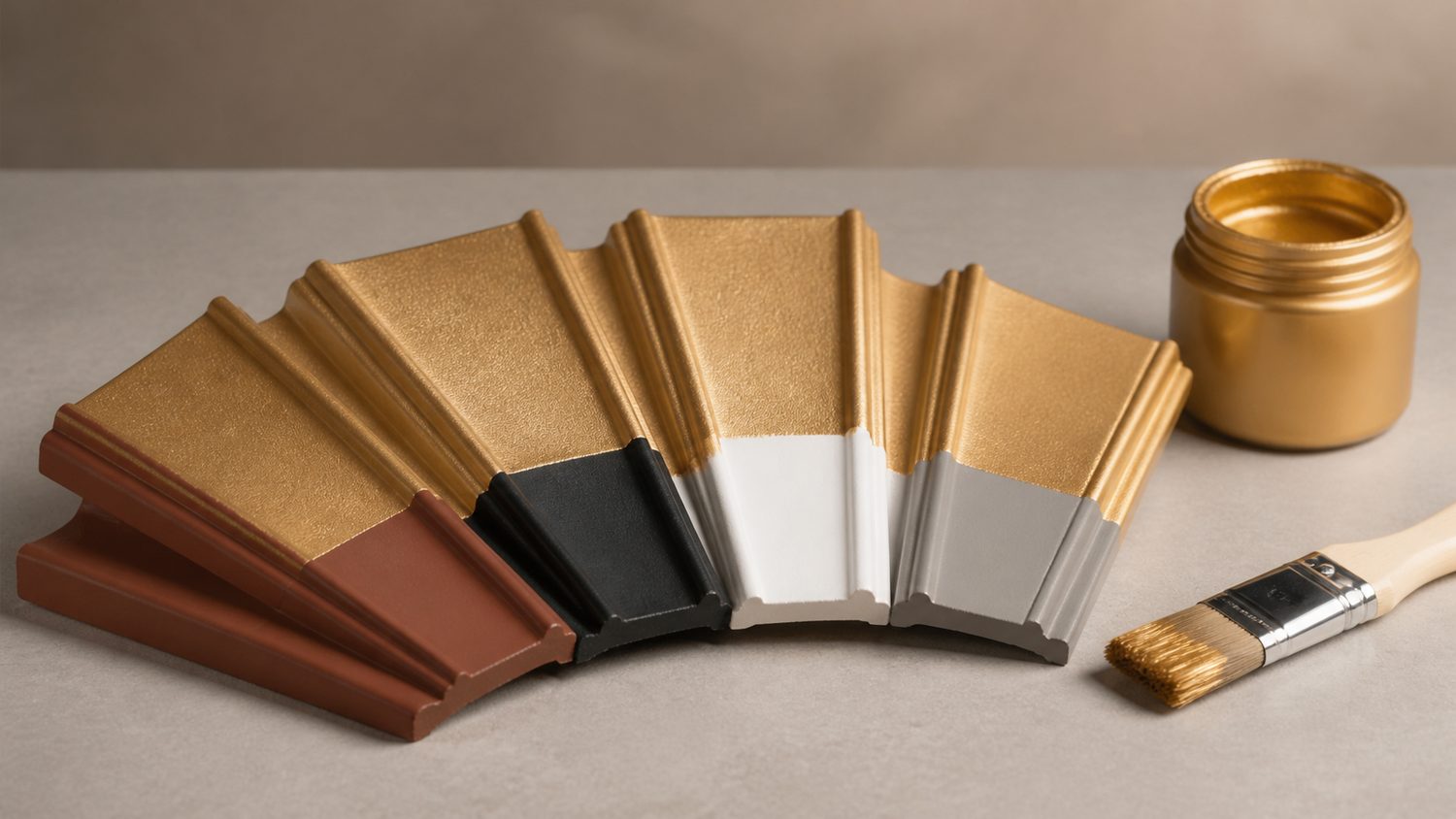
There is no single best undercoat color for gold because “gold” can mean a metallic miniature paint, a sprayed automotive color, genuine leaf on a frame, imitation leaf on furniture, or a decorative acrylic finish. Those systems use different binders, reflect light differently and fail in different ways. The useful question is not “what color goes under gold?” but “what kind of gold layer am I applying, over what surface, and what final temperature or shadow do I want?” Choose substrate preparation and compatibility first; use color as a controlled visual adjustment rather than as a universal rule.
Separate primer, basecoat and adhesive
Undercoat can mean three different layers. A primer promotes adhesion and evens an unsuitable surface. An opaque basecoat supplies color beneath a paint film. In gilding, size is the adhesive that receives leaf, while bole is the colored prepared layer beneath it in traditional water gilding. They are not interchangeable. A red paint can be a visual base for a brushed metallic miniature, but it is not burnishable bole merely because leaf is placed on top. A sound automotive sealer is chosen for the paint system’s technical requirements before its color is used for styling.
Metallic hobby paint: black is the conservative start
Black is a useful undercoat for brush-painted gold metallics when the aim is deep shadows and strong contrast. Metallic paint is not an opaque sheet of metal: its pigment particles and thinness can allow the base to influence recesses, edges and any light-coverage area. Black makes missed recesses read as shadow and can keep bright gold from looking chalky. It is forgiving on engraved detail, chain, armor joints and cast texture. The trade-off is that a translucent or lightly applied gold may need additional thin coats to look rich and even. Do not compensate with one heavy coat; it obscures sculpted detail and makes metallic flakes lie unevenly.
Warm brown, red-brown and ochre
Choose a dark warm brown for antique gold, aged bronze-adjacent gold, or a believable warm shadow beneath a metallic. It is less stark than black, so thin spots look intentional rather than dirty. Red-brown or terra-cotta pushes the result warmer and connects to traditional gilding, where red bole has long been used beneath gold leaf. Ochre and yellow-ochre give a lighter, continuous warmth and make tiny gaps at overlaps less conspicuous. None of these creates metallic reflectivity by itself. They set the color seen through thin paint, at damaged edges and in visual shadow around metallic particles.
White and gray: coverage versus richness
White, ivory and light gray can help a transparent or pale gold paint reach apparent color more quickly, but they can also turn warm gold pale or toy-like when the metallic coat is thin. Use them for a bright champagne, pale antique gold or clean decorative highlight, and test a swatch first. Neutral gray is often safer than pure white because it preserves some value contrast in recesses. This is not a rule that dark bases are always better; it is a reminder that a light base remains part of the total effect when the topcoat is not fully opaque. On miniatures, reserve very light bases for selected raised areas if the rest needs readable shadows.
Gold leaf uses bole for a different purpose
Genuine gold leaf is extremely thin, so preparation quality and base color affect appearance and repairs. In traditional water gilding, bole is a fine clay layer over prepared gesso; it gives a smooth foundation that can be burnished. Red bole is the familiar warm choice for rich classical frame and icon work. Yellow or ochre bole gives a more neutral gold field and makes a small break in the leaf less conspicuous. Gilding technical guidance describes red as warm, yellow as even and neutral, and black as cold: the choice is aesthetic rather than a mandatory formula. Leaf cannot hide scratches, brush ridges or porous grain, so a smooth sealed substrate is more important than chasing a fashionable bole color.
Oil-size and imitation leaf
For oil-size or water-based adhesive gilding on furniture, walls and craft objects, the colored layer is usually sealed paint or primer rather than burnishable water-gilding bole. Gold-leaf guidance recommends red or yellow backgrounds for gold on walls and stresses sealing porous surfaces so the adhesive does not soak in. Repair and smooth the substrate, seal it as required, apply an even color coat, then apply the specified adhesive and lay leaf at the correct tack. Imitation metal leaf can tarnish or discolor without a compatible protective topcoat, while genuine gold behaves differently. Read the adhesive and leaf maker’s instructions instead of assuming a water-gilding method transfers to imitation leaf.
Automotive and spray gold
Automotive gold basecoat is a formulated color system whose coverage, ground-coat recommendation, reducer and clearcoat are specified by its maker. A black ground can deepen a translucent metallic or candy-like effect; light gray or white can make a color cleaner or brighter; a dedicated tinted sealer may be required for coverage and uniformity. These are not safe substitutions to make from a miniature-painting guide. Spray a test card using the exact primer, sealer, basecoat and clear system, including the same coats and flash times, then view it in sun and shade. A mismatch can cause poor coverage, color shift, solvent reaction or adhesion trouble even if the color looked right in a photograph.
A practical decision process
- Identify the material: metallic paint, genuine leaf, imitation leaf, automotive basecoat or decorative finish.
- Prepare the substrate for that system first: clean, sand, repair, seal or prime as required.
- Choose black for deep hobby-paint shadows; warm brown, red-brown or ochre for warmer gold; light gray or ivory only for a pale bright result.
- For water gilding, choose bole for warmth and burnishability, not as a substitute for gesso or adhesive.
- Make a labeled test swatch with the actual gold, coat count and protective finish, then view it in final lighting.
- Change one variable at a time. If color, sheen and adhesion all change together, a test panel cannot identify the cause.
The best undercoat color for gold is conditional. Black is the practical all-round starting point for dark, readable hobby metallics; warm brown, red-brown or ochre make gold warmer; and red or yellow bole belongs to the separate craft of traditional gilding. The smoother, more compatible and better-tested the layer stack, the more convincing the gold will look.