

As an Amazon Associate and eBay Partner, toptenpick.com earns from qualifying purchases. Prices and availability are subject to change.
Memory wire end caps come off. Almost everyone who makes memory wire bracelets discovers this, usually after giving one away, and the instinct is to look for a stronger glue. That is treating the wrong part of the problem.
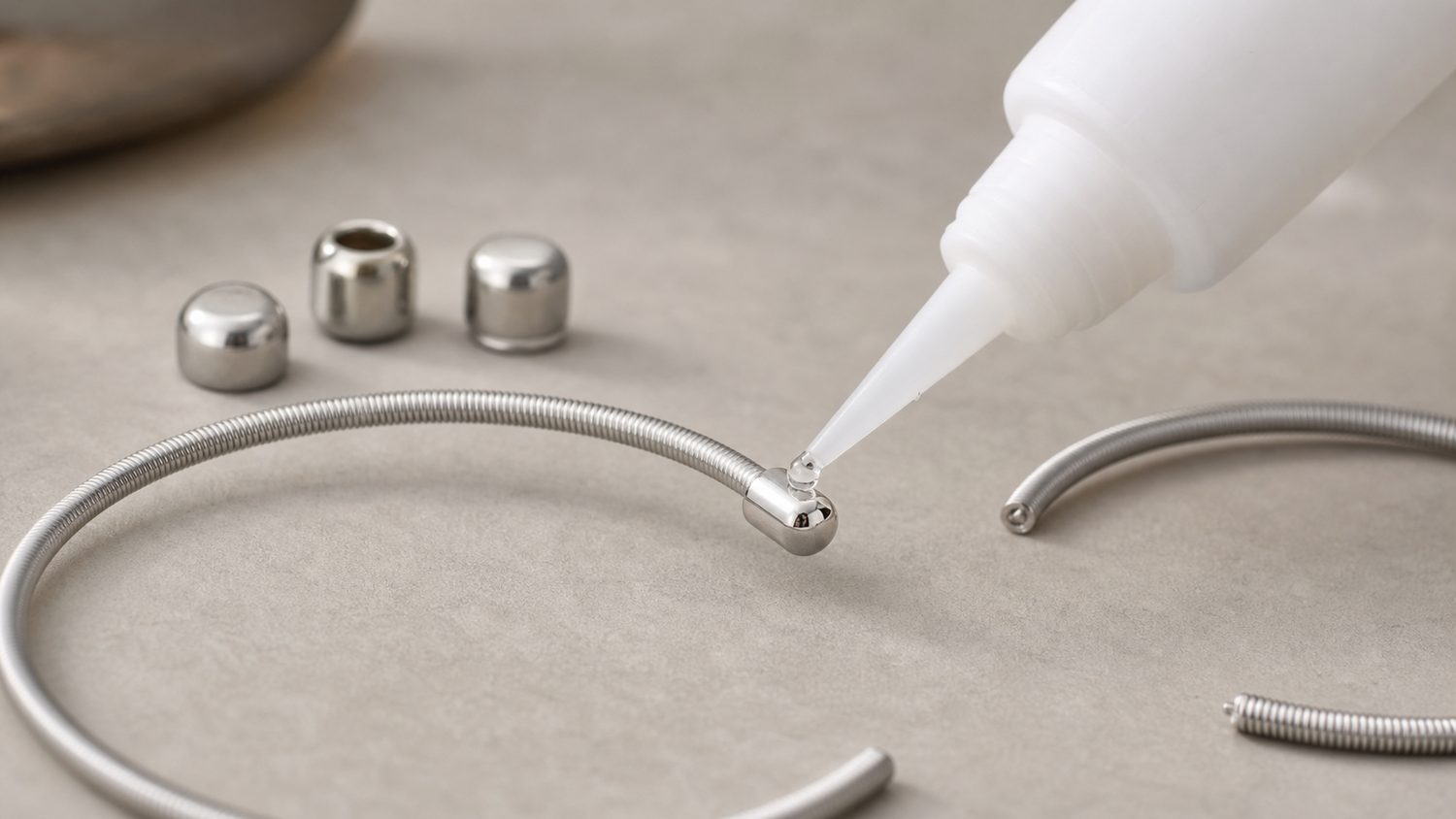
Memory wire is hardened steel, and it is smooth. Adhesives grip by keying into surface texture and by chemically bonding to the substrate, and a polished hardened steel wire offers very little of either. Worse, the joint is tiny — a butt joint between a wire end and a shallow cap — and it is loaded in exactly the direction adhesives are weakest, which is peel. Every time the bracelet is put on, the coil flexes and the cap is levered rather than pulled. No glue is strong in peel on smooth steel at that scale.
So there are two real fixes, and one of them is free.
Turn a loop instead. Round-nose pliers and about eight millimetres of spare wire produce a simple loop at each end that mechanically cannot pass through a bead. It is stronger than any adhesive joint, it will never fail, and you can hang a charm or a drop from it. Memory wire is hard, so you need pliers you do not mind marking and, ideally, memory wire shears — ordinary jewellery cutters are damaged by it.
If you do glue, change the geometry. Scuff the last few millimetres of wire with a file or abrasive paper so the adhesive has something to key into, use a cap with a deep recessed well rather than a shallow flat one, and use a gap-filling adhesive that can build a fillet inside that well rather than a thin runny one. That converts a butt joint into something closer to a socket, which is a joint adhesives are actually good at.
Ten picks below, adhesives and the tools that replace them.
| # | Product | Price | Where to buy |
|---|---|---|---|
| 1 | Gel Cyanoacrylate (Gap-Filling Super Glue) | $6-$15 | Amazon |
| 2 | Two-Part Epoxy (5-Minute or Slow Cure) | $8-$20 | Amazon |
| 3 | Jewellery-Specific Adhesive | $8-$18 | Amazon · eBay |
| 4 | Round-Nose Pliers | $10-$30 | Amazon · eBay |
| 5 | Memory Wire Shears | $15-$35 | Amazon · eBay |
| 6 | End Caps with a Deep Recessed Well | $8-$25 | Amazon |
| 7 | Needle Files or Abrasive Paper | $8-$20 | Amazon |
| 8 | Isopropyl Alcohol and Lint-Free Wipes | $6-$15 | Amazon · eBay |
| 9 | Third-Hand Tool or Helping Hands | $10-$30 | Amazon · eBay |
| 10 | Crimp Beads and Crimping Pliers | $12-$30 | Amazon |
The picks, in detail
Gel Cyanoacrylate (Gap-Filling Super Glue)
The best adhesive choice if you are gluing, and the gel formulation is the point. Thin cyanoacrylate wicks away and leaves almost nothing in the joint; a gel stays in the cap’s well and builds a fillet around the wire, which is what turns a butt joint into a socket. Scuff the wire first. Its weakness is exactly what the introduction describes — it is brittle and poor in peel, so a bracelet flexed daily will eventually work a cap loose however well it was applied.
- Gel consistency that stays in place
- Bonds metal to metal
- Sets in seconds, cures in minutes
- Precision applicator tips
- Fills the cap well rather than running away
- Fast enough to hold without clamping
- Cheap and available everywhere
- Brittle and weak in peel, which is how the joint is loaded
- Bonds skin instantly — work carefully
Two-Part Epoxy (5-Minute or Slow Cure)
Stronger than cyanoacrylate in the way that matters here, because cured epoxy is tougher and less brittle, so it tolerates the flexing that snaps a cyanoacrylate joint. Mix small quantities, work it into the cap’s well, seat the wire and leave it undisturbed. A slow-cure epoxy is stronger than a five-minute one and gives you time to position things — the five-minute version is a convenience trade rather than the better adhesive. Mix accurately; guessed ratios cure soft.
- Two-part resin and hardener
- 5-minute and slow-cure versions
- Tougher and less brittle than cyanoacrylate
- Gap filling
- Tolerates flexing far better than super glue
- Fills the cap well properly
- Slow-cure versions are stronger still
- Mixing ratio must be accurate or it cures soft
- Needs the piece left undisturbed while it sets
Jewellery-Specific Adhesive
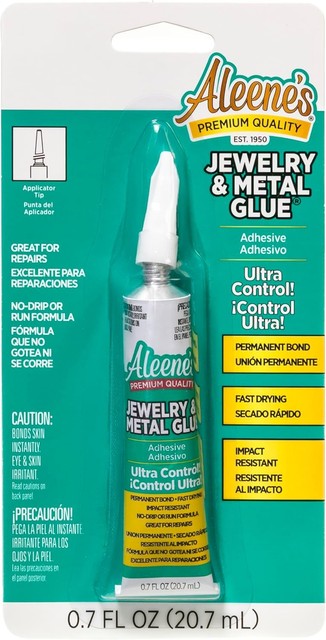
A flexible adhesive formulated for craft and jewellery use, and its virtue is the property cyanoacrylate lacks: it stays slightly flexible when cured, so the joint moves with the piece rather than cracking. That suits memory wire’s constant flexing better than a rigid bond does. The trade-offs are a long cure time — often overnight for full strength — and a solvent smell that means working in a ventilated space. Worth trying if brittle failures are what you have been getting.
- Remains flexible when cured
- Bonds metal, glass and stone
- Long cure time for full strength
- Precision applicator
- Flexibility suits a joint that moves constantly
- Bonds a range of jewellery materials
- Clear when cured
- Needs overnight for full strength
- Strong solvent smell — ventilate properly

Round-Nose Pliers
The tool that replaces glue entirely, and the answer this article keeps pointing at. About eight millimetres of spare wire at each end, gripped in the jaw and rolled, produces a simple loop that a bead physically cannot pass. It is mechanically stronger than any adhesive joint at this scale and it cannot fail with age. Memory wire is hard, so expect the pliers to mark — use a dedicated pair rather than your best ones, and choose a pair with a smooth taper so you can make consistent loop sizes.
- Smooth tapered round jaws
- Forms consistent loops
- Comfortable spring-loaded handles
- Jewellery-scale size
- A loop is stronger than any glued joint here
- Cannot fail with age or flexing
- Gives you somewhere to hang a charm or drop
- Memory wire marks the jaws — use a dedicated pair
- Takes a little practice for consistent loops
Memory Wire Shears
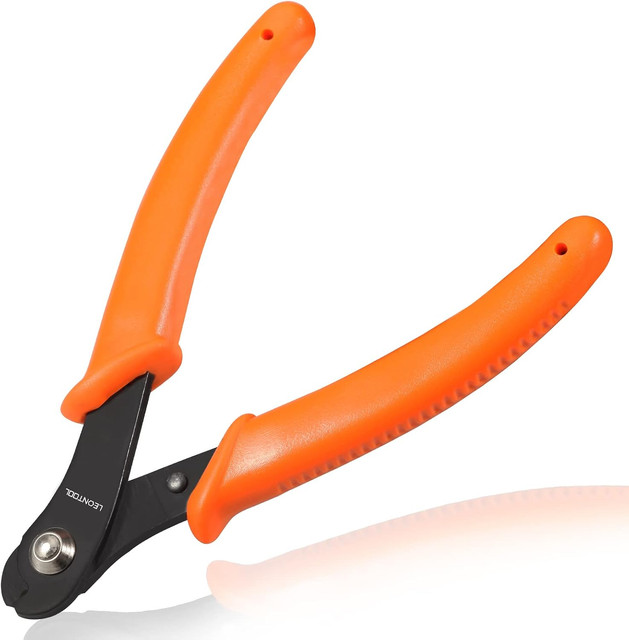
Non-negotiable if you work with memory wire at all. It is hardened steel and it will notch, chip or ruin ordinary jewellery side cutters in a few cuts — which is an expensive lesson people learn once. Memory wire shears have hardened jaws with a shearing rather than pinching action, designed for exactly this. Keep them for memory wire only. They also leave a cleaner end, which matters because a burred end does not seat properly in a cap and is uncomfortable against skin.
- Hardened shearing jaws
- Designed specifically for memory wire
- Cleaner cut than side cutters
- Comfortable handles
- Ordinary cutters are destroyed by memory wire
- Clean ends seat properly in caps
- Last for years on the right material
- Should be kept for memory wire only
- More expensive than ordinary cutters
End Caps with a Deep Recessed Well
The component choice that makes gluing work. A shallow flat-backed cap gives the adhesive a tiny butt joint; a cap with a deep drilled well lets the wire go in several millimetres and lets the adhesive build a fillet all around it. That is a socket joint rather than a butt joint, and it is the difference between a cap that holds and one that comes off. Check the well depth and the internal diameter against your wire gauge before buying a large quantity.
- Deep drilled recess rather than a flat back
- Internal diameter matched to wire gauge
- Plated or solid metal finishes
- Sold in packs
- Turns a weak butt joint into a strong socket joint
- Adhesive builds a fillet all round the wire
- The single most useful change if you glue
- Well depth is rarely stated — check before bulk buying
- Internal diameter must match the wire gauge
Needle Files or Abrasive Paper
The five-minute preparation step that determines whether any adhesive holds. Adhesives key into surface texture, and polished hardened steel has almost none — scuffing the last few millimetres of the wire with a fine needle file or abrasive paper gives it something to grip. Clean the wire afterwards with alcohol to remove the dust and any finger oils, and do not touch the scuffed section again before gluing. This step costs nothing and it does more than changing adhesive.
- Fine needle files or abrasive paper
- Used on the last few millimetres of wire
- Also deburrs the cut end
- Cheap sets
- Gives the adhesive something to key into
- Costs nothing and takes seconds
- Also removes the burr from cutting
- Wire must be cleaned of dust and oils afterwards
- Easy to skip, and it is the step that matters most

Isopropyl Alcohol and Lint-Free Wipes
The other half of the preparation. Memory wire arrives with manufacturing oil on it, and your fingers add more — both prevent an adhesive bonding to the metal underneath, which is one of the invisible reasons a joint that looked perfect fails a week later. Wipe the wire end with isopropyl alcohol after scuffing and before gluing, and handle it by the middle afterwards. This costs pennies and it removes a failure mode you cannot see.
- Isopropyl alcohol, 90% or higher
- Lint-free wipes or cotton buds
- Evaporates without residue
- Also cleans tools and work surfaces
- Removes the oils that silently prevent bonding
- Evaporates completely with no residue
- Very cheap and useful throughout the craft
- Must be done after scuffing, not before
- Flammable — keep away from heat

Third-Hand Tool or Helping Hands
Because glue needs the joint held still and undisturbed while it cures, and holding a bracelet steady by hand for five minutes is neither comfortable nor reliable. A small stand with adjustable clips holds the wire and the cap in position while the adhesive sets, so the joint is not being flexed as it cures — which is one of the more common reasons a joint is weak from the start. Cheap, and it makes a two-part epoxy practical.
- Adjustable articulated arms with clips
- Weighted base
- Some include a magnifier
- Rubber-tipped jaws on better versions
- Holds the joint undisturbed while it cures
- Makes slow-cure epoxy practical
- Frees both hands for the work
- Metal clips can mark plated findings
- Cheap arms will not hold a position
Crimp Beads and Crimping Pliers
A mechanical alternative worth knowing about. A crimp bead threaded onto the wire and squeezed flat with crimping pliers grips the wire by deformation rather than adhesion, and a properly crimped bead on memory wire will not come off. Used under an end cap, or on its own as the stop, it gives you a mechanical joint without needing to turn a loop — useful if the loop is not the look you want. Use proper crimping pliers rather than flat-nose ones, which flatten rather than fold.
- Crimp beads and tubes in several sizes
- Crimping pliers that fold rather than flatten
- Grips mechanically, not by adhesion
- Can be hidden under a cap
- Mechanical grip, so no adhesive failure mode
- Works where a loop is not the look you want
- Cheap and quick once you have the pliers
- Flat-nose pliers flatten rather than crimp properly
- Crimp size must match the wire gauge
Buying tips
- Turn a loop instead of gluing. Eight millimetres of spare wire and a pair of round-nose pliers produces a loop a bead physically cannot pass, and it is mechanically stronger than any adhesive joint at this scale. It will never fail with age, and it gives you somewhere to hang a charm. This is the fix, and it is free.
- If you glue, scuff and clean the wire first. Adhesives key into surface texture and hardened polished steel has almost none. A few seconds with a needle file on the last few millimetres, then a wipe with isopropyl alcohol to remove dust and finger oils, does more than changing to a stronger adhesive.
- Use caps with a deep recess, not flat backs. A shallow cap gives you a tiny butt joint, which is the weakest thing an adhesive can be asked to do. A deep drilled well lets the wire seat several millimetres in and lets the adhesive build a fillet all round it — a socket joint, which adhesives are genuinely good at.
- Use gel, not thin, cyanoacrylate. Thin super glue wicks away from the joint and leaves almost nothing in it. A gel stays in the cap’s well where it can do some good. If you have been using the thin liquid kind and wondering why caps come off, that alone may be the answer.
- Buy memory wire shears, and keep them for memory wire. It is hardened steel and it will notch or ruin ordinary jewellery side cutters within a few cuts. Shears designed for it cut cleanly and last for years. A clean end also seats properly in a cap and does not scratch the wearer, which a burred end does.
- Do not cut memory wire to length by uncoiling it flat. Let it keep its coil and count turns instead — three coils for a bracelet is typical. Uncoiling and re-forming it works the steel and it never returns to quite the same shape. Cut from the coil with the shears and leave the extra you need for loops.
- Let epoxy cure fully before wearing the piece. Five-minute epoxy sets in five minutes and reaches full strength over several hours, and a joint flexed while it is still curing is permanently weakened. Put it in a helping-hands stand, leave it overnight, and then test it deliberately before giving it to anyone.
- Test every piece before it leaves your hands. Pull firmly on each end cap, and flex the bracelet as it would be flexed being put on. A cap that comes off in your workshop is a small annoyance; one that comes off on someone’s wrist loses all the beads. Building the test into your routine is what turns this from a recurring problem into a solved one.
As an Amazon Associate and eBay Partner, toptenpick.com earns from qualifying purchases. Prices and availability are subject to change.