

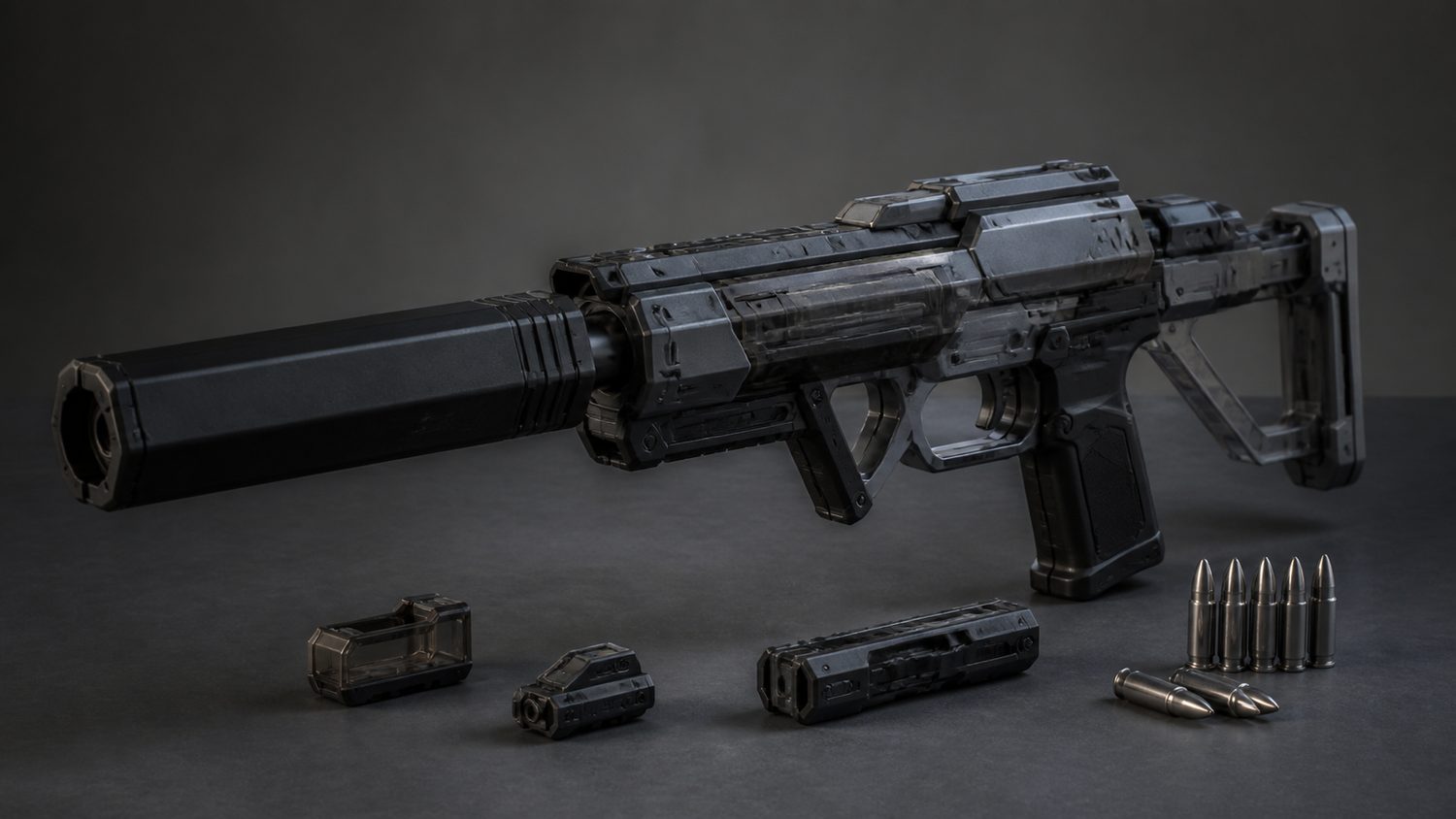
Silenced Specter is a game-build question, not a product purchase. A useful roll begins with the activity and the role the weapon has in the loadout. Before comparing individual perks, establish whether the build needs reliable add clear, sustained damage into tougher targets, quick handling for swapping from a special weapon, or a low-risk option for learning an encounter. A silenced weapon often feels naturally suited to a stealthy or controlled playstyle, but the perk combination still has to support the range, ammo economy and timing of the activity.
Read the weapon frame before the perk columns
Start with the base behavior. Rate of fire, magazine size, reload pattern, recoil direction, range falloff and damage profile determine what a perk can realistically improve. A fast weapon with a small magazine may value a reload or magazine-extension perk more than a damage bonus that arrives after the magazine is already empty. A slower, harder-hitting weapon can often gain more from consistency and handling. Treat the frame as the foundation and the perks as modifiers; no perk name can make a weapon perform outside its intended engagement range.
Test the weapon in the type of content you actually play. A build that feels excellent while clearing weak enemies in a patrol zone can be awkward in a timed activity where targets appear at longer range and ammunition matters. Likewise, a perk that has a dramatic effect in player-versus-player combat may contribute little to sustained player-versus-environment damage. Keep a short note of the engagement distances where shots feel reliable and where recoil or falloff begins to undermine the result. That turns a vague impression into a repeatable comparison.
Define the role before choosing a first-column perk
First-column choices usually affect consistency, reloads, magazine flow, ammo return or handling. For an add-clear roll, a reload or magazine perk can keep the weapon active through a wave rather than producing a pause after every few targets. For a cleanup tool, handling and ready speed can matter most. For damage, choose a first-column effect that sustains the damage window.
Do not evaluate a reload perk only by its headline speed. Consider when the reload happens. If the perk requires a kill, a manual action or a short cooldown, ask whether that trigger is available against the enemies you intend to fight. A perk that is outstanding against dense groups can be nearly invisible against a lone durable target. Magazine perks deserve the same scrutiny: more rounds can be valuable, but only if the larger magazine does not impose a reload, handling or stability trade-off that makes the weapon less dependable.
Second-column effects need a realistic trigger
Damage, crowd-control and ability-synergy perks are strongest when their trigger matches the activity. A kill-triggered effect is naturally comfortable in routine add clear. A precision-triggered effect rewards deliberate aim and can be better in encounters where precision targets are common. An ability-linked effect is only reliable when the surrounding build supplies that ability at a steady cadence. Avoid calling a perk universally best merely because its damage number is attractive. A smaller bonus that is active in most engagements often contributes more than a large bonus that is active briefly or rarely.
For a silenced playstyle, control can be as valuable as raw damage. Effects that improve stability, reduce flinch, extend range consistency or allow a quick disengagement can make the weapon easier to use in difficult content. Crowd-control effects can also create breathing room, but assess whether they interfere with teammates, obscure targets or require a specific final blow. The practical question is simple: after the perk activates, does it make the next few seconds of play easier, safer or faster?
Barrels, magazines and masterwork choices
Small stat choices should repair a real weakness rather than chase a perfect-looking inventory screen. If recoil is already comfortable, extra stability may have less value than range or handling. If the weapon is used inside a short lane, range may be less important than reload speed. Magazine options should be tested with the selected perks because a larger magazine can change how often a damage or reload effect is triggered. When a weapon has a masterwork or enhancement path, use it to reinforce the job the weapon already performs well rather than attempting to make it cover every role at once.
Perk text, tuning and trait pools can change with patches and seasons. Use the in-game inspection screen as the source of truth and test one change at a time.
Build a roll around the rest of the loadout
A primary weapon does not need to solve every problem. If another weapon already covers long-range damage, the Silenced Specter roll can focus on close and medium consistency. If the loadout lacks a way to clear groups quickly, a crowd-control roll may create more total value. Consider ammunition economy, champion or shield requirements when those systems apply, and leave room for the weapon types required by the activity. The most successful build is usually a set of complementary tools, not three weapons attempting the identical role.
For group content, pay attention to the effect of a perk on the whole fireteam. Some combinations are excellent for a solo loop but offer little when teammates secure most final blows. In those cases, neutral consistency perks or effects triggered by hits can be more dependable. For competitive modes, favor traits that work at the range and time-to-kill conditions you can consistently create, rather than a reward that only appears after a winning streak has already begun.
A simple way to keep and compare drops
When a new roll drops, label it by role instead of trying to rank every variation on a single list. One can be an add-clear roll, another a general-purpose roll and another a handling-focused competitive roll. Dismantle duplicates only after checking the full perk combination, the magazine and any version-specific enhancement options. Keeping a short test note prevents a familiar mistake: deleting the roll that felt ordinary in a low-level activity but becomes reliable in a higher-pressure one.
There is no permanent universal best roll. The best one is the version whose base stats, perk triggers and surrounding build all line up with the activity you play today. Read the current in-game perk text, test it in the right setting and choose consistency over a theoretical combination that rarely turns on. That gives Silenced Specter a clear job in the loadout and makes future updates easier to evaluate.