

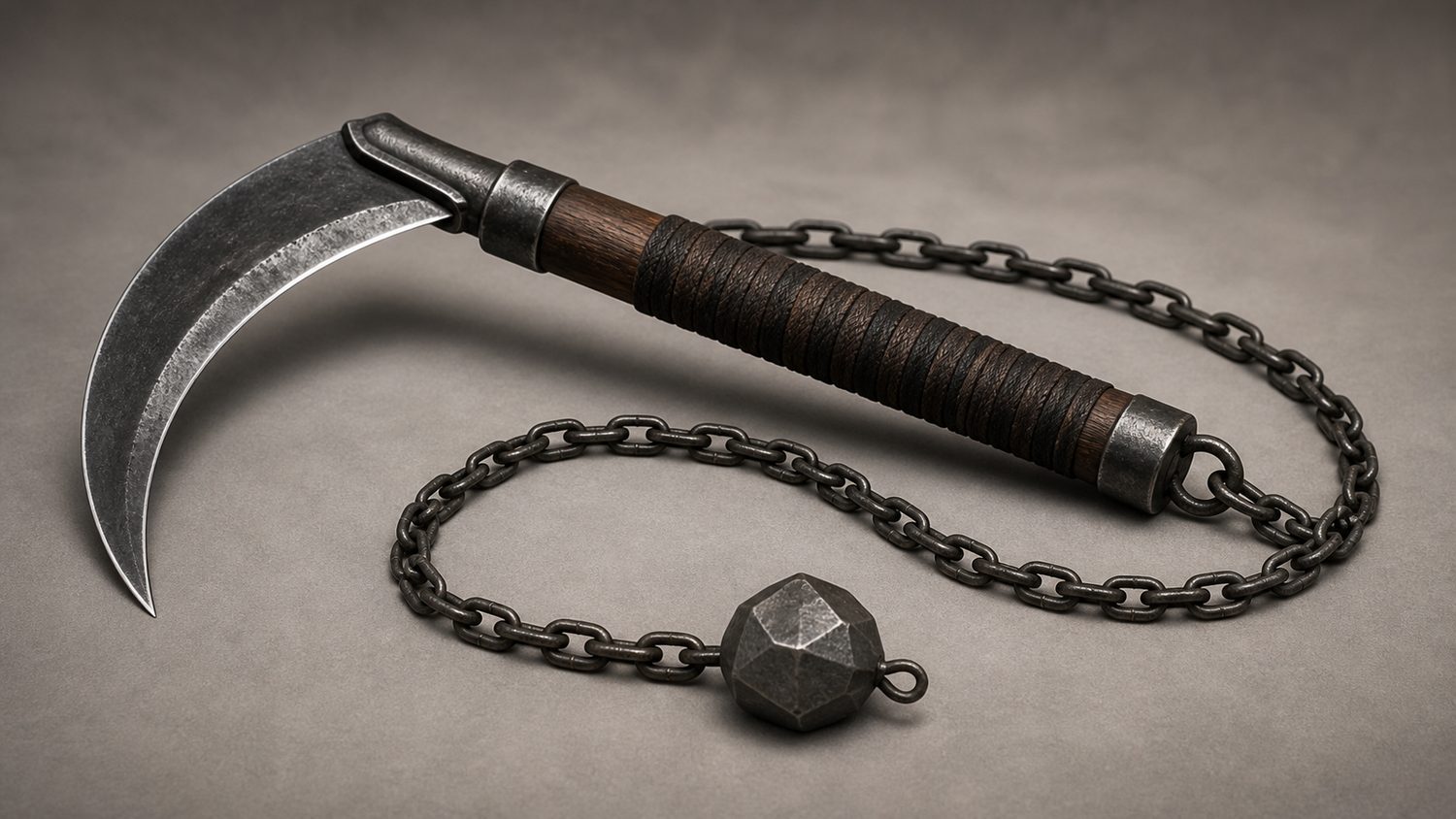
In the original Nioh, Dexterity is the main stat to inspect first for a Kusarigama, with Skill as a secondary scaling stat on the weapon data for Nioh’s Kusarigama. That is not a reason to dump every early level into damage. Nioh’s first playthrough asks for equipment requirements, Ki management, survivability, Ninja capacity, and weapon skills as well as attack. The useful build is a Kusarigama-led character that can wear the intended armor and still execute clean stance and Ki-Pulse play.
This advice is scoped to the first Nioh, including Complete Edition. Do not carry later Nioh 2 mechanics into it. The official Complete Edition manual says weapon skill points unlock active and passive skills for each weapon, alongside Ninja and Onmyo skills. It supports building around the whole toolset instead of treating a single displayed attack number as the only goal.
Dexterity: the main Kusarigama and Ninja stat
Weapon data for Nioh’s Kusarigama lists Dexterity at B+ scaling, Skill at C+, and Body at D+. Dexterity is therefore the most direct attribute to check when a player wants the weapon’s normal damage scaling, and it also fits a Ninja-oriented playstyle. In practice, that means Dexterity supports a coherent character plan: Kusarigama attacks plus Ninja tools rather than a weapon choice that pulls the build in two unrelated directions.
Raise Dexterity steadily, but inspect the level-up preview and weapon card. If a point provides little immediate attack, it may still be useful for Ninja capacity or a later requirement; if it does not serve the current build, use the point elsewhere. The first campaign rewards a balanced set of usable tools more than a fragile character that has neglected every requirement for a marginal damage gain.
Skill and Body: supporting the weapon and your equipment
Skill is the next Kusarigama scaling stat shown for the named weapon, so it is a sensible secondary investment once Dexterity, armor needs, and essential utility are addressed. Skill also matters for some light-armor requirements, which makes it useful when the intended armor and weapon direction overlap. Body appears as a weaker scaling stat on this weapon example, but it should not be treated as worthless: health and equipment requirements can be more important than a small theoretical attack increase while learning a mission.
Choose armor based on what you can actually wear and how it affects movement and Ki, then meet its requirements. Do not equip a heavier piece only because its defence number is higher if it makes the build clumsy or leaves required attributes ignored. Test the setup at a shrine and in a safe mission area before committing materials.
Ki, stances, and weapon skills
The Kusarigama is not just a scaling exercise. The official manual distinguishes weapon active and passive skills from Ninja and Onmyo skills, so spend points on actions you will use. Learn a small number of moves, practise them in low-risk encounters, and connect attacks to Ki Pulse rather than buying every skill immediately. A player who can recover Ki and change range deliberately will gain more from the weapon than one who has a long skill list but no consistent sequence.
Use stances to solve problems. A faster approach can help create an opening, while a more committed attack should be used when the enemy is vulnerable and there is enough Ki to recover. Watch enemy responses instead of repeating the same chain until empty. If the target blocks, dodges, or starts an attack, adjust position and recover rather than forcing another swing.
Starter allocation priorities
- Meet equipment requirements. Build the armor and guardian-spirit setup you can use effectively.
- Raise Dexterity consistently. It is the leading Kusarigama scaling stat on the cited weapon and supports Ninja capacity.
- Add Skill where it supports armor or the secondary scaling plan.
- Protect Ki and survivability. A damage number is not helpful when a player cannot finish a safe sequence.
- Buy usable weapon and Ninja skills. Practise them instead of spending points only for passives.
Review the build at each new weapon
Whenever a better Kusarigama drops, compare its actual scaling letters, requirements, and special effects before changing level priorities. The cited Nioh weapon data is an example of the usual Dexterity-led pattern, not a substitute for the weapon in your inventory. This habit prevents a build from being locked to a guide when the gear has changed.
Common mistakes
Do not assume every Kusarigama has identical affixes or that a late-game discussion applies to the first playthrough. Check the actual weapon card. Do not confuse Nioh 1 with Nioh 2 when reading build advice. Do not let a recommendation for high Dexterity become a reason to ignore armor requirements, Ki management, or the skills that make the weapon enjoyable.
The best Kusarigama stats in Nioh are therefore a priority order, not a one-number answer: build a functional character, make Dexterity the main damage and Ninja focus, use Skill as the secondary weapon support, and keep enough of the rest of the character intact to survive and learn the game.