

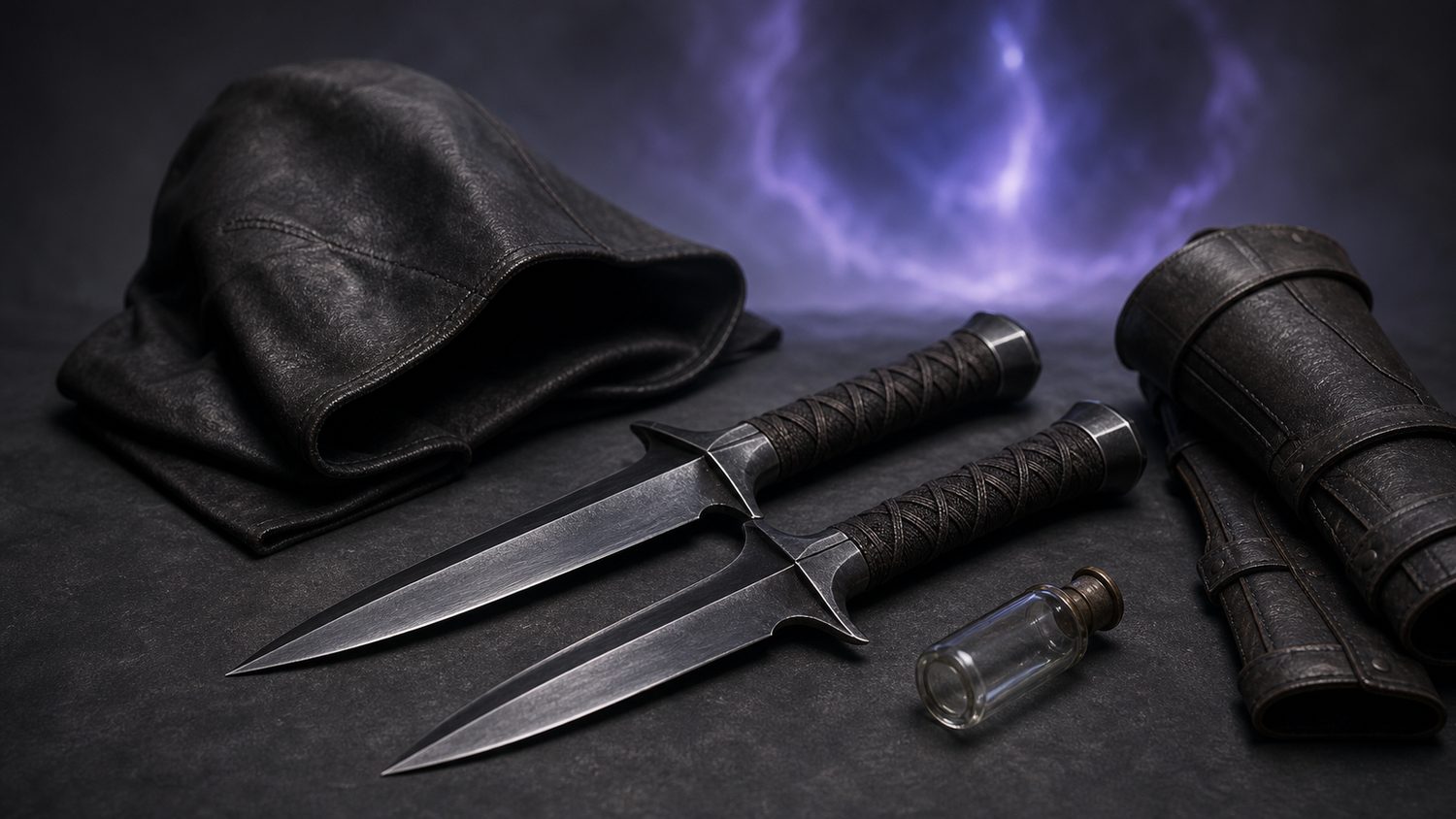
There is no single best Rogue spec in RIFT that can be named responsibly without first saying what the character needs to do. The Rogue Calling covers damage, support, healing, and tanking through its Souls. Marksman, Assassin, Bladedancer, Nightblade, Ranger, and Saboteur are presented by the official game guide as damage Souls; Bard and Tactician are support choices; Physician is a support/healer; and Riftstalker is a support/tank. That breadth is the Rogue’s strength, but it makes old one-line rankings unreliable.
RIFT is still operating: the official news page carried shard-restart and event notices in September 2026. Its current patch notes, however, should be checked before treating any old forum build or damage table as a present-day answer. The official recent notes do not provide a Rogue DPS ranking. This guide therefore chooses a best role, explains what the relevant Soul is designed to do, and leaves exact point allocations, ability bars, and raid rankings to the live in-game tooltips and the most recent official changes.
Best all-purpose starting choice: Marksman for ranged DPS
Marksman is the clearest first Rogue Soul for a player who wants to deal damage from range. RIFT describes it as a sharpshooter built around hit-and-run attacks and volleys. That makes the role easy to understand before a player knows every encounter: stay positioned, keep attacking rather than forcing melee contact, and learn how the Soul’s tools feel against ordinary quest enemies and moving targets.
Marksman is a good answer when “best” means a straightforward damage-focused Rogue for solo leveling, open-world play, or a player who simply prefers a bow-and-gun style. It is not proof that Marksman wins every current damage meter. Encounter movement, the other Souls selected in the role, gear, player execution, and later balance changes can all alter that comparison. Use it because you want ranged damage, then inspect the Soul Tree and the current character sheet instead of copying a years-old allocation.
Best stealth-flavored melee choice: Assassin
Choose Assassin when the attraction of Rogue is close-range damage with stealth and poisons. The official description calls it a DPS Soul whose user works from the shadows with twin poisoned blades. That is enough to identify its lane: it suits the player who wants an aggressive melee identity and is comfortable being close to the enemy rather than attacking from a distance.
The limit is practical, not a claim about its ceiling. Melee positioning asks more of the player whenever an encounter punishes standing near a target or demands frequent movement. An Assassin role can still be the right choice, but it should be evaluated in the content being played. Try its supplied Purpose or a saved role, read the current abilities, and decide whether the proximity and timing are enjoyable. Do not assume that a stealth theme by itself makes it the best solo, group, or PvP Soul.
Best mobile melee alternative: Bladedancer
Bladedancer is another DPS option for the player who wants a melee Rogue but does not want Assassin’s particular shadow-and-poison fantasy. RIFT describes Bladedancer through grace, agility, acrobatics, and precise strikes. It is the sensible starting point for someone drawn to a fast, blade-focused combat style.
This is a choice of feel and assignment rather than a promise of superior sustained damage. Compare it with Assassin in the live Soul Tree: look at the abilities the game currently offers, whether the actions make sense on your preferred keys, and whether the character will be used mostly alone or beside a group. If one style keeps you engaged and lets you perform its actions consistently, it is usually more useful than a nominally fashionable build you dislike playing.
Best group-support choice: Bard
Bard is the Rogue answer when a group needs support rather than another damage specialist. The official class guide calls Bard a support class and says it heals allies and weakens foes through codas, cadenzas, fanfares, and anthems. It also calls the Soul a capable solo option, which matters to a player who does not want to maintain a completely separate character for group time.
Pick Bard when you enjoy watching party needs, helping allies survive, and contributing more than direct damage. Its weakness is expectation management: support is a role with a job, so a group may expect you to use the tools the content requires rather than play it as an ordinary DPS setup. Confirm the group’s need before queuing or joining difficult content, and keep a damage-oriented saved role available for times when support is not wanted.
Best Rogue healer: Physician
Physician is the more direct choice for a Rogue who wants healing and shielding. RIFT identifies Physician as a Dream Soul Pack option and describes it as an alchemical archer using ranged abilities to heal and shield allies. The returning-player guide likewise labels its role as healer. That gives the Rogue a distinct group function without abandoning a ranged presentation.
Access matters here. Because the official guide labels Physician a Dream Soul Pack Soul, verify that it is available on the account before planning around it. Once it is, treat it as a healing role first. Read its current spells and any current official notices, then practice in appropriate group content rather than assuming a support DPS setup can substitute for a designated healer.
Best Rogue tank choice: Riftstalker
Riftstalker is the Rogue Soul to consider when the group needs a tank. The official guide labels it support/tank and describes a plane-walker that shifts around the battlefield and withstands heavy blows. This makes it the correct starting category for a player who wants the Rogue Calling’s defensive role, not a side recommendation for a damage build.
Tanking has a different success test from damage. The useful questions are whether you can keep enemies controlled, survive the incoming pressure, understand the encounter, and communicate with the group. Learn the current in-game abilities and begin in content appropriate to the character’s equipment. Do not select Riftstalker because a historical guide calls it a high-DPS hybrid; select it because you want to perform the tank assignment.
Other valid role-first choices
Nightblade is an official DPS Soul for players who want magic-infused blades. Ranger is a DPS Soul built around bow, blade, and animal companions. Saboteur is a DPS Soul using explosives to control the battlefield. Tactician, a Storm Soul Pack option, is a support Soul that uses magitech cannons and engines to heal and aid allies. None needs to be dismissed simply because it is absent from an old “best Rogue spec” list. They answer different preferences and group jobs.
How to choose without chasing an obsolete build
- Name the job first. Choose ranged damage, melee damage, support, healing, or tanking before comparing Souls.
- Use the game’s flexible role system. RIFT lets a character save combinations of Souls in Roles and switch among them, so a Rogue can keep separate setups for different jobs.
- Start with a Purpose if needed. The game provides premade Soul combinations as learning paths; they are a safer first step than an unverified copied build.
- Check access. Physician and Tactician are identified by RIFT as pack Souls, so confirm availability on the account.
- Verify live details. Before investing heavily, compare current in-game tooltips with the latest official patch notes. A role description is stable guidance; an exact rotation or numerical ranking is not.
The best Rogue spec for RIFT is therefore the one matched to the job you intend to fill: Marksman for a simple ranged-DPS starting point, Assassin or Bladedancer for different melee styles, Bard or Tactician for support, Physician for healing, and Riftstalker for tanking. Keep more than one saved role if you enjoy the Calling’s flexibility, and let current in-game information settle any performance question that an old build guide cannot.