

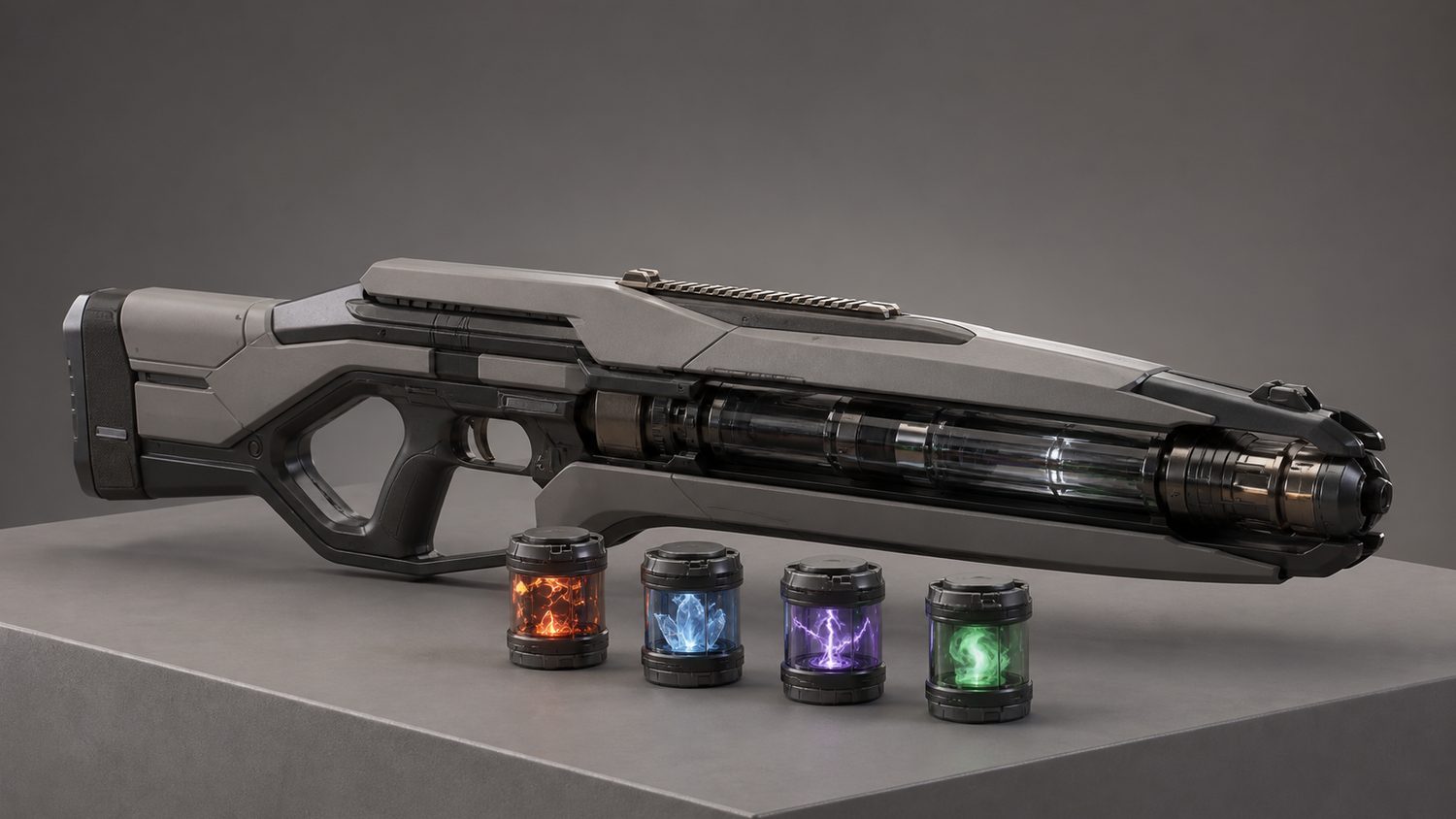
There is no single best element for every Kuva weapon. The useful choice depends on the weapon’s base damage, the elemental combinations produced by its installed mods, the enemy or activity being built for, and whether the weapon is intended for direct damage, status effects, or a specific squad role. The old advice to farm one progenitor element for every weapon is also less permanent than it once was: current Adversary-weapon systems provide more than one way to change or improve the bonus later.
Make the initial choice deliberately, but do not abandon a weapon simply because its first bonus is imperfect. First decide what the finished loadout needs to do, then check the actual mod configuration and damage display. A progenitor bonus should support that configuration instead of being treated as a universal tier list.
What determines a Kuva weapon’s element
The Warframe used when creating a Kuva Lich is the progenitor Warframe. The progenitor determines the elemental damage bonus on the resulting Kuva weapon. The current set of possible bonus types is Impact, Heat, Cold, Electricity, Toxin, Magnetic, and Radiation. The choice is made when the Kuva Larvling is turned into a Lich; the same frame does not need to be used during later Lich missions.
That system is a reason to plan before a Mercy kill, not a reason to memorize every frame. Consult the current progenitor table and choose a frame associated with the element the build calls for. For example, the current reference lists Saryn among Toxin progenitors, Mag among Magnetic progenitors, Ember among Heat progenitors, Volt among Electricity progenitors, Frost among Cold progenitors, and Ash among Radiation progenitors. Primed and Umbra versions use the same element as their base Warframe.
Start with the weapon, then the build
Ask four questions before choosing an element. What are the weapon’s base damage types? Which mod elements will already be installed? Which combined damage type is the build trying to create? Is the weapon expected to apply many status effects, deliver a few heavy hits, or solve a particular enemy problem? Those answers can point in different directions for different Kuva weapons.
A fast status-oriented weapon may value a bonus that fits its intended status distribution. A slow, hard-hitting weapon may care more about the final elemental combination and how much of the bonus remains relevant on each hit. A weapon built for one mission type can reasonably use a different element from the same weapon built for another. The right comparison is therefore between two completed mod configurations, not between isolated element names.
Examples of conditional choices
Toxin when the intended configuration needs Toxin
Toxin is a sensible target when the planned build specifically needs a Toxin contribution. It can be attractive because elemental mods combine according to their placement and the weapon’s innate elements, so the bonus may help reach a desired final damage combination with fewer compromises. Before farming for it, arrange the actual elemental mods in the Arsenal and inspect the displayed result. A Toxin bonus is not automatically correct if it produces an unwanted combination or crowds out a damage type the weapon needs.
Heat, Cold, Electricity, Magnetic, or Radiation for a stated job
The other available bonuses should be chosen for a reason that can be named. Heat can suit a configuration designed around Heat contribution; Cold or Electricity can suit a different planned combination; Magnetic and Radiation may be selected when their bonus type fits the weapon’s intended matchup or status plan. None of those statements means the same element is best on every gun. The reliable test is whether the finished build produces the desired damage types and status weighting after all mods are installed.
A Kuva Bramma illustrates the decision process without requiring a universal answer. It has an innate bonus selected from the progenitor system, and the player should compare the complete bow build they intend to use: one configuration may prefer a Toxin contribution, while another may need a different bonus to preserve a chosen elemental outcome. The decision belongs to that build, not to the weapon name alone.
Valence Fusion: the duplicate route
Valence Fusion lets a player combine duplicate Kuva weapons. Official patch notes explain that it can raise the innate damage bonus and that the weapon selected as the starting weapon keeps its investments. Later official changes made the element choice explicit when fusing two eligible duplicates: the player can choose which of the available elements to keep while the numerical bonus combines under the system’s rules.
This makes a duplicate more useful than a disappointment. If a weapon has an element you want but a lower bonus, or a stronger percentage in an element you do not want, Valence Fusion can be part of a longer improvement plan. It does consume the donor weapon, so confirm which weapon is being kept and which one is being used as the donor before accepting the action.
Elemental Vice and Valence Override
The current system also includes Elemental Vice for Rank 40 Adversary weapons, including Kuva weapons. Installing it unlocks Valence Override, which lets the player swap the damage type of the Valence bonus among the seven available progenitor elements. The bonus percentage remains the same when the damage type changes. This is the important modern answer to a player who already owns a well-invested weapon with the wrong element: the element can be changed later once the Rank 40 requirement is met.
Elemental Vice does not eliminate build decisions. It makes them reversible. A player can use the weapon, learn which configuration they prefer, and then change the bonus type rather than treating the original progenitor as a permanent verdict. The rank requirement also means a new weapon still benefits from a considered first choice.
A practical decision checklist
- Identify the exact Kuva weapon. Do not copy an element recommendation from a different weapon class.
- Build the mod layout first. Check which elements combine and what the Arsenal shows after mod order is applied.
- Name the target activity. General missions, status-focused setups, and specialized enemy plans can want different results.
- Choose a matching progenitor frame. Use the current progenitor table rather than an old chart.
- Keep improvement routes in mind. Valence Fusion can improve a duplicate path, while Elemental Vice at Rank 40 makes the bonus type freely swappable.
The best element for a Kuva weapon is the one that makes its finished build do the job you actually want. Treat the progenitor bonus as one component of a configurable weapon, verify the final damage display, and use Valence Fusion or Elemental Vice when a later build calls for a different answer.