

As an Amazon Associate and eBay Partner, toptenpick.com earns from qualifying purchases. Prices and availability are subject to change.
Nori is graded on how crisp it stays, how cleanly it wraps without cracking, and how much umami flavor it actually has versus tasting like plain dried seaweed — and the grade varies a lot by brand and country of origin (Korea, Japan, and China are the three main sources). Here are six roasted nori brands that actually show up in home-sushi and Asian-grocery buying guides, from everyday options to the higher grades serious home cooks reach for.
| # | Product | Price | Where to buy |
|---|---|---|---|
| 1 | Yamamotoyama Original Roasted Sushi Nori | $8-$15 (50 sheets) | Amazon · eBay |
| 2 | Nagai Nori Roasted Nori | $8-$14 (50 sheets) | Amazon · eBay |
| 3 | Daechun (Choi’s) Roasted Seaweed | $6-$12 (50 sheets) | Amazon · eBay |
| 4 | Kimnori Organic Roasted Nori | $10-$16 (50 sheets) | Amazon · eBay |
| 5 | Hime Roasted Seaweed | $5-$10 (50 sheets) | Amazon · eBay |
| 6 | GimMe Organic Roasted Seaweed Sheets | $6-$11 (50 sheets) | Amazon · eBay |
The picks, in detail

Yamamotoyama Original Roasted Sushi Nori
A long-established Japanese-American brand with tiered sourcing — Original from China, Silver and Gold from Korea, and a Japan-sourced Special Reserve as their top grade — so you can move up in quality within the same brand.
- Multiple quality tiers within one brand line
- Standard 50-sheet roasted nori packs
- Easy to move up a grade without switching brands
- Widely available at Asian grocers and online
- Entry-tier Original nori is noticeably lower grade than their Gold/Special Reserve
Nagai Nori Roasted Nori
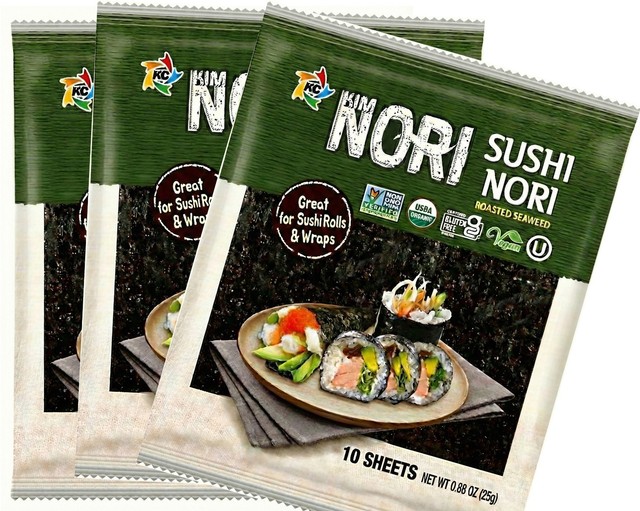
Cited repeatedly as tasting the closest to nori eaten fresh in Asia — crisp dry, melting soft once it hits a wrapped roll, particularly recommended for temaki (hand rolls).
- Crisp-to-soft texture profile suited to hand rolls
- Frequently called out as closest to what you’d get at a Japanese sushi counter
- Less mainstream distribution than Yamamotoyama

Daechun (Choi’s) Roasted Seaweed
A Korean gold-grade nori brand known for rich umami flavor — a step up from everyday nori without moving into the priciest Japan-sourced tiers.
- Gold-grade Korean sourcing
- Strong umami flavor for the price tier
- Widely stocked at Korean/Asian grocers
- Korean-grade nori can run slightly thinner than some Japanese sheets — fine for rolling, less ideal for hand rolls held a long time
Kimnori Organic Roasted Nori
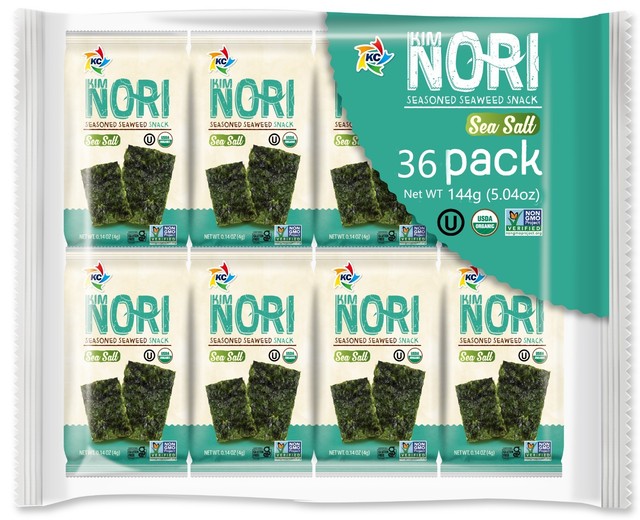
Roasted and packed in California from 100% USDA Organic seaweed with no additives — the pick if you specifically want an organic-certified, domestically packed sheet.
- USDA Organic certified
- No additives
- Double-roasted for crispness
- USDA Organic certification
- Packed in the US, shorter supply chain than imported-only brands
- Premium pricing versus standard Korean/Chinese-sourced nori
Hime Roasted Seaweed
A common grocery-aisle nori brand that gives homemade rolls a restaurant-like appearance — a reliable, easy-to-find everyday choice.
- Standard roasted sushi-nori sheet format
- Easy to find at most Asian grocery chains
- Consistent everyday quality
- Not a specialty/premium grade — fine for daily use, not the pick for a special occasion roll

GimMe Organic Roasted Seaweed Sheets
Better known for its seaweed snack packs, but GimMe’s nori sheets are a genuine sushi-wrapping option too — a good pick if you already buy their snacks and want one brand for both.
- Organic sourcing
- Same brand family as GimMe’s seaweed snack line
- Organic option at a more accessible price than Kimnori
- One brand for both snacking and sushi-wrapping nori
- Less specialized for sushi specifically than dedicated sushi-nori brands
Buying tips
- Country of origin is a real quality signal, not just marketing — Japan-sourced tiers generally grade highest, Korean gold-grade nori next, with China-sourced entry tiers being the most variable.
- For hand rolls (temaki) eaten immediately, prioritize crispness (Nagai Nori, Yamamotoyama’s higher tiers); for rolls that sit a little before serving, a slightly thicker sheet holds up better against moisture.
- Store opened packs with a fresh desiccant packet and reseal tightly — nori’s biggest failure mode is going soft/chewy from ambient humidity, not aging out.
As an Amazon Associate and eBay Partner, toptenpick.com earns from qualifying purchases. Prices and availability are subject to change.