

As an Amazon Associate and eBay Partner, toptenpick.com earns from qualifying purchases. Prices and availability are subject to change.
If headphones hurt with piercings, the problem is almost never the headphones being bad — it is a shallow earcup. Cartilage piercings sit on the outer ear: the helix, the industrial bar spanning it, the conch, the tragus and the daith. A cup with less than about 20 mm of internal depth presses the earcup padding straight onto that jewellery, and no amount of soft padding fixes a cavity that is too shallow to clear the bar in the first place. So the spec to shop on is internal earcup depth, followed by clamping force and then weight. Pads around 25–30 mm of filled height, with a clear air gap above the driver mesh, let jewellery sit inside the cup untouched. The ten below are grouped by how they solve it: deep cups, low clamp, or avoiding the ear entirely.
| # | Product | Price | Where to buy |
|---|---|---|---|
| 1 | Bose QuietComfort Ultra Headphones | $350–$430 | Amazon · eBay |
| 2 | Sony WH-CH720N | $90–$150 | Amazon · eBay |
| 3 | Sennheiser HD 599 | $150–$200 | Amazon · eBay |
| 4 | Philips SHP9500 | $70–$110 | Amazon · eBay |
| 5 | Shokz OpenRun Pro 2 | $150–$190 | Amazon · eBay |
| 6 | AKG K371 | $130–$180 | Amazon · eBay |
| 7 | Audio-Technica ATH-R70x | $280–$350 | Amazon · eBay |
| 8 | SteelSeries Arctis Nova 7 | $130–$180 | Amazon · eBay |
| 9 | Beyerdynamic DT 990 Pro | $130–$180 | Amazon · eBay |
| 10 | Sony WH-1000XM5 | $300–$400 | Amazon · eBay |
The picks, in detail

Bose QuietComfort Ultra Headphones
The comfort benchmark, and the pair most often named by people with multiple piercings. The cups are deep and the clamping force is unusually gentle for a noise-cancelling headphone, which is the harder combination to find — most active noise cancelling designs clamp hard to seal. Owners with several piercings report four-hour sessions without pressure discomfort.
- deep, plush earcup padding
- notably low clamping force for an ANC design
- active noise cancelling with adjustable modes
- folds for transport
- Bluetooth with multipoint
- gentle clamp combined with genuinely deep cups
- long sessions without hot spots
- excellent noise cancelling
- among the most expensive options here
- soft pads compress over a couple of years and need replacing

Sony WH-CH720N
The value answer, and a genuinely clever one for piercings. At around 192 grams it is one of the lightest noise-cancelling headphones made, and light weight is what lets a headband hold position without clamping — the pads keep jewellery clear without squeezing the ear to stay on your head.
- approximately 192 g
- deep earcup padding for the price
- active noise cancelling
- around 35 hours battery
- Bluetooth multipoint
- extremely light, so clamp can stay gentle
- deep pads relative to its price class
- the cheapest ANC pair here that genuinely works with piercings
- plastic build feels less premium
- noise cancelling is a clear step below Bose or the XM series
Sennheiser HD 599
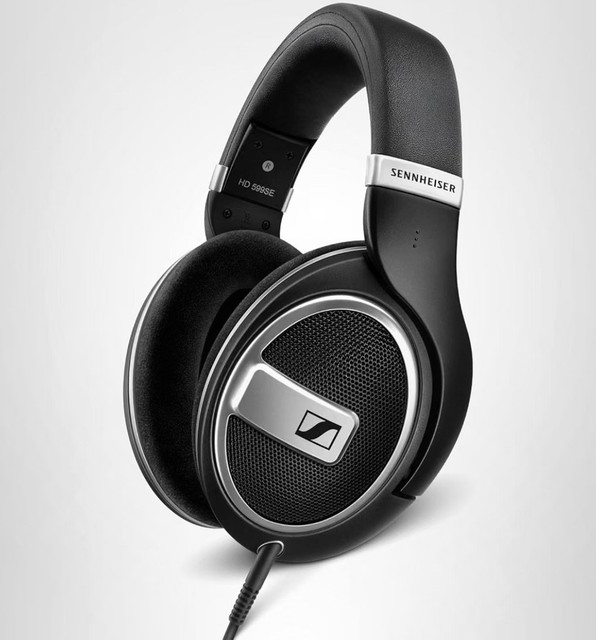
The open-back pick, and the classic recommendation for anyone whose ears hurt in normal headphones. Large velour-covered pads and a genuinely roomy cavity mean the ear sits inside the cup rather than under it, and the clamp is loose by design. If you listen at a desk rather than on a train, this solves the problem more completely than any closed headphone.
- open-back design
- large velour earpads with a deep cavity
- low clamping force
- replaceable pads and cable
- wired, no battery
- one of the roomiest cavities available at any price
- velour breathes and does not grip jewellery
- pads are user-replaceable
- open back leaks sound in both directions — desk use only
- no noise cancelling and no wireless
Philips SHP9500
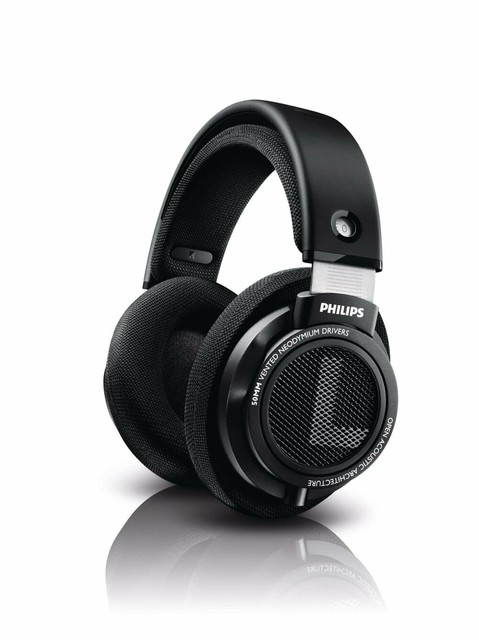
The budget open-back that keeps being recommended for a reason. Enormous cups, very light clamp and a large flat pad surface — for the money there is nothing that clears cartilage jewellery as easily. It is plasticky and it leaks sound badly, and neither matters if it is going to sit on a desk.
- open-back design
- large diameter pads with a roomy cavity
- very low clamping force
- around 320 g with a self-adjusting headband
- detachable 3.5 mm cable
- the cheapest genuinely roomy option here
- clamp is light enough to forget about
- cups are large enough for almost any ear
- substantial sound leakage in both directions
- build is plastic and feels it

Shokz OpenRun Pro 2
The complete sidestep. Bone conduction transmits sound through the cheekbones and leaves the ears entirely untouched, which makes it the safest choice for a fresh or irritated piercing where nothing should be pressing on it at all. The second-generation model reduced clamping force by around 16% and widened the contact area, so even the temple pressure is gentler.
- bone conduction with an added air conduction driver
- roughly 16% lower clamping force than the previous generation
- widened contact area for even pressure distribution
- nothing enters or covers the ear
- IP-rated for sweat and rain
- ears are completely untouched, so any piercing is irrelevant
- safest option while a piercing is still healing
- full situational awareness
- bass is weaker than any over-ear here
- leaks sound at higher volumes

AKG K371
The closed-back compromise. It gives you the isolation an open headphone cannot, with pads noticeably deeper and softer than most closed studio designs and an oval cup shape that follows the ear rather than sitting on it. A reasonable pick when you need privacy but cannot tolerate a shallow monitor cup.
- closed-back over-ear
- oval cups with deep memory foam pads
- moderate clamping force
- around 255 g
- foldable with three detachable cables
- deep pads unusual for a closed studio headphone
- oval cups suit the ear shape well
- isolates without needing a hard clamp
- memory foam pads warm up over long sessions
- clamp is firmer than any open-back here

Audio-Technica ATH-R70x
The lightest full-size headphone on this list and, for a sore ear, that is the headline. A very light open-back with a self-adjusting wing headband that spreads its weight rather than pinching, and large fabric-covered pads with a deep cavity. If clamp is what hurts rather than depth, this is the pair to try.
- open-back design
- very light for a full-size headphone
- self-adjusting three-dimensional wing support
- large fabric pads with a deep cavity
- detachable dual-sided cable
- the lightest and lowest-clamp option among the over-ears
- weight spread across the headband instead of the ears
- pads are breathable fabric rather than leatherette
- high impedance, so it wants a proper amplifier
- expensive for a wired open-back

SteelSeries Arctis Nova 7
The gaming pick, and gaming headsets are a smart place to look here because they are engineered for multi-hour sessions and for people wearing glasses. The suspension-style band and soft fabric pads distribute pressure widely rather than concentrating it at the rim, which is exactly where an industrial bar sits.
- fabric-covered memory foam earpads
- suspension-style headband distributing weight
- designed around long session comfort and glasses
- wireless with simultaneous Bluetooth
- retractable microphone
- pressure spread widely rather than at the cup rim
- fabric pads stay cool and do not grip jewellery
- good value with a microphone included
- cups are not as deep as the open-back options
- gaming aesthetics are not for everyone
Beyerdynamic DT 990 Pro
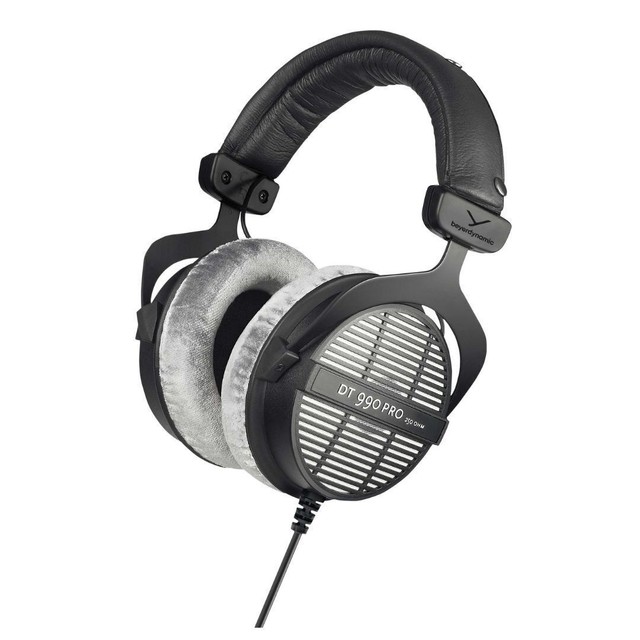
The deep-pad specialist. Beyerdynamic’s grey velour pads are among the thickest fitted to any headphone, which puts a large air gap between jewellery and the driver housing. The caveat is honest: clamp out of the box is firm, and this pair only works for piercings after the headband has been stretched over a few days.
- open-back design
- thick grey velour earpads
- large internal cavity above the driver
- replaceable pads
- wired, available in several impedances
- among the deepest pads of any headphone here
- velour is breathable and does not stick
- pads are cheap and easy to replace
- firm clamp until deliberately stretched — the main caveat for sore ears
- bright treble that not everyone tolerates

Sony WH-1000XM5
The premium wireless pick where noise cancelling is the priority. It is light for a flagship at around 250 grams, and the redesigned band spreads load better than the older models did. Cups are shallower than the Bose, so this is the right choice if your piercings are helix or lobe rather than a full industrial bar.
- around 250 g
- soft synthetic leather pads
- class-leading active noise cancelling
- roughly 30 hours battery
- Bluetooth multipoint
- excellent noise cancelling with a light headband
- gentle clamp for a flagship ANC pair
- comfortable over long flights
- shallower cups than the Bose — less clearance for an industrial bar
- does not fold flat, so the case is bulky
Buying tips
- Shop on internal earcup depth, not on pad softness. Pads under about 20 mm of filled height press directly onto the outer ear where cartilage piercings live. Aim for roughly 25–30 mm, with a clear air gap above the driver mesh so jewellery rests inside the cup untouched.
- Work out whether it is depth or clamp that hurts you. Pain right at the piercing usually means the cup is too shallow; a dull ache around the whole ear after an hour means the clamping force is too high. They need different fixes, and buying for the wrong one wastes the money.
- While a piercing is still healing, use bone conduction and nothing else. Pressure on a fresh cartilage piercing can cause migration or irritation bumps that take months to settle — six weeks of Shokz is cheaper than that.
- Deep velour pads are the cheapest upgrade in audio. Many headphones take third-party replacement pads, and swapping thin leatherette for thick velour on a headphone you already own often solves the problem outright for around $25.
- Stretch a new headband before writing the pair off. Resting it over a stack of books slightly wider than your head for a few days reduces clamping force permanently, and it is the standard fix for the Beyerdynamic clamp.
- Avoid on-ear designs entirely. On-ear pads rest their full pressure directly on the outer ear, which is the worst possible geometry for helix, conch or industrial jewellery — the question is only how quickly it starts hurting.
- Consider swapping to flat-back labret jewellery or a shorter barbell for long listening sessions. Reducing what protrudes from the ear is often easier than finding a headphone deep enough to clear a long industrial bar.
As an Amazon Associate and eBay Partner, toptenpick.com earns from qualifying purchases. Prices and availability are subject to change.