

As an Amazon Associate and eBay Partner, toptenpick.com earns from qualifying purchases. Prices and availability are subject to change.
The NexStar 6SE is an f/10 Schmidt-Cassegrain with a 1,500mm focal length, so an eyepiece’s magnification on it is simply 1,500 divided by the eyepiece’s focal length in millimeters. These 10 real eyepieces span that whole useful range, from a wide 32mm low-power view for finding targets to a 7mm high-power pick for planetary detail, all sensibly matched to what the 6SE can actually resolve.
| # | Product | Price | Where to buy |
|---|---|---|---|
| 1 | Celestron X-Cel LX 25mm | $80-$100 | Amazon · eBay |
| 2 | Celestron X-Cel LX 12mm | $80-$100 | Amazon · eBay |
| 3 | Celestron X-Cel LX 7mm | $85-$105 | Amazon · eBay |
| 4 | Celestron Luminos 19mm | $230-$270 | Amazon · eBay |
| 5 | Explore Scientific 82-Degree Series 14mm | $200-$240 | Amazon |
| 6 | Baader Morpheus 14mm | $220-$260 | Amazon · eBay |
| 7 | Baader Hyperion Zoom 8-24mm | $170-$200 | Amazon · eBay |
| 8 | Tele Vue Plossl 32mm | $130-$160 | Amazon · eBay |
| 9 | Celestron Omni Plossl 15mm | $40-$55 | Amazon · eBay |
| 10 | Agena Starguider 8mm (60-Degree Series) | $40-$55 | Amazon |
The picks, in detail
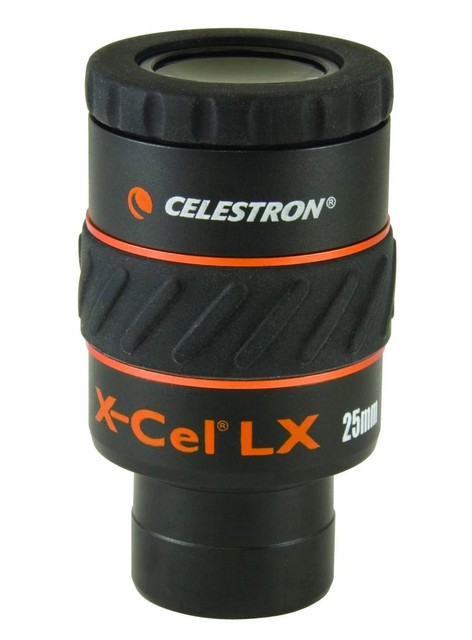
Celestron X-Cel LX 25mm
A comfortable, wide 60-degree low-power eyepiece (60x on the 6SE) that’s the easiest way to find and frame targets before switching to higher power.
- 60-degree apparent field of view
- Parfocal across the X-Cel LX line (no refocusing when swapping)
- Long eye relief, glasses-friendly
- 1.25-inch barrel
- 60x on the 6SE gives a bright, forgiving view for star-hopping and framing
- Parfocal design speeds up swapping eyepieces mid-session
- Not as wide a true field for large open clusters as a low-power Plossl
- Priced above basic Plossls
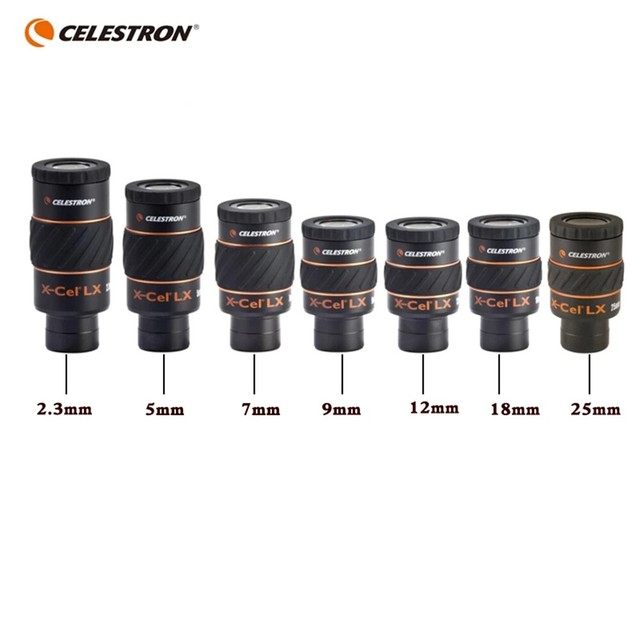
Celestron X-Cel LX 12mm
A mid-power eyepiece (125x on the 6SE) that lands right in the sweet spot for lunar detail and larger planetary views on an f/10 SCT.
- 60-degree apparent field
- 125x magnification on the 6SE
- Long eye relief
- Fully multi-coated optics
- Good balance of magnification and image brightness for the Moon and Jupiter
- Parfocal with the rest of the X-Cel LX line
- Not high enough power for fine Saturn ring detail on steady nights
- Mid-tier price point

Celestron X-Cel LX 7mm
A genuine high-power planetary eyepiece (214x on the 6SE), well within its roughly 350x practical ceiling and sharp enough for cloud-band and ring detail on good nights.
- 60-degree apparent field
- 214x magnification on the 6SE
- Long eye relief even at short focal length
- Parfocal with the line
- High enough power for real planetary detail without exceeding the 6SE’s useful maximum
- Eye relief stays comfortable even at 7mm
- Narrower forgiving window – atmospheric seeing has to cooperate
- Small exit pupil dims the view versus lower-power eyepieces

Celestron Luminos 19mm
A premium 82-degree wide-field eyepiece (about 79x on the 6SE) that turns the f/10 view into an immersive look at open clusters and the Moon.
- 82-degree apparent field of view
- About 20mm eye relief even at this focal length
- Dual ED elements for edge sharpness
- Heavier premium-build barrel with grip ring
- Dramatically wider, more immersive view than a standard Plossl at similar power
- Very comfortable eye relief for eyeglass wearers
- Heavier eyepiece may need a counterweight on some mounts
- Premium price for a single focal length
Explore Scientific 82-Degree Series 14mm
A wide, immersive 82-degree-field eyepiece (about 107x on the 6SE), giving expansive views of the Moon and bright deep-sky objects.
- 82-degree apparent field of view
- Multi-element design for edge-to-edge sharpness
- Argon-purged, waterproof housing
- 1.25-inch barrel
- Wide field makes star-hopping and framing much easier than a narrower eyepiece
- Durable, well-sealed housing
- Larger and heavier than basic Plossls
- Edge sharpness can soften slightly at the very field edge on faster scopes
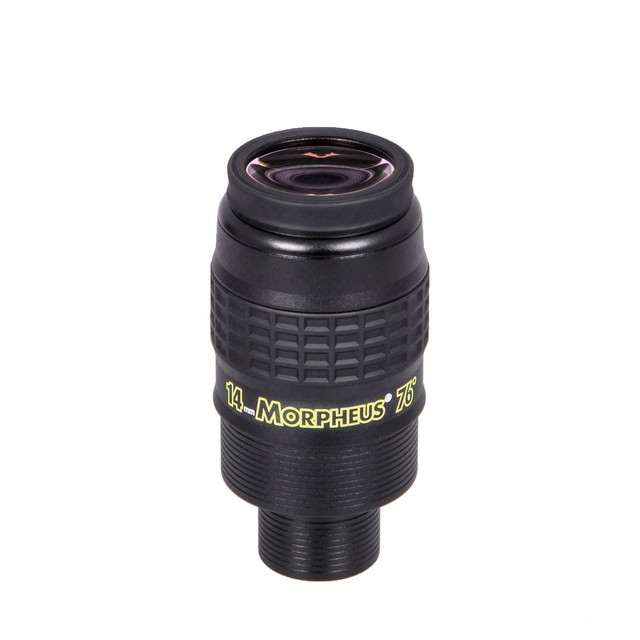
Baader Morpheus 14mm
A flat-field 76-degree eyepiece (about 107x on the 6SE) known for excellent sharpness to the edge, a strong match for critical planetary and lunar viewing.
- 76-degree flat apparent field
- About 20mm long eye relief across the line
- Interchangeable barrel system (1.25-inch/2-inch)
- Sharp to the field edge
- Widely praised for edge sharpness and comfortable eye relief
- Flat field keeps stars pinpoint across the view
- Premium German-engineered pricing
- Heavier than a basic Plossl of the same focal length

Baader Hyperion Zoom 8-24mm
A single continuously-variable zoom eyepiece covering roughly 63x to 188x on the 6SE, letting you dial in magnification without swapping glass mid-session.
- Continuously variable 8mm-24mm focal length
- 1.25-inch barrel, threaded for optional Barlow/accessories
- Consistent eye relief across the zoom range
- One eyepiece covers a wide magnification range
- Extremely convenient for public outreach or quick target changes, no eyepiece swapping
- One purchase covers low-to-mid-high power
- Field of view narrows at the low-power end compared to a dedicated wide-field eyepiece
- Optical performance is a compromise versus dedicated fixed-focal-length eyepieces at either extreme
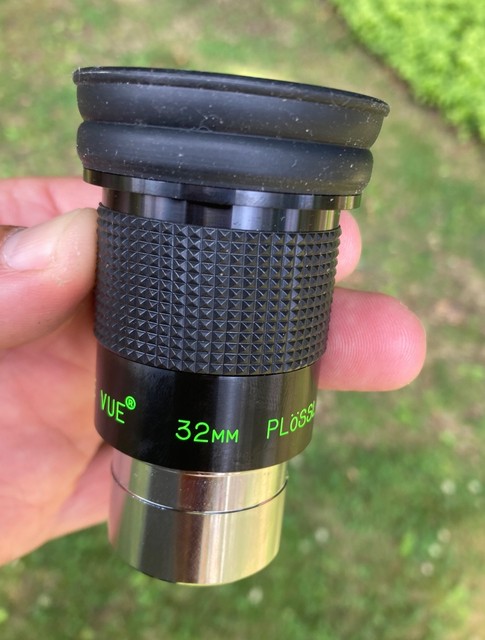
Tele Vue Plossl 32mm
The widest comfortable low-power view (about 47x) a standard 1.25-inch barrel allows on the 6SE, ideal for framing large star fields and finding faint deep-sky targets.
- 50-degree apparent field of view
- Premium Tele Vue optical coatings
- 1.25-inch barrel, near the practical field-stop limit for this barrel size
- Compact, lightweight design
- Widest true field available before needing a 2-inch visual back
- Excellent contrast and sharpness from Tele Vue’s optics
- 47x-class low power isn’t useful for planetary detail
- Premium brand pricing versus generic Plossls
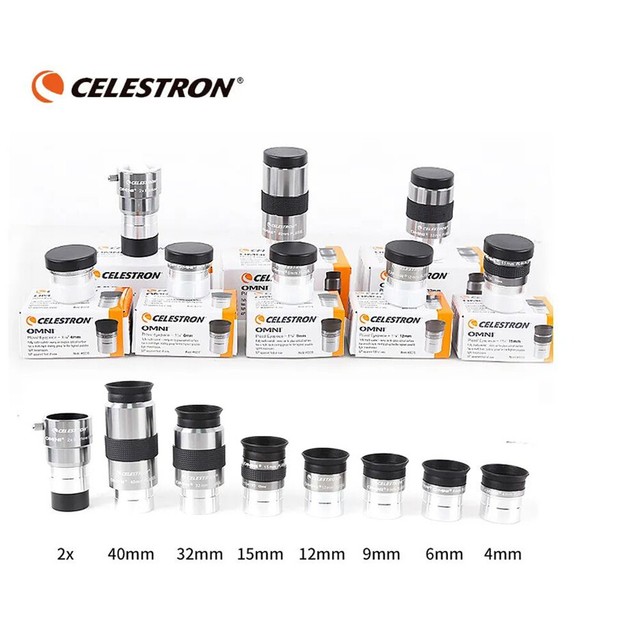
Celestron Omni Plossl 15mm
A no-frills, budget-friendly Plossl at a genuinely useful mid-power focal length (100x on the 6SE), a sensible first upgrade beyond the stock 25mm eyepiece.
- 52-degree apparent field of view
- Fully coated optics
- 1.25-inch barrel
- Affordable price point
- Real image-quality upgrade over many stock starter eyepieces at low cost
- 100x is a well-rounded all-purpose power on the 6SE
- Narrower field and shorter eye relief than premium wide-field eyepieces
- Simpler coatings show more scatter around bright objects like the Moon
Agena Starguider 8mm (60-Degree Series)
A budget wide-field eyepiece that punches above its price, giving a genuinely wide 60-degree view at a useful high-power focal length (188x) for planets on the 6SE.
- 60-degree apparent field of view
- 188x magnification on the 6SE
- Multi-coated optics
- Twist-up eyecup
- Noticeably wider field than a same-price Plossl at this focal length
- Good value for a first high-power eyepiece
- Coatings and edge sharpness trail premium brands like Tele Vue/Baader
- Eye relief is tighter than the X-Cel LX line at the same focal length
Buying tips
- Stay under the 6SE’s practical magnification ceiling of roughly 300-350x – a shorter focal length than about 4-5mm will just produce a dim, blurry, empty-magnification image regardless of eyepiece quality.
- A low-power wide-field eyepiece (25-32mm) earns its keep for finding and framing targets before you switch to a shorter focal length for detail – don’t skip straight to your highest-power eyepiece.
- Exit pupil matters as much as magnification: dividing the eyepiece’s focal length by the telescope’s f-ratio (f/10 here) gives the exit pupil size, and anything under about 0.7mm starts to look dim and shows eye floaters more – that’s the practical ceiling well before the theoretical maximum.
As an Amazon Associate and eBay Partner, toptenpick.com earns from qualifying purchases. Prices and availability are subject to change.