

As an Amazon Associate and eBay Partner, toptenpick.com earns from qualifying purchases. Prices and availability are subject to change.
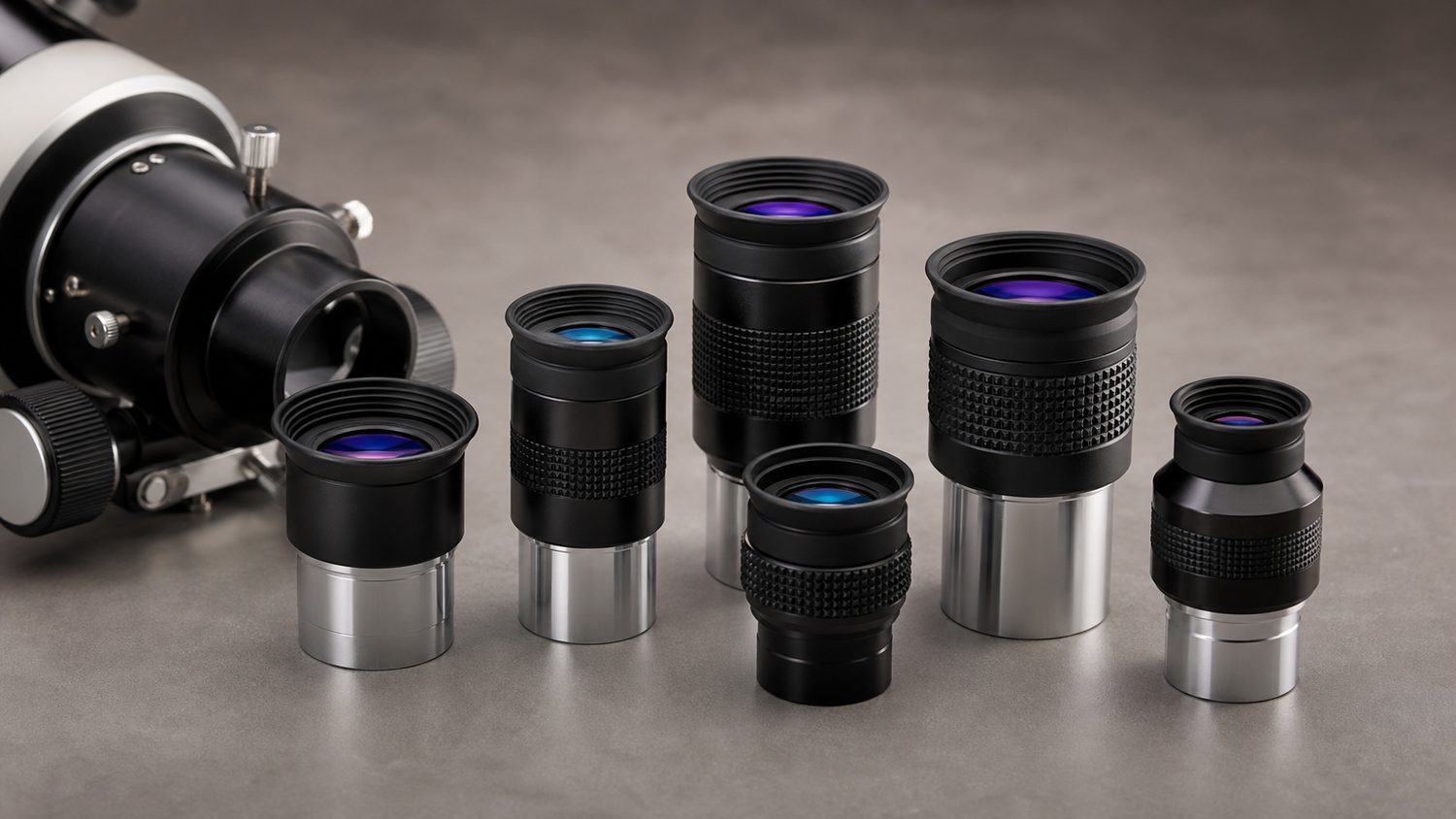
A “fast” telescope — typically f/4 to f/5 — bends incoming light more sharply than a slower scope, which is exactly why cheap eyepieces fall apart at the edge of the field on them: coma, astigmatism, and field curvature all get worse as the focal ratio drops. Below f/5 it takes genuinely well-corrected optics to keep stars looking like points all the way to the edge. Here are ten eyepieces, from budget-friendly to premium, that are specifically known for holding up well on fast scopes.
| # | Product | Price | Where to buy |
|---|---|---|---|
| 1 | Tele Vue Ethos (various focal lengths) | $550-$800 | Amazon · eBay |
| 2 | Tele Vue Nagler Type 6 | $400-$550 | Amazon · eBay |
| 3 | Tele Vue Delos | $450-$550 | Amazon · eBay |
| 4 | Explore Scientific 82° Series | $200-$350 | Amazon · eBay |
| 5 | Baader Morpheus | $300-$400 | Amazon · eBay |
| 6 | Meade Series 5000 HD-60 | $70-$120 | Amazon |
| 7 | Celestron Luminos | $200-$280 | Amazon · eBay |
| 8 | Pentax XW Series | $300-$450 | Amazon · eBay |
| 9 | Celestron X-Cel LX | $60-$90 | Amazon · eBay |
| 10 | SVBONY 68° Wide Angle Eyepiece Set | $60-$90 (set) | Amazon · eBay |
The picks, in detail

Tele Vue Ethos (various focal lengths)
A 100-degree apparent field with edge correction that remains the benchmark for fast Newtonians and Dobsonians.
- 100° apparent field of view
- Excellent edge-to-edge sharpness on fast scopes
- Long eye relief for the field size
- Premium multi-element design
- Best-in-class correction at f/4-f/5
- Immersive spacewalk view
- Expensive
- Heavy — may need counterweighting on light scopes
Tele Vue Nagler Type 6
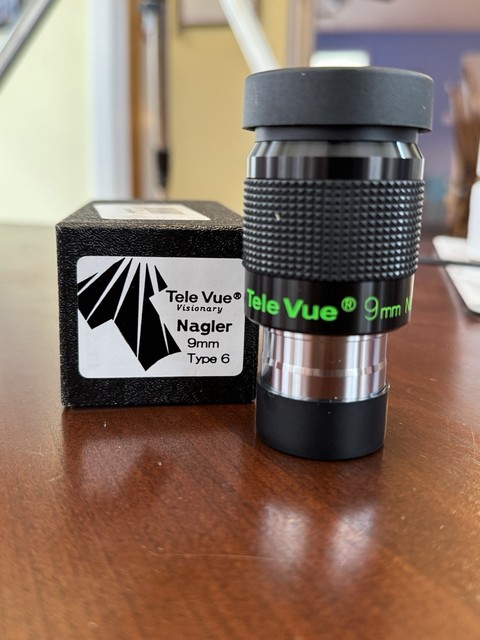
Tele Vue’s long-running 82-degree design, purpose-built to control aberrations on fast focal ratios.
- 82° apparent field
- Multiple focal lengths from 2.5mm-13mm
- Excellent coma and astigmatism control
- Parfocal within the series
- Sets the reference standard for fast-scope performance
- Sharp across nearly the whole field
- Premium price per eyepiece

Tele Vue Delos
Same optical family as the Ethos with a narrower field but dramatically long eye relief, great for eyeglass wearers on fast scopes.
- 20mm eye relief across the range
- 72° apparent field
- Twist-up eyecup
- Sharp at fast focal ratios
- Extremely comfortable for extended viewing sessions
- Well-corrected edge performance
- Narrower field than Ethos/Nagler for the price

Explore Scientific 82° Series
A wide-field design that largely mirrors the Nagler formula at a noticeably lower price.
- 82° apparent field
- Argon-purged waterproof versions available
- 13mm+ eye relief
- 2″ and 1.25″ barrel options
- Nagler-like wide-field performance for less money
- Good edge sharpness on fast Newtonians
- Bulkier than premium alternatives
Baader Morpheus
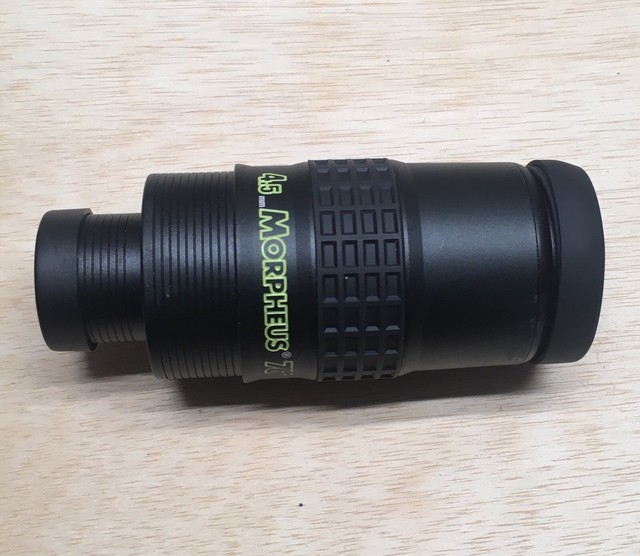
A 76-degree flat-field design built specifically to stay sharp on fast scopes and in binoviewers.
- 76° apparent field
- Genuine flat-field design
- Long eye relief
- Good for binoviewing
- Excellent balance of comfort and sharpness on fast scopes
- Versatile across visual and binoviewer use
- Slightly narrower field than 82°+ competitors
Meade Series 5000 HD-60
A 6-element design specifically engineered to correct the chromatic aberration and edge distortion that fast scopes exaggerate.
- 6-element optical design
- 60° apparent field
- Over 17mm eye relief
- Multi-coated optics
- Over 40% improvement in edge/chromatic correction versus a plain Plossl
- More affordable than ultra-wide premium lines
- Narrower apparent field than 82°+ eyepieces

Celestron Luminos
A wide 82-degree field aimed at deep-sky observing, priced below the premium Japanese/American brands.
- 82° apparent field
- Long eye relief
- Dual ring eyecup
- Multiple focal lengths
- Good value for a wide, immersive field
- Comfortable eye relief
- Heavier barrel than some competitors
Pentax XW Series
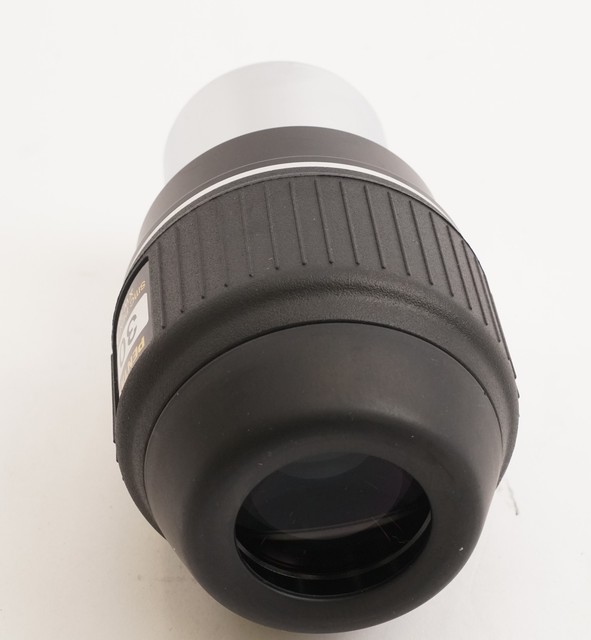
A long-running premium line known for sharp, comfortable views with generous eye relief across the field.
- 70° apparent field
- 20mm eye relief throughout the series
- Fully multi-coated optics
- 8 focal lengths from 3.5mm-40mm
- Renowned sharpness and contrast
- Very comfortable for eyeglass wearers
- Premium pricing
- Narrower field than 82°+ designs
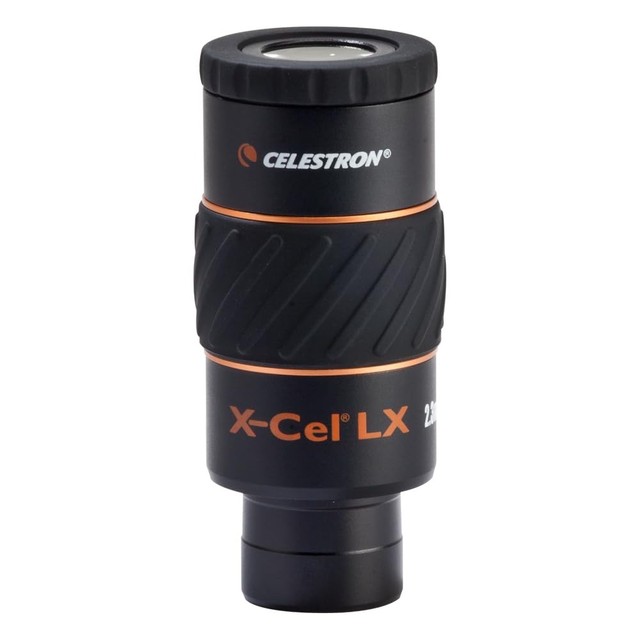
Celestron X-Cel LX
A budget-friendly option better suited to high-power/planetary use on a fast scope than wide-field deep-sky work.
- 60° apparent field
- Long 15mm+ eye relief
- Rubber grip barrel
- Parfocal design
- Inexpensive way to build out a full eyepiece case
- Good eye relief for glasses wearers
- Narrower field shows fast-scope aberrations more than premium wide-field designs
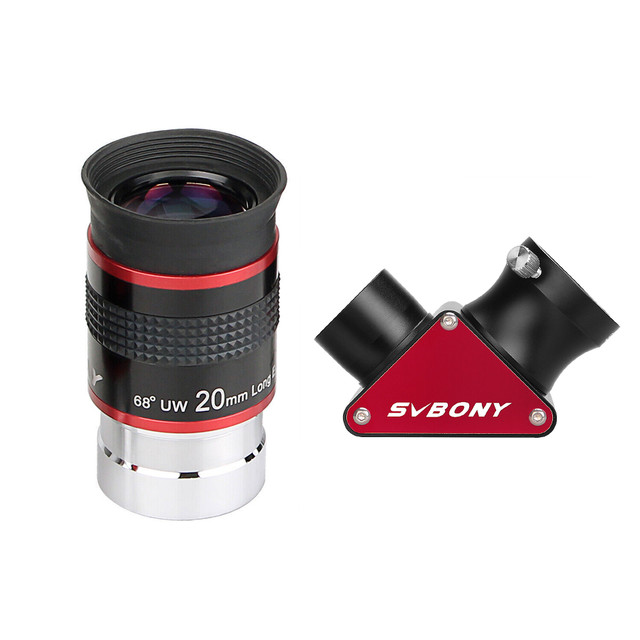
SVBONY 68° Wide Angle Eyepiece Set
The budget entry point for testing whether wide-field eyepieces suit your fast scope before spending premium money.
- 68° apparent field
- Fully multi-coated optics
- Set of 4 focal lengths (6/9/15/20mm)
- Threaded for standard filters
- Very low cost per eyepiece
- Reasonable performance for the price
- Edge sharpness falls short of premium eyepieces on very fast (f/4) scopes
Buying tips
- Below f/5, apparent field width matters less than edge correction — a well-corrected 68° eyepiece can look sharper at the edge than a poorly-matched 100° one.
- If your telescope has a coma corrector (common on fast Newtonians), factor its cost into your eyepiece budget — it does more for edge sharpness than upgrading eyepieces alone.
- Buy one mid-price eyepiece and test it on your specific scope before committing to a full matched set — the same eyepiece can perform differently on an f/4 Newtonian versus an f/5 refractor.
As an Amazon Associate and eBay Partner, toptenpick.com earns from qualifying purchases. Prices and availability are subject to change.