

About this guide
The D60 has no in-body autofocus motor, so it only autofocuses with AF-S, AF-I, or third-party lenses that carry their own built-in motor – a screw-drive AF or AF-D lens will mount and shoot, but only in manual focus. These are real zoom lenses confirmed to carry their own focus motor, so autofocus actually works on this body.
As an Amazon Associate and eBay Partner, toptenpick.com earns from qualifying purchases. Prices and availability are subject to change.
The picks, in detail

Nikon AF-S DX NIKKOR 18-140mm f/3.5-5.6G ED VR
A do-it-all superzoom range that covers wide-angle through short telephoto in one lens, with Nikon's own VR stabilization to help handheld shots on the D60.
- AF-S ultrasonic autofocus motor
- VR image stabilization
- 18-140mm (27-210mm equivalent)
- ED glass elements
- Covers the most common everyday focal range in one lens
- Larger and heavier than kit-lens-class options

Nikon AF-S DX NIKKOR 18-200mm f/3.5-5.6G ED VR II
The classic Nikon superzoom, stretching well into telephoto territory for travel shooters who don't want to swap lenses.
- AF-S motor
- VR II stabilization
- 18-200mm (27-300mm equivalent)
- Internal focus
- Longest single-lens reach without changing lenses
- Long-running, well-reviewed design
- Priced well above the shorter-range zooms

Nikon AF-S DX Zoom-NIKKOR 55-200mm f/4-5.6G ED
A lightweight, affordable telephoto companion to a standard kit lens, sized to autofocus on the D60 without adding much weight.
- AF-S motor
- 55-200mm (82.5-300mm equivalent)
- Compact, lightweight build
- ED glass
- Budget-friendly way to add telephoto reach
- No VR on the base version – check the VR-suffixed variant if stabilization matters

Nikon AF-S DX NIKKOR 55-300mm f/4.5-5.6G ED VR
Stretches telephoto reach further than the 55-200mm while adding VR stabilization for handheld shots at full zoom.
- AF-S motor
- VR stabilization
- 55-300mm (82.5-450mm equivalent)
- ED glass elements
- Real reach upgrade over the 55-200mm with image stabilization included
- Narrower aperture at the long end makes low light harder

Nikon AF-S DX NIKKOR 18-300mm f/3.5-5.6G ED VR
An all-in-one superzoom that covers wide-angle all the way to serious telephoto, avoiding lens changes altogether.
- AF-S motor
- VR stabilization
- 18-300mm (27-450mm equivalent)
- Internal zoom design
- Broadest single-lens range on this list
- Highest price point here, with the widest-aperture-range compromise of any all-in-one zoom

Nikon AF-S DX NIKKOR 16-85mm f/3.5-5.6G ED VR II
A wider standard zoom that's a good travel companion, trading ultimate reach for a genuinely useful wide end and VR stabilization.
- AF-S ultrasonic motor
- VR II stabilization
- 16-85mm (24-127.5mm equivalent)
- ED/aspherical elements
- Fast, accurate autofocus and a useful wide-angle starting point
- Less telephoto reach than the 18-140mm/18-200mm options
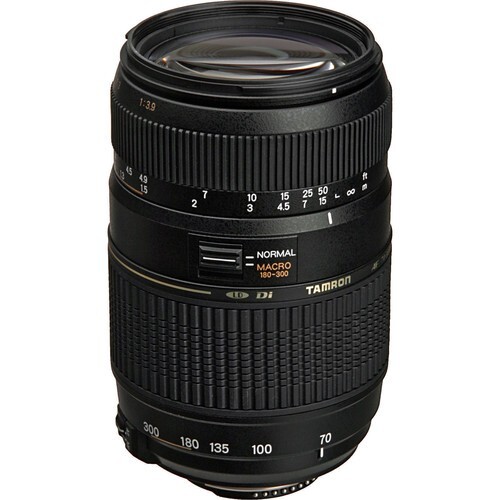
Tamron AF 70-300mm f/4-5.6 Di LD Macro (BIM)
Tamron built this 70-300mm specifically with a built-in motor for Nikon bodies like the D60 that lack one in-camera.
- Built-in autofocus motor (BIM) for AF on motor-less Nikon bodies
- 70-300mm range
- Macro focusing capability
- LD glass element
- Real telephoto reach at a fraction of Nikon’s own 70-300mm price
- Third-party autofocus speed trails Nikon’s own AF-S lenses
What each one costs
Typical price, cheapest first. Tap a name to jump to that pick and its buy link.
Compare any three
| Nikon AF-S DX NIKKOR 18-140mm f/3.5-5.6G ED VR | Nikon AF-S DX NIKKOR 18-200mm f/3.5-5.6G ED VR II | Nikon AF-S DX Zoom-NIKKOR 55-200mm f/4-5.6G ED | |
|---|---|---|---|
| Price | $250-$350 | $500-$650 | $150-$220 |
| Key features |
|
|
|
| Pros |
|
|
|
| Cons |
|
|
|
Buying tips
- Confirm ‘AF-S’ (or a third-party lens explicitly labeled with a built-in motor, like Tamron’s BIM or Sigma’s HSM) before buying – a plain ‘AF’ or ‘AF-D’ lens will mount but only focus manually on the D60.
- VR (vibration reduction) matters more at the telephoto end of these ranges; it’s worth prioritizing on anything reaching past 200mm if you shoot handheld.
- The D60’s 10.2MP sensor doesn’t demand today’s sharpest optics to look great, so an older or third-party design isn’t a real handicap here.
- If you mostly shoot one focal range, a shorter, lighter zoom (55-200mm or 16-85mm) will be noticeably easier to carry all day than an 18-300mm all-in-one.
As an Amazon Associate and eBay Partner, toptenpick.com earns from qualifying purchases. Prices and availability are subject to change.