

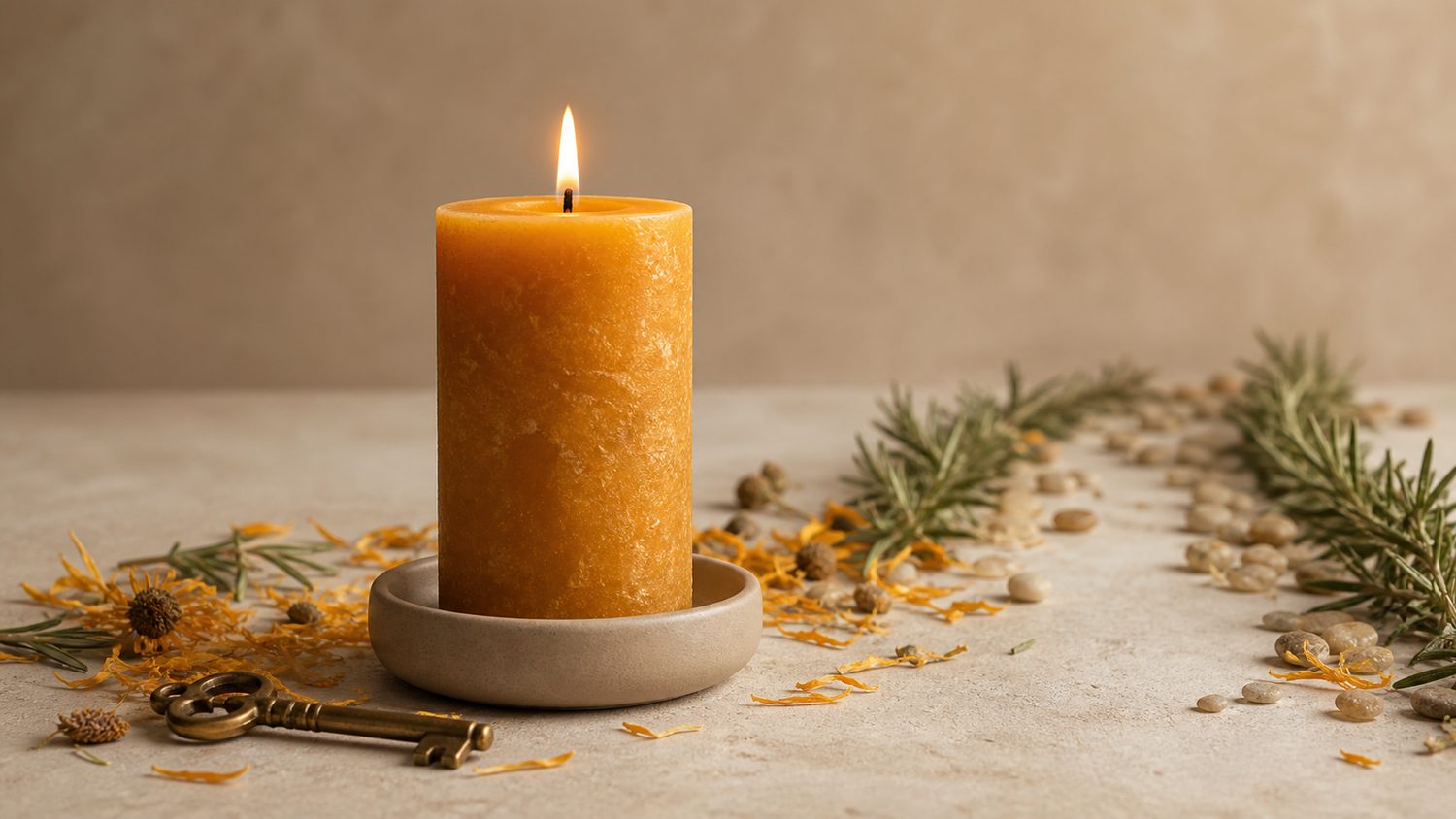
There is no universally correct day to burn a Road Opener candle. In contemporary hoodoo and related conjure practice, Sunday and Wednesday are common choices, but the tradition, the practitioner and the purpose of the work matter more than a one-size-fits-all calendar rule. Some Road Opening instructions associate Sunday with the Sun and a sense of beginning, while others associate Wednesday with Mercury, communication and movement. Those are religious or spiritual correspondences, not scientifically established ways to change an outcome.
Choose the day that belongs to the practice you are following, or select a time when you can work without interruption and attend to candle safety. A specific goal is more useful than an elaborate schedule. If the purpose is a job search, write the practical actions you will take alongside the observance, such as updating a resume or making calls. If it concerns a relationship or a difficult decision, keep the ritual separate from consent, legal obligations and honest communication. A candle can be meaningful as prayer, reflection or a cultural practice; it is not a substitute for professional, medical, legal or financial help.
Why Sunday and Wednesday are common choices
Several current Road Opener sellers and practitioners recommend Sunday or Wednesday. One Gullah Geechee hoodoo guide describes Sunday as connected with the Sun and Wednesday as connected with Mercury, and a Road Opening candle maker gives the same two-day suggestion. This is evidence of a living practice, not proof that those days work objectively better than any other day. Hoodoo is not a single standardized institution, so do not turn a shop instruction into a rule for every community or family lineage.
Sunday can be a good choice if it fits your personal observance and you want to begin a new week with a clear intention. Wednesday can fit work involving communication, applications, travel plans or a stalled conversation when that correspondence is meaningful to you. The best day is the one that lets you be present, follow your own tradition with respect and finish safely. Waiting weeks for an ideal planetary arrangement is rarely helpful when a practical task needs doing today.
Respect the tradition and its limits
Road Opening or Road Opener work is often discussed in connection with hoodoo, African American folk spiritual practice, and with botanica traditions that use the Spanish phrase Abre Camino. Those histories are real and deserve more care than treating the candle as a generic productivity accessory. Read from practitioners who identify their tradition, learn whether the material is a family practice or a commercial adaptation, and avoid claiming authority over a culture you do not belong to.
There is also no accepted scientific evidence that candle timing removes obstacles, changes another person’s choices or guarantees employment, money, court results or reconciliation. The honest value of a ritual can be the time it creates for reflection, prayer, grief, intention and a decision to act. Keep claims at that level. Do not use a Road Opener candle to pressure someone into a relationship, evade a court requirement or delay necessary care.
Choose a simple intention
Before lighting a candle, state the goal in language you can act on. A vague request for everything to improve makes it hard to know what you are asking of yourself. A more useful intention might be to find three appropriate jobs to apply for, make a housing appointment, repair a neglected friendship through an honest message, or decide whether to ask for advice. The candle does not need a dramatic petition to serve as a focused ritual object.
Keep the intention about your own choices. For example, write that you seek clarity and courage to pursue a new opportunity instead of writing that a particular person must act a certain way. This protects consent and makes the follow-through concrete. Put the practical step on your calendar before or after the observance. The combination of reflection and action is more responsible than waiting for a sign.
Waxing moon, sunrise and multi-day burns
Some contemporary guides pair road-opening work with a waxing moon or sunrise. These are symbolic preferences associated with growth, beginning and light; they are not requirements. If sunrise makes you rushed, tired or unable to supervise the candle, choose a safer time. If a practitioner you trust uses a multi-day schedule, follow only the parts that are compatible with the candle label and a safe setting.
Seven-day glass candles are common in botanicas and spiritual-supply shops, but a seven-day label does not authorize unattended burning. Never leave a candle lit while you sleep, leave home or cannot monitor it. Do not interpret a flame going out, smoke, wax shape or a cracked container as a medical, legal or financial instruction. Extinguish the flame, assess the practical hazard and resume only if the candle and its holder are sound.
Use an open flame safely
The U.S. Fire Administration advises keeping candles at least 12 inches from anything that burns, using stable holders and extinguishing them when leaving a room, home or going to bed. The National Fire Protection Association likewise advises an uncluttered sturdy surface and says not to burn a candle all the way down. These rules take priority over any ritual instruction that recommends a continuous burn.
- Use a stable heat-resistant surface: keep the candle away from curtains, papers, fabric, pets and children.
- Stay in the room: do not leave a lit candle unattended, even for a short errand or shower.
- Check the container: stop using a jar candle if it cracks, overheats or shows unsafe damage.
- Follow the label: do not add oils, herbs, paper or objects near the flame unless the manufacturer specifically says it is safe.
- Choose flameless light when needed: a battery-operated candle can support a reflective observance where open flame is unsafe.
Sunday or Wednesday are reasonable traditional choices if they fit the practice you are following, but neither is a requirement and neither guarantees a result. Choose a calm, supervised time; set an ethical intention about your own actions; and take the real-world step that the situation calls for. Respect for hoodoo and related traditions includes being honest about what ritual can and cannot promise, and treating candle fire safety as non-negotiable.