

As an Amazon Associate and eBay Partner, toptenpick.com earns from qualifying purchases. Prices and availability are subject to change.
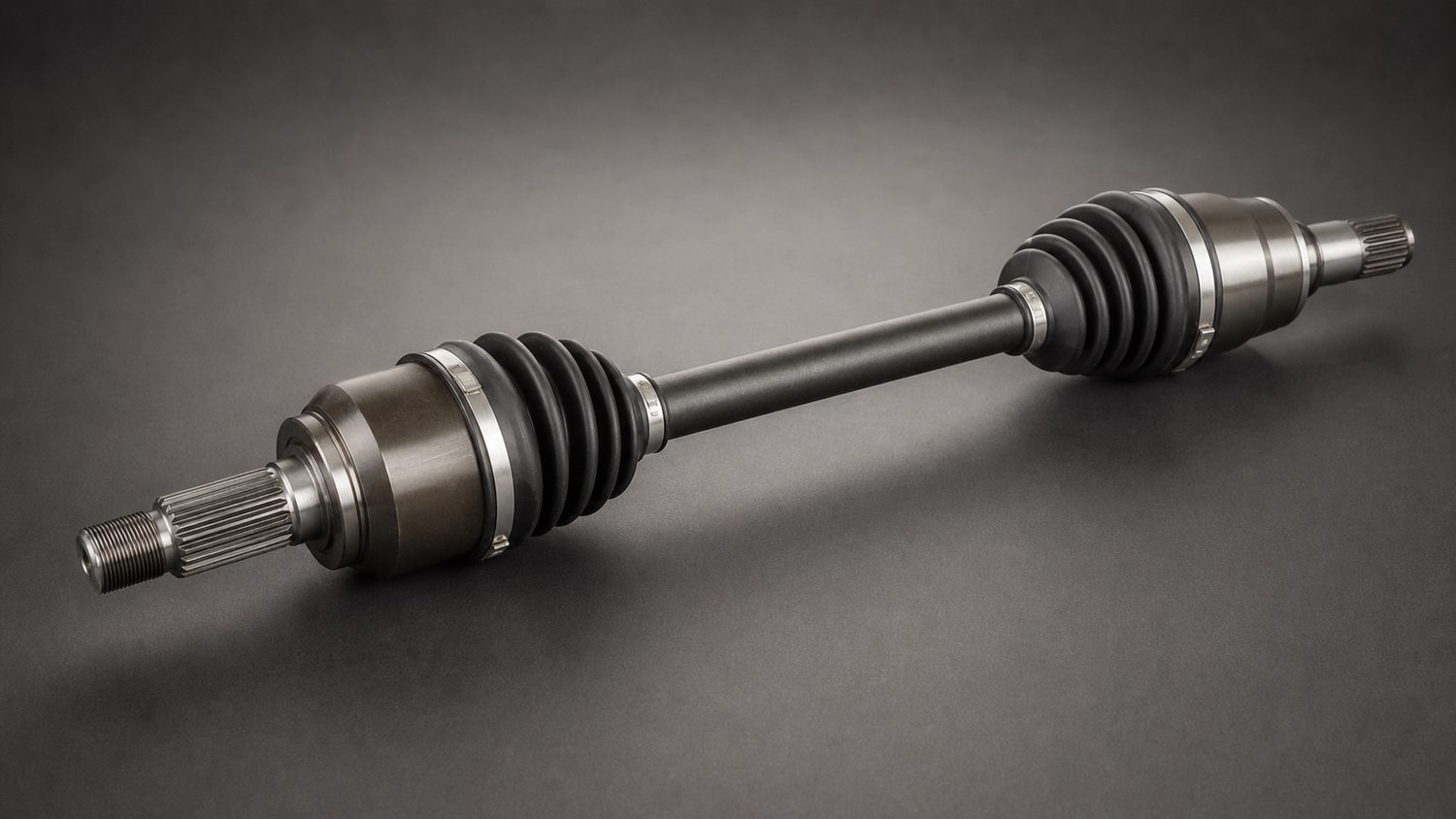
If your CV axles keep failing, the axle is usually not the fault — the angle it is being asked to work at is. A constant-velocity joint is designed to transmit torque through a range of operating angles, and its life falls off sharply as that angle increases. On these trucks, two things push it past where it is happy: cranking the torsion bars to level the front end, and fitting a lift without the components that correct geometry. Both raise the ride height by dropping the lower control arm, which steepens the angle the inner and outer joints run at permanently — not just at full droop. Fit a premium axle into that geometry and it will fail the same way the last one did, just with a better warranty attached.
So the diagnostic question comes before the shopping question. Has the truck been levelled by turning up the torsion keys? Does it have a lift, and did that lift include differential drop brackets or replacement upper control arms? If the answer is a level achieved by cranking, the cheapest genuine fix is often to wind it back a little and see whether the problem stops — and if you want the height, the proper route is a kit with the geometry correction included.
Second, know which failure you actually had, because they mean different things. A torn boot is a maintenance failure: grease escapes, grit gets in, and the joint destroys itself over the following weeks. Catch it early and a reboot kit is a cheap repair. A joint that clicks on full lock is worn out. A shaft that has twisted or snapped is a torque or angle failure, and that is the one that points back at geometry or at an aggressive tune.
Third, the fitment trap: these trucks change part numbers more than people expect. Model year, cab and bed configuration, and whether the truck is a 1500, 2500 or 3500 all affect which axle fits, and the generations do not interchange. Buy against your VIN through a dealer catalogue or a reputable parts lookup, not against a photograph.
And one honest note on tuning. A Duramax with a tune makes far more torque than it left the factory with, and CV axles are one of the components that finds out first. If the truck is tuned and lifted, the axles are being asked to do two new things at once, and no brand of replacement makes that combination fine.
| # | Product | Price | Where to buy |
|---|---|---|---|
| 1 | ACDelco Professional CV Axle Assembly | $180–$350 | Amazon |
| 2 | RCV Performance Ultimate CV Axle | $900–$1,800 | Amazon |
| 3 | GSP or Cardone Remanufactured CV Axle | $90–$200 | Amazon |
| 4 | Differential Drop Bracket Kit | $120–$300 | Amazon |
| 5 | Upper Control Arms for Lifted Trucks | $400–$900 | Amazon · eBay |
| 6 | CV Boot and Reboot Kit | $20–$50 | Amazon · eBay |
| 7 | Torsion Key Levelling Kit (understand the trade) | $100–$250 | Amazon · eBay |
| 8 | Front End Alignment After Any Change | $90–$200 | Amazon · eBay |
| 9 | Axle Nut and Hardware Kit | $10–$30 | Amazon |
| 10 | Cheap Unbranded CV Axle | $60–$120 | Amazon · eBay |
The picks, in detail
ACDelco Professional CV Axle Assembly
The OE-equivalent choice and a sensible default for a truck that has not been modified. ACDelco is GM’s own parts brand, so fitment against the VIN is dependable and the joint specification matches what the truck was engineered around. If your axle failed from age or a torn boot rather than from geometry, replacing like with like is the correct repair.
- OE-equivalent specification
- Complete assembly with boots and grease
- Fitment listed by VIN and configuration
- GM parts network availability
- Dependable fitment across the model variations
- Matches the specification the truck was designed around
- Widely stocked with a real warranty path
- No extra strength for a lifted or tuned truck
- More expensive than aftermarket equivalents
- Will fail again if the underlying angle is wrong
RCV Performance Ultimate CV Axle
The heavy-duty end of this market, built around a different joint design intended to handle both more torque and steeper operating angles than a standard CV. This is the axle for a lifted, tuned truck that has already eaten a set — it addresses the actual load case rather than just being a thicker version of the original. It costs what a specialist part costs.
- Heavy-duty joint designed for high angle operation
- Chromoly shaft
- Rebuildable rather than disposable
- Made for modified applications
- Built for the lifted and tuned case specifically
- Rebuildable, so a boot tear is not a write-off
- Substantially stronger than OE
- Several times the price of an OE-equivalent axle
- Overkill on a stock truck
- Lead times on less common applications
GSP or Cardone Remanufactured CV Axle
The value tier, and worth understanding what you are buying. A remanufactured axle is an original shaft with new joints, boots and grease, which for a stock truck used normally is a reasonable repair at a low price. Quality varies between remanufacturers and the shaft itself has an unknown history, so it is the right choice for a budget repair and the wrong one for a modified truck.
- Remanufactured on original cores
- New boots, grease and joints
- Wide application coverage
- Lower price than new assemblies
- Cheapest route to a working axle
- Fine for a stock truck driven normally
- Broad availability
- Shaft history is unknown
- Quality varies between remanufacturers
- Not suitable for lifted or tuned applications
Differential Drop Bracket Kit
The component that addresses the cause rather than the symptom. A diff drop lowers the front differential by an inch or so, which brings the inner CV joints back towards a sensible operating angle after a lift has raised everything around them. On a lifted truck eating axles this is frequently the fix, and it costs a fraction of one premium axle.
- Lowers the front differential relative to the frame
- Reduces inner CV operating angle
- Bolt-in with longer hardware
- Sized to the lift height
- Treats the actual cause of high-angle failures
- Far cheaper than repeatedly replacing axles
- Bolt-in on most applications
- Reduces ground clearance slightly, which is the point of the lift
- Must be matched to the lift height
- Not a substitute for correct upper control arms on bigger lifts

Upper Control Arms for Lifted Trucks
The other half of geometry correction. Aftermarket upper arms with revised ball joint positions restore alignment angles that a lift takes away, which reduces the angle the outer CV runs at and lets the alignment be set properly. On a truck that has been lifted more than a modest amount, arms and a diff drop together are what make CV life normal again.
- Revised geometry for lifted ride height
- Uniball or heavy-duty ball joint
- Greasable pivots on many designs
- Matched to specific lift ranges
- Restores alignment angles a lift removes
- Reduces outer CV operating angle
- Usually stronger than the OE arm as a bonus
- Uniballs need regular attention and are noisier
- Expensive in pairs
- Must be matched to the lift height

CV Boot and Reboot Kit
The cheap repair that catches the cheap failure. A torn boot slings grease out and lets grit in, and the joint then destroys itself over weeks rather than instantly — so a boot spotted early is a twenty-pound fix instead of a three-hundred-pound one. Inspect boots whenever the truck is on a lift. Split boots that fit without removing the shaft exist and are a reasonable compromise on a driveway repair.
- Replacement boot, clamps and CV grease
- Conventional and split-boot versions
- Application-specific sizing
- Very cheap
- Turns an early tear into a cheap repair
- Split versions fit without removing the axle
- Includes the correct grease
- Useless once grit has got into the joint
- Split boots are less durable than one-piece
- Fiddly to clamp correctly
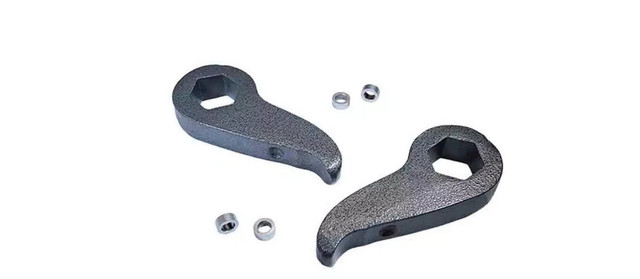
Torsion Key Levelling Kit (understand the trade)
Listed because it is frequently the cause and it is sold as a cheap improvement. Levelling by re-indexing the torsion keys raises the front without new springs, and it works — while permanently increasing the CV operating angle and preloading the torsion bars. A modest amount is fine; the trucks that eat CV axles are usually the ones cranked hard for maximum lift. If you already have one, winding it back is the cheapest diagnostic available.
- Re-indexed torsion keys
- Raises the front without new springs
- Cheap and bolt-in
- Height adjustable within a range
- Cheapest way to level the front
- Reversible
- No spring or shock change required
- Increases CV operating angle permanently
- Cranked hard, it is a common cause of repeat axle failure
- Stiffens the front ride noticeably
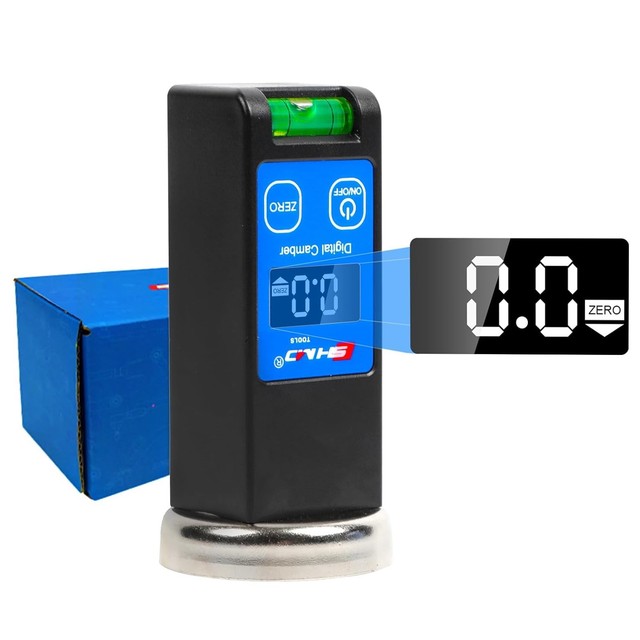
Front End Alignment After Any Change
Not a part, and the step people skip. Anything that changes ride height changes camber, caster and toe, and a truck running out of alignment wears its outer CV joints as well as its tyres. Budget for an alignment after fitting a lift, a level, control arms or a diff drop — and ask for the printout, because the numbers tell you whether the geometry correction actually worked.
- Four-wheel alignment with printout
- Camber, caster and toe set to specification
- Required after any ride height change
- Some shops specialise in lifted trucks
- Confirms whether geometry correction worked
- Protects tyres as well as joints
- The printout is diagnostic evidence
- Not all shops can align a lifted truck to spec
- Needs redoing after every suspension change
- Cannot fix angles that need a part to correct
Axle Nut and Hardware Kit
Small, cheap and genuinely important: the axle nut on these trucks is a torque-critical single-use item on many applications, and reusing a stretched nut or under-torquing it lets the hub work loose. That destroys the wheel bearing and then the axle splines. Buy the nut with the axle, torque it to the published figure with a proper wrench, and do not guess.
- Single-use axle nut where specified
- Correct thread and seat for the application
- Sometimes includes washers and circlips
- Very cheap
- Prevents a hub working loose after the repair
- Cheap relative to a bearing and axle
- Sold alongside most axle assemblies
- Requires a torque wrench that reaches the figure
- Easy to forget when ordering
- Application-specific — check before buying
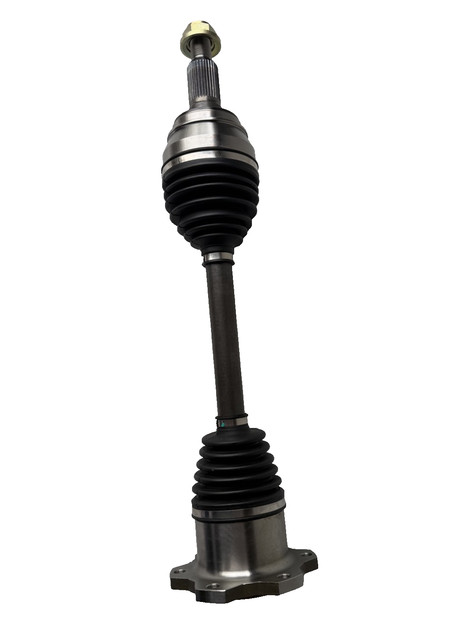
Cheap Unbranded CV Axle
Named because these fill marketplace listings and because in this application they fail in a specific way. The joints use softer material and less consistent heat treatment, so they wear quickly at stock angles and very quickly at the increased angles of a lifted truck. The labour to change a CV axle is the same whether the part cost eighty pounds or three hundred, which is what makes the cheap one poor value rather than merely cheap.
- Generic aftermarket assembly
- Broad application listings, often imprecise
- Substantially cheaper than branded parts
- Short or nominal warranty
- Lowest possible purchase price
- Softer joints wear fast, especially at raised angles
- Vague fitment listings lead to wrong parts
- The labour cost is identical to fitting a good one
Buying tips
- Diagnose the angle before buying an axle. Cranked torsion keys and a lift without geometry correction both increase CV operating angle permanently, and a new axle in bad geometry fails the same way the old one did.
- Wind a cranked level back a little as a free test. If the failures stop, you have found the cause and saved yourself a premium axle.
- Identify which failure you had. A torn boot is a maintenance failure, a clicking joint is worn out, and a twisted or snapped shaft points at angle or torque — they mean different things.
- Fit a diff drop and correct upper arms if the truck is lifted. Together they cost a fraction of repeatedly replacing axles, and they address the cause.
- Buy against your VIN, not a photograph. Model year, cab and bed configuration and the 1500/2500/3500 split all change the part, and the generations do not interchange.
- Inspect boots every time the truck is on a lift. A tear caught early is a cheap reboot; the same tear found a month later is a destroyed joint.
- Get an alignment after any ride height change and keep the printout. It tells you whether the geometry correction actually worked, and it protects tyres as well as joints.
- Be honest about the tune. A tuned Duramax makes far more torque than stock, and if it is also lifted the axles are being asked to do two new things at once — no brand of replacement makes that fine.
As an Amazon Associate and eBay Partner, toptenpick.com earns from qualifying purchases. Prices and availability are subject to change.