

As an Amazon Associate and eBay Partner, toptenpick.com earns from qualifying purchases. Prices and availability are subject to change.
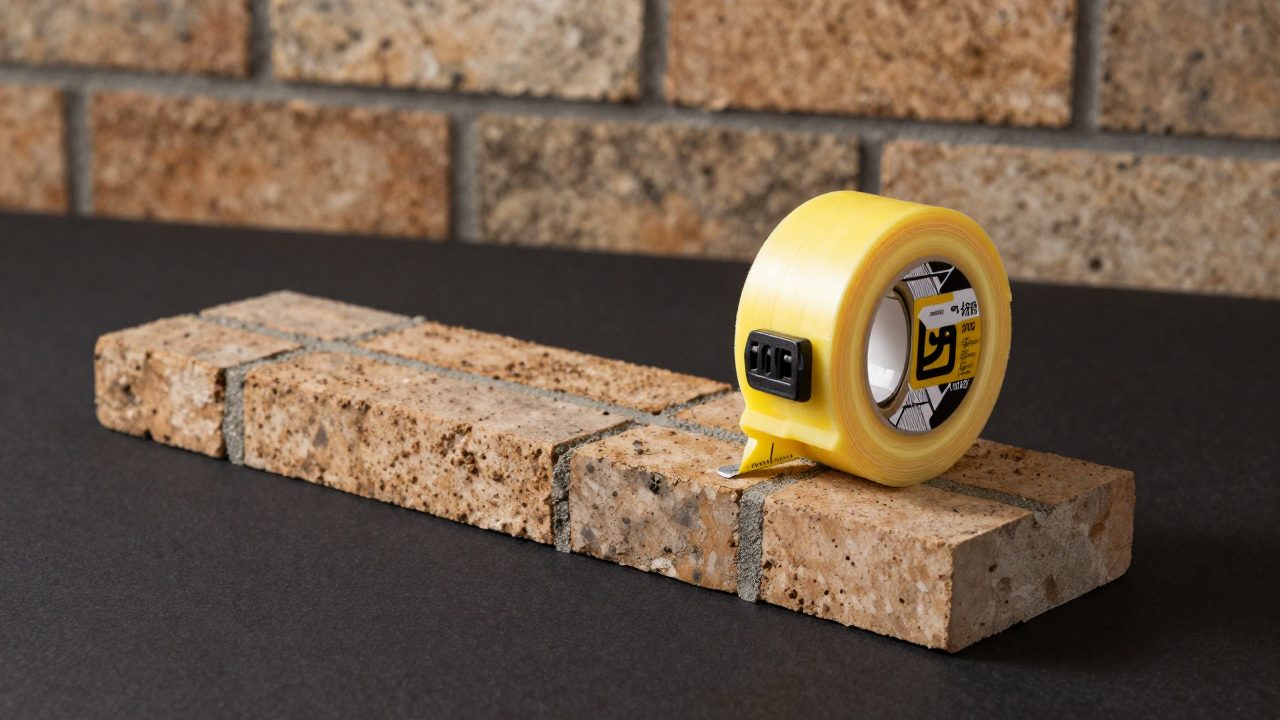
Tape fails on brick for a reason you can see with a torch: the adhesive is only touching the high points. Adhesion is a contact-area problem. A smooth surface lets a tape’s adhesive wet out across effectively all of it; brick is a landscape of ridges, pits and open pores, so a flat tape bridges the gaps and makes real contact with a small fraction of what it appears to cover. Mortar joints are worse than the bricks. And on top of that reduced area sits a layer of loose dust and efflorescence that the adhesive grabs instead of the wall — so the tape does stick, to a layer of powder that then falls off the brick.
That gives you the two things that actually change the outcome, and neither is a brand.
Prepare the surface. A stiff brush to knock off loose material, then a wipe with isopropyl alcohol to lift the fine dust, then let it dry completely. This single step moves more tapes from failing to holding than any upgrade in adhesive does, and it takes two minutes.
Then use a tape that conforms rather than bridges. The right product for rough masonry is usually a thick foam-backed tape — acrylic foam or a heavy PE foam — because the foam compresses into the texture and multiplies the real contact area. A thin film tape, however aggressive the adhesive, is fighting the geometry. Thickness is the specification to shop on, not peel strength on a steel panel, which is how tapes are usually rated and which tells you nothing about brick.
Two conditions will beat any tape, so plan around them. Temperature: most pressure-sensitive adhesives need application above roughly 10 °C to flow into the surface, and an exterior brick wall in winter is well below that even when the air is not. And moisture: brick is porous and holds water, and water at the bond line is what lifts tape weeks later when everything looked fine on day one. Apply to a dry wall on a mild day and give acrylic adhesives their full cure — often 24 to 72 hours to reach real strength.
And the honest limit. For anything heavy, anything permanent, or anything outdoors that matters, the answer is a mechanical fixing — a plug and a screw into the brick, or into the mortar joint, which is softer and easier to drill and easier to make good afterwards. Tape is for light, temporary and indoor work. A tape rated for 20 kg on a laboratory steel panel is not rated for 20 kg on your garden wall.
| # | Product | Price | Where to buy |
|---|---|---|---|
| 1 | 3M VHB Heavy Duty Mounting Tape | $18–$40 | Amazon · eBay |
| 2 | Gorilla Heavy Duty Double Sided Mounting Tape | $8–$18 | Amazon · eBay |
| 3 | Isopropyl Alcohol and a Stiff Brush | $10–$20 | Amazon |
| 4 | Exterior-Grade Butyl Sealing Tape | $15–$35 | Amazon · eBay |
| 5 | Gaffer Tape (for temporary indoor use) | $12–$25 | Amazon · eBay |
| 6 | Masonry Nail-In Clips and Hooks | $6–$15 | Amazon · eBay |
| 7 | Command Strips (indoor smooth surfaces only) | $10–$25 | Amazon · eBay |
| 8 | Construction Adhesive (Grab Adhesive) | $8–$20 | Amazon · eBay |
| 9 | Outdoor Double-Sided PE Foam Tape | $10–$22 | Amazon · eBay |
| 10 | Duct Tape (what not to use) | $5–$12 | Amazon · eBay |
The picks, in detail

3M VHB Heavy Duty Mounting Tape
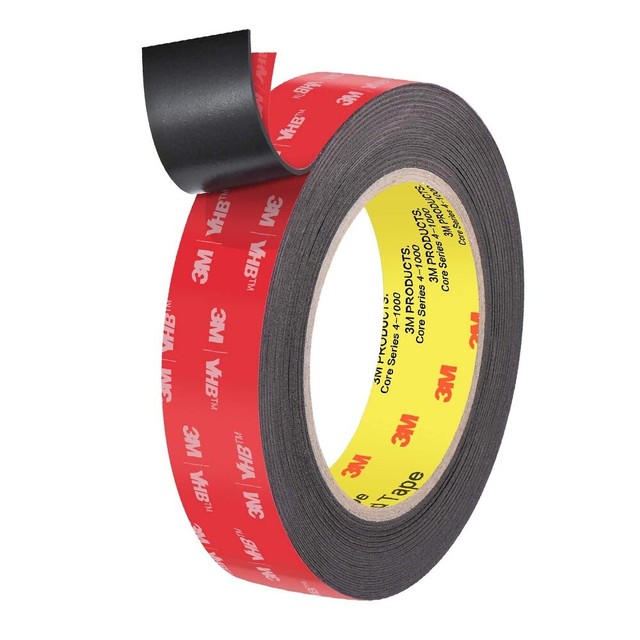
The acrylic foam tape that most others are imitating. The foam core is the point: it compresses into a rough surface so the adhesive makes contact with far more of the brick than a flat tape can, and it keeps working as the wall expands and contracts. Acrylic adhesive builds strength over hours rather than instantly, so press it hard, then leave it alone for a day before loading it.
- Viscoelastic acrylic foam core
- Conforms to irregular surfaces
- Several thicknesses — thicker suits rougher brick
- Full strength develops over 24–72 hours
- Foam core is the right mechanism for rough masonry
- Tolerates thermal movement in a wall
- Genuinely strong once cured
- Effectively permanent — removal damages paint and pointing
- Needs a scrupulously clean, dry surface
- Expensive per metre

Gorilla Heavy Duty Double Sided Mounting Tape
The widely stocked foam-tape alternative and a sensible first try for indoor brick and interior feature walls. Thick weatherproof foam that compresses into texture, with a strong pressure-sensitive adhesive. It is less capable than VHB on a genuinely rough exterior wall but it is a third of the price and sold in every hardware shop, which counts for something on a Saturday.
- Thick weatherproof foam core
- Double-sided
- Indoor and outdoor rated
- Sold in convenient short rolls
- Foam core conforms to texture
- Cheap and available everywhere
- Good on smoother interior brick and render
- Struggles on heavily textured or dusty exterior brick
- Bond strength well below VHB
- Difficult to remove cleanly
Isopropyl Alcohol and a Stiff Brush
The two-minute step that decides whether anything else on this list works, and it costs almost nothing. Brush the area firmly to knock off loose grit, efflorescence and spider silk, then wipe with isopropyl on a lint-free cloth to lift the fine dust that a brush leaves behind, then let it dry completely. Skip this and your expensive tape bonds to a layer of powder that is itself barely attached to the wall.
- 99% isopropyl alcohol
- Stiff nylon or brass brush
- Lint-free cloths
- Evaporates completely with no residue
- Improves every tape on this list more than an upgrade would
- Costs a few pounds and takes two minutes
- No residue to interfere with adhesive
- Brick must be fully dry before taping
- Brass brushes can mark soft or old brick
- Requires you to actually do it

Exterior-Grade Butyl Sealing Tape
Butyl is what roofers and glaziers use where a bond has to survive water and temperature swings, and it behaves quite differently from a pressure-sensitive tape. It is soft and permanently tacky, so it squashes deep into the texture of brick and mortar rather than sitting on top, and it does not dry out or go brittle. Messy, effective, and the right chemistry for outdoor masonry.
- Soft permanently tacky butyl rubber
- Conforms deeply into rough surfaces
- Waterproof and UV stable in the better grades
- Foil or fabric backed versions
- Squashes into texture instead of bridging it
- Genuinely waterproof at the bond line
- Stays flexible for years
- Sticky, stringy and unpleasant to work with
- Leaves a residue that is hard to remove
- Not the right look for anything visible

Gaffer Tape (for temporary indoor use)
The honest choice for a party, an event or anything coming down within days. Good cloth gaffer has a thick, conformable fabric backing and a high-tack rubber adhesive that grips a rough surface far better than plastic tape, and it removes without leaving the gluey mess duct tape does. It is not a mounting solution and it will not last a week outdoors — for a weekend indoors it is exactly right.
- Woven cloth backing with a matt finish
- High-tack rubber adhesive
- Tears by hand, no scissors needed
- Removes with far less residue than duct tape
- Conformable backing grips rough brick
- Clean removal for a rubber adhesive
- Matt black is nearly invisible in a dim room
- Temporary — days, not months
- Fails quickly outdoors or in damp
- Good gaffer is several times the price of duct tape

Masonry Nail-In Clips and Hooks
The alternative that keeps coming up because it works. A hardened masonry nail clip driven into a mortar joint holds cable, lights and light fixings with no adhesive involved at all, costs pence, and survives weather indefinitely. The mortar joint is deliberately the softer material — it takes a nail or a drilled plug more easily than brick and it is far easier to make good later.
- Hardened nail with an integral clip or hook
- Sized for cable diameters
- Driven into mortar rather than brick
- Galvanised versions for outdoor use
- Immune to dust, damp and cold — the three things that beat tape
- Costs almost nothing
- Mortar is easy to repair afterwards
- Makes a permanent hole
- Hardened nails snap or bend if the mortar is hard
- Not suitable for rented walls without permission
Command Strips (indoor smooth surfaces only)
Listed because everyone reaches for them and they are specifically wrong here. The manufacturer’s own guidance excludes textured and porous surfaces, and brick is the archetype of both — the stretch-release backing needs an even bond across its whole area to release cleanly, and on brick it never has one. They fall off, usually taking a little of the brick face with them. Excellent product, wrong wall.
- Stretch-release adhesive strips
- Designed for smooth painted walls
- Removes without marking the correct surfaces
- Range of weight ratings
- Genuinely excellent on smooth painted plaster
- Clean removal on the surfaces they are meant for
- Widely available
- Manufacturer excludes textured and porous surfaces, which includes brick
- Weight ratings assume smooth substrate
- Failures tend to be sudden rather than gradual

Construction Adhesive (Grab Adhesive)
Not tape and frequently the correct answer, which is why it belongs here. A gun-applied grab adhesive fills the texture rather than bridging it — that is precisely the failure mode of tape — and reaches a bond strength no tape approaches on masonry. The trade is permanence and mess: removal means chiselling, and it will pull the brick face. Right for a permanent fixing, wrong for anything you may reverse.
- Cartridge-applied hybrid polymer or solvent adhesive
- Fills surface irregularities rather than bridging
- Interior and exterior grades
- Grab within minutes, full cure in days
- Fills texture, which is exactly what brick needs
- Far stronger than any tape on masonry
- Weatherproof grades available
- Effectively permanent and removal damages the wall
- Needs a caulking gun and some skill
- Messy and unforgiving of misalignment

Outdoor Double-Sided PE Foam Tape
The cheaper foam option for exterior work: closed-cell polyethylene foam with an adhesive designed for temperature and UV exposure. It conforms to texture better than a film tape and costs considerably less than acrylic VHB. Do not expect VHB performance — the foam is softer and the adhesive less sophisticated — but on prepared, dry brick in mild weather it holds light items well.
- Closed-cell PE foam core
- UV and temperature rated adhesive
- Several thicknesses and widths
- Weather resistant
- Much cheaper than acrylic foam tape
- Conforms reasonably to brick texture
- Rated for outdoor temperature swings
- Considerably weaker than VHB
- PE foam compresses permanently under sustained load
- Sensitive to application temperature

Duct Tape (what not to use)
Named because it is the default reach and it is the wrong one. The polyethylene backing is stiff and does not conform to masonry texture, and the rubber adhesive is formulated to grab fast rather than to wet out into a porous surface. Outdoors the backing degrades in UV within a season and the adhesive turns to a hard varnish that is genuinely difficult to remove from brick. It will hold for a fortnight and then leave a stain.
- Polyethylene-coated cloth backing
- High initial tack rubber adhesive
- Very cheap and universally available
- Not formulated for porous or exterior surfaces
- Cheap and everywhere
- Fine for its actual purposes indoors
- Strong initial grab
- Stiff backing bridges texture instead of conforming
- Degrades in UV within a season
- Leaves a hardened residue that stains brick
Buying tips
- Understand why tape fails here: brick is rough and porous, so a flat tape only contacts the high points, and a layer of loose dust takes what contact remains.
- Brush and wipe with isopropyl before taping anything. This two-minute step changes the outcome more than any upgrade in tape does.
- Buy foam, not film. A thick acrylic or PE foam core compresses into the texture and multiplies the real contact area; a thin film tape is fighting the geometry however aggressive its adhesive.
- Ignore peel-strength figures. Those are measured on polished steel and tell you nothing about a masonry surface with a tenth of the contact area.
- Apply above about 10 °C and to a dry wall. Most pressure-sensitive adhesives will not flow into the surface when cold, and a porous brick wall holds water long after the surface looks dry.
- Let acrylic adhesives cure before loading them. They build strength over 24 to 72 hours, and most early failures are things hung the same afternoon.
- Use the mortar joint if you are drilling or nailing. It is deliberately softer than the brick, it takes a plug or a masonry nail more easily, and it is far simpler to make good afterwards.
- Use a mechanical fixing for anything heavy, permanent or outdoors. Tape on brick is for light, temporary, indoor work — a weight rating earned on a steel test panel is not a rating for your garden wall.
As an Amazon Associate and eBay Partner, toptenpick.com earns from qualifying purchases. Prices and availability are subject to change.