

As an Amazon Associate and eBay Partner, toptenpick.com earns from qualifying purchases. Prices and availability are subject to change.
This isn’t medical advice — pudendal neuralgia is a real nerve condition and persistent pelvic or nerve pain deserves an actual diagnosis and a pelvic-health clinician’s input, not just a new cushion. What follows is a factual rundown of cushion geometry: designs with a center or U-shaped cutout that keep pressure off the perineum and tailbone, as opposed to a full “donut” ring, which several pelvic-health resources specifically warn against for this kind of nerve pain because the ring itself creates a pressure band around the sensitive area rather than removing it.
| # | Product | Price | Where to buy |
|---|---|---|---|
| 1 | Aylio Coccyx Orthopedic Comfort Foam Seat Cushion | $30-$45 | Amazon · eBay |
| 2 | ComfiLife Premium Comfort Seat Cushion | $30-$40 | Amazon · eBay |
| 3 | Everlasting Comfort Memory Foam Seat Cushion | $25-$40 | Amazon · eBay |
| 4 | Xtreme Comforts Deluxe Coccyx Seat Cushion | $30-$45 | Amazon · eBay |
| 5 | ObboMed SU-2370 Orthopedic Wedge Cushion with Coccyx Cut-Out | $25-$40 | Amazon |
| 6 | Purple Ultimate Seat Cushion | $70-$90 | Amazon · eBay |
| 7 | Cushion Lab Pressure Relief Seat Cushion | $70-$80 | Amazon · eBay |
| 8 | Kieba Coccyx Seat Cushion | $60-$70 | Amazon · eBay |
| 9 | Vive Coccyx Cushion | $30-$40 | Amazon · eBay |
| 10 | Drive Medical Wedge Cushion with Stretch Cover | $40-$46 | Amazon · eBay |
The picks, in detail
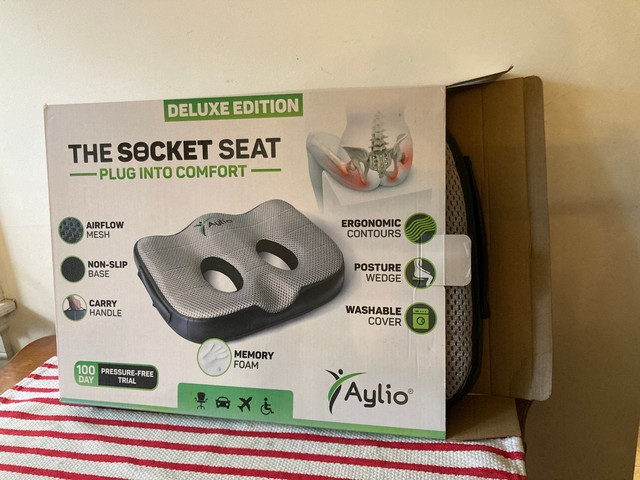
Aylio Coccyx Orthopedic Comfort Foam Seat Cushion
A U-cutout memory-foam cushion aimed at tailbone and lower-body pressure relief, one of the longest-standing names in this category.
- U-shaped rear cutout
- Memory foam construction
- Non-slip base
- Washable cover
- Well-established product with a long track record
- Firm-but-forgiving foam holds shape over time
- Foam can run warm without a breathable cover
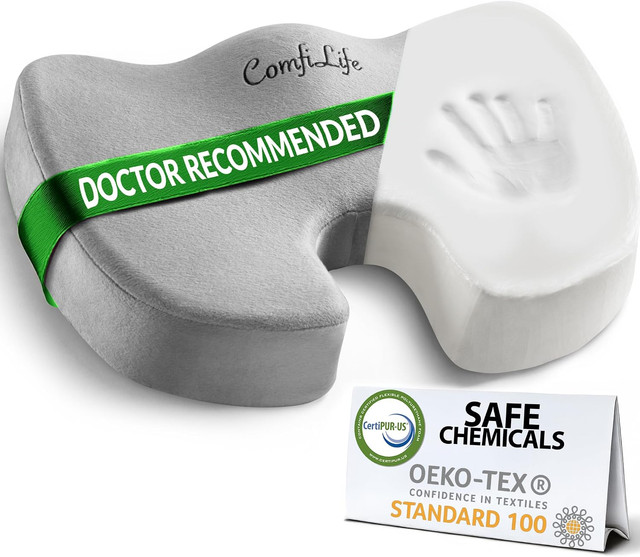
ComfiLife Premium Comfort Seat Cushion
A non-slip 100% memory-foam cushion with a coccyx cutout, widely used for general tailbone and lower-back pressure relief.
- Coccyx cutout
- 100% memory foam
- Non-slip bottom
- Washable cover
- Firm support that doesn’t bottom out
- Widely available and well-reviewed
- Cutout is moderate depth — not as deep as dedicated wedge designs
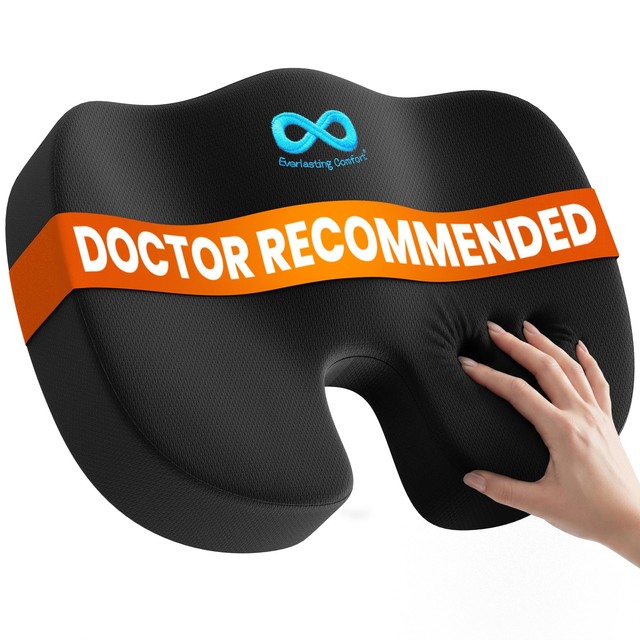
Everlasting Comfort Memory Foam Seat Cushion
A doctor-recommended-marketed memory foam cushion with a U-shaped rear cutout, positioned for office chair and car use.
- U-shaped coccyx cutout
- Memory foam
- Ergonomic design for chairs and car seats
- Washable cover
- U-cutout design rather than a full ring
- Widely stocked, easy to compare sizes
- Softer foam than some competitors — can compress unevenly over months of daily use
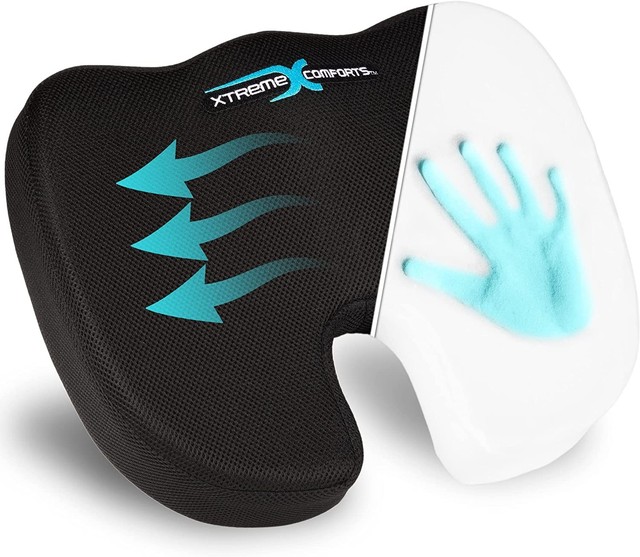
Xtreme Comforts Deluxe Coccyx Seat Cushion
A U-shape cutout cushion built specifically to keep pressure off the tailbone area, with a firmer foam than some competitors.
- U-shape cutout
- Memory foam with back support option
- Non-slip base
- Washable cover
- Firmer foam holds its shape under regular use
- Cutout is deep enough for genuine pressure relief
- Firmer feel may need a break-in period
ObboMed SU-2370 Orthopedic Wedge Cushion with Coccyx Cut-Out
A wedge-shaped cushion with a coccyx cutout — the wedge angle tilts the pelvis forward, which some pelvic-pain resources note can further reduce direct pressure on the perineal area versus a flat cushion.
- Wedge shape with coccyx cutout
- Poly/cotton removable cover
- Firm support foam
- Wedge angle changes sitting posture, not just cushioning
- Poly/cotton cover is easy to remove and wash
- Wedge angle takes adjustment if you’re not used to a tilted seat

Purple Ultimate Seat Cushion
A different approach entirely: no cutout, instead a 2.5in gel-grid pad that redistributes pressure across the whole seat surface rather than isolating the tailbone area.
- GelFlex grid pad, no cutout
- Temperature-neutral gel material
- Large 21.75 x 18in surface
- Non-slip
- Pressure redistribution across the full seat, not a single cutout zone
- No cutout means no edge pressure at all
- No cutout at all, so it won’t fully unload a specific pressure point the way a U-shaped design does
- Noticeably pricier than the foam options here
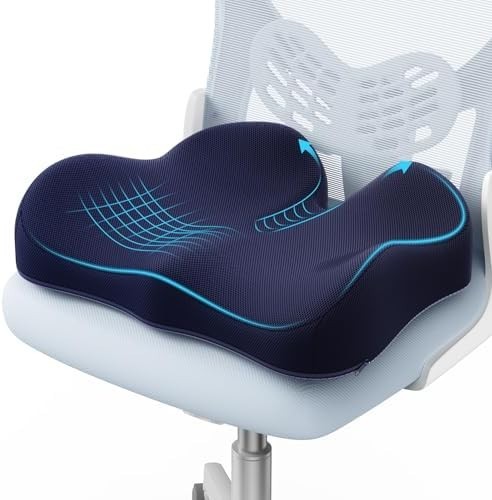
Cushion Lab Pressure Relief Seat Cushion
A patented, extra-dense memory foam cushion with a rear cutout, marketed specifically for hip, tailbone, coccyx and sciatica pressure relief during long sitting.
- Patented ergonomic cutout design
- Extra-dense memory foam
- Non-slip base
- Washable cover
- Denser foam than most budget cushions, holds shape longer under daily use
- Well-reviewed specifically for tailbone/coccyx pressure
- Pricier than the Aylio/ComfiLife tier
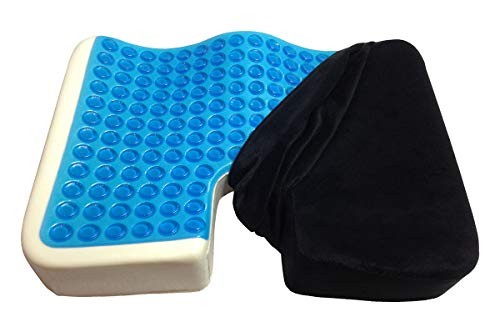
Kieba Coccyx Seat Cushion
A cool-gel-infused memory foam cushion with a U-shaped cutout, sized larger than most competitors for extra surface support.
- U-shaped coccyx cutout
- Cool gel memory foam
- Larger-than-average surface size
- Non-slip bottom
- Cooling gel layer helps with foam heat retention over long sits
- Larger surface area than most competing cushions
- Bulkier to carry/store than slimmer cushions
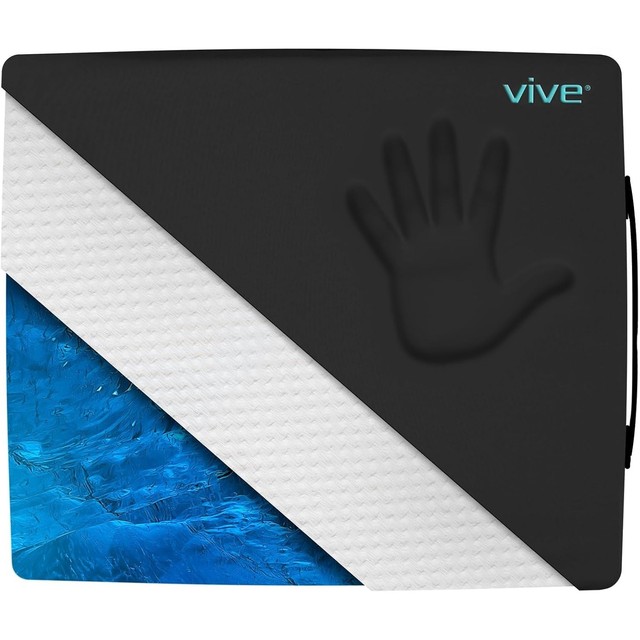
Vive Coccyx Cushion
A budget-friendly contoured memory foam cushion with a rear cutout, from a brand focused on mobility and orthopedic support products.
- Contoured coccyx cutout
- Memory foam construction
- Non-slip base
- Washable cover
- Lower price point than Cushion Lab or Kieba
- Orthopedic-focused brand with a wide support-product catalog
- Thinner foam profile than the denser premium options here

Drive Medical Wedge Cushion with Stretch Cover
A medical-supply-brand wedge cushion, similar in concept to the ObboMed wedge above but from a company that primarily sells to healthcare/DME channels.
- Wedge shape
- Foam fill
- Removable stretch cover
- Sold through medical-supply retailers
- Medical-supply-grade construction and sourcing
- Stretch cover is easy to remove and wash
- Fewer color/style options than consumer-market cushions
Buying tips
- Avoid full “donut” ring cushions for this specific type of nerve pain — several pelvic-health resources note the ring shape itself creates a band of pressure around the sensitive area and can make things worse rather than better; look for a center or U-shaped cutout instead.
- Foam firmness matters: too soft and you sink into the gap, increasing pressure on surrounding tissue; too firm and there’s no give at all. Medium-firm memory foam is the usual middle ground.
- A wedge-angle cushion changes your pelvic tilt, not just the cushioning underneath you — it can help or aggravate symptoms depending on the individual, so it’s worth trying before committing to daily use.
- See a pelvic-health physical therapist or physician for a proper diagnosis and treatment plan — a cushion changes sitting pressure, it does not treat the underlying nerve condition.
As an Amazon Associate and eBay Partner, toptenpick.com earns from qualifying purchases. Prices and availability are subject to change.