

As an Amazon Associate and eBay Partner, toptenpick.com earns from qualifying purchases. Prices and availability are subject to change.
Most PA program supply lists point straight at the Littmann Cardiology IV, and most students buy it without asking whether they need it. The honest answer for the majority of PA students is no, not yet. Tubing length, how well the ear tips seal your ear canal, and whether the earpieces sit at the right angle for your head change what you actually hear far more than which chestpiece model you own. A Cardiology IV with ear tips that do not seal will lose you more low-frequency sound than a Classic III with tips that fit properly.
That fit variable is easy to check and almost never checked. Ear tips come in at least two sizes per model, and the canal they need to seal is yours, not a size chart’s. If air leaks around the tip, even a little, the diaphragm’s low-frequency signal drops out first, which is exactly the range that carries heart sounds and diminished breath sounds. Before comparing chestpieces, try the largest snap-tight tip that seats without discomfort. It is the single change most likely to improve what you hear on day one, and it costs nothing.
None of this means chestpiece design is irrelevant, it means it matters less than fit and matters more once you already have a good seal. The Cardiology IV’s larger, deeper chestpiece genuinely picks up fainter murmurs and softer breath sounds than the Classic III, which is real value if you already know you are headed toward cardiology, pulmonology, or a busy ICU rotation. Digital options go further still: the Littmann CORE adds amplification and Bluetooth waveform capture on top of the Cardiology IV’s acoustics, and the Eko CORE 500 adds a built-in ECG. Both are genuinely more capable, and both cost more than most first-year students need to spend before they know their specialty.
On the other end, MDF’s lineup delivers most of a Littmann’s practical function at roughly half the price, usually with a longer warranty, and the ADC Adscope covers basic vitals work for the cost of a few textbooks. To be clear, this is equipment advice, not clinical advice: no stethoscope here will make you a better diagnostician by itself. What changes with the equipment is acoustic performance, comfort over a long shift, and how much of a faint sound survives the trip from the patient’s chest to your ear.
The ten stethoscopes below cover that range, from a budget teaching scope through the Littmann and MDF acoustic tiers to two fully electronic options, with real specs, prices, and the honest tradeoffs of each. Check the fit-and-tubing basics first. The chestpiece name on the box is the second decision, not the first.
| # | Product | Price | Where to buy |
|---|---|---|---|
| 1 | 3M Littmann Classic III | $120–$150 | Amazon · eBay |
| 2 | 3M Littmann Cardiology IV | $180–$220 | Amazon · eBay |
| 3 | 3M Littmann Lightweight II S.E. | $60–$90 | Amazon · eBay |
| 4 | 3M Littmann CORE Digital Stethoscope | $330–$360 | Amazon · eBay |
| 5 | Eko CORE 500 Digital Stethoscope | $395–$500 | Amazon · eBay |
| 6 | MDF MD One Epoch Titanium | $55–$70 | Amazon · eBay |
| 7 | MDF ProCardial Titanium | $65–$90 | Amazon · eBay |
| 8 | MDF Acoustica Deluxe | $25–$35 | Amazon · eBay |
| 9 | ADC Adscope 641 Sprague Rappaport | $20–$30 | Amazon · eBay |
| 10 | Ultrascope Single Stethoscope | $90–$100 | Amazon · eBay |
The picks, in detail
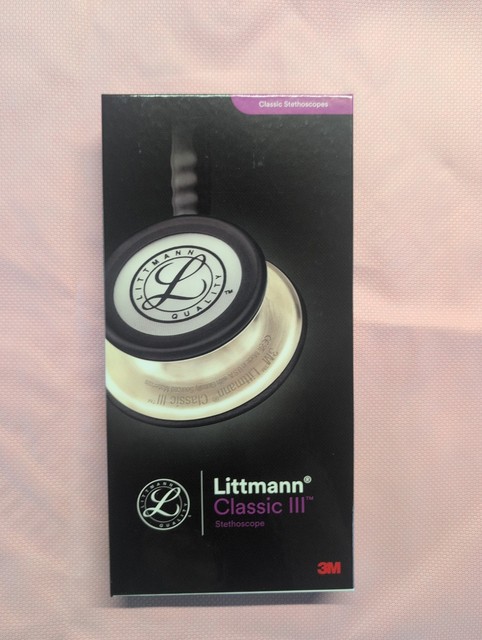
3M Littmann Classic III
The default recommendation for most PA programs and the scope your preceptors likely already own, which makes it easy to compare notes on technique. Dual-lumen tubing keeps the diaphragm and bell sound paths separate to cut friction noise, and the tunable diaphragm on both sides covers adult and pediatric exams with one chestpiece.
- Dual-lumen tubing for adult and pediatric sides
- Tunable diaphragm on both chestpiece faces
- 27-inch tubing, about 5.5 oz
- 7-year manufacturer warranty
- Widely used, so preceptors can troubleshoot the same scope
- Latex-free tubing
- Solid acoustic performance for its price tier
- Less sensitive than the Cardiology IV for faint murmurs
- Stock ear tips do not seal well for every ear canal shape

3M Littmann Cardiology IV
The step up in raw acoustic sensitivity, with a larger and deeper tunable chestpiece built for faint heart and lung sounds. Worth the premium if you already expect to spend time in cardiology, pulmonology, or critical care rotations; unnecessary weight and cost for a student who has not yet found that out.
- Larger, deeper tunable chestpiece than the Classic III
- Dual-lumen tubing, 22-inch or 27-inch length options
- About 6.1 oz, heavier than the Classic III
- 7-year manufacturer warranty
- Best acoustic sensitivity of any purely analog Littmann
- Adult and pediatric sides are both tunable
- Strong resale and trade-in recognition among Littmann scopes
- Noticeably heavier around the neck over a full clinical day
- Price premium buys sensitivity most early rotations do not require

3M Littmann Lightweight II S.E.
A simpler tunable-diaphragm-plus-open-bell design for students who find the Classic III too heavy or too expensive. It gives up some tuning flexibility in exchange for the lightest weight in the Littmann adult lineup, which is noticeable by the end of a ten-hour shift on the wards, especially if you already carry a loaded white coat and a badge reel of tools around your neck all day.
- About 118 g, the lightest adult Littmann stethoscope
- Tunable diaphragm plus separate open bell
- 28-inch tubing
- 2-year manufacturer warranty
- Comfortable for extended daily wear
- Lower price than the Classic III
- Snap-tight ear tips stay seated during exams
- No dual-tunable chestpiece, so it is less versatile than the Classic III
- Shorter warranty than the Classic III or Cardiology IV

3M Littmann CORE Digital Stethoscope
A Cardiology IV chestpiece paired with a digital amplifier and a Bluetooth link to the Eko app, so you can switch between acoustic listening and up to 40x amplification and see a waveform on your phone. Built for someone who wants electronic assist without leaving the Littmann acoustic design behind.
- Cardiology IV acoustic chestpiece with CORE digital attachment
- Up to 40x amplification with active noise cancellation
- Bluetooth streaming to the Eko app on iOS and Android
- 2-year limited warranty
- Switches instantly between analog and amplified listening
- Recordable, shareable heart-sound waveforms for later review
- Same chestpiece feel as the analog Cardiology IV
- Costs close to the price of three Classic IIIs
- Battery and electronics add a failure point a purely acoustic scope does not have
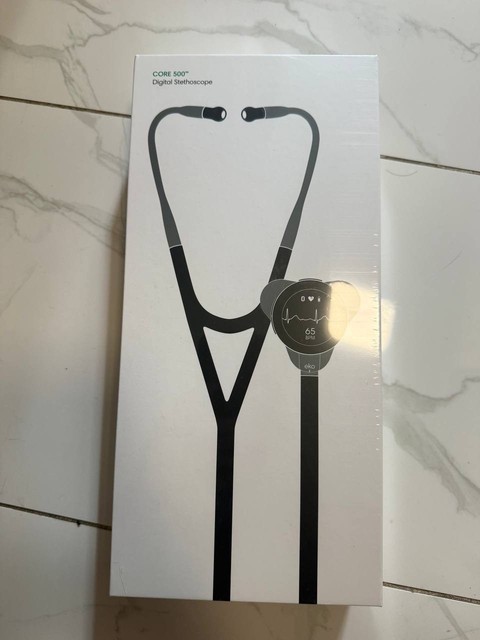
Eko CORE 500 Digital Stethoscope
A fully electronic stethoscope with a built-in 3-lead ECG and an onboard screen, aimed at students who want objective waveform data alongside sound rather than just amplification. It is the steepest price and the steepest learning curve on this list, and the most capable if you use those features.
- 3-lead ECG plus phonocardiogram display
- Three auscultation modes: cardiac, pulmonary, and wide band
- Full-color onboard display, up to 60-hour battery life
- Optional Eko+ subscription for AI murmur and AFib detection
- Only scope on this list that captures ECG alongside sound
- Exam recordings can be reviewed later or shared with a preceptor
- Scratch- and splash-resistant housing
- The most expensive option here by a wide margin
- AI detection features require a $119.99 per year subscription after the trial

MDF MD One Epoch Titanium
A titanium dual-head stethoscope that undercuts the Littmann Classic III on price while still covering adult and pediatric exams through one convertible chestpiece. The realistic budget pick for a student who wants name-brand build quality without the Littmann price tag, and one of the few scopes here backed by a genuinely lifetime warranty rather than a two- or seven-year one.
- Titanium construction, about half the weight of MDF’s steel scopes
- Convertible chestpiece with screw-on adult/pediatric conversion
- Pre-angled, tension-adjustable ErgonoMax headset
- Lifetime warranty with free-parts-for-life
- Longer warranty than anything Littmann offers
- Noticeably cheaper than Littmann for comparable build quality
- Wide color and finish selection
- Acoustic sensitivity trails the Littmann Classic III in side-by-side use
- Less brand recognition among preceptors than Littmann

MDF ProCardial Titanium
MDF’s cardiology-tier scope, with an extra-deep cone bell and a more sensitive diaphragm than the MD One, aimed at the same acoustically demanding use case as the Littmann Cardiology IV but at roughly half the price. A reasonable middle ground if the Cardiology IV’s cost is the only thing stopping you.
- Extra-deep cone-shaped bell for low-frequency sounds
- True bell and true diaphragm dual-head, patented convertible chestpiece
- About 4.9 oz titanium chestpiece, roughly half MDF’s steel version
- Lifetime warranty
- Cardiology-level acoustic design for less than a Littmann Cardiology IV
- ComfortSeal ear tips reduce ambient noise pickup
- Convertible to pediatric and infant sizes with separate attachments
- Pediatric and infant attachments are sold separately
- Less brand recognition than Littmann in clinical settings

MDF Acoustica Deluxe
MDF’s entry-level scope, aimed at first-semester students who need something functional for physical-exam labs before committing to a pricier scope once they know their program’s expectations. Fine for vitals and basic auscultation practice, not built for picking out faint sounds in a loud emergency department.
- Aluminum dual-head chestpiece with a brass acoustic valve stem
- Deep cone bell rated for 20 to 100 Hz low-frequency sounds
- Ultra-thin fiber diaphragm
- Lifetime warranty with free-parts-for-life
- Lowest price on this list from a name-brand maker
- Same lifetime warranty as MDF’s pricier scopes
- Light enough for all-day wear
- Weakest acoustic sensitivity on this list
- Not the scope to rely on for subtle murmurs or breath sounds
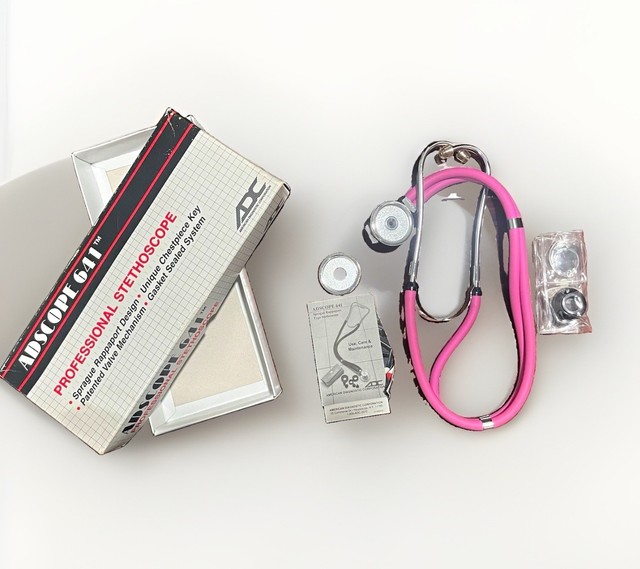
ADC Adscope 641 Sprague Rappaport
A Sprague Rappaport design with five interchangeable chestpieces rather than one tunable diaphragm, an older acoustic format some programs still use for teaching vitals and blood pressure. Worth knowing about even though most PA programs now favor tunable-diaphragm scopes like the Littmann or MDF lines.
- 5 interchangeable chestpieces: adult and pediatric diaphragms plus 3 bell sizes
- Double-tube design for stereo separation
- 30-inch overall length, about 7 oz
- 5-year manufacturer warranty
- Cheapest functional option on this list
- Interchangeable bells cover a wider size range than a fixed chestpiece
- Comes with spare diaphragms and ear tips
- Sprague design is bulkier and less comfortable around the neck than a single-tube scope
- Double tubing can pick up rubbing noise if the tubes cross

Ultrascope Single Stethoscope
A made-in-USA stethoscope with an acrylic chestpiece and a fully customizable exterior print, built for students who want a scope instantly identifiable as theirs on a busy clinic floor. Acoustic performance sits a step below the Littmann and MDF tunable designs, but the identification value is real when a dozen scopes look identical.
- Acrylic chestpiece, quieter handling noise than a metal one
- 500-plus customizable exterior designs, including personal photos
- Lifetime warranty on parts
- Made in the USA
- Easy to spot as yours instead of one of many identical black scopes
- Cheaper than the Littmann Classic III
- Acrylic chestpiece resists scratches
- Acoustic performance is not in the same tier as Littmann or MDF ProCardial
- Novelty design may read as less serious in some clinical settings
Buying tips
- Try the ear tips in your own ears before buying anything. A stethoscope that does not seal your ear canal loses low-frequency sound no matter how good the chestpiece is.
- Swap to the largest snap-tight ear tip that seats without pain. Most students default to whatever ships in the box and never try the other sizes.
- Measure tubing length against how you actually work. Around 27 to 28 inches lets you stand back from a patient without hunching, while a 22-inch tube transmits sound very slightly better at close range.
- Buy a spare set of diaphragms and ear tips at the same time you buy the scope. They wear out and go missing long before the chestpiece does, and most brands sell them separately.
- Ask your program directly whether a digital or amplified stethoscope is allowed during skills checks or exams before buying one. Some require a purely acoustic scope.
- Tag or engrave your stethoscope with your name the day it arrives. A Littmann left in a shared clinic supply room is a common and expensive loss.
- If you already own a Classic III or Cardiology IV from an undergraduate nursing prerequisite, check that it still tunes cleanly between bell and diaphragm modes before spending on a new one.
- Re-tube rather than replace when the tubing cracks, stiffens, or yellows. Littmann and MDF both sell replacement tubing kits for well under the cost of a new stethoscope.
As an Amazon Associate and eBay Partner, toptenpick.com earns from qualifying purchases. Prices and availability are subject to change.