

As an Amazon Associate and eBay Partner, toptenpick.com earns from qualifying purchases. Prices and availability are subject to change.
The question behind this search is usually backwards. A GTX 1050 Ti is a 75W card that draws its entire power budget from the PCIe slot — the reference design has no 6-pin or 8-pin power connector at all — and that alone says how modest its ceiling is. At 1080p, almost any CPU built in the last decade can feed it fully; buying a brand-new CPU specifically to “unlock” more performance from a 1050 Ti is, for most owners, money that would do more for actual gameplay spent elsewhere. The card’s real limit is its 4GB of VRAM, which forces lower texture settings in newer titles no matter what CPU sits next to it.
A CPU upgrade does make sense in two real situations. First, if the current chip is genuinely weak for gaming — an old dual-core Pentium or Celeron, or a first-generation FX-series AMD chip out of a decade-old prebuilt — those can bottleneck even a modest GPU like this one in current titles. Second, if this is a deliberate staging upgrade: build a platform now with room to grow, then swap in a stronger GPU later without touching the CPU again.
Anyone in the first group should check one thing before buying a same-socket “upgrade”: Intel’s LGA1151 socket exists in two electrically incompatible versions that look identical. Boards with 100- or 200-series chipsets — paired with the 6th/7th-gen Skylake and Kaby Lake chips from the same era the 1050 Ti launched into — cannot run 8th/9th-gen Coffee Lake CPUs like the i5-9400F, which need a 300-series board. Confirm the chipset, not just the socket name, before ordering anything.
Because the card’s own ceiling is VRAM, not CPU horsepower, the list below leans budget rather than chasing headroom a 1050 Ti will never use, with a couple of current-platform options included for anyone planning ahead to a future GPU swap. The used market for older AM4 and LGA1151 chips is healthy and cheap in 2026, which suits a card this old — just factor in that used parts carry no warranty.
One more honest check before spending anything: drop the resolution or settings in your heaviest game and see if frame rate moves. If it barely changes, the 1050 Ti’s GPU and VRAM ceiling is what’s holding you back, not the processor, and no CPU on this list will fix that.
| # | Product | Price | Where to buy |
|---|---|---|---|
| 1 | AMD Ryzen 5 5600 | $140–$165 | Amazon · eBay |
| 2 | Intel Core i3-12100F | $90–$120 | Amazon · eBay |
| 3 | AMD Ryzen 5 4500 | $80–$100 | Amazon · eBay |
| 4 | Intel Core i5-10400F | $65–$95 | Amazon · eBay |
| 5 | AMD Ryzen 5 3600 | $100–$130 (used) | Amazon · eBay |
| 6 | Intel Core i5-9400F | $45–$90 (used) | Amazon · eBay |
| 7 | AMD Ryzen 5 2600 | $35–$55 (used) | Amazon · eBay |
| 8 | Intel Core i3-10100F | $50–$80 | Amazon · eBay |
| 9 | Intel Core i5-7500 | $20–$45 (used) | Amazon · eBay |
| 10 | AMD Ryzen 3 3100 | $35–$60 (used) | Amazon · eBay |
The picks, in detail
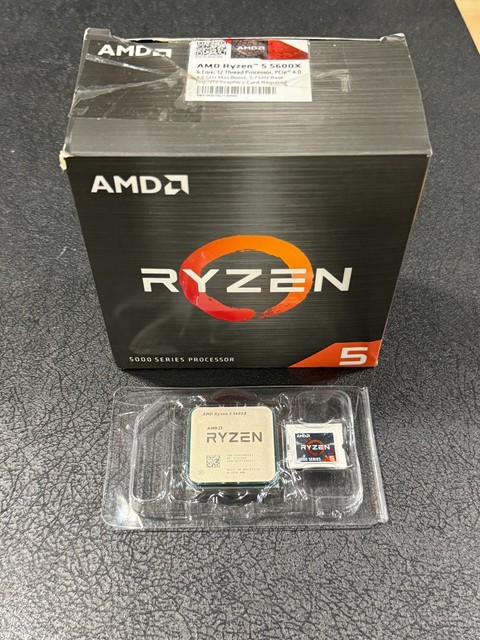
AMD Ryzen 5 5600
A 6-core, 12-thread Zen 3 chip on the still-current AM4 socket. It’s arguably more CPU than a 1050 Ti alone will ever need, but that’s the point if you’re staging a future GPU upgrade — it removes the CPU as a variable entirely and stays genuinely useful for years after the graphics card changes.
- 6 cores / 12 threads
- 3.5GHz base, 4.4GHz boost
- AM4 socket
- 65W TDP
- One of the best value chips on a mature, well-supported platform
- Ample headroom for a future GPU upgrade
- Runs cool enough for an inexpensive cooler
- Genuinely more CPU than a 1050 Ti alone needs today
- AM4 is a mature platform nearing the end of its own upgrade path
- No integrated graphics for troubleshooting without the discrete GPU

Intel Core i3-12100F
A current-generation quad-core on the still-current LGA1700 socket. It’s a sensible “build now, upgrade the GPU later” pick since the platform itself has more runway left than any older socket on this list, even though its four cores are a smaller step up than the six-core options here.
- 4 cores / 8 threads
- up to 4.3GHz
- LGA1700 socket
- 58W TDP
- Genuinely current platform with a longer future upgrade path
- Low price for the performance
- Efficient power draw
- No integrated graphics on the F variant, so it needs a working GPU to display anything
- Requires a DDR4 or DDR5 board purchase if building fresh
- Only four cores, a smaller jump than the six-core picks here

AMD Ryzen 5 4500
A budget six-core Zen 2 chip on AM4, cheaper than the 5600 while still comfortably ahead of anything a 1050 Ti actually needs fed to it. A solid choice if the goal is simply to stop being CPU-limited in day-to-day gaming without spending much to get there.
- 6 cores / 12 threads
- 3.6GHz base, 4.1GHz boost
- AM4 socket, includes stock cooler
- 65W TDP
- Comes bundled with a usable stock cooler
- Cheaper than the 5600 while covering most everyday gaming performance
- AM4 keeps a future GPU-only upgrade path open
- Slightly weaker gaming performance than newer Zen 3 parts like the 5600
- Fewer usable PCIe lanes than newer AM4 chips
- Still an older core design overall

Intel Core i5-10400F
A six-core LGA1200 chip from roughly the same era as the budget prebuilts that originally shipped 1050 Tis next to much weaker dual- or quad-core CPUs. A cheap, straightforward upgrade if you already have a 400- or 500-series board and don’t want to swap the motherboard too.
- 6 cores / 12 threads
- 2.9GHz base, 4.3GHz turbo
- LGA1200 socket
- 65W TDP
- Comfortably ahead of the weaker CPUs many 1050 Ti prebuilts originally shipped with
- Inexpensive on the used and clearance market
- Low power draw
- LGA1200 is an end-of-life socket with no further CPU upgrades available
- No integrated graphics on the F suffix
- Older core architecture than similarly priced AM4 alternatives

AMD Ryzen 5 3600
A still genuinely capable 6-core, 12-thread chip on the used market, well beyond what a 1050 Ti’s 4GB VRAM ceiling will ever call for. It sits between the cheaper Ryzen 5 2600 and the newer 4500/5600 in both price and performance, making it worth checking against both before buying.
- 6 cores / 12 threads
- 3.6GHz base, 4.2GHz boost
- AM4 socket
- 65W TDP
- Strong price-to-performance on the used market
- AM4 keeps a later GPU-only upgrade path open
- Widely available with plenty of buyer feedback to vet sellers by
- Buying used means no manufacturer warranty
- Older Zen 2 core design compared to the 4500 or 5600
- Can sell for close to a new Ryzen 5 4500 depending on the week

Intel Core i5-9400F
A worthwhile six-core for anyone whose existing board already uses a 300-series LGA1151 (Coffee Lake) chipset — confirm that first, since it will not boot on a 100- or 200-series board despite the identical physical socket. A cheap way to remove a genuinely weak CPU without a motherboard change on the right board.
- 6 cores / 6 threads
- 2.9GHz base, 4.1GHz turbo
- LGA1151, 300-series chipset only
- 65W TDP
- Very cheap on the used market
- Meaningful step up from a budget dual-core prebuilt CPU
- Low power draw
- Requires a 300-series board; won’t work in 100/200-series LGA1151 boards despite the same socket shape
- No hyperthreading, six threads total
- LGA1151 has no further CPU upgrade path

AMD Ryzen 5 2600
The cheapest AM4 six-core worth considering, and a reasonable stopgap if the current CPU is a genuine bottleneck and the budget is tight. It won’t match newer Zen chips per core, but it’s still six real cores and twelve threads for very little money.
- 6 cores / 12 threads
- 3.4GHz base, 3.9GHz boost
- AM4 socket, includes stock cooler
- 65W TDP
- Very low used price
- Still six cores and twelve threads for the money
- AM4 socket keeps some upgrade room open
- Slower per-core than newer Zen chips, so gains are more modest
- Buying used carries no warranty
- PCIe 3.0 only, which limits future GPU choices even though it doesn’t affect a 1050 Ti

Intel Core i3-10100F
A budget LGA1200 quad-core, enough to stop a genuinely weak older CPU from limiting esports titles and lighter older games alongside a 1050 Ti, without spending much to get there. It’s a modest step, appropriate for a modest GPU.
- 4 cores / 8 threads
- 3.6GHz base, 4.3GHz turbo
- LGA1200 socket
- 65W TDP
- Cheap
- Enough performance for most titles this GPU can actually run well
- Low power draw
- Only four cores, not much of an upgrade over similar-era Intel quads
- LGA1200 has no further CPU upgrade path
- No integrated graphics on the F variant

Intel Core i5-7500
The closest same-generation match to the 1050 Ti’s original launch window — worth considering only if your existing board is already a 100- or 200-series LGA1151 chipset and the goal is to avoid a motherboard swap entirely. It’s the weakest option here on paper, but it’s also the cheapest way to stay on the same platform.
- 4 cores / 4 threads
- 3.4GHz base, 3.8GHz turbo
- LGA1151, 100/200-series chipset
- 65W TDP
- No motherboard change needed on a matching older board
- Very cheap used
- Enough for esports titles and older AAA games at 1080p
- No hyperthreading, four threads total, the weakest option here for newer titles
- A dead-end socket with zero further upgrade path
- Used pricing and condition vary widely
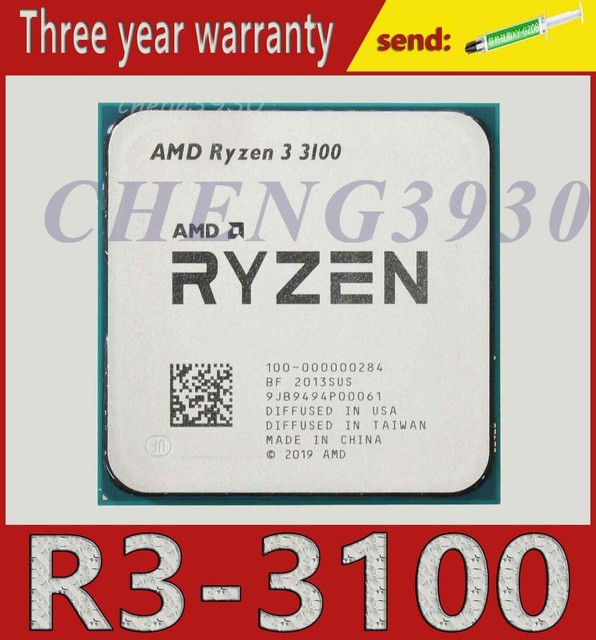
AMD Ryzen 3 3100
A cheap AM4 quad-core with SMT, a reasonable minimum-viable upgrade if the current CPU is the real problem and the plan is to move to a proper six-core later once the GPU also gets replaced. It’s more of a bridge than a destination.
- 4 cores / 8 threads
- 3.6GHz base, 3.9GHz boost
- AM4 socket
- 65W TDP
- Very low price
- SMT gives it more headroom than similarly priced quad-cores without it
- AM4 socket keeps upgrade room open
- Four cores is a smaller jump than the six-core options here
- Buying used carries no warranty
- Only a modest step up if the current CPU isn’t actually the bottleneck
Buying tips
- Check your motherboard’s chipset, not just its socket name, before buying a same-socket CPU — LGA1151’s 100/200-series boards and 300-series boards look identical but cannot run each other’s CPU generation.
- Fix the 1050 Ti’s actual ceiling first: its 4GB of VRAM is what forces lower texture settings in newer games, and no CPU upgrade changes that.
- If your current CPU is an old dual-core Pentium or Celeron, or a first-generation FX-series chip, that’s a genuine bottleneck worth fixing; a mid-range six-core from the last several years generally is not.
- Favor a socket with a future — AM4 or LGA1700 — over a single-generation dead-end platform, even if the 1050 Ti alone doesn’t need the extra headroom today.
- The 1050 Ti draws its full ~75W straight from the PCIe slot with no separate power connector on the reference design, so there’s nothing to check on the power-delivery side for the GPU itself.
- Moving to a different CPU socket almost always means a new motherboard and cooler too — price that in before assuming a CPU-only upgrade is cheap.
- If you plan to replace the 1050 Ti within a year or two, buy the cheapest CPU that removes your real bottleneck now rather than paying for headroom this GPU can’t use.
- Test whether you’re actually CPU-bound before spending anything: drop resolution or settings in your heaviest game, and if frame rate barely moves, the GPU and its VRAM are the limit, not the processor.
As an Amazon Associate and eBay Partner, toptenpick.com earns from qualifying purchases. Prices and availability are subject to change.