

As an Amazon Associate and eBay Partner, toptenpick.com earns from qualifying purchases. Prices and availability are subject to change.
An i5-2500 is a Sandy Bridge quad-core from 2011 — four cores, four threads, no hyper-threading. It is still a perfectly capable chip for older and less demanding games, and the honest framing for this upgrade is that you are not building a fast system, you are getting the most out of one you already own.
Three limits decide what is worth buying:
Four threads. Modern titles increasingly assume six or more. In CPU-heavy games — large open worlds, simulation, anything with lots of NPCs — the processor runs out of headroom regardless of the card, and you see it as stutter and poor 1% lows while the GPU sits well below full load.
PCIe 3.0 x16. Fine for most cards, but modern budget cards with an x8 or x4 interface lose real performance on an older slot. Check the interface width, not just the generation.
No Resizable BAR. Some current cards, particularly Intel’s Arc line, depend on it heavily and underperform badly without it.
The practical sweet spot is a card that saturates 1080p without asking more of the CPU than it can give. Ten below, with the honest ceiling marked.
| # | Product | Price | Where to buy |
|---|---|---|---|
| 1 | AMD Radeon RX 6600 | $180–$230 | Amazon · eBay |
| 2 | AMD Radeon RX 580 8GB | $70–$130 | Amazon · eBay |
| 3 | NVIDIA GeForce GTX 1060 6GB | $80–$130 | Amazon · eBay |
| 4 | NVIDIA GeForce GTX 1650 Super | $110–$160 | Amazon · eBay |
| 5 | AMD Radeon RX 6600 XT | $220–$280 | Amazon · eBay |
| 6 | NVIDIA GeForce GTX 1660 Super | $120–$170 | Amazon · eBay |
| 7 | AMD Radeon RX 570 4GB or 8GB | $50–$90 | Amazon · eBay |
| 8 | NVIDIA GeForce GTX 1070 | $110–$170 | Amazon · eBay |
| 9 | Intel Arc A580 or A750 — with a warning | $140–$220 | Amazon · eBay |
| 10 | A 16 GB DDR3 memory kit | $20–$40 | Amazon · eBay |
The picks, in detail
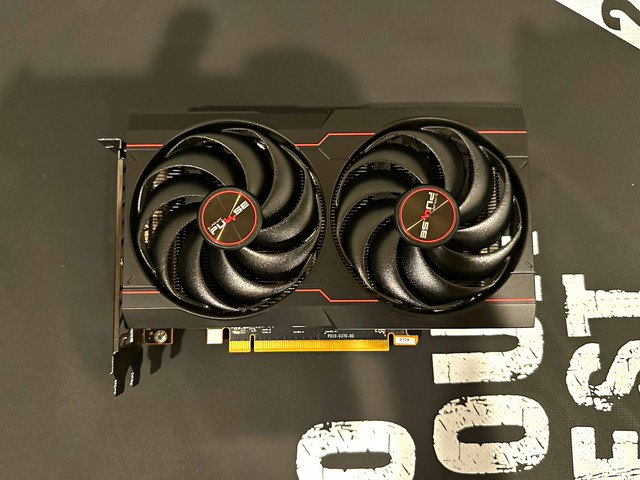
AMD Radeon RX 6600
The best overall pairing available today. It comfortably drives 1080p at high settings, draws little power so a modest older PSU can usually handle it, and — the important detail — it runs a PCIe 4.0 x8 interface that behaves perfectly well on this board’s 3.0 slot. It will be somewhat held back by four threads in demanding titles, but it is the point where the card stops being the limit.
- 8 GB VRAM, comfortable for 1080p high
- Roughly 130 W, modest PSU requirement
- PCIe 4.0 x8, no meaningful loss on a 3.0 slot
- Widely available new and used
- Strongest sensible pairing for this CPU
- Low power draw suits an older build
- 8 GB VRAM has real headroom
- Four threads will bottleneck it in CPU-heavy games
- Weak at ray tracing
- Not worth it if you only play older titles

AMD Radeon RX 580 8GB
The value benchmark for this class of system, and the card most often recommended alongside a Sandy Bridge i5. It handles 1080p in most titles at medium to high, the 8 GB version has aged far better than the 4 GB, and the used market is full of them at low prices. Power draw is the catch — it wants a real PSU with two 6+2 pin connectors.
- 8 GB VRAM — buy this version, not the 4 GB
- PCIe 3.0 x16, native fit for this platform
- Strong used availability at low prices
- Roughly 185 W under load
- Excellent price-to-performance, especially used
- Native PCIe 3.0 x16 interface
- 8 GB ages well for textures
- Power hungry — needs a decent PSU
- Runs hot and loud on cheaper coolers
- Used cards may have had heavy mining use
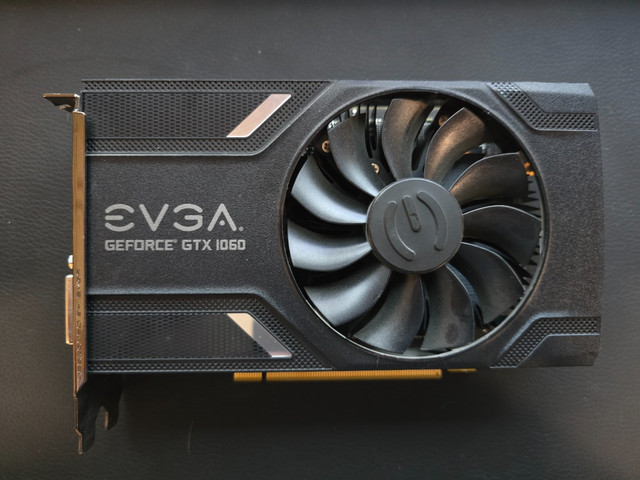
NVIDIA GeForce GTX 1060 6GB
The NVIDIA equivalent and the other card that dominates recommendations for this platform. Slightly more efficient than the RX 580, slightly slower in newer titles, and better supported by older games and software that expect NVIDIA. The 6 GB version is the one to get; the 3 GB card is a meaningfully different and weaker product despite the similar name.
- 6 GB VRAM — not the 3 GB variant
- Roughly 120 W, modest power requirement
- PCIe 3.0 x16
- NVENC encoder for streaming and recording
- Efficient and quiet
- Good driver support for older titles
- NVENC is genuinely useful for capture
- 3 GB variant is a trap — check before buying
- Slower than the RX 580 in newer games
- Ageing feature set, no modern upscaling

NVIDIA GeForce GTX 1650 Super
The efficient modern-ish option, and notable because many versions need no supplementary power connector at all — it draws what it needs from the slot. That makes it the answer for a prebuilt with a small proprietary PSU, which describes a lot of surviving Sandy Bridge machines. Performance sits near the GTX 1060.
- Roughly 100 W, many variants need no PCIe power cable
- 4 GB VRAM
- PCIe 3.0 x16
- Compact, fits small cases
- Often requires no PSU upgrade at all
- Compact enough for slim prebuilts
- Good performance per watt
- 4 GB VRAM is limiting for newer textures
- Not much faster than a used 1060 that costs less
- Limited availability new

AMD Radeon RX 6600 XT
A step above the plain 6600 and realistically the ceiling worth considering. It is a capable 1080p-high and occasional 1440p card, which means on this CPU it will spend a good deal of time waiting for the processor. Buy it only if the system is a stepping stone and the card will move to a new build later — as a permanent pairing it is money the CPU cannot use.
- 8 GB VRAM, strong 1080p and entry 1440p
- Roughly 160 W
- PCIe 4.0 x8
- Good resale value
- Comfortable headroom at 1080p
- Sensible card to carry into a future build
- Efficient for its performance
- Clearly bottlenecked by four threads
- Costs more than this platform justifies alone
- Diminishing returns versus the plain 6600

NVIDIA GeForce GTX 1660 Super
The last really sensible NVIDIA card of the older generation, sitting between the 1060 and the modern budget cards. 6 GB of faster memory gives it a genuine edge over the 1060 in newer titles, and power draw stays moderate. A good buy used, and a reasonable one new if the price is right.
- 6 GB GDDR6, faster than the 1660 non-Super
- Roughly 125 W
- PCIe 3.0 x16
- NVENC encoder included
- Clear step up from the 1060 in modern games
- Moderate power requirement
- Strong used availability
- 6 GB is becoming the new limit
- No modern upscaling support
- Often priced close to an RX 6600

AMD Radeon RX 570 4GB or 8GB
The budget floor worth buying, and often extremely cheap used. It is a step below the RX 580 and will need settings turned down in newer titles, but for older games, emulation and general use it is far more card than the integrated graphics it replaces. Prefer the 8 GB version if the price gap is small.
- 4 GB or 8 GB VRAM variants
- PCIe 3.0 x16
- Roughly 150 W
- Very low used prices
- Cheapest card here that is genuinely worth fitting
- Plenty for older titles and emulation
- 8 GB version ages noticeably better
- Struggles in current AAA titles
- Still needs supplementary power
- Heavy mining use common on the used market

NVIDIA GeForce GTX 1070
Often named as the ceiling for this CPU, and that is a fair description — it is roughly where adding more card stops producing more frames. 8 GB of VRAM keeps it usable, and used prices have fallen a long way. Worth it over a 1060 only if the price difference is modest, because the CPU will eat much of the gain.
- 8 GB VRAM
- PCIe 3.0 x16
- Roughly 150 W
- Strong performance in older and mid-weight titles
- Comfortable headroom for its era
- 8 GB VRAM still relevant
- Good value used
- Genuinely bottlenecked by this CPU
- Older feature set
- Large card, check case clearance
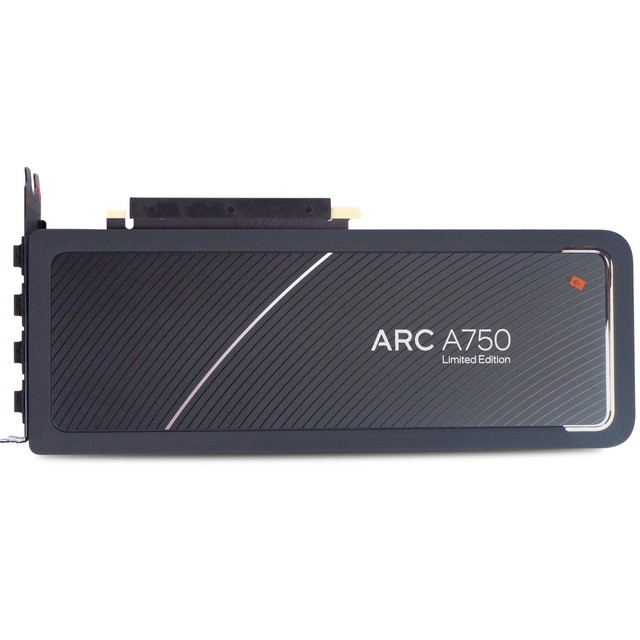
Intel Arc A580 or A750 — with a warning
Listed mainly so the decision is informed: do not buy an Arc card for this system. Arc depends heavily on Resizable BAR, which Sandy Bridge boards do not support, and without it these cards lose a large and well-documented share of their performance. They are good value on a modern platform and a poor choice on this one.
- Requires Resizable BAR for full performance
- Sandy Bridge platforms cannot provide it
- 8 GB VRAM
- Strong value on modern platforms only
- Excellent price-to-performance — on a supported platform
- Good media encode engine
- Improving driver maturity
- Major performance loss without Resizable BAR
- Not supportable on this chipset
- Included here as a warning, not a recommendation

A 16 GB DDR3 memory kit
Not a graphics card, and frequently the better purchase. Many surviving i5-2500 machines still run 8 GB, and modern games regularly exceed that — when they do, frame rates collapse in a way no GPU upgrade fixes. DDR3 is cheap now. Check what you have before spending on a card; if it is 8 GB, fix that first.
- 2 × 8 GB DDR3 1333 or 1600 MHz
- Dual channel operation
- Very low current prices
- Immediate benefit in memory-limited titles
- Often a bigger real-world gain than a faster GPU
- Costs a fraction of any card here
- Fixes stutter that looks like a GPU problem
- Does nothing if you already have 16 GB
- DDR3 is end-of-life — no future reuse
- Check board limits before buying 32 GB
Buying tips
- Check your RAM before you buy a card. At 8 GB, modern titles swap to disk and stutter regardless of GPU. A £25 memory kit frequently outperforms a £200 graphics card on these machines.
- Diagnose the bottleneck first. Watch CPU and GPU load while playing. CPU pinned near 100% with the GPU below 70% means the processor is the limit and a faster card changes almost nothing.
- Check your power supply’s wattage and its PCIe connectors. Many Sandy Bridge prebuilts shipped with 300 W units and no spare 6-pin — that rules out most cards here except the GTX 1650 Super.
- Avoid Intel Arc on this platform. No Resizable BAR support means a large, well-documented performance loss that no driver update fixes.
- Prefer 8 GB over 4 GB where the choice exists. VRAM is the specification that has aged worst, and the price gap is usually small.
- On the used market, ask about mining use and check the card’s fans physically. Worn bearings are the most common failure and the easiest thing to miss in a photo.
- Be realistic about the target. This is a 1080p, 60 fps machine for most modern games. Chasing high refresh rates on a four-thread CPU is money spent on frames the processor will not deliver.
As an Amazon Associate and eBay Partner, toptenpick.com earns from qualifying purchases. Prices and availability are subject to change.