

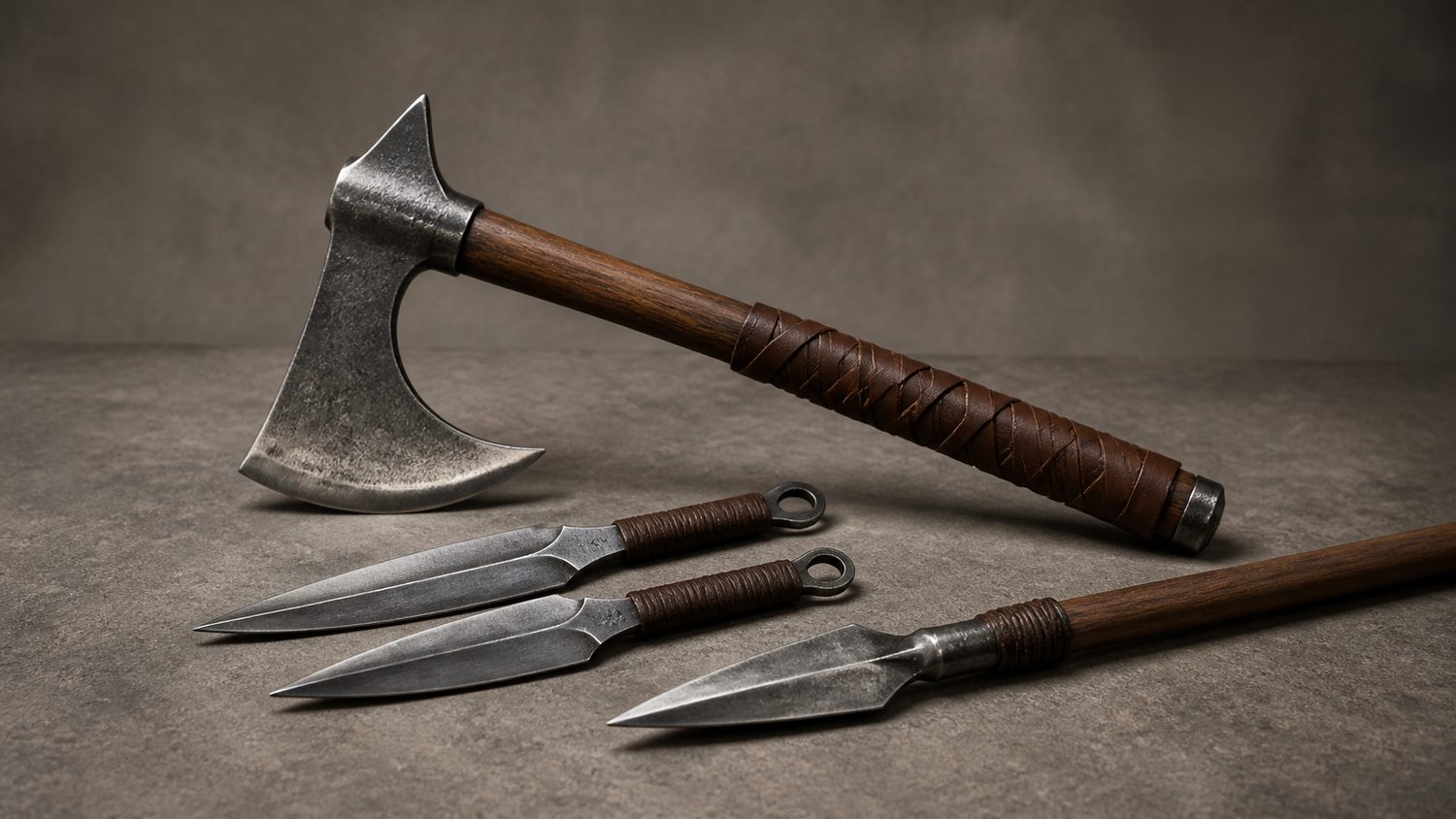
A thrown-weapon character in Dungeons & Dragons 5e works best when the rules at your own table are settled before character creation. The basic question is simple: can you draw the weapon as part of the attack, do you recover it after the fight, and are you making a melee weapon attack at range or using a weapon with the thrown property? Those details shape ability scores, fighting style, feat choices and inventory far more than a single internet build does. Rule wording and options also depend on which books your Dungeon Master permits.
Pick a weapon family first
Javelins, handaxes, daggers, light hammers, spears and darts do not ask exactly the same things from a character. A Strength-based build naturally fits many thrown melee weapons, while darts interact differently because they are ranged weapons. Weapon range has two bands: attacks beyond the normal range but inside the long range are normally made with disadvantage, and some conditions can remove or compound that penalty. Read each weapon entry and write down its normal and long range before assuming a build feature applies to it.
Ability scores and defenses
Strength is the natural starting point for a front-line thrower using most melee weapons, while Dexterity can matter for armor class, initiative and particular weapon choices. Constitution remains important because a character who fights close enough to retrieve weapons can be targeted frequently. Do not sacrifice every defensive statistic in pursuit of a small damage gain. A character who can stay standing, hold concentration when relevant, and reach the next turn generally contributes more damage over an adventuring day than a fragile specialist.
Class features and fighting styles
Look for features that support weapon attacks, action economy, drawing a weapon, or returning a weapon. Some fighting styles and subclasses explicitly improve thrown attacks; some only sound relevant and actually apply to melee attacks made in melee. Distinguish the attack’s weapon category from the location of the target. A thrown handaxe is still a melee weapon used to make a ranged attack, which is why feature wording matters. Ask the Dungeon Master for a ruling before investing a level or feat in an interaction that rests on a single adjective.
Inventory is part of the build
Thrown weapons have ammunition-like logistics even though they are not always ammunition. Carry enough inexpensive weapons for a full adventuring day, track what lands in inaccessible terrain, and have a backup melee weapon for grapples, cramped rooms or a fight where recovery is impossible. A returning weapon feature can simplify this, but it should not be treated as an excuse to ignore disarm effects, antimagic, underwater conditions, or a lost weapon after a dramatic throw. Put the carrying plan on the character sheet so it is not improvised in the middle of combat.
Feats, accuracy and distance
A feat is valuable only if it solves a problem you actually encounter. A character fighting in open spaces may value range; one often engaged beside allies may value close-quarters flexibility; another may need an ability-score increase or better concentration first. Avoid stacking damage modifiers without checking whether they apply to every weapon you carry. Accuracy is usually more valuable than a small damage rider when armor classes rise, and advantage or reliable positioning can change the comparison again.
Tactics at the table
Thrown weapons reward choosing the correct square before choosing the target. Stand where you can see the target without creating cover problems for allies, keep a retreat route open, and avoid throwing a weapon you cannot retrieve when the encounter is about to move. Coordinate with the party: a controller who holds an enemy in place and a defender who blocks a corridor can make ordinary thrown attacks much more reliable. Do not chase a fleeing enemy into an unexplored room only to recover a cheap weapon; the action economy and safety of the group are worth more.
Session-zero checklist
- Which sourcebooks, feats and subclasses are allowed?
- How does the table handle drawing and stowing weapons during multiple attacks?
- Does a returning-weapon option return immediately or after the attack resolves?
- Will the campaign have frequent travel, water, flight or vertical battlefields?
- Do you have a melee backup and a recorded supply of spare thrown weapons?
The best thrown-weapon build is one that matches those answers. Build for legal, repeatable attacks and a workable inventory, then tune its damage and range to the campaign rather than assuming every published option is available or interpreted identically.