

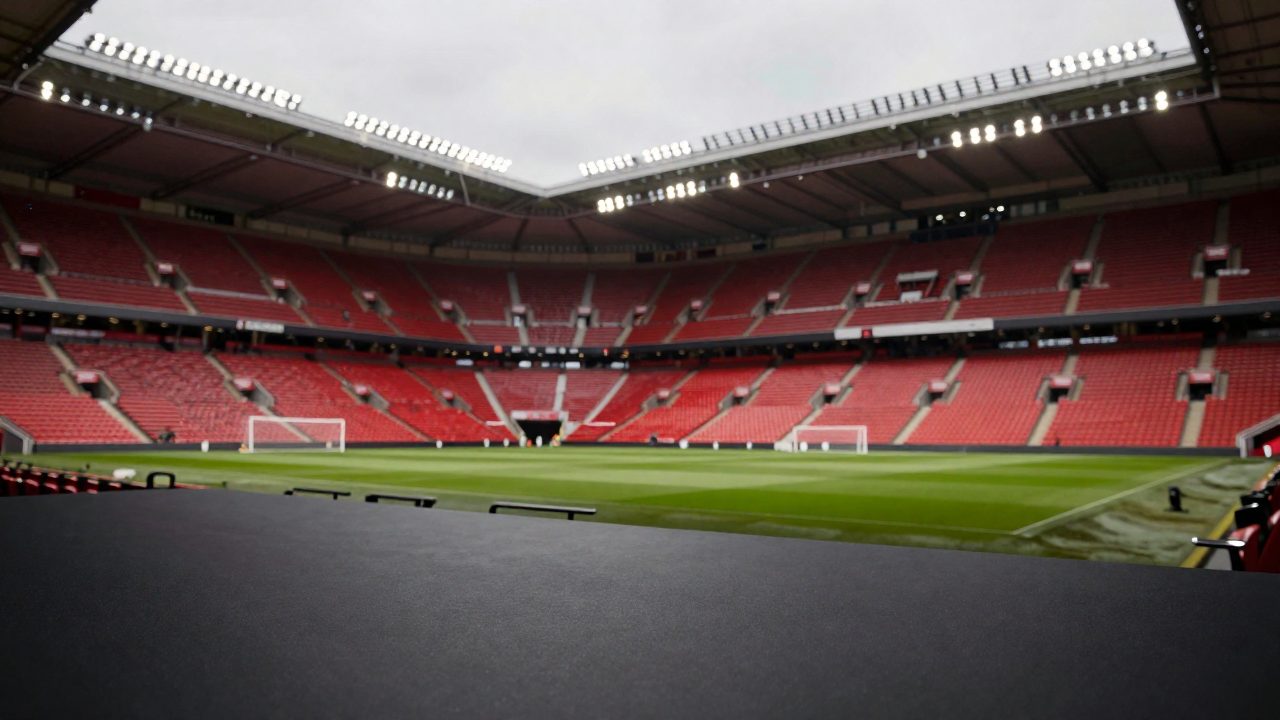
The best stand at Old Trafford depends on the ticket actually available, the type of view you prefer, and how easily you need to reach your seat. The ground has four named sides around an all-seater pitch: the Sir Alex Ferguson Stand, the East Stand, the Sir Bobby Charlton Stand, and the Stretford End. There is no universal best block or row. A sensible choice begins with the official seating plan for the match, then compares the stand, tier, distance from the halfway line, and route to the allocated entrance.
Old Trafford’s layout makes the trade-offs fairly clear. The Sir Alex Ferguson Stand runs along one long side and has three tiers. The Sir Bobby Charlton Stand is opposite it on the other long side and has one tier on the official plan. The East Stand and Stretford End sit behind the goals and each have two tiers. Corners connect these main stands through the North East and North West Quadrants. Use those verified layout facts before treating a ticket label as a promise of a particular view or matchday experience.
Best for following the whole match: a long-side stand
Start with the Sir Alex Ferguson Stand or Sir Bobby Charlton Stand if the priority is seeing play develop from one end of the pitch to the other. A long-side seat presents the field across its width, which makes it easier to follow team shape, passing lanes, and changes of direction. The choice between the two is then a question of tier and the location offered on the official map, rather than a claim that one side always has a better view.
The Sir Alex Ferguson Stand has three tiers, so it offers the broadest range of heights. A higher tier generally creates a more complete picture of the pitch, while a lower tier places the action physically nearer. Neither is automatically superior. A supporter who wants to track formation may prefer a higher position; someone focused on individual battles near the touchline may prefer a lower one. Check the event’s current seat map, because the same stand contains many blocks and the angle changes as a seat moves toward a corner.
The Sir Bobby Charlton Stand is the south side on the official plan and has a single tier. It remains a sound option when the available seat is closer to the middle of the long side than alternatives elsewhere. Do not assume a particular ticket price or hospitality status from the stand name. Ticket arrangements vary by match, and the official ticketing channel should be the source for current availability and conditions.
Best for end-to-end perspective: Stretford End or East Stand
The Stretford End and East Stand are behind the goals. These stands suit visitors who want the pitch framed lengthways: attacks arrive directly toward or move away from the seat, and penalty-area action reads differently than it does from the side. The trade-off is that the far end of the pitch is more distant, especially from a lower tier. This is a matter of geometry, not an absolute ranking.
The Stretford End is the west side of the official seating plan and has two tiers. The East Stand is opposite on the east side and also has two tiers. When comparing them, begin with the ticket’s exact tier and block. A central seat behind a goal can offer a clean view down the length of the pitch, while a position toward a corner creates a more diagonal perspective and may better suit a visitor who wants to see two adjacent touchlines. The official stadium plan shows the tiers and quadrants; it cannot guarantee a personal view, so avoid relying on a generic seat-review claim in place of the live map.
For a first visit, a behind-goal ticket is still a valid choice if it is the official ticket available. It provides a recognizable stadium perspective and makes the scale of the ground clear. The right expectation is important: it is a different way of watching football, not an inferior version of a halfway-line seat.
Use the quadrants deliberately
The North West and North East Quadrants join the end stands to the Sir Alex Ferguson Stand. A quadrant seat can be a good compromise when it gives a more open diagonal view than a seat directly behind a goal, while still remaining near the end of the pitch. It is also where tier and entry details matter especially strongly. Check the block on the official map, then trace it to the named stand and gate information on the match ticket.
Do not choose a quadrant simply because a resale listing uses an attractive description. Manchester United warns supporters to use official channels for ticket and matchday enquiries. The club’s visitor material directs guests to stadium maps, directions, and the seating plan, while its contact page lists ticketing and accessible-support routes. That information is more useful than a broker’s generic “premium view” language.
Accessibility and matchday access
Accessible seating should be selected through Manchester United’s accessible-ticketing and disabled-support channels, rather than by trying to infer suitability from the stand name. The club’s charter refers to family-and-friends seating for wheelchair users, and the official contact page lists a dedicated Accessible Ticketing and Disabled Supporters number. Supporters bringing crutches or other walking aids are asked to contact the accessibility team before attending so the club can ensure the seat is suitable.
The official stadium diagram also identifies an accessibility platform on the Sir Alex Ferguson Stand side during the stadium tour route. That does not mean every guest should choose that stand; it confirms that access planning is part of the stadium’s infrastructure. If mobility, hearing, sensory needs, or companion seating are relevant, contact the club before purchase or travel. It is safer than assuming a higher tier, a particular aisle, or a named stand will meet an individual requirement.
Matchday planning matters even after the seat has been chosen. The club says all supporters are screened before entry, and its maps instruct visitors to use the entry point printed on the match ticket. Do not rely on an old map to select an entrance. Bring only items allowed by current policy, leave extra time for screening, and check travel advice before setting out. Old Trafford can be reached by bus, rail, and Metrolink; Manchester United’s current getting-here page should guide the final journey.
How to choose
- For the broadest tactical view: compare available Sir Alex Ferguson Stand and Sir Bobby Charlton Stand seats, favouring a position nearer the middle of the long side.
- For a direct view along the pitch: compare central Stretford End and East Stand blocks.
- For a diagonal compromise: compare North West and North East Quadrant tickets using the official map.
- For a first visit: choose an official ticket in the best tier and location available rather than delaying for a mythical perfect stand.
- For accessibility needs: use Manchester United’s accessible-ticketing support before buying or travelling.
The best Old Trafford stand is therefore the one whose verified position matches how you watch football and how you will enter the ground. Start with the official plan, compare long-side, behind-goal, and quadrant perspectives, then confirm entry and accessibility details through Manchester United. That approach is more reliable than any fixed “best stand” claim.