

As an Amazon Associate and eBay Partner, toptenpick.com earns from qualifying purchases. Prices and availability are subject to change.
Marantz has a house sound and it has been consistent for decades: warm, smooth, slightly forward in the midrange, which is why the receivers flatter vocals, jazz and acoustic recordings. That character is the whole basis of a good pairing, and it points in one direction — match a warm amplifier with a neutral-to-detailed speaker. Put a Marantz with a dark, rolled-off speaker and you stack warmth on warmth; the result is soft and dull. Put it with a clear, well-extended speaker and the two meet in the middle, which is why KEF and Bowers & Wilkins come up so persistently in this conversation — B&W is Marantz’s own recommended pairing, and KEF’s Uni-Q driver gives the pinpoint imaging that Marantz’s detail deserves. The second thing to settle is power. Most mid-range and higher modern Marantz receivers drive 4-ohm speakers without complaint, but a vintage Marantz from the 1970s is a different machine: 20 to 40 watts a channel means you want a sensitive speaker, around 88 dB or higher, or you will run out of volume before you run out of enjoyment. The eleven below cover both cases, from a $250 bookshelf pair to a reference monitor that will take everything a modern Marantz can give it.
| # | Product | Price | Where to buy |
|---|---|---|---|
| 1 | KEF Q350 | $450–$650 | Amazon · eBay |
| 2 | KEF LS50 Meta | $1,300–$1,600 | Amazon · eBay |
| 3 | Bowers & Wilkins 607 S3 | $800–$1,000 | Amazon · eBay |
| 4 | Klipsch RP-600M II | $600–$800 | Amazon · eBay |
| 5 | Q Acoustics 3030i | $350–$500 | Amazon |
| 6 | ELAC Debut 2.0 B6.2 | $280–$400 | Amazon · eBay |
| 7 | Wharfedale Diamond 12.1 | $250–$400 | Amazon · eBay |
| 8 | Polk Reserve R200 | $500–$750 | Amazon · eBay |
| 9 | DALI Oberon 3 | $500–$700 | Amazon · eBay |
| 10 | Monitor Audio Bronze 100 | $400–$600 | Amazon · eBay |
| 11 | Triangle Borea BR03 | $450–$650 | Amazon · eBay |
The picks, in detail

KEF Q350
The long-standing default recommendation and still the one to beat under $600. The Uni-Q array puts the tweeter in the middle of the mid-bass cone so both sounds arrive from the same point, which is why the imaging is so specific. Neutral enough to balance the Marantz warmth without turning clinical.
- Uni-Q coincident driver array
- 6.5-inch mid-bass driver, 25 mm aluminium dome tweeter
- 8 ohm nominal, 87 dB sensitivity
- Rear port with a foam bung supplied
- Exceptional imaging for the price
- Neutral tuning is a natural counterweight to Marantz warmth
- Easy amplifier load
- Rear port needs breathing room from the wall
- Bass runs out below about 50 Hz without a subwoofer

KEF LS50 Meta
The step up, and the point where a good Marantz starts sounding like a much more expensive system. The Metamaterial Absorption Technology behind the tweeter soaks up rear-firing energy that would otherwise smear detail. Demanding about placement and unforgiving of a bad recording — that is the deal.
- Uni-Q driver with Metamaterial Absorption Technology
- 8 ohm nominal, 85 dB sensitivity
- Constrained-layer-damped cabinet
- Four finishes
- Reference-grade imaging and detail
- Reveals what the Marantz is actually doing
- Compact enough for a small room
- 85 dB sensitivity wants real power — not for a vintage 25-watt receiver
- Needs stands and space to work properly

Bowers & Wilkins 607 S3
Marantz’s officially recommended partner brand, and the pairing dealers demo. The decoupled dome tweeter is the famous part — it gives the treble air and separation that stops a warm amplifier sounding closed-in. The most obviously complementary speaker here.
- Decoupled double-dome aluminium tweeter
- 165 mm Continuum cone mid-bass driver
- 8 ohm nominal, 84 dB sensitivity
- Rear-firing Flowport
- The intended pairing — voiced to complement this kind of amplifier
- Treble clarity that lifts a warm receiver
- Excellent cabinet finish
- Low sensitivity needs a modern receiver with current behind it
- Can turn bright on poor recordings

Klipsch RP-600M II
The pick for a vintage Marantz, and the one that solves the power problem outright. Klipsch’s horn-loaded tweeter makes it far more sensitive than anything else here, so a 30-watt receiver from 1975 plays loud and stays clean. A Reference Premiere speaker and a clear step up from the previous generation.
- Horn-loaded 25 mm titanium tweeter
- 6.5-inch Cerametallic woofer
- High sensitivity — very easy to drive
- Rear Tractrix port
- Plays loud on very little power — ideal for a vintage Marantz
- Dynamic, lively presentation
- Removable grille and solid build
- Horn treble is a strong flavour some listeners dislike
- Forward tuning can tip bright on harsh recordings
Q Acoustics 3030i
The value champion, and the pick if the room is a living room rather than a listening room. A larger driver in a bigger cabinet than most bookshelf rivals, so it produces real low end without a subwoofer — genuinely useful when the speakers have to sit on a sideboard.
- 5-inch mid-bass driver in a larger-than-usual cabinet
- Point-to-point bracing with P2P damping
- 6 ohm nominal, 88 dB sensitivity
- Rear port
- Real bass extension without a subwoofer
- Very forgiving of average recordings
- Outstanding value
- Less precise imaging than the KEFs
- Big for a bookshelf speaker — measure the shelf
ELAC Debut 2.0 B6.2
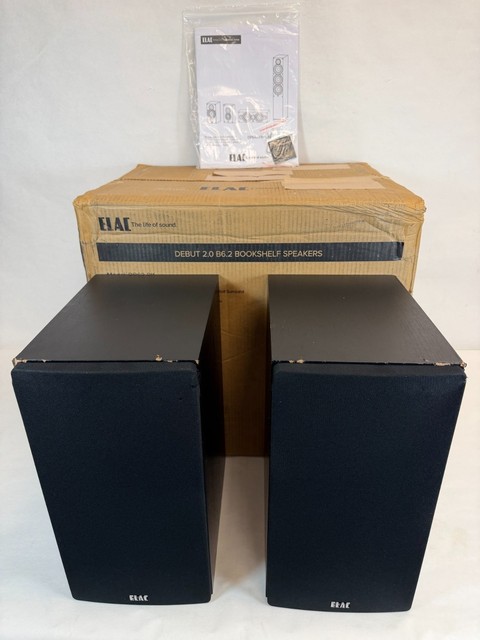
Andrew Jones’s budget design, and the most speaker-for-the-money on this list. A 6.5-inch aramid-fibre woofer in a deep cabinet gives it authority the price does not suggest. Slightly warm itself, so best with a modern Marantz rather than a vintage one.
- 6.5-inch aramid-fibre woofer
- 25 mm cloth dome tweeter with a wide-dispersion waveguide
- 6 ohm nominal, 87 dB sensitivity
- Front-firing port — works close to a wall
- Front port tolerates a bookshelf or a wall behind it
- Substantial bass for the money
- Smooth, unfatiguing treble
- Its own warmth can double up with a warm receiver
- Plain cabinet finish
Wharfedale Diamond 12.1
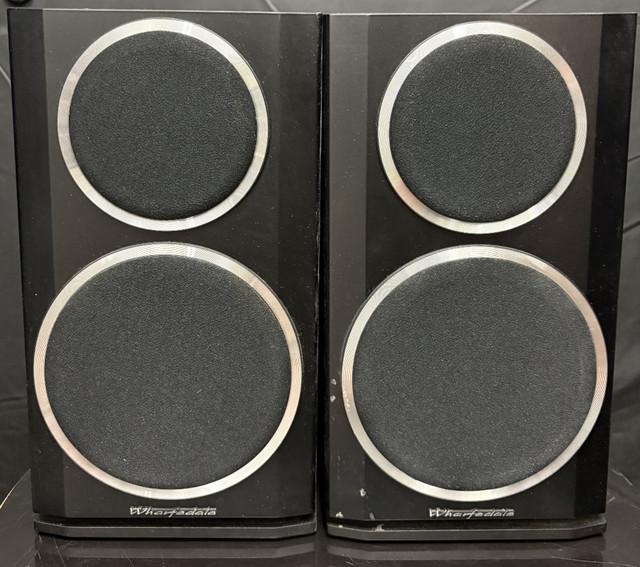
The gentle option, and the right call if your Marantz already sounds a touch bright or the room is full of hard surfaces. The Diamond series has been a budget reference for decades and the 12.1 keeps the tradition — smooth, forgiving, easy to live with for hours.
- 5-inch woven Kevlar cone
- 25 mm textile dome tweeter
- 8 ohm nominal, 86 dB sensitivity
- Slot-loaded downward port
- Very forgiving of bright rooms and compressed sources
- Long-standing reputation and easy resale
- Comfortable for long listening sessions
- Softest treble here — detail takes a back seat
- Warmth on warmth can go too far with some Marantz models

Polk Reserve R200
Polk’s serious range rather than its supermarket one, and a strong all-rounder for a Marantz doing both music and film. The Pinnacle ring-radiator tweeter is clean and extended — exactly the quality that pairs well here — and the cabinet is properly braced.
- Pinnacle ring-radiator tweeter
- 6.5-inch Turbine cone mid-woofer
- X-Port anti-turbulence port design
- Certified for home-theatre surround use
- Equally comfortable with music and movies
- Clean, extended treble that suits a warm receiver
- Frequently discounted
- Larger than a typical bookshelf pair
- Needs stands to image properly

DALI Oberon 3
The Danish alternative, and one of the easiest loads on this list. DALI voices for low distortion at normal listening levels rather than for specification-sheet extension, which gives a relaxed but detailed sound that sits comfortably with Marantz electronics.
- 7-inch wood-fibre cone
- 29 mm ultra-light soft dome tweeter
- 6 ohm nominal, 87.5 dB sensitivity
- Rear bass reflex port
- Easy load — happy on modest power
- Detailed without ever sounding aggressive
- Attractive wood-effect finishes
- Wide cabinet needs a deep shelf or proper stands
- Not the last word in bass slam

Monitor Audio Bronze 100
The detail-forward British option. Monitor Audio’s C-CAM metal drivers give a crisp, articulate presentation that is close to the opposite of the Marantz house sound — which is exactly why it works. The pick if your complaint about the current system is that it sounds soft.
- C-CAM gold dome tweeter
- 5.25-inch C-CAM mid-bass driver
- 8 ohm nominal, 87 dB sensitivity
- Rear HiVe II port
- Crisp and articulate — cuts through a warm amplifier
- Well-made cabinets in several finishes
- Strong midrange clarity on vocals
- Metal-dome treble is unforgiving of bad recordings
- Modest bass from the small woofer

Triangle Borea BR03
The high-sensitivity French option, and the other good answer for a vintage Marantz. Triangle designs for efficiency, so this plays loud on little power, and the tuning is open and lively rather than warm — a genuine contrast to the amplifier underneath it.
- 6-inch cellulose paper mid-bass driver
- 25 mm silk dome tweeter
- 8 ohm nominal, high sensitivity around 90 dB
- Front-firing port
- High sensitivity suits low-powered vintage receivers
- Front port tolerates a wall behind it
- Open, energetic presentation
- Lively tuning can tire at high volume
- Less widely stocked than the British and American brands
Buying tips
- Match warm with neutral, not with warm. Marantz’s smooth, midrange-forward character is why KEF and B&W keep coming up — they are clear and well-extended, so the two meet in the middle. Pairing a Marantz with a deliberately dark speaker stacks warmth on warmth and the result is dull.
- A vintage Marantz is a different amplifier. A 1970s receiver making 20–40 watts a channel needs a sensitive speaker, 88 dB or higher, or it runs out of headroom early. That points at Klipsch or Triangle rather than the KEF LS50 Meta at 85 dB.
- Modern mid-range and higher Marantz receivers handle 4-ohm speakers without complaint, so nominal impedance is rarely the limiting factor on current gear. On vintage units stay at 8 ohms unless you know the amplifier tolerates less.
- Bookshelf speakers on an actual bookshelf lose most of what you paid for. Rear-ported designs need 20–30 cm of clear air behind them; if that is impossible, choose a front-ported model like the ELAC Debut or the Triangle Borea.
- Get the tweeter to ear height when you are seated. It is free, it matters more than the speaker cable, and it is the step most people skip.
- Add a subwoofer before you upsize the speakers. A good bookshelf pair plus a modest sub usually beats a floorstander at the same total price, and it gives you placement flexibility a big cabinet cannot.
- Buy for the room, not for the specification sheet. A small room with a 40-watt vintage Marantz and sensitive speakers will play louder and cleaner than a large room with a pairing that looks better on paper.
As an Amazon Associate and eBay Partner, toptenpick.com earns from qualifying purchases. Prices and availability are subject to change.