

As an Amazon Associate and eBay Partner, toptenpick.com earns from qualifying purchases. Prices and availability are subject to change.
A digital piano can feed several genuinely different speaker types. Powered studio monitors are a stereo pair for close listening and need left/right outputs or an appropriate splitter from the piano. Keyboard amplifiers combine amplification and a mixer in one cabinet for a simple mono setup. Compact PA speakers are portable powered cabinets that may add microphone inputs and battery operation. Passive hi-fi speakers are not included unless paired with a separate amplifier, because a piano’s line output cannot drive them directly. Before buying, check whether the piano has two ¼-inch line outs, headphone output only, or balanced outputs; then match the speaker inputs and use the correct cables.
| # | Product | Price | Where to buy |
|---|---|---|---|
| 1 | JBL 305P MkII | $130–$180 each | Amazon · eBay |
| 2 | Yamaha HS5 | $200–$260 each | Amazon · eBay |
| 3 | PreSonus Eris 3.5BT Gen 2 | $130–$180 per pair | Amazon · eBay |
| 4 | PreSonus Eris Studio 5 | $150–$220 each | Amazon · eBay |
| 5 | Kali Audio LP-6 V2 | $200–$280 each | Amazon · eBay |
| 6 | Roland KC-80 | $300–$400 | Amazon · eBay |
| 7 | Roland KC-200 | $500–$650 | Amazon · eBay |
| 8 | Yamaha DBR10 | $450–$600 each | Amazon · eBay |
| 9 | Bose S1 Pro+ | $650–$750 | Amazon · eBay |
| 10 | Mackie Thump GO | $350–$500 | Amazon · eBay |
The picks, in detail
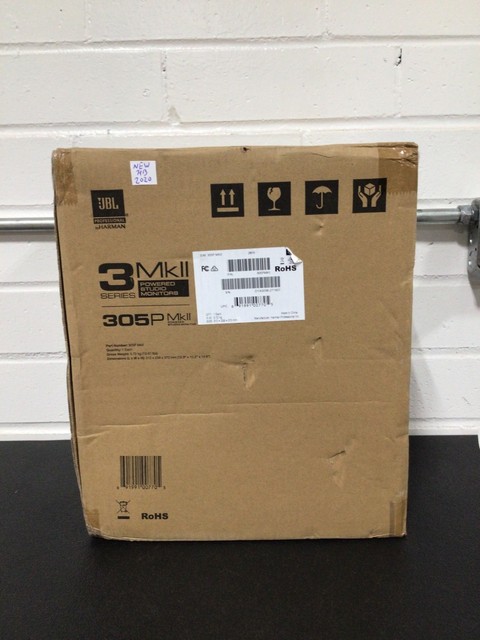
JBL 305P MkII
A single powered 5-inch two-way studio monitor with balanced XLR and ¼-inch TRS inputs. Buy two for stereo piano playback; it is not sold as an amplified pair.
- powered 5-inch two-way monitor
- 41 W total amplification
- XLR and ¼-inch TRS balanced inputs
- single-speaker product
- Balanced inputs suit many stage-piano line outputs
- Stereo is straightforward with two matching monitors
- Two units and two suitable output feeds are required for stereo

Yamaha HS5
A compact powered studio monitor commonly used in pairs for keyboard and piano monitoring. It accepts balanced XLR and ¼-inch TRS line input and is sold as one monitor.
- 5-inch powered studio monitor
- 70 W bi-amp system
- XLR and ¼-inch TRS inputs
- single-speaker format
- Balanced inputs fit common piano line outputs
- Pairing identical units preserves stereo left/right playback
- A single HS5 is mono; plan and budget for two if stereo is required
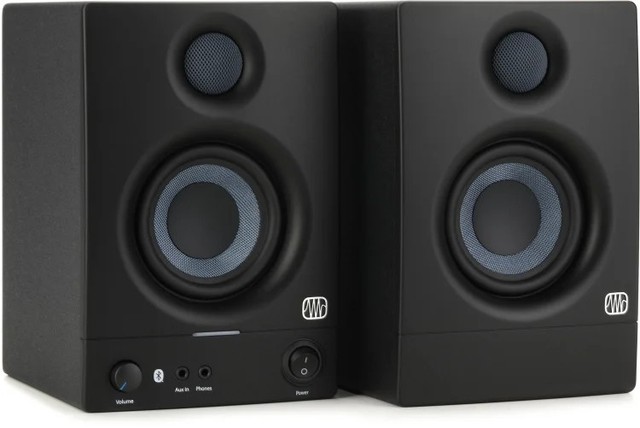
PreSonus Eris 3.5BT Gen 2
A compact powered monitor pair for close-range home use, with 3.5-inch drivers, Bluetooth, and analog inputs including TRS, RCA, and ⅛-inch stereo.
- powered pair
- 3.5-inch two-way drivers
- TRS, RCA, and ⅛-inch inputs
- Bluetooth connectivity
- Pair is sold together, so stereo does not require two separate purchases
- Multiple analog inputs help with pianos that only expose a headphone-style output
- Small drivers are a compact-desk choice, not a substitute for a larger keyboard amp at a performance

PreSonus Eris Studio 5
A powered 5.25-inch studio monitor with XLR, ¼-inch TRS, and RCA inputs. It is sold individually, so a stereo digital-piano rig needs a matched pair.
- 5.25-inch powered studio monitor
- XLR, TRS, and RCA inputs
- single-monitor product
- rear-panel acoustic controls
- Input choices accommodate balanced and unbalanced piano outputs
- Larger woofer than compact 3.5-inch desktop pairs
- Budget for two speakers and correct cabling for stereo

Kali Audio LP-6 V2
A powered 6.5-inch studio monitor for a dedicated stereo pair. It provides XLR, TRS, and RCA inputs and is sold as an individual monitor.
- 6.5-inch powered two-way monitor
- XLR, TRS, and RCA inputs
- boundary-EQ switches
- single-speaker product
- Useful input flexibility for different piano output types
- Larger cabinet than a 5-inch monitor for a home music space
- Two monitors occupy more space and require deliberate left/right placement

Roland KC-80
A compact keyboard amplifier with a 10-inch woofer, 50 W output, and three mixing channels. It is a mono keyboard amp rather than a stereo monitor pair.
- 50 W keyboard amplifier
- 10-inch woofer
- three-channel mixer
- ¼-inch line inputs
- One cabinet and mixer simplify a basic piano setup
- Keyboard-specific amplifier format avoids needing separate monitor pairs
- One cabinet delivers mono playback unless expanded through additional equipment
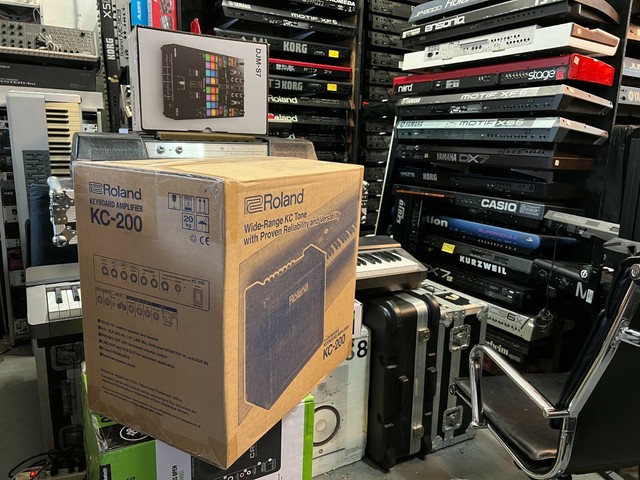
Roland KC-200
A 100 W two-way keyboard amplifier with four line-input channels and a dedicated auxiliary input that supports an XLR vocal microphone, useful when piano and a microphone share one small rig.
- 100 W two-way keyboard amp
- four line-input channels
- dedicated auxiliary input with XLR microphone support
- ¼-inch monitor channel input
- Integrated mixer supports more than a single piano source
- Keyboard-amp form factor is portable compared with a separate mixer and powered monitors
- It is a mono cabinet, so it does not reproduce a piano’s stereo samples as a left/right pair does
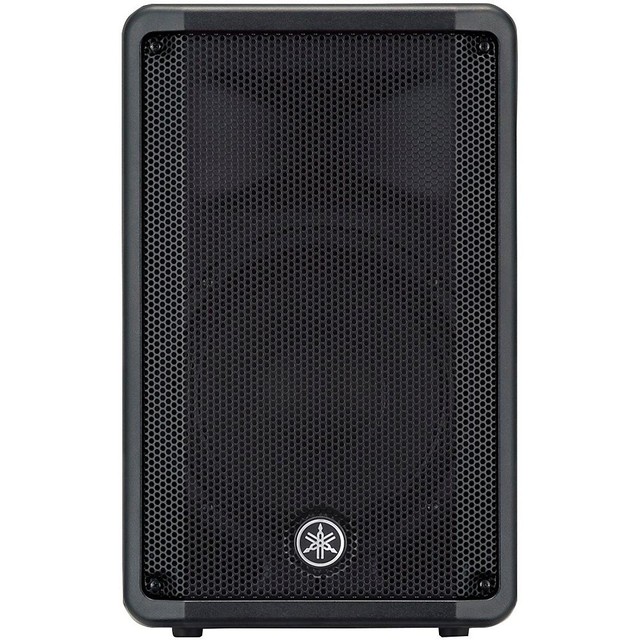
Yamaha DBR10
A powered 10-inch two-way PA speaker that accepts XLR/TRS combo and RCA inputs. One cabinet is mono; a pair can be used when a digital piano has separate left and right outputs.
- 10-inch powered two-way PA speaker
- XLR/TRS combo inputs
- RCA stereo input
- single powered PA cabinet
- PA-style input panel handles instruments and other sources
- Can be used alone or as a matched stereo pair
- One unit is mono, and a pair is bulkier than small desktop monitors
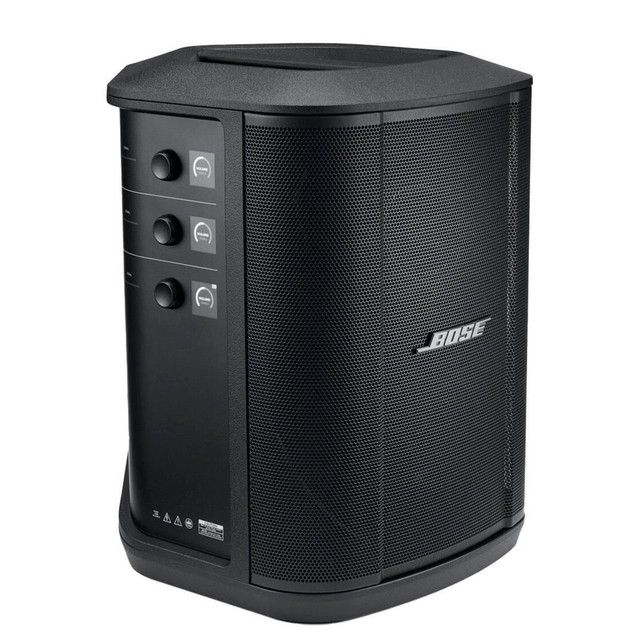
Bose S1 Pro+
A portable powered PA speaker with Bluetooth, two XLR/TRS combo inputs, a ¼-inch instrument input, and battery operation. It is a flexible single-speaker option, not a stereo pair by itself.
- portable powered PA
- two XLR/TRS combo inputs
- ¼-inch instrument input
- rechargeable battery operation
- Battery power suits a piano setup away from an outlet
- Inputs accommodate piano plus vocal microphone or another source
- One cabinet is mono and premium-priced compared with compact monitors
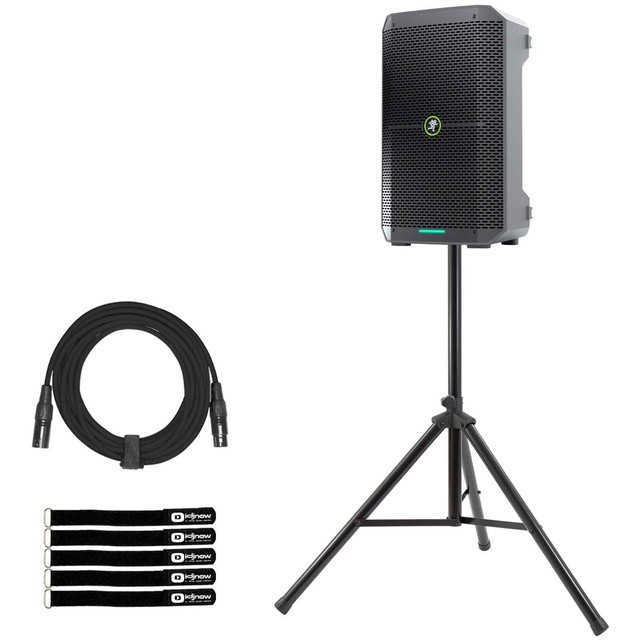
Mackie Thump GO
A battery-powered compact PA speaker with Bluetooth and two combo XLR/TRS inputs, intended for portable reinforcement rather than passive-speaker use.
- battery-powered portable PA
- two XLR/TRS combo inputs
- Bluetooth
- single powered cabinet
- Portable format can work where AC-powered studio monitors cannot
- Combo inputs are compatible with instrument line-level connections using appropriate cables
- One speaker is mono; verify input gain and cable type with the specific piano
Buying tips
- For stereo piano samples, use two powered monitors or two matched PA speakers and connect the piano’s left and right outputs separately.
- A headphone jack can feed powered speakers, but set volume carefully and use the correct stereo-breakout or interface cable; dedicated line outputs are preferable when available.
- Do not connect a digital piano directly to passive speakers. Passive speakers need a separate power amplifier or receiver.
As an Amazon Associate and eBay Partner, toptenpick.com earns from qualifying purchases. Prices and availability are subject to change.