

As an Amazon Associate and eBay Partner, toptenpick.com earns from qualifying purchases. Prices and availability are subject to change.
Almost every work shoe sold to cleaners carries a slip-resistant marking, and it is worth knowing exactly what that marking was earned on — because it is probably not the floor you work on.
The standard behind it is ASTM F2913, which fully adopts the older SATRA TM144 method. The test drags a shoe across a defined quarry tile surface, dry and then wetted with plain water, measuring the coefficient of friction at heel strike and at toe-off. To carry the label, the shoe has to reach a coefficient of at least 0.40 in each mode. That is a genuine test and a genuinely useful floor — it is the surface commercial kitchens are built from.
It is not the surface a house cleaner spends the day on. Domestic work means sealed vinyl, polished porcelain, laminate and stone, and the contaminant is rarely plain water. It is a film of detergent, floor polish or bathroom cleaner — which is a lubricant by design, engineered to lift dirt off a surface by reducing how well things stick to it. A shoe rated 0.40 on wet quarry tile can still be well short of safe on a soapy polished floor, because the two surfaces are not remotely alike. The marking is a floor, not a ceiling.
What actually helps on those floors is a soft, sticky rubber compound rather than a hard-wearing one, and a tread with lots of small sipes and open channels so the liquid has somewhere to go instead of forming a film under the sole. The newer ASTM F3445 standard adds graded performance levels, which is more informative than a pass/fail mark if you can find it quoted.
The other half of the job is different and easier to shop for: six to eight hours a day on hard floors, on your feet, carrying things, kneeling and standing back up. That wants real cushioning, a removable insole so you can fit your own, and an upper that survives bleach. Ten picks below, and the last three are not shoes.
| # | Product | Price | Where to buy |
|---|---|---|---|
| 1 | Slip-Resistant Service Shoe with a Soft Rubber Outsole | $45-$90 | Amazon · eBay |
| 2 | Slip-On Clog with a Closed Back | $40-$100 | Amazon · eBay |
| 3 | Cushioned Athletic Shoe with a Removable Insole | $60-$130 | Amazon |
| 4 | Waterproof Work Shoe with a Sealed Upper | $70-$140 | Amazon · eBay |
| 5 | Indoor-Only Shoe Kept in the Kit Bag | $40-$90 | Amazon · eBay |
| 6 | Anti-Fatigue Insoles | $15-$50 | Amazon · eBay |
| 7 | Compression Socks | $15-$40 | Amazon · eBay |
| 8 | Knee Pads or a Kneeling Pad | $20-$50 | Amazon · eBay |
| 9 | Shoe Covers or Overshoes | $12-$35 | Amazon |
| 10 | Shoe Deodoriser and Drying Rack | $20-$60 | Amazon |
The picks, in detail

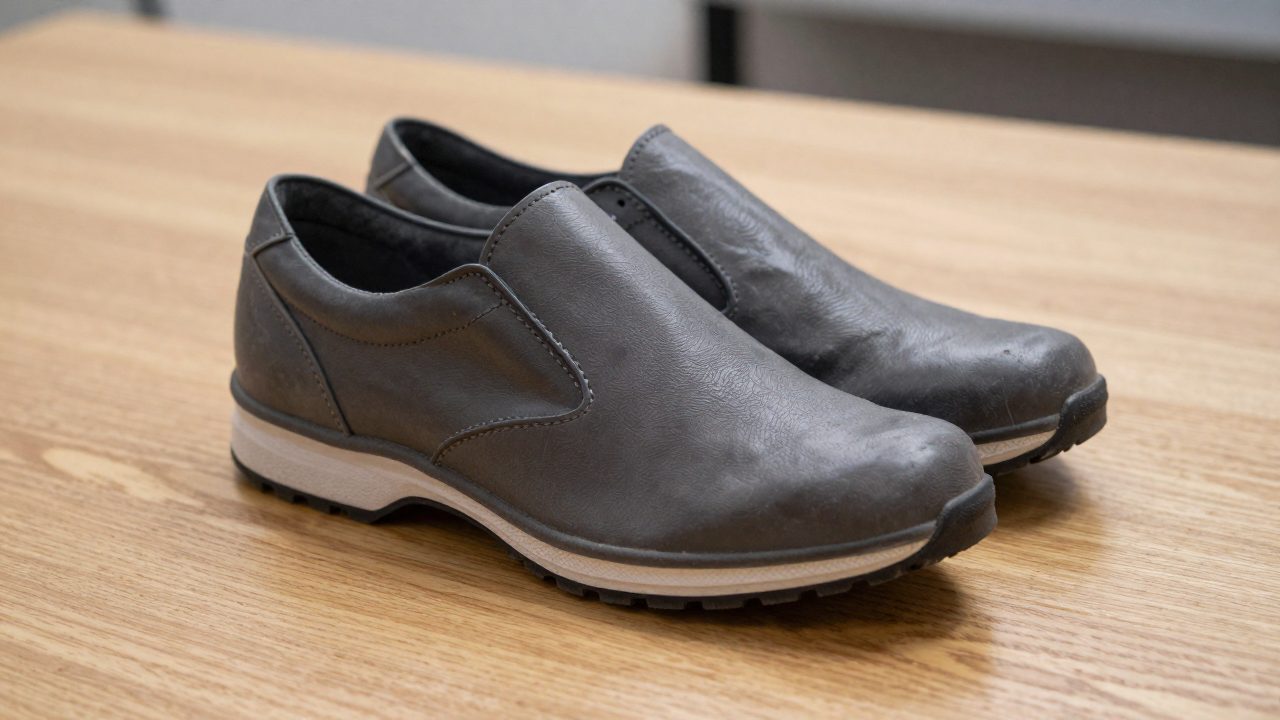
Slip-Resistant Service Shoe with a Soft Rubber Outsole
The category built for exactly this work, usually sold to restaurant and healthcare staff. What you are buying is a deliberately soft rubber compound with a densely siped tread — the compound grips because it deforms into the microscopic texture of the floor, and the sipes give the liquid somewhere to escape. The trade-off is honest: soft rubber wears faster than hard rubber, so these shoes have a shorter life than a general trainer. That is the price of the grip, not a defect.
- Soft-compound rubber outsole
- Densely siped tread pattern with channels
- ASTM F2913 slip-resistance marking
- Wipe-clean upper on most models
- Built specifically for wet, contaminated hard floors
- Easy to clean at the end of a shift
- Widely available and reasonably priced
- Soft outsole wears noticeably faster
- The rating was earned on quarry tile, not a soapy polished floor

Slip-On Clog with a Closed Back
The format that dominates in healthcare for good reasons that transfer directly to cleaning: easy on and off at a client’s front door, simple to wipe down, and no laces to soak up bleach and untie themselves on stairs. Insist on a closed or strapped back rather than an open one — an open-backed clog on a staircase carrying a vacuum is a genuine hazard, and most of the injuries in this job are falls. Look for a moulded footbed with real arch support rather than a flat pan.
- Slip-on with a closed or strapped heel
- Moulded supportive footbed
- Wipe-clean sealed upper
- Slip-resistant outsole
- On and off in seconds at every house
- No laces to soak in cleaning chemicals
- Sealed uppers shrug off spills
- Open-backed versions are unsafe on stairs
- Less foot security than a laced shoe when carrying loads
Cushioned Athletic Shoe with a Removable Insole
For anyone whose floors are mostly dry, the cushioning argument can outweigh the grip argument, and a decent running-style shoe is far more comfortable over eight hours than most service footwear. The feature to insist on is a removable insole, because the stock insole in almost any shoe is a thin token and swapping it for a proper one transforms how the day feels. Check the outsole compound: a hard, durable trainer sole is exactly wrong on a wet floor even if the tread looks aggressive.
- Thick cushioned midsole
- Removable insole for orthotics or aftermarket inserts
- Breathable upper
- Wide fittings commonly available
- Much more comfortable over a long day than service shoes
- Takes a proper aftermarket insole
- Breathes far better, so feet stay drier
- Hard trainer outsoles perform poorly on wet floors
- Mesh uppers absorb spills and stain

Waterproof Work Shoe with a Sealed Upper
Bathroom and kitchen work means standing in water, and a wet sock at nine in the morning is a miserable and genuinely unhealthy way to spend a day. A shoe with a sealed or membrane-lined upper keeps that out. Be clear about the trade-off, because it is real: waterproof means less breathable, so feet get warmer and damper from the inside. Worth it if you are regularly working in standing water, an actively bad choice if you mostly work dry.
- Sealed leather or membrane-lined upper
- Gusseted tongue to stop water entering
- Slip-resistant outsole
- Chemical-resistant materials on better models
- Keeps feet dry in bathrooms and around mop buckets
- Sealed uppers resist bleach and cleaning chemicals
- Easy to wipe clean
- Noticeably less breathable — feet get warm
- Once water gets in over the collar it cannot get out

Indoor-Only Shoe Kept in the Kit Bag
A working practice as much as a purchase, and one experienced cleaners adopt. A second pair carried in the bag and changed into at the door never picks up grit from a driveway, so it never scratches a client’s floors — which matters commercially — and its soft, grippy outsole is not worn down on pavements. It also means arriving at a house with dry shoes when it is raining. Any of the shoes above works; the point is that it never goes outside.
- Any lightweight slip-resistant shoe
- Kept exclusively for indoor use
- Light enough to carry in a kit bag
- Slip-on styles are quickest at the door
- Never tracks grit onto a client’s floors
- Soft outsole lasts far longer without pavement wear
- Always dry, whatever the weather outside
- Two pairs to buy and carry
- Changing at every house takes time

Anti-Fatigue Insoles
The highest-value purchase per dollar in this entire list. The insole that comes with almost any shoe is a thin foam token, and replacing it with a proper cushioned or gel insert does more for how your feet and back feel at the end of a day than an extra fifty dollars on the shoe would. Buy for the shape of your foot rather than the brand — a high-arch insole in a flat foot is worse than the stock one. Replace them every few months; they compress and stop working long before they look worn out.
- Gel or high-rebound foam construction
- Arch-specific versions for high, medium and low arches
- Trim-to-fit sizing
- Some include a metatarsal pad
- Biggest comfort improvement available for the money
- Moves between pairs of shoes
- Available in arch-specific versions
- Compress and stop working after a few months
- The wrong arch profile makes things worse, not better
Compression Socks
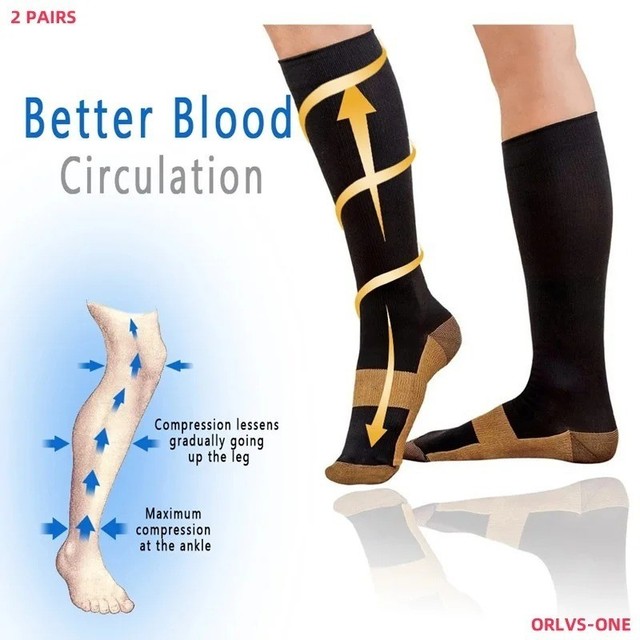
Standing on hard floors all day is a circulation problem as much as a foot problem, and it shows up as aching legs and swollen ankles by evening rather than as sore soles. Graduated compression socks — tighter at the ankle, easing up the calf — help blood return and noticeably reduce that end-of-day heaviness. Mild compression around 15-20 mmHg is the usual starting point for people on their feet at work. They also wick better than cotton, which keeps feet drier inside a waterproof shoe.
- Graduated compression, typically 15-20 mmHg
- Moisture-wicking synthetic or merino blends
- Cushioned sole and reinforced heel
- Crew and knee-high lengths
- Directly targets end-of-day leg ache and swelling
- Wicks far better than cotton socks
- Cheap and easy to try
- Awkward to get on, especially over damp feet
- Talk to a doctor first if you have circulation or diabetes concerns

Knee Pads or a Kneeling Pad
Belongs on a footwear list because it is the injury the footwear cannot prevent. Bathroom and floor work means kneeling on hard tile repeatedly, and knee damage from that is cumulative and permanent. Strap-on gel knee pads keep working when you move; a foam kneeling pad is more comfortable but has to be carried and positioned. Most people end up with both — the pads for quick jobs and the pad for anything that takes longer than a few minutes.
- Gel or foam cushioning with a hard or soft cap
- Adjustable straps behind the knee
- Non-marking outer surface
- Separate foam kneeling pads for longer jobs
- Prevents cumulative, permanent knee damage
- Strap-on pads stay in place as you move
- Non-marking versions will not scuff a client’s floor
- Straps behind the knee restrict circulation if tight
- Hard caps can scratch delicate flooring — check the outer
Shoe Covers or Overshoes
The commercial answer to the same problem the indoor-only shoe solves, and cheaper to start with. Disposable or reusable covers pull over your outdoor shoes at the client’s door, so nothing from the street reaches their carpet. Clients notice this and it reads as professional. The safety caveat is important: many disposable covers are slippery on hard floors, so use them on carpet and take them off for tile. Reusable fabric covers with a grip sole avoid that problem.
- Disposable polypropylene or reusable fabric
- Elasticated opening
- Grip-soled versions available
- Sold in bulk packs
- Cheap, and clients visibly appreciate it
- No second pair of shoes to carry
- Bulk packs last a long time
- Plain disposables are slippery on hard floors
- Disposables are a recurring cost and waste
Shoe Deodoriser and Drying Rack
Unglamorous, and it is what makes a pair last. Shoes worn eight hours a day and exposed to cleaning chemicals do not dry overnight in a cupboard, and damp shoes break down faster, smell, and encourage fungal infection. A boot dryer or a simple rack that stands them open, plus an antibacterial deodorising spray, adds months to a pair. The cheapest version of this is simply owning two pairs and alternating them — which almost doubles the life of both.
- Forced-air or passive drying racks
- Antibacterial deodorising sprays
- Cedar or charcoal inserts for odour
- Compact enough for a cupboard
- Meaningfully extends the life of a pair
- Prevents the fungal problems that come with damp footwear
- Alternating two pairs works even without any equipment
- Heated dryers can damage adhesives if run too hot
- One more thing taking up space
Buying tips
- Know what the slip-resistant label was earned on. ASTM F2913 (adopting SATRA TM144) tests on quarry tile, dry and water-wet, requiring a coefficient of friction of at least 0.40. Domestic floors are polished porcelain and sealed vinyl, and the contaminant is detergent — a designed lubricant. Treat the marking as a minimum, not a guarantee for your actual hazard.
- Soft outsole compound beats an aggressive tread pattern. On a smooth wet floor, grip comes from a soft rubber deforming into the surface’s microscopic texture, not from deep lugs meant for mud. A hiking-style sole can be markedly worse than a plain-looking service sole. Press a thumbnail into the outsole in the shop — if it barely marks, it is too hard.
- Look for lots of small sipes, not big blocks. Those fine slits give the liquid somewhere to escape so it does not form a continuous film under the sole. A tread of large solid blocks with wide gaps traps water underneath exactly where you need contact. This is the single most useful thing you can judge by eye.
- Replace slip-resistant shoes on grip, not on looks. A soft outsole loses its grip long before the tread wears away visibly, because the surface glazes and hardens. If the shoe feels less confident on a wet floor than it did when new, that is the end of its useful life regardless of how much rubber is left. Test them the same way each time on the same wet floor.
- Buy shoes with a removable insole, then replace the insole. Stock insoles are a thin token in almost every shoe at any price. A proper anti-fatigue insert costs far less than the difference between a cheap shoe and an expensive one, and does more for eight hours on tile. Match it to your arch height — the wrong profile is worse than the original.
- Keep a second pair for indoors only. It never picks up grit from driveways, so it never scratches a client’s floors, and its soft outsole is not worn down on pavement. You also arrive with dry shoes when it is raining. Two pairs alternated last far more than twice as long as one pair worn every day.
- Be careful with disposable shoe covers on hard floors. Plain polypropylene covers are genuinely slippery on tile and laminate — they solve the client’s floor problem and create a falling problem. Use them on carpet, take them off for hard floors, or buy reusable covers with a grip sole.
- Look after your knees as deliberately as your feet. Kneeling on tile is a large part of this work and the damage is cumulative and permanent. Strap-on pads for moving jobs, a foam pad for anything longer than a few minutes, and check that the outer surface is non-marking before it meets a client’s floor.
As an Amazon Associate and eBay Partner, toptenpick.com earns from qualifying purchases. Prices and availability are subject to change.