

As an Amazon Associate and eBay Partner, toptenpick.com earns from qualifying purchases. Prices and availability are subject to change.
Propeller choice looks like a matter of taste and it is not. There is a single number that decides it, and almost nobody measures it.
Every outboard has a manufacturer-specified wide-open-throttle rpm range — the band the engine is designed to reach at full throttle, printed in the owner’s manual. The propeller’s entire job is to let the engine reach the upper-middle of that band, at your normal load, on a normal day. That is it. Pick the prop that puts you in the range; everything else follows.
Get it wrong in either direction and there is a real cost. Too much pitch and the engine cannot reach its range — it lugs, runs hot, cannot make its rated power, and over time that is genuine engine damage rather than merely poor performance. It also feels sluggish out of the hole and the boat will not plane properly with a load aboard. Too little pitch and the engine over-revs past its limit at full throttle, which the rev limiter will cut but which wastes fuel and top speed on the way there.
The useful rule of thumb that makes this practical: each inch of pitch is worth roughly 150 to 200 rpm, in the opposite direction. If you are 400 rpm below the bottom of the range, drop two inches of pitch. If you are 300 rpm over the top, add one or two. That arithmetic is the whole of propeller selection for an engine this size.
Which leads to the thing you actually have to buy first if you do not own one: a tachometer. Plenty of 30 hp outboards are fitted to boats with no rev counter at all, and without one you are choosing a prop by feel — which is how people end up with an engine that has been lugging for three seasons. A tachometer costs far less than a propeller.
One more note: prop specifications are written as diameter × pitch, so 9 1/4 × 11 means a 9.25-inch diameter and an 11-inch pitch. On a small outboard, diameter is generally fixed by the gearcase and pitch is what you change.
Ten picks below.
| # | Product | Price | Where to buy |
|---|---|---|---|
| 1 | Aluminium Propeller in the Stock Pitch | $90-$200 | Amazon · eBay |
| 2 | Lower-Pitch Aluminium Propeller | $90-$200 | Amazon · eBay |
| 3 | Higher-Pitch Aluminium Propeller | $90-$200 | Amazon · eBay |
| 4 | Stainless Steel Propeller | $250-$500 | Amazon · eBay |
| 5 | Four-Blade Propeller | $150-$450 | Amazon |
| 6 | Digital Tachometer | $40-$150 | Amazon · eBay |
| 7 | Spare Propeller for the Boat | $90-$200 | Amazon · eBay |
| 8 | Propeller Nut, Thrust Washer and Cotter Pin Kit | $10-$30 | Amazon · eBay |
| 9 | Marine Anti-Seize Grease for the Prop Shaft | $10-$25 | Amazon |
| 10 | Propeller Guard or Line Cutter | $40-$200 | Amazon |
The picks, in detail
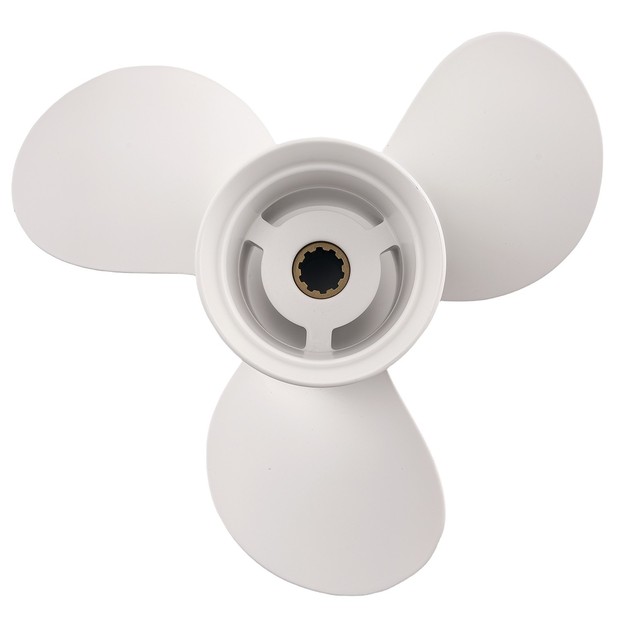
Aluminium Propeller in the Stock Pitch
The baseline, and the right starting point if you do not know what you have. Aluminium props for a 30 hp outboard are inexpensive, widely available in a range of pitches, and — importantly — they are sacrificial: hit a rock and the aluminium deforms or the blade breaks, which is a far cheaper outcome than damaging the gearcase. Start with the pitch the engine was supplied with, measure your wide-open-throttle rpm, and then move up or down from there using the rule of thumb.
- Cast aluminium construction
- Wide range of pitches available
- Rubber hub that shears to protect the gearcase
- Matched to the Yamaha 30 hp gearcase
- Cheap, so experimenting with pitch is affordable
- Sacrificial — it protects the gearbox in a strike
- Widely stocked in multiple pitches
- Flexes under load, which costs a little efficiency
- Damages more easily than stainless

Lower-Pitch Aluminium Propeller
The fix when your measured wide-open-throttle rpm is below the manufacturer’s range. Dropping pitch lets the engine spin faster for the same boat speed, which brings the revs up into the band and transforms how the boat gets onto the plane. It is the right move for a heavily loaded boat, a boat carrying passengers and gear, or any hull that struggles to plane. Expect to trade a little top speed for a great deal more usable performance, which on a 30 hp boat is a good trade.
- One to three inches less pitch than stock
- Same diameter for the gearcase
- Aluminium construction
- Improves acceleration and planing
- Brings a lugging engine back into its rev range
- Dramatically better hole shot with a load
- Removes the damage risk of chronic lugging
- Lower top speed when lightly loaded
- Easy to overshoot into over-revving

Higher-Pitch Aluminium Propeller
The other direction, for when your engine is over-revving past the top of its range at full throttle — typically a light boat with one person aboard. Adding pitch means the boat travels further per revolution, which brings the revs down and adds top speed. Check the rpm with the load you actually carry most of the time, not with an empty boat, because a prop chosen for an empty hull will lug the moment you put three people and a cooler in it.
- One to three inches more pitch than stock
- Same diameter
- Aluminium construction
- Higher top speed at the same revs
- Fixes over-revving on a lightly loaded boat
- Better cruising speed and fuel economy
- Quieter at cruise
- Slower acceleration and worse planing with a load
- Easy to overshoot into lugging

Stainless Steel Propeller
The upgrade, and worth understanding rather than assuming. Stainless is much stiffer than aluminium, so the blades do not flex under load — which means the pitch you bought is the pitch you get at full throttle, and efficiency and top speed improve measurably. It is also far more resistant to damage. The trade-off is the important part: a stainless prop does not sacrifice itself in a strike, so the energy goes into the gearcase instead. On a 30 hp outboard, that is a real consideration in shallow or rocky water.
- Stainless steel, much stiffer than aluminium
- Holds its pitch under load
- Thinner blade sections for efficiency
- Rubber or replaceable hub
- Measurably better efficiency and top speed
- Resists damage from debris and light contact
- Repairable rather than disposable
- Does not sacrifice itself — a strike reaches the gearcase
- Two to three times the price of aluminium
Four-Blade Propeller
A different trade-off rather than a better prop. A fourth blade adds blade area, which grips the water better at low speed and in turns — so you get a noticeably better hole shot, more stable handling, and the ability to stay on the plane at a lower speed. The cost is usually a small loss of top end. For a boat that carries people and gear, tows, or runs in choppy water, that trade is often worth making. For a light boat chasing top speed, it is not.
- Four blades rather than three
- More blade area in the water
- Better low-speed grip and stability
- Available in aluminium and stainless
- Noticeably better hole shot and planing
- Holds the plane at lower speeds
- More stable in turns and chop
- Usually a small loss of top speed
- Fewer pitch options available
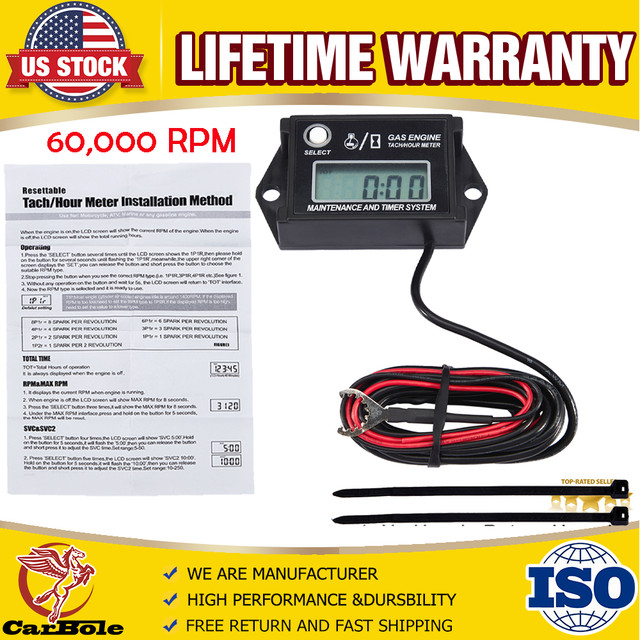
Digital Tachometer
The instrument that makes every other decision on this list possible, and the first thing to buy if your boat does not have one. Without a rev counter you are choosing a propeller by how the boat feels, which is exactly how engines end up lugging for years. A surface-mount or clamp-on inductive tachometer wired to the ignition gives you the number the manual’s range refers to. It costs a fraction of a propeller and it is the difference between measuring and guessing.
- Inductive or ignition-pulse sensing
- Panel mount or clamp-on
- Hour meter on many models
- Waterproof housing
- Turns propeller choice into a measurement
- Hour meter puts servicing on a real schedule
- Far cheaper than a propeller
- Needs correct cylinder/pulse configuration to read right
- Some require wiring into the ignition

Spare Propeller for the Boat
Carry one. A propeller strike is the most common way a small boat’s day ends, and a spare plus the tools to fit it turns being stranded into a twenty-minute job on a beach. The sensible choice is a cheap aluminium prop in the same pitch as your main one — it does not need to be as good, it needs to get you home. Store it where it cannot roll around and damage the blades, and keep the hub hardware with it rather than assuming you will find spares in a locker.
- Matching pitch to your main propeller
- Aluminium for cost
- Stored with its hub hardware
- Blade guard or bag for storage
- Turns a stranding into a short delay
- Cheap insurance for a day on the water
- Doubles as the experiment prop for pitch changes
- Takes up locker space
- Needs storing so it cannot damage its own blades

Propeller Nut, Thrust Washer and Cotter Pin Kit
The small parts that make a prop change possible and that are always missing when you need them. The thrust washer sits behind the prop and takes the load; the nut and cotter pin hold it on. Cotter pins are single-use — straightening and reusing one is how props come off — and they cost pennies. Keep a small bag of the correct parts with the spare prop, along with the right size socket, because none of the rest matters if you cannot actually fit the propeller.
- Thrust washer, prop nut and cotter pins
- Correct sizes for the Yamaha 30 hp gearcase
- Stainless cotter pins
- Sold as small kits
- Cotter pins are single-use and always missing
- Cheap and takes no space
- Makes the spare prop actually usable
- Sizes are model-specific
- Easy to lose the thrust washer overboard
Marine Anti-Seize Grease for the Prop Shaft
The five-minute job that prevents a genuinely bad day. A propeller left on an unlubricated shaft in salt water corrodes onto it, and a seized prop on a beach is an unfixable problem with the tools you have aboard. A generous coat of marine-grade waterproof grease on the shaft splines at every fitting prevents it entirely. Do it annually even if you never change the prop — pull it off, grease the shaft, put it back. It also lets you check for fishing line wrapped behind the prop.
- Marine-grade waterproof grease
- Resists salt water washout
- Applied to the shaft splines
- Small tubes last years
- Prevents a seized prop, which is unfixable on a beach
- Annual removal also reveals wrapped fishing line
- Costs almost nothing
- Needs redoing at every prop removal
- Ordinary grease washes out in salt water
Propeller Guard or Line Cutter
Two different safety items, both worth considering. A prop guard is a cage that prevents the blades contacting a swimmer or a diver, which is a real consideration on a boat used around people in the water — it costs some efficiency, which is the honest trade. A line cutter is a small blade on the shaft that slices rope and fishing line before it wraps and seizes, which is the more common problem on a small outboard and the cheaper fix.
- Cage-style prop guards
- Shaft-mounted line cutters
- Stainless construction
- Model-specific fitment
- Guards protect people in the water
- Line cutters prevent the most common fouling
- Both fit without modifying the engine
- Guards cost efficiency and top speed
- Line cutters cannot handle heavy rope
Buying tips
- Choose the prop by wide-open-throttle rpm, not by top speed. The manual gives a rev range the engine is designed to reach at full throttle, and the propeller’s only job is to put you in the upper-middle of it at your normal load. Everything else — acceleration, top speed, economy, engine life — follows from getting that right.
- Each inch of pitch is worth roughly 150 to 200 rpm. That rule of thumb is the whole arithmetic. Four hundred revs below the range means dropping about two inches of pitch. Three hundred over the top means adding one or two. Nothing more sophisticated is needed for an engine this size.
- Buy a tachometer before you buy a propeller. Without one you are choosing by feel, which is how engines end up lugging for years — and chronic lugging is genuine engine damage rather than just poor performance. A tachometer costs a fraction of a prop and it makes every subsequent decision a measurement.
- Measure with the load you normally carry. A prop chosen with an empty boat and one person aboard will lug the moment you add passengers, fuel and gear. Run the test with a typical load on a typical day, and if your loads vary a lot, choose for the heavier one — over-revving lightly loaded is much less harmful than lugging when loaded.
- Aluminium sacrifices itself; stainless does not. That is the real difference, not just efficiency. An aluminium prop deforms or breaks in a strike and saves your gearcase. A stainless prop survives and passes the energy on to the gearbox. In shallow or rocky water that is a genuine reason to stay with aluminium.
- Grease the prop shaft at every fitting. A propeller left on an ungreased shaft in salt water corrodes onto it, and a seized prop on a beach cannot be removed with the tools you have. Marine waterproof grease on the splines prevents it entirely. Pull the prop annually anyway — it is the only way to see fishing line wrapped behind it.
- Use a new cotter pin every time. They are single-use, they cost pennies, and straightening and reusing one is how propellers come off in deep water. Keep a small bag of the correct pins, the thrust washer and the right socket with your spare prop, because none of that spare is useful if you cannot fit it.
- Consider a four-blade if you carry people or tow. More blade area means a better hole shot, more stability in turns and the ability to hold a plane at a lower speed, at the cost of a little top end. For a working boat or a family boat that is usually the right trade; for a light boat chasing maximum speed it is not.
As an Amazon Associate and eBay Partner, toptenpick.com earns from qualifying purchases. Prices and availability are subject to change.