

As an Amazon Associate and eBay Partner, toptenpick.com earns from qualifying purchases. Prices and availability are subject to change.
The GeForce GTX 1050 Ti is a 2016 card with 4 GB of memory and a 75-watt appetite, and in 2026 that combination still buys something specific: quiet, cheap, no-extra-power-cable 1080p gaming in older and lighter titles. Building around it is a different exercise from building a modern rig. The card is the weakest link, so the goal is not to feed it a monster CPU — it is to spend as little as possible everywhere else while making sure nothing else holds it back, and to leave a clean upgrade path for the day you replace the GPU and keep the rest. That means a modern budget 4- or 6-core chip rather than the ancient quad-core the card originally shipped beside, 16 GB of RAM as the floor, an NVMe drive because the price gap over SATA is now trivial, and an honest 450-550 W power supply from a name you recognise. Below are ten parts that fit that brief, grouped so you can pick one CPU and its matching board and take the rest more or less as listed.
| # | Product | Price | Where to buy |
|---|---|---|---|
| 1 | Intel Core i3-12100F | $110–$140 | Amazon · eBay |
| 2 | AMD Ryzen 5 5600 | $135–$155 | Amazon · eBay |
| 3 | MSI PRO B660M-A DDR4 Motherboard | $100–$130 | Amazon · eBay |
| 4 | MSI B550M PRO-VDH WiFi Motherboard | $90–$120 | Amazon · eBay |
| 5 | Corsair Vengeance LPX 16 GB DDR4-3200 (2×8 GB) | $35–$55 | Amazon · eBay |
| 6 | Crucial P3 Plus 1 TB NVMe SSD | $60–$90 | Amazon · eBay |
| 7 | be quiet! System Power 11 450 W (80+ Bronze) | $45–$65 | Amazon |
| 8 | Corsair CX550F RM Bronze (Modular) | $60–$85 | Amazon · eBay |
| 9 | Cooler Master MasterBox Q300L Micro-ATX Case | $45–$65 | Amazon · eBay |
| 10 | Thermalright Assassin X 120 Refined SE CPU Cooler | $18–$30 | Amazon · eBay |
| 11 | MSI GeForce GTX 1050 Ti 4GT OC (4 GB) | $70–$130 used | Amazon · eBay |
The picks, in detail
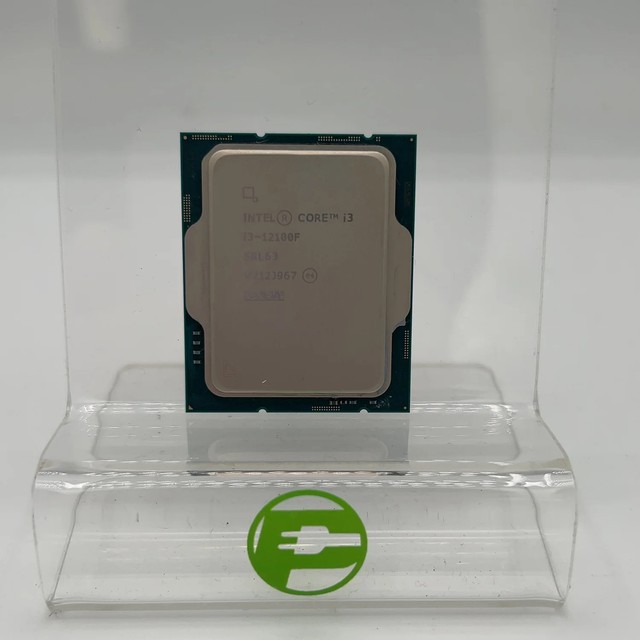
Intel Core i3-12100F
The value pick, and the one most guides land on. Four cores and eight threads of Alder Lake are far more than a 1050 Ti will ever saturate, so every rupee or dollar past this is spent on a bottleneck that does not exist. No integrated graphics, which is exactly right when a discrete card is already in the plan.
- 4 cores / 8 threads, up to 4.3 GHz boost
- LGA1700 socket, 58 W base power
- Ships with a stock cooler — adequate for this class
- Works on cheap B660/H610 DDR4 boards
- Cheapest modern CPU that will not limit a 1050 Ti
- Runs cool and quiet on the bundled cooler
- DDR4 boards keep the platform cost down
- Only 4 cores — feels thin if you stream or multitask heavily
- LGA1700 is an end-of-life socket, so CPU upgrades are limited to what exists today
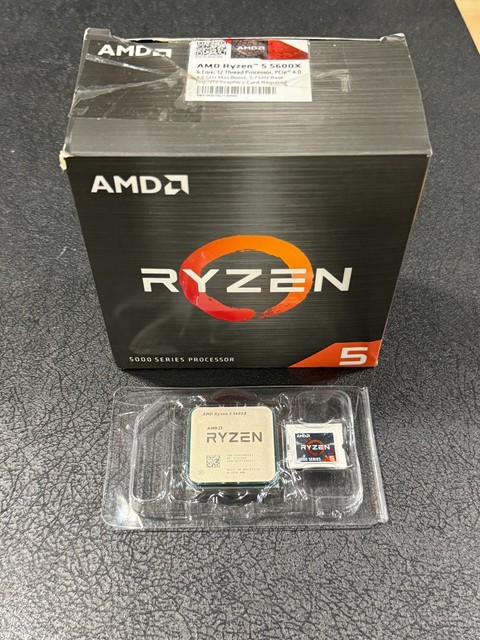
AMD Ryzen 5 5600
Two more cores than the i3 for a modest premium, and the better buy if the machine does anything besides game — video calls with a browser full of tabs, light editing, emulation. Drops into the enormous second-hand and clearance pool of AM4 boards, which is where the real savings live.
- 6 cores / 12 threads, up to 4.4 GHz boost
- AM4 socket, 65 W TDP
- Includes the Wraith Stealth cooler
- Unlocked multiplier for light overclocking
- Six cores age better than four
- Huge selection of cheap AM4 motherboards
- Cooler included, so no extra purchase
- Usually costs more than the i3-12100F for no gaming gain at this GPU tier
- AM4 is a dead-end socket for future upgrades

MSI PRO B660M-A DDR4 Motherboard
The board to pair with the i3-12100F. Micro-ATX, DDR4 so you can reuse or buy cheap memory, and enough VRM to run anything you would ever drop into this socket later. Nothing flashy — which is the point at this budget.
- LGA1700, micro-ATX form factor
- 4× DDR4 DIMM slots, up to 128 GB
- PCIe 4.0 x16 slot plus 2× M.2 slots
- 2.5 Gb Ethernet
- DDR4 support avoids a memory upgrade you do not need
- Two M.2 slots is generous for the price
- Straightforward BIOS, good fan control
- No Wi-Fi on the base model
- Micro-ATX means fewer expansion slots

MSI B550M PRO-VDH WiFi Motherboard
The AM4 counterpart, for the Ryzen 5 5600. B550 rather than the cheaper A320 or B450 because it brings PCIe 4.0 and proper memory support, and the WiFi version routinely sells under $100 — which makes the usual ‘save $15 on A320’ argument hard to justify.
- AM4 socket, micro-ATX
- 4× DDR4 slots, up to 128 GB
- PCIe 4.0 for the primary M.2 and GPU slot
- Wi-Fi and Bluetooth onboard
- Wi-Fi included at a budget price
- PCIe 4.0 pays off when you upgrade the GPU later
- Supports the full range of Ryzen 5000 chips without a BIOS gamble
- VRM is fine for a 5600 but not for a 5900X
- Only two fan headers besides the CPU header
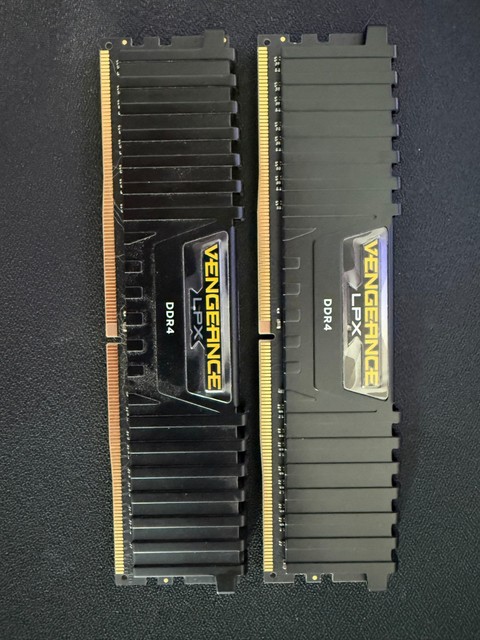
Corsair Vengeance LPX 16 GB DDR4-3200 (2×8 GB)
Sixteen gigabytes in two sticks is the floor in 2026, and dual-channel matters more than the headline speed — a single 16 GB stick will measurably cost you frames. The LPX heat spreader is low enough to clear a tower cooler, which is not true of every RGB kit at this price.
- 2×8 GB DDR4-3200, CL16
- Low-profile 34 mm heat spreader
- XMP 2.0 profile, one BIOS toggle to enable
- Works on both Intel and AMD platforms above
- Dual-channel out of the box
- Clears large air coolers
- Reliable, boring, widely tested
- No RGB if you want the light show
- DDR4 will not carry over to a future AM5 or LGA1851 build

Crucial P3 Plus 1 TB NVMe SSD
The gap between a 1 TB SATA SSD and a 1 TB NVMe drive is now roughly the price of a takeaway meal, so there is no reason to buy the slower one. A terabyte is the right size — modern games routinely eat 80 GB each, and the 1050 Ti still plays plenty of them.
- 1 TB capacity, M.2 2280 form factor
- PCIe 4.0, up to 5,000 MB/s sequential read
- Backwards compatible with PCIe 3.0 slots
- 5-year limited warranty
- Cheap per gigabyte
- Fast enough that the interface is never the bottleneck here
- Runs cool without a heatsink
- DRAM-less design slows sustained large writes
- PCIe 4.0 speeds are wasted on an older board
be quiet! System Power 11 450 W (80+ Bronze)
A 1050 Ti draws its full 75 W from the slot with no auxiliary connector, so the whole system sits comfortably under 250 W. That makes 450 W genuinely sufficient rather than optimistic — and 80+ Bronze from a real manufacturer is the line you should never drop below, whatever a $25 no-name unit claims on the box.
- 450 W continuous, 80 PLUS Bronze certified
- 120 mm quiet fan
- Standard ATX, non-modular
- Protections: OVP, UVP, OCP, SCP
- Quiet under the loads this build actually produces
- Reputable brand at an entry price
- Enough headroom for a mid-range GPU upgrade later
- Non-modular cabling clutters a small case
- 450 W is too tight if you plan a 200 W+ graphics card someday

Corsair CX550F RM Bronze (Modular)
Step up here if you expect the GPU to be the first thing you replace. The extra 100 watts and the fully modular cabling cost about $25 more, and they buy you a power supply that survives two more builds after this one. Modularity matters more than it sounds in a cheap case with no cable-management room.
- 550 W, 80 PLUS Bronze
- Fully modular flat cables
- 120 mm rifle-bearing fan
- Single +12 V rail
- Headroom for a real GPU upgrade
- Only the cables you need go in the case
- Long warranty for the price tier
- More power than this build needs today
- Fan is audible under heavy load

Cooler Master MasterBox Q300L Micro-ATX Case
Cheap cases are usually cheap because of airflow, and this one is not — the perforated front panel and magnetic dust filters do the job, and the whole thing is small enough to sit on a desk. Both micro-ATX boards above drop straight in, and a 1050 Ti is short enough that GPU clearance is a non-issue.
- Micro-ATX / Mini-ITX support
- Perforated front and top panels with magnetic dust filters
- Up to 360 mm GPU clearance, 159 mm cooler height
- Transparent acrylic side panel
- Genuinely good airflow at a budget price
- Compact desk-friendly footprint
- Repositionable I/O panel
- Ships with only one fan
- Acrylic panel scratches easily
- Tight behind the motherboard tray for cables

Thermalright Assassin X 120 Refined SE CPU Cooler
Both CPUs above include a stock cooler that works. This is the $20 upgrade that makes the machine quiet instead of merely functional — four heat pipes and a 120 mm fan against a 65 W chip is overkill in the best way, and it fits the Q300L’s 159 mm height limit with room to spare.
- 4 × 6 mm direct-contact heat pipes
- 120 mm PWM fan, 1,550 RPM max
- 155 mm total height
- Mounts for LGA1700 and AM4 in the box
- Near-silent at the loads this build generates
- Costs about the same as a decent case fan
- Clears low-profile RAM comfortably
- Mounting hardware instructions are terse
- Plain black — no lighting

MSI GeForce GTX 1050 Ti 4GT OC (4 GB)
If you do not already own the card, this is the version to look for. It is a two-slot, no-power-connector design that runs off the PCIe slot alone, which is what lets a 450 W supply work and what makes the 1050 Ti a favourite for reviving prebuilt office machines. Buy it used with clear eyes: it is a nine-year-old card and new stock, where it exists, is usually overpriced.
- 4 GB GDDR5, 128-bit bus
- 75 W board power — no PCIe power cable required
- Dual-slot, roughly 145 mm long
- DisplayPort, HDMI and DVI-D outputs
- Runs on any power supply with a spare PCIe slot
- Cool and quiet, often passive at idle
- Comfortable 1080p in esports and older titles
- 4 GB of VRAM is limiting in current games
- No ray tracing, no DLSS
- New stock is scarce and poor value — the used market is the sane route
Buying tips
- Do not overspend on the CPU. A 1050 Ti will be the limiting part in almost every game, so a Core i3-12100F or Ryzen 5 5600 is the ceiling worth paying for. Money saved here is better spent on the SSD or on the graphics card you buy next.
- Two sticks of RAM, always. A single 16 GB module runs the memory in single-channel mode and costs real frame rate on a budget system. Buy a 2×8 GB kit, and enable the XMP or EXPO profile in the BIOS afterwards — without that one toggle the memory runs at its slow default speed.
- Check the case’s GPU clearance against the card you actually have. The 1050 Ti is short, but some factory-overclocked triple-fan variants of later cards are not, and a $50 case is where clearance problems show up.
- Budget the power supply for the GPU you will buy, not the one you have. The 1050 Ti needs almost nothing; a replacement card in two years may need 200 W and two 8-pin connectors. Spending $25 more on a 550 W modular unit today saves buying a second PSU later.
- Buying the card used? Ask for a photo of it running with a load test on screen, check the fans spin freely, and prefer a seller with returns. Mining-era cards are common in this generation and a reflowed or heavily used board is not a bargain.
- If the total creeps past about $450, stop and reconsider. At that point a modern entry-level card on the same platform outperforms this build by a wide margin. The 1050 Ti build makes sense when the card is free, already owned, or genuinely cheap — not as a from-scratch purchase at retail prices.
As an Amazon Associate and eBay Partner, toptenpick.com earns from qualifying purchases. Prices and availability are subject to change.