

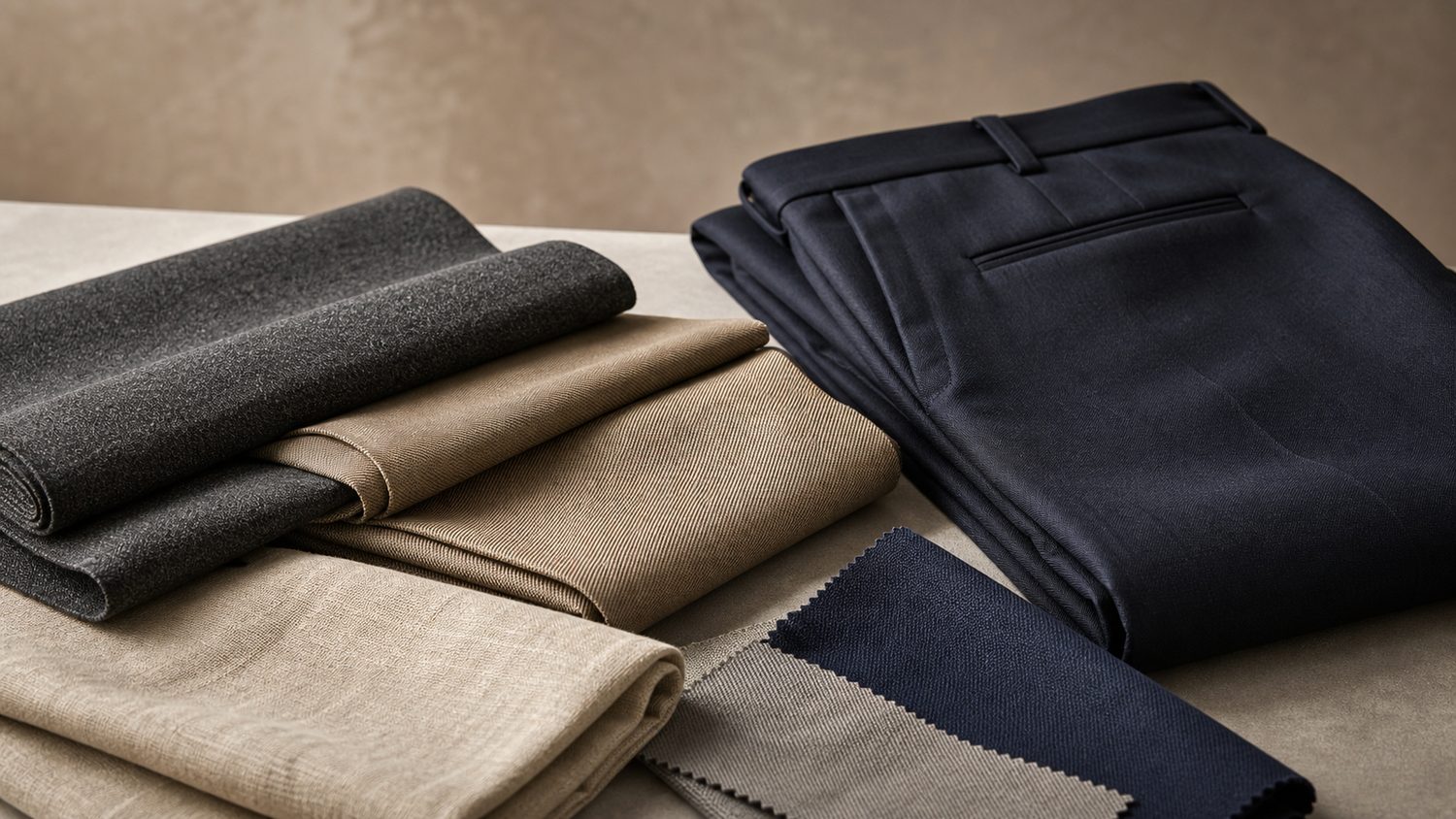
The best fabric for men’s pants depends on the job the pants need to do. A tailored wool trouser, a cotton twill chino, a linen summer pant, and a synthetic stretch work pant are all reasonable choices for different conditions. Start with climate, formality, movement, and care. Then read the composition label and construction rather than trusting a product name such as “premium,” “performance,” or “travel.”
Fiber alone does not settle the question. A fabric’s weight, weave, stretch, finishing, lining, and garment cut affect how it hangs, wears at the seat and knees, and feels over a day. A small amount of elastane can change mobility; a high synthetic percentage can improve drying and shape retention while changing breathability. The most useful wardrobe has several fabric types rather than one supposed winner.
Best all-round casual fabric: cotton twill
Cotton twill is the versatile choice for chinos and many everyday trousers. Its diagonal weave gives a more structured appearance than a very light plain weave, while cotton makes it familiar and easy to dress up or down. Choose it for everyday office-casual use, travel where you can wash garments, and outfits that need to work with sneakers, boots, or loafers.
Check the label and the weight in hand. A heavier twill usually holds a cleaner silhouette and resists showing every outline, while a lighter version feels less substantial. Cotton can crease and may dry more slowly than a synthetic blend. If mobility is important, a cotton-elastane twill can be sensible, but stretch does not eliminate the need for a correct rise, thigh, and seat fit.
Best for tailored trousers: wool or a wool blend
Wool is the traditional choice when trouser drape and a more formal line matter. It has natural elasticity, which helps it recover after sitting, and it is warm for its weight. A wool trouser can suit a business wardrobe, cooler weather, and occasions where a crisp casual chino would look too informal.
There is no need to treat 100 percent wool as automatically superior. A well-made wool blend can add durability, shape retention, or easier care. Read the care label before buying: the right choice for someone willing to dry-clean a tailored pair differs from the right choice for someone who needs frequent machine washing. Also judge the cloth’s weight; a heavy winter wool and a lightweight suiting wool serve different seasons.
Best for hot weather: linen or linen-cotton
Linen is the natural summer answer for a relaxed trouser. It breathes well and has a distinctly airy, textured appearance. Its trade-off is creasing. Those wrinkles are part of linen’s character, so buy it when a softer, less formal look is acceptable rather than hoping it will behave like a pressed wool trouser throughout a humid day.
A linen-cotton blend is a useful compromise for someone who likes the warm-weather feel but wants a little more softness and less visible creasing. It should still be assessed by the whole garment: a tight cut, heavy lining, or unsuitable underwear can undermine the comfort promised by the fibre label. Follow the individual garment’s wash and ironing instructions.
Best for hard use and easy care: cotton-polyester or technical blends
For commuting, uniforms, travel, and frequent laundering, a cotton-polyester blend is often practical. Polyester can help a fabric dry faster and retain its shape, while cotton keeps a more familiar hand feel. A small amount of elastane can improve movement and recovery at the knees. This is a performance decision, not a luxury signal.
The compromise is heat and feel. A high synthetic percentage can feel less breathable than cotton, linen, or wool in warm conditions. If you run hot, test the trouser indoors before making it a travel uniform. Look beyond the phrase “stretch”: confirm the full fiber percentages and see whether the fabric returns to shape after sitting and bending.
Best rugged casual fabric: denim
Denim is a strong option when the desired result is a jean rather than a trouser that imitates one. Its durability and casual identity make it useful for regular wear, but its weight can be uncomfortable in heat and its stiffness can matter for cycling, long sitting, or active work. Stretch denim may help movement, though it too should be judged by fit and recovery.
Choose denim for casual use rather than trying to force it into every office or formal setting. Dark, simple denim can look neater than heavily distressed fabric, but the venue’s dress code is more important than a color rule.
How to choose the right cloth
- Read the composition label. It tells you more than a marketing name and makes the trade-offs visible.
- Match fabric to temperature and formality. Linen suits heat and relaxed settings; wool suits tailored settings and cooler days; cotton twill covers much of daily wear.
- Try the full range of movement. Sit, bend, climb stairs, and check the seat and knees before removing tags.
- Inspect construction. Weave, weight, lining, seams, pockets, and cut all affect durability and comfort.
- Respect care requirements. Buy dry-clean-only wool only if that routine fits your life.
Choose cotton twill for a first all-round pair, wool or a wool blend for tailored trousers, linen or linen-cotton for heat, and a synthetic blend for hard use and easy laundering. The best fabric is the one whose label, construction, and care needs fit how you will actually wear the pants.