

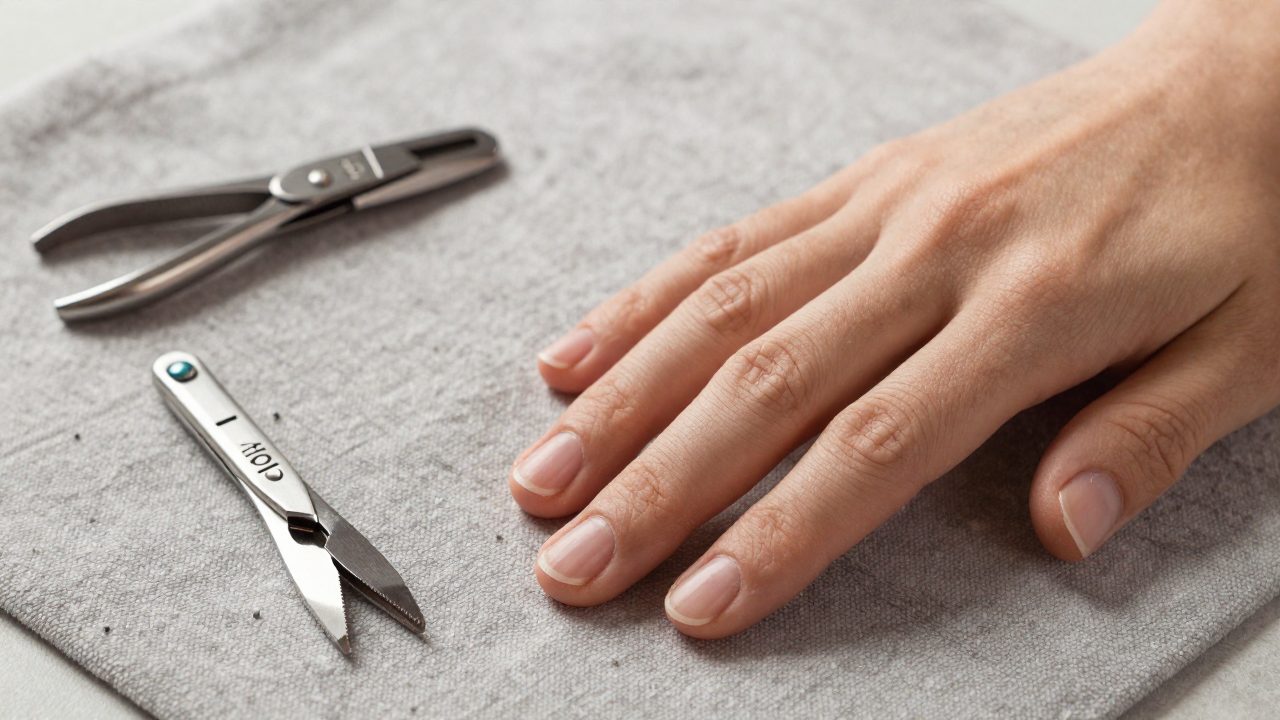
The best day to cut nails is the day when they need trimming and you can do it carefully. There is no medical reason to prefer Monday, Friday, a lunar date, or any other day of the week. If a family or religious tradition gives a particular day personal meaning, it can be followed as a custom, but it does not change how nails grow or how safely they can be cut. A practical answer is more useful: choose a calm time after a bath or shower, work in good light, use clean tools, and leave enough time to finish without rushing.
Choose a condition, not a day of the week
The American Academy of Dermatology recommends trimming immediately after a bath or shower, or soaking nails in lukewarm water for a few minutes first. Softer nails are easier to cut with control. That makes after washing a better moment than a particular calendar day. If you cannot trim after washing, do not force the issue. Wait until you can sit comfortably, see the nail clearly, and use the right tool.
Fingernails and toenails do not need the same timetable. Fingernails usually show their need first when an edge catches on fabric, typing becomes uncomfortable, or a rough corner needs filing. Toenails generally grow more slowly. A current NHS foot-care guide suggests regular toenail cutting every 6 to 12 weeks, but the right interval still depends on how fast a person’s nails grow, footwear, and whether the nails are becoming difficult to manage. Look at the length and shape rather than following a calendar rule.
Set up for a careful trim
Use a nail clipper or nail scissors for fingernails and an appropriate toenail clipper for toenails. Gather a nail file or emery board before starting, because filing is the safer way to deal with a small sharp edge than repeatedly clipping at it. The AAD advises disinfecting tools monthly using a scrub brush with 70 to 90 percent isopropyl alcohol, then rinsing them in hot water and drying them fully before storage. Do not share tools if they cannot be properly cleaned.
Good lighting is part of the timing decision. Sit with a stable foot or hand position instead of trying to trim while standing, walking, watching something else, or using a dull light source. If you cannot reach your toenails safely, if your hands are unsteady, or if your vision makes it difficult to see what you are cutting, filing gradually or asking for professional advice is safer than taking a large clip. The goal is a smooth edge, not the shortest possible nail.
Fingernails: straight across, then gently shape
For fingernails, the AAD recommends cutting almost straight across and then using a file to slightly round the corners. This gives a neat edge while reducing snagging. File in one direction rather than sawing back and forth, which the AAD notes can weaken nails. Stop when the edge is smooth. Cutting closer in pursuit of a perfectly rounded shape creates more opportunity to nick the skin or leave an uneven edge.
Do not cut or push back cuticles as part of an ordinary trim. Cuticles protect the nail root, and cutting them makes it easier for germs to enter. If the skin around a nail is dry, use moisturiser after trimming instead of cutting more. The AAD specifically recommends moisturising after a trim because dry nails split more easily. A loose hangnail is different from a cuticle: clip it carefully with a clean tool rather than pulling it.
Toenails: keep the corners visible
Toenails need a more conservative shape. The AAD and NHS guidance agree on cutting them straight across, avoiding the sides, and not cutting too short. Use a file to remove sharp edges rather than carving into the corners. Cutting down a side can leave a spike that grows forward, and cutting too short can make the toe sore. Do not cut a V shape into a toenail; this is not recommended as a way to prevent an ingrown nail.
Well-fitting footwear also matters because a shoe that is too tight can press on the toes. If a nail is thick, difficult to reach, or difficult to cut safely, filing it gradually may be a better home-care option than forcing a clipper through it. A podiatrist can advise on nails that cannot be safely managed with ordinary personal care. That is particularly relevant for anyone who has been told to take special care with their feet because of a medical condition.
When to postpone trimming and seek advice
Do not treat a painful, swollen, bleeding, or draining nail edge as a routine grooming problem. The NHS advises seeking medical advice for persistent ingrown-toenail problems, while the AAD advises seeing a board-certified dermatologist for changes in nail colour, texture, or shape. A dark streak, a nail pulling away from the skin, major thickening or thinning, pits or grooves, or a nail that stops growing deserve assessment rather than an attempt to trim the issue away. This is not a diagnosis list; it is a reason to get an appropriate professional opinion.
Also pause if the skin has already been cut. Cleanliness and a calm approach matter more than completing the trim immediately. If there are signs of infection around a toenail, such as increasing redness, heat, swelling, pain, or discharge, seek advice from an appropriate clinician rather than digging at the nail corner.
A simple schedule that works
- Check once a week. Look for snagging fingernails, sharp edges, or toenails that are approaching the end of the toe.
- Trim after washing when practical. Softer nails and clean hands or feet make the process easier.
- Use clean, sharp tools in good light. Replace a damaged clipper rather than squeezing harder.
- Clip conservatively. Fingernails can be almost straight with lightly rounded corners; toenails should be straight across without cutting into the sides.
- File and moisturise. Smooth rough edges in one direction and use moisturiser after trimming.
Folklore about lucky or unlucky nail-cutting days can be an enjoyable tradition, but it is not a safety rule. The best day is simply the next suitable moment: after washing if possible, with clean tools, enough light, and no need to rush. That routine is more dependable than any day-of-the-week rule, and it works for ordinary fingernail and toenail care throughout the year.