

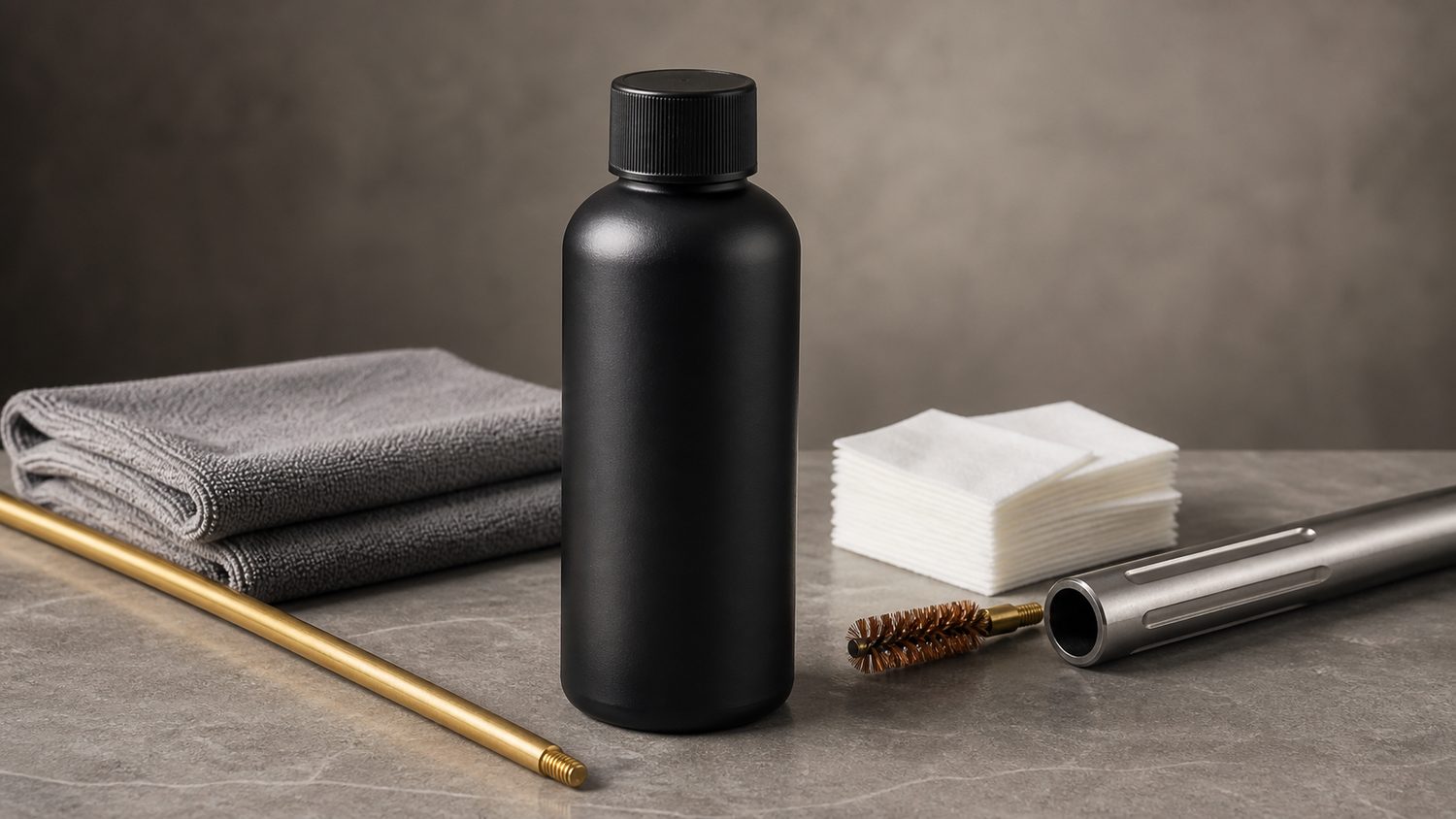
A search for a copper remover for a barrel sounds like a simple shopping question, but it is really a materials-and-safety question. This page does not rank products or recommend a purchase. It explains what copper fouling is, what the broad chemistry labels on maintenance products mean, and when the safer decision is to stop and consult the firearm maker or a qualified gunsmith. This guide therefore names no products, prices or buying recommendations.
What copper fouling means
Copper-coloured deposits can be left in a bore when a jacketed projectile travels through it. Heat, pressure, friction and the condition of the bore can affect where residue appears. A visible colour is not, by itself, a diagnosis of a problem. Normal use can leave residue, while persistent accuracy, safety or corrosion concerns call for the manufacturer’s maintenance guidance and, where needed, professional inspection. Do not treat a photograph, forum post or generic cleaning schedule as a substitute for the instructions for a particular firearm.
Read chemistry categories rather than marketing claims
Maintenance products are commonly described by broad chemical categories: water-based cleaners, petroleum-based cleaners, ammonia-containing formulations, ammonia-free reactive formulations, mild detergents and protective oils. These labels do not make products interchangeable. A formulation may target carbon, copper-coloured residue, oil or general grime, and its directions may limit contact time, specify particular surfaces or require a wipe-down afterward. The safety data sheet and the original label are more useful than a vague claim that a liquid is “strong” or “fast.”
Finish and material compatibility
Read both the firearm manual and the cleaner’s compatibility warnings before use. If either source is silent, ask the firearm maker or a gunsmith rather than testing an unfamiliar chemical on a visible or critical surface. Avoid leaving any liquid where it can wick into bedding, grips, laminated wood, electronics, enclosed cavities or ammunition storage. If a surface changes colour, becomes tacky, develops haze, sheds coating or shows corrosion, stop using the product and seek qualified guidance. A cosmetic change can also signal a compatibility problem that should not be concealed with additional chemicals.
Set up a safe unloaded work area
Maintenance starts with control of the firearm, not with a cleaning liquid. Follow the maker’s unloading and clearing procedure, remove ammunition from the work area and visually and physically confirm the condition required by the manual before any handling. Keep ammunition in a separate location. Use a stable, well-lit bench where the firearm cannot roll, fall or be accessed by children, visitors or pets. Point it in a safe direction throughout handling, even when you believe it is unloaded.
Do not improvise disassembly, force a component or work on an unfamiliar mechanism from an internet diagram. Use only the level of field stripping authorised by the manual. If access is obstructed, a part will not move normally, a bore appears blocked, or a firearm has been dropped or damaged, stop. A gunsmith can evaluate the issue without turning a maintenance task into a safety or reliability problem. Avoid distractions, alcohol, impairing medication or rushed work whenever firearms are present.
Ventilation and personal protection
Solvents and reactive cleaners can release vapours and can irritate skin, eyes or airways. Work in a well-ventilated area that follows the product label’s instructions; a closed room, vehicle, basement or living space is a poor substitute for ventilation. Keep the container away from flame, sparks, hot equipment and smoking materials where its warning label requires it. Do not eat, drink or prepare food at the bench, and wash hands after finishing.
Use the personal protective equipment stated on the label and safety data sheet. Chemical-resistant gloves and eye protection are common precautions, but the appropriate material and use depend on the formulation. Gloves that are damaged, contaminated or incompatible with the chemical do not provide reliable protection. If liquid contacts eyes or skin, or if someone experiences breathing difficulty, dizziness or persistent irritation, follow the product’s first-aid directions and obtain urgent medical advice when indicated. Keep the label or safety data sheet available for emergency responders.
Storage, rags and disposal
Store maintenance chemicals in their original labelled containers with caps secured, away from children, pets, food, heat and ignition sources. Never transfer a solvent into a drink bottle, unlabelled jar or food container. Keep incompatible chemicals apart and do not keep deteriorated containers that leak, bulge or have unreadable labels. A clean, dry cabinet or other secure storage location is preferable to leaving chemicals on a bench or in a vehicle.
Used patches, cloths and gloves may carry solvent, oil, metal residue or other contaminants. Set them aside in a manner consistent with the label and local waste rules; do not burn them, pour leftover liquid down a drain or dispose of chemicals where they can reach soil or water. Local household hazardous-waste programmes can explain whether a particular material needs a dedicated collection route. When in doubt, retain the material in its original closed container and ask the local waste authority rather than guessing.
When to ask for professional or local guidance
The firearm manufacturer is the primary source for approved maintenance intervals, allowed disassembly and material cautions. A qualified gunsmith is the appropriate next contact for persistent deposits, visible pitting, suspected corrosion, a damaged crown, a possible obstruction or any uncertainty about a component. They can inspect the firearm without relying on a generic description of colour or residue.
Rules on firearm possession, transport, storage, repair and chemical disposal vary by jurisdiction and can change. Follow the law where the firearm is located, including any rules that affect who may handle it or where it may be maintained. This general guide is not legal advice and does not replace the maker’s manual. The responsible outcome is a clean, securely stored firearm and a work area free of ammunition and chemical hazards—not an aggressive attempt to remove every visible mark.