

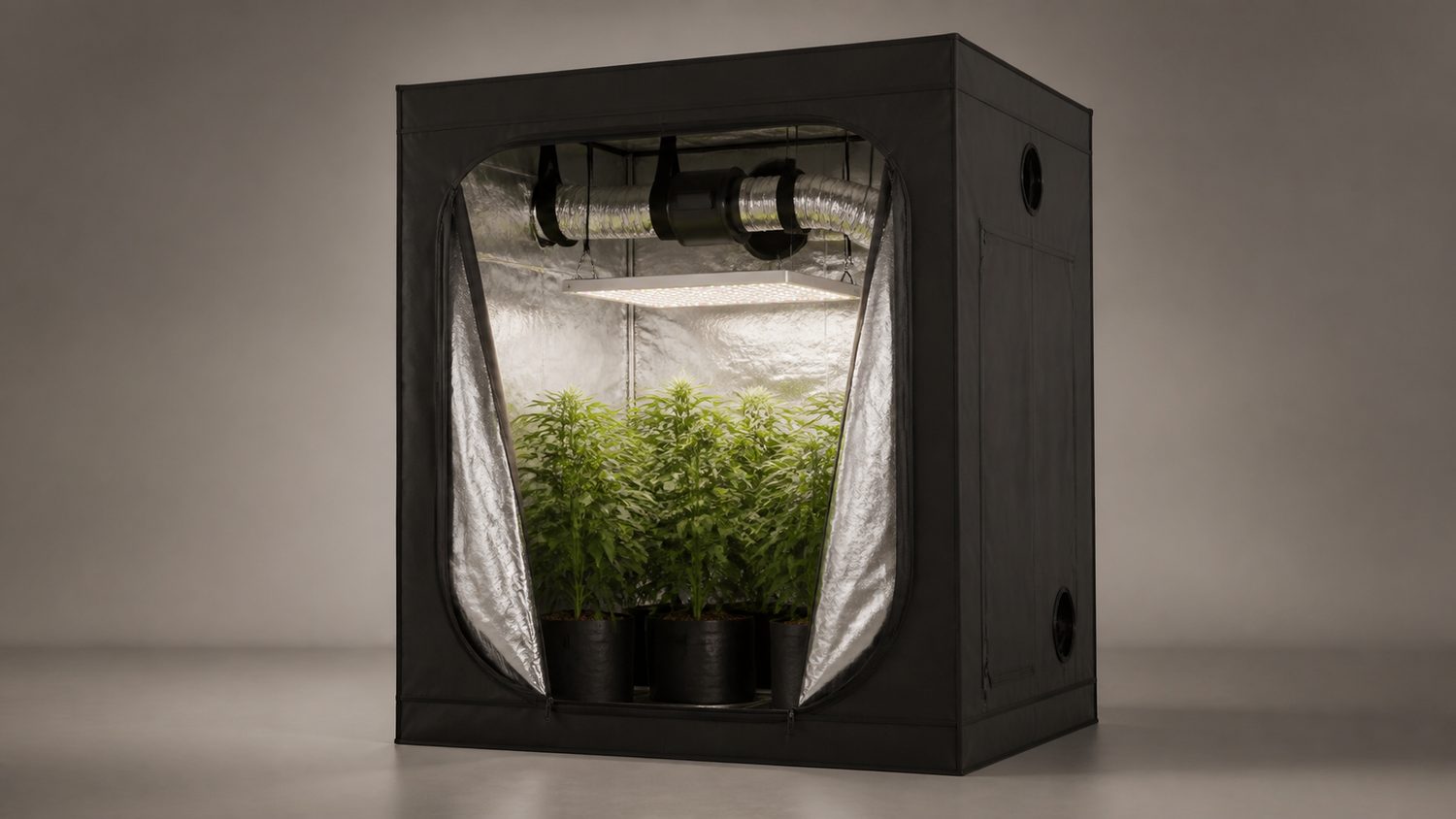
‘Best Choice Products’ is a brand name, not a grow-tent category
Best Choice Products is an established home-and-garden retailer, but the words ‘best choice products grow tent’ can mean two very different things. They may refer to that specific company, or they may simply be a search phrase for a good indoor gardening enclosure. The distinction matters because a marketplace title can place familiar words beside a generic item without establishing who made it, who supports it, or whether a warranty applies. A current review of Best Choice Products’ own gardening collection found garden beds, planters, potting furniture, carts, and a small outdoor greenhouse, but did not verify a current Best Choice Products grow-tent line. That is not proof that no old or third-party listing exists; it means a brand claim needs evidence before it is trusted.
Do not treat a logo in a listing title, a search-result snippet, or a reseller category as proof of manufacturer identity. A product can be described loosely, catalogued under an incorrect brand, or remain indexed after it is discontinued. ‘Best Choice’ is also ordinary language used by unrelated sellers. The practical question is not whether the phrase sounds plausible. It is whether the particular enclosure has a documented maker, an identifiable model, and a support route that matches the item being offered.
Authenticate the maker and model first
Begin with the manufacturer’s current site rather than a marketplace search. Look for the exact model name or number, dimensions, manual, parts information, and contact details on a page the manufacturer controls. Then compare those details with the seller’s listing, photographs, carton label, and included instructions. The model identifier should agree across them. A mismatch in dimensions, port layout, frame count, or manual illustration is a reason to pause, not a small cosmetic difference. Save the listing and the manufacturer page before purchase, along with the receipt; support pages and marketplace listings can change.
A useful support test is specific: can the seller say who handles a missing connector, a damaged zipper, a torn floor tray, or an assembly question’ A real manufacturer may have an address, service contact, warranty terms, and a manual tied to the model. A retailer may handle returns, but that is not the same as manufacturer support. If the listing cannot identify the maker or model, avoid assuming replacement parts will fit. Generic tents often share broad shapes while using different pole lengths, corner fittings, zipper runs, and port positions.
Measure the room and working envelope
Published tent dimensions describe the enclosure, not the entire space needed to operate it. Measure the floor footprint, finished ceiling height, doorway route, and clearance around each opening. Leave space to unzip doors, inspect plants, route ducting without tight bends, and reach controls without climbing over equipment. Check height after allowing for suspended equipment and its adjustment range. A tent that technically fits beneath a ceiling may leave too little room to hang equipment safely or to maintain distance required by that equipment’s instructions.
Record dimensions in one unit and distinguish exterior footprint from usable interior area. Check whether the stated width is measured at the poles, the fabric, or the widest point of a tray. If the tent will be placed on carpet, a raised floor, or an uneven surface, account for that too. Assemble only on a stable, level area where the frame can stand square. A distorted base can make doors bind, increase strain on zippers and connectors, and complicate water cleanup. Photographs are poor substitutes for a measured plan.
Assess frame, fabric, and load claims
Plan airflow as a system
Ventilation is not merely a question of whether the tent has circular ports. Confirm the number, diameter, and position of ports against the ducting and equipment instructions, and make sure doors and intake openings will not be blocked by a wall or stored items. Avoid crushing, sharply kinking, or improvising duct routes that restrict air movement. Air moved within the tent and air exhausted from the room are related but separate issues; equipment inside a small enclosure still affects the room that contains it.
Watch for condensation, wet surfaces, musty odors, and water collecting under or around the tent. EPA guidance treats moisture control as central to preventing mold and advises keeping indoor relative humidity below 60 percent, ideally 30 to 50 percent where possible. The appropriate setup depends on the room, outdoor conditions, and equipment in use, so use measured temperature and humidity rather than assuming a fan solves every moisture problem. Address leaks and spills promptly, keep drainage paths clear, and follow local building rules where ventilation connects to the exterior.
Keep water and electricity separate
A grow tent can combine water, humidity, metal framing, cords, lights, fans, and timers in a confined area. Follow every electrical device’s instructions and use equipment identified for the environment in which it will operate. Keep plugs, adapters, power strips, and connections out of the tent’s wettest area and above any plausible spill or drain path. Route cords so they are not pinched by a zipper, stretched across a doorway, buried beneath a tray, or used to support weight. Do not operate equipment while standing in water, and do not energize equipment that has become wet until it has been assessed appropriately.
OSHA’s electrical-safety guidance calls for inspecting cords and equipment in damp locations and using ground-fault circuit-interrupter protection there. The Consumer Product Safety Commission also identifies cord construction and strain relief as important electrical-safety characteristics. Those principles do not replace local electrical code or a qualified electrician’s advice. Do not daisy-chain extension cords, overload a receptacle or power strip, modify plugs, or make unapproved repairs. If the required electrical load or permanent wiring is uncertain, stop and have a qualified electrician assess the installation.
A clear conclusion
This is an informational clarification, not a product roundup. No current Best Choice Products grow-tent line was verified in the brand’s own catalogue during this review. Readers who encounter that phrase can separate a documented manufacturer product from a generic, stale, or ambiguously titled listing by checking the maker, exact model, manual, dimensions, support terms, and safe operating requirements. That evidence is more useful than a familiar phrase when the enclosure will hold powered equipment in a humid indoor space.