

As an Amazon Associate and eBay Partner, toptenpick.com earns from qualifying purchases. Prices and availability are subject to change.
Rural development spans a wide range of registers, from dense academic handbooks written for graduate students and practitioners to accessible popular economics that a general reader can pick up cold. This list covers both ends — reference-grade academic texts for coursework or professional use, and the well-known popular-economics titles that made rural poverty and development a mainstream reading topic.
| # | Product | Price | Where to buy |
|---|---|---|---|
| 1 | Handbook of Rural Development, edited by Gary Paul Green | $45-$90 depending on edition/format | Amazon · eBay |
| 2 | Rural Development: Principles, Policies and Management by Katar Singh | $40-$60 | Amazon |
| 3 | Rural Development: Putting the Last First by Robert Chambers | $30-$45 | Amazon · eBay |
| 4 | Transforming the Rural Asian Economy: The Unfinished Revolution, edited by Mark W. Rosegrant and Peter Hazell | $40-$65 | Amazon |
| 5 | Poor Economics by Abhijit V. Banerjee and Esther Duflo | $12-$18 | Amazon · eBay |
| 6 | Banker to the Poor by Muhammad Yunus | $12-$17 | Amazon · eBay |
| 7 | Development as Freedom by Amartya Sen | $14-$18 | Amazon · eBay |
| 8 | Out of Poverty by Paul Polak | $15-$25 | Amazon · eBay |
The picks, in detail

Handbook of Rural Development, edited by Gary Paul Green
A reference-grade academic handbook covering global trends, state policy, and grassroots movements affecting rural areas, spanning resource dependence, migration, entrepreneurship, microfinance, tourism, and gender.
- Multi-contributor academic handbook format
- Broad topical coverage across rural development subfields
- Aimed at professors, students, and practitioners
- The most comprehensive single-volume academic reference on this list, useful for coursework or professional research
- Multi-contributor format brings in specialist expertise across many rural-development subtopics
- Academic reference pricing sits well above the popular-economics titles here
- Dense reference format, not a cover-to-cover general-interest read
Rural Development: Principles, Policies and Management by Katar Singh
A textbook specifically structured around the subject of rural development as a course of study, widely used in academic settings.
- Textbook format organized by principle, policy, and management themes
- Written specifically for rural development coursework
- Sage academic publisher
- Purpose-built as a course textbook, so it’s organized more pedagogically than a general reference handbook
- Widely assigned in rural development academic programs
- Academic textbook pricing
- Less accessible to a casual general reader than the popular titles on this list

Rural Development: Putting the Last First by Robert Chambers
A 1983 book widely regarded as an influential, field-defining work in participatory rural development thinking.
- Published 1983, still in print
- Foundational text in participatory development approaches
- Written by a leading development studies academic
- Genuinely influential — shaped how a generation of development practitioners think about rural poverty
- Still assigned and cited widely despite its age
- Written in 1983 — some examples and data are dated relative to current rural development practice
- More academic in tone than the popular economics titles here
Transforming the Rural Asian Economy: The Unfinished Revolution, edited by Mark W. Rosegrant and Peter Hazell
A 2001 detailed study of rural economic transformation across Asia, covering agricultural and rural policy shifts in the region.
- Regional focus on rural Asia specifically
- Multi-contributor academic study format
- Published 2001
- Useful if your interest is specifically in Asian rural development rather than the field generally
- Detailed regional data and case studies not found in the broader handbooks here
- Narrower regional scope than the Handbook of Rural Development or Chambers’s book
- Academic pricing and format
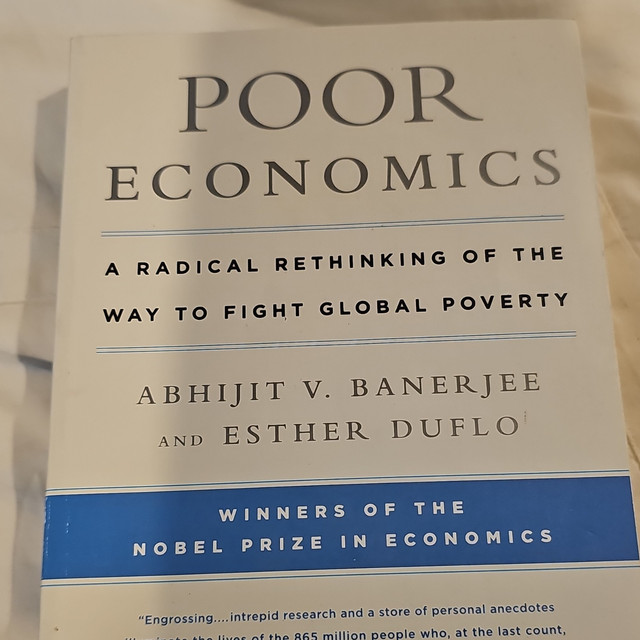
Poor Economics by Abhijit V. Banerjee and Esther Duflo
A data-driven, Nobel Prize-winning economists’ exploration of what actually works in fighting poverty, written for a general audience rather than an academic one.
- Mass-market paperback format
- Written by Nobel Prize-winning economists (2019, Economic Sciences)
- Based on randomized-control-trial development economics research
- The most accessible book on this list for a general reader with no development studies background
- Grounded in rigorous RCT-based research rather than anecdote, despite its readable style
- Broader poverty economics focus, not narrowly rural-development-specific
- Less useful as a course reference than the dedicated academic texts here

Banker to the Poor by Muhammad Yunus
Yunus’s account of founding Grameen Bank and pioneering microfinance, essential reading on one specific and widely adopted rural development tool.
- Memoir/narrative nonfiction format
- Written by the Nobel Peace Prize-winning founder of Grameen Bank
- Focused specifically on microfinance as a development strategy
- Firsthand account from the person who pioneered the approach, not a secondhand academic summary
- Highly readable narrative style compared to the textbooks on this list
- Narrow focus on microfinance specifically rather than rural development broadly
- Memoir format means it’s one person’s account and perspective, not a comprehensive survey
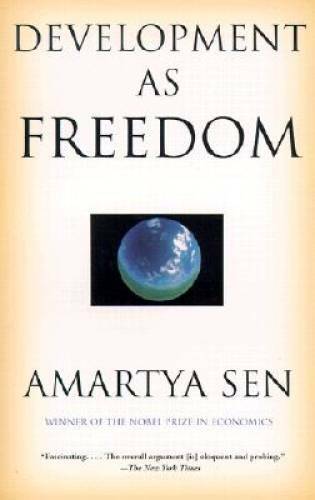
Development as Freedom by Amartya Sen
Nobel laureate economist Amartya Sen’s influential argument that development should be understood as the expansion of people’s real freedoms, not just economic growth.
- Mass-market paperback format
- Written by a Nobel Prize-winning economist and philosopher
- Broad development-theory framework, applicable to rural contexts among others
- Foundational development-theory text that reframed how the whole field thinks about what “development” means
- Accessible to a general reader despite its theoretical depth
- General development theory rather than specifically rural-focused
- More conceptual/philosophical than the practical policy texts here

Out of Poverty by Paul Polak
A 2008 book by Paul Polak, founder of International Development Enterprises, arguing for practical, market-based approaches to rural poverty rather than aid-driven ones.
- Published 2008 by Berrett-Koehler
- Written by a practitioner (founder of an international rural-development NGO), not purely an academic
- Focused on practical, income-generating rural interventions
- Practitioner’s-eye view grounded in actual field projects, a different angle than the academic or Nobel-laureate texts here
- Directly rural-poverty-focused rather than general development theory
- Less academically rigorous/cited than the university-press texts on this list
- Some of its specific project examples are now over 15 years old
Buying tips
- For coursework or professional reference, start with the Handbook of Rural Development or Katar Singh’s textbook — they’re structured for that use in a way the popular titles aren’t.
- For a general-interest first read with no prior background, Poor Economics is the most accessible starting point, followed by Banker to the Poor for a narrower, story-driven look at one specific tool (microfinance).
- Development as Freedom and Poor Economics both work at the level of development theory broadly, not rural development specifically — pair either with Chambers’s Putting the Last First or Polak’s Out of Poverty for a rural-specific practical angle.
As an Amazon Associate and eBay Partner, toptenpick.com earns from qualifying purchases. Prices and availability are subject to change.