

As an Amazon Associate and eBay Partner, toptenpick.com earns from qualifying purchases. Prices and availability are subject to change.
Two decisions determine whether a Kannada book works for you, and both need making before you buy anything.
First: script or transliteration. Kannada has its own script — an abugida where each consonant carries an inherent vowel that is modified by marks around it — and a great many beginner books teach entirely in Roman transliteration. That feels faster for about three weeks and then becomes a ceiling. Every real-world thing you would want to read is in the script: shop signs, bus destination boards, menus, forms, anything written by anyone. Transliteration is also inconsistent between authors, so two books will spell the same word differently and you will build the wrong sound-to-symbol associations. The script has a reputation for being intimidating and it is genuinely learnable in a couple of weeks of daily practice. Learn it early, even if your goal is only speaking.
Second: spoken or literary Kannada. These are meaningfully different, in the way that spoken and written Arabic differ. The formal, literary register used in newspapers, books and formal writing is not what people speak on the street in Bengaluru or Mysuru, and a course built on literary grammar will leave you able to read a headline and unable to hold a conversation with an auto driver. Most people want spoken Kannada. Many academic textbooks teach the literary form, and they do not say so on the cover.
There is a third point worth knowing about this particular language market. The best Kannada materials are frequently published in India and hard to find internationally, and much of what surfaces first in an online search is a thin print-on-demand phrasebook. Books from Indian academic publishers and from Karnataka-based language institutions are generally far better than the international listings suggest, and worth seeking out.
Ten picks below, and the last three are not books.
| # | Product | Price | Where to buy |
|---|---|---|---|
| 1 | Structured Kannada Textbook with Script from Lesson One | ₹400-₹2,000 | Amazon |
| 2 | Kannada Script Primer or Workbook | ₹200-₹800 | Amazon |
| 3 | Spoken Kannada Course with Audio | ₹500-₹2,500 | Amazon |
| 4 | Kannada-English Dictionary | ₹400-₹1,500 | Amazon · eBay |
| 5 | Phrasebook for Immediate Use | ₹200-₹700 | Amazon |
| 6 | Kannada Grammar Reference | ₹500-₹2,000 | Amazon |
| 7 | Graded Readers and Children’s Books in Kannada | ₹150-₹600 | Amazon |
| 8 | Kannada Keyboard Stickers or a Physical Keyboard | ₹150-₹1,500 | Amazon |
| 9 | Flashcards or a Spaced Repetition Setup | ₹0-₹800 | Amazon |
| 10 | A Conversation Partner or Tutor | ₹300-₹1,000 per hour | Amazon |
The picks, in detail
Structured Kannada Textbook with Script from Lesson One
The format that produces actual competence, and the one to prioritise. A proper textbook introduces the script immediately, builds grammar in a deliberate sequence, and gives you exercises with an answer key so you can check yourself. Look for one that teaches spoken Kannada rather than the literary register, and that keeps transliteration as a temporary crutch in the first chapters rather than throughout. The presence of an answer key is a good proxy for whether the book was designed for self-study.
- Kannada script taught from the beginning
- Graded grammar sequence
- Exercises with an answer key
- Spoken register rather than literary
- Builds real competence rather than phrasebook recall
- Answer key makes self-study viable
- Script from the start avoids the transliteration ceiling
- Slower and more demanding than a phrasebook
- Many textbooks teach literary Kannada without saying so
Kannada Script Primer or Workbook
A dedicated script book, and worth buying alongside whatever course you choose. The Kannada alphabet has a logic to it — consonants in a grid organised by where in the mouth they are formed, vowel marks applied systematically — and a primer that shows that structure makes the whole thing far less intimidating than a list of shapes. Writing workbooks with stroke-order guides and tracing practice matter more than they sound: forming the letters by hand is what makes you able to read them.
- Full consonant and vowel charts
- Stroke order and tracing practice
- Conjunct consonant forms
- Reading practice as it goes
- The script is learnable in a couple of weeks this way
- Writing by hand is what makes reading stick
- Cheap and finishable
- Conjunct consonants are genuinely harder than the basic set
- A workbook alone teaches no vocabulary
Spoken Kannada Course with Audio
Kannada has sounds that do not exist in English — the retroflex consonants in particular, made with the tongue curled back — and no written description conveys them. Audio is not optional. A course with recordings by native speakers, ideally with dialogue at natural speed as well as slowly, is what trains your ear to hear distinctions you cannot currently make. Check the audio is included and accessible rather than a dead link to a defunct CD, which is a genuine problem with older Indian-published courses.
- Native speaker recordings
- Dialogues at natural and slow speed
- Downloadable audio or QR code access
- Pronunciation drills
- Essential for retroflex sounds English lacks
- Trains the ear as well as the eye
- Natural-speed dialogue prepares you for real speech
- Older courses reference CDs that no longer play
- Audio quality varies a lot
Kannada-English Dictionary
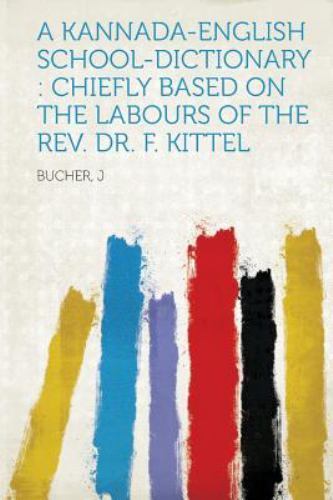
A real dictionary rather than an app, and it is worth owning one for a specific reason: looking a word up in a Kannada dictionary requires knowing the script’s alphabetical order, and learning that order is itself a useful exercise that cements the script. Choose a bidirectional dictionary of reasonable size — a pocket one will fail you constantly — and check whether it gives the script, a transliteration and a part of speech, since many give only two of the three.
- Bidirectional Kannada-English and English-Kannada
- Script with transliteration
- Parts of speech and usage notes
- Full-size rather than pocket
- Learning the alphabetical order cements the script
- More reliable than most app dictionaries
- Usage notes explain things a word list cannot
- Pocket dictionaries are too small to be useful
- Heavy and not portable
Phrasebook for Immediate Use
Honest about what it is: a phrasebook does not teach you a language, and for a two-week visit that is entirely fine. Restaurant, directions, autorickshaw, shopping, numbers, greetings — a good phrasebook covers those with the script and a pronunciation guide, and it fits in a pocket. Buy one if the goal is to be polite and functional on a trip. Do not buy one expecting to learn Kannada from it, which is the mismatch that produces most of the disappointed reviews in this category.
- Situational phrase groupings
- Script alongside transliteration
- Pronunciation guide
- Pocket sized
- Immediately useful on a short trip
- Cheap and portable
- Script alongside lets you point at things
- Teaches no grammar, so you cannot build sentences
- Transliteration schemes vary between publishers
Kannada Grammar Reference
The second book, bought a few months in. Kannada is agglutinative — grammatical information is added as suffixes stacked onto a root, which means a single word can carry what English needs a phrase for — and that structure is genuinely different from anything an English speaker has internalised. A reference grammar is not for reading cover to cover; it is for the moment a textbook’s explanation does not answer your question. Buy it when the questions start, not before.
- Systematic treatment of case, tense and agreement
- Verb conjugation tables
- Examples in script with translation
- Indexed for reference use
- Answers the questions a course leaves hanging
- Conjugation tables are genuinely used
- One purchase serves for years
- Impenetrable as a first book
- Many reference grammars describe literary Kannada
Graded Readers and Children’s Books in Kannada
The step that turns study into reading, and the one people skip. Children’s picture books and graded readers give you real Kannada in the script at a level you can actually get through, which is what builds reading speed — and reading speed is what makes the script stop being work. Karnataka has a strong children’s publishing tradition, and bilingual editions with English alongside let you check yourself without a dictionary on every line.
- Simple vocabulary and short sentences
- Large, clear script
- Bilingual editions available
- Illustrated
- Builds reading speed, which is what makes script effortless
- Real Kannada rather than constructed textbook sentences
- Bilingual editions remove the dictionary interruption
- Children’s vocabulary is not adult conversational vocabulary
- Hard to find outside India
Kannada Keyboard Stickers or a Physical Keyboard
For typing, which is how you will actually produce most of your written Kannada. Stickers applied to an existing keyboard, or a keyboard with the layout printed, let you type in the script without hunting. Note there are competing layouts — a phonetic layout maps to how the sounds are spelled in English and is far easier for a learner, while the InScript layout is the Indian standard. Start phonetic unless you have a reason not to; it is the one that lets you type what you can already say.
- Transparent stickers or a printed keyboard
- Phonetic and InScript layouts
- Works with built-in operating system input methods
- Cheap and quick to apply
- Makes typing in script practical from day one
- Phonetic layouts are far easier for learners
- Typing reinforces spelling
- Two competing layouts, which confuses beginners
- Cheap stickers peel within months
Flashcards or a Spaced Repetition Setup
Vocabulary is the bottleneck in any language and Kannada is no exception, and spaced repetition is the most efficient way through it — you see a card just before you would have forgotten it, which is what moves words into long-term memory. Physical cards work and a free spaced-repetition app works better because it does the scheduling for you. Make your own cards from your course rather than downloading a large pre-made deck; the making is half the learning.
- Blank cards or a spaced repetition application
- Script on one side, meaning on the other
- Scheduling handled automatically by apps
- Audio can be attached in app decks
- The most efficient route through vocabulary
- Making your own cards is itself effective study
- Free options are as good as paid ones
- Large downloaded decks are demotivating and poorly matched
- Requires daily consistency to work
A Conversation Partner or Tutor
Not a book, and it is the thing that most determines whether you get anywhere. Kannada’s diglossia — the gap between what books teach and what people say — is not something a book can close, and a native speaker will correct in ten minutes what a textbook leaves wrong for a year. Online tutoring platforms have Kannada teachers at Indian rates, and in Karnataka a language exchange costs nothing. Use the books for structure and a person for everything the books cannot do.
- Online tutoring platforms or local exchange
- Native speaker correction
- Spoken register rather than literary
- Flexible scheduling
- Closes the gap between book Kannada and spoken Kannada
- Corrects pronunciation errors before they set
- Indian rates make regular lessons affordable
- Requires scheduling and commitment
- Not every native speaker can explain their own grammar
Buying tips
- Learn the script early, even if you only want to speak. Transliteration feels faster for three weeks and then caps you hard — every sign, menu and form is in the script, and transliteration schemes are inconsistent between books so you learn the wrong sound-to-symbol links. The script takes a couple of weeks of daily practice and it pays back permanently.
- Check whether the book teaches spoken or literary Kannada. The two differ meaningfully, and many academic textbooks teach the literary register without saying so on the cover. A course built on literary grammar leaves you able to read a headline and unable to talk to an auto driver. Most learners want the spoken form.
- Insist on audio by native speakers. Kannada’s retroflex consonants — made with the tongue curled back — do not exist in English and no written description conveys them. If you cannot hear the distinction you cannot make it, and errors set early are hard to undo. Check that the audio is actually accessible, not a dead link to a CD.
- Write the letters by hand. Tracing and copying with correct stroke order is what makes you able to read the script quickly, in a way that recognising shapes on a screen does not. A cheap workbook with stroke-order guides is a couple of weeks of ten-minute sessions and it changes everything that follows.
- Look for Indian publishers. The best Kannada materials are frequently published in India and rank poorly in international searches, where thin print-on-demand phrasebooks surface first. Books from Indian academic publishers and Karnataka language institutions are generally far better than the listings suggest, and cheaper.
- Buy a grammar reference later, not first. Kannada is agglutinative — meaning stacks up as suffixes on a root — and that is genuinely unfamiliar to an English speaker. A reference grammar is impenetrable as a first book and invaluable three months in, when you have specific questions a course left unanswered.
- Start reading real Kannada as early as you can bear. Children’s books and graded readers give you the script at a level you can get through, and reading speed is what makes the script stop feeling like work. Bilingual editions let you check yourself without stopping at a dictionary on every line.
- Find a person. The gap between textbook Kannada and what people actually say is not something a book can close, and a native speaker will fix in ten minutes what a course leaves wrong for a year. Online tutors at Indian rates cost very little, and in Karnataka a language exchange costs nothing at all.
As an Amazon Associate and eBay Partner, toptenpick.com earns from qualifying purchases. Prices and availability are subject to change.