

As an Amazon Associate and eBay Partner, toptenpick.com earns from qualifying purchases. Prices and availability are subject to change.
Most reggae bass tone problems get fixed by turning something down, not by buying something bigger. Ask on TalkBass how to get that dub sound and the answer is almost always the same: roll the amp’s treble back to somewhere around 9 or 10 o’clock, ease off the high-mids too, and let the bass knob do the work. Add flatwound strings and a right-hand position closer to the neck than the bridge, and most of the classic reggae bass sound is already there before you’ve spent a dollar on gear.
That matters when you’re shopping for an amp, because a modern combo built to be bright and articulate — the kind with a compression tweeter or horn wired in by default — is working against you. You can dial the amp’s own treble control to zero and still hear top end if the horn stays engaged, which is why a horn-defeat or “vintage” voicing switch is worth more here than another EQ band.
What the classic reggae rigs actually needed was headroom and a big speaker, not brightness. Players who gig reggae regularly describe wanting 300 to 500 watts into a single 15-inch driver or a pair of 12s, specifically so a clean, fat low end doesn’t break up at stage volume — the tone comes from moving air at low frequencies, not from clarity up top. It’s the same logic behind the rigs associated with the genre’s foundational players: big 15-inch speakers, dark-voiced heads, and flatwound-strung Jazz basses played with a light touch near the neck.
None of that means you need boutique gear. A budget 1×15 combo with a tweeter you can switch off will get you closer to a real dub tone than an expensive hi-fi rig with the horn left on. What matters, roughly in order, is enough clean headroom for the room you’re playing, a speaker size that can move real low-frequency air, and a way to get the top end out of the signal path entirely rather than just turned down.
The ten amps and combos below range from sub-$400 practice-friendly combos to pro-level heads meant to be paired with a cabinet, and every one of them gives you a real path to that deep, rolled-off dub tone — some more directly than others, which the notes below call out.
| # | Product | Price | Where to buy |
|---|---|---|---|
| 1 | Fender Rumble 200 (V3) | $400–$540 | Amazon · eBay |
| 2 | Peavey MAX 115 II | $300–$330 | Amazon · eBay |
| 3 | Fender Rumble 500 (V3) | $700–$750 | Amazon · eBay |
| 4 | Ampeg PF-500 Head + PF-115HE Cabinet (Portaflex stack) | $950–$1,050 | Amazon |
| 5 | Ampeg SVT-7 Pro | $450–$900 | Amazon · eBay |
| 6 | Aguilar TH500V2 Tone Hammer | $850–$900 | Amazon · eBay |
| 7 | Genzler Magellan 800 | $750–$800 | Amazon · eBay |
| 8 | Gallien-Krueger MB212-II | $1,300–$1,350 | Amazon · eBay |
| 9 | Ashdown Studio 15 | $600–$650 | Amazon · eBay |
| 10 | Acoustic BN3115 | $500–$750 | Amazon · eBay |
The picks, in detail

Fender Rumble 200 (V3)
The most affordable way onto this list, and a genuinely reggae-friendly one if you use it right. The single 15-inch speaker moves real low-end air, and the amp’s Vintage and Contour voicing buttons roll off top end fast. The catch is a bright, compression-tweeter-equipped design out of the box — switch the tweeter and Bright button off before you touch the EQ, or you’re fighting the amp’s default voicing all night.
- 200W into 4 ohms with an extension cab, 140W internal (1×15)
- Class-D power amp with an Eminence driver
- Bright, Contour and Vintage voicing switches
- Effects loop, XLR line out, 1/8″ aux and headphone jacks
- Real 15-inch low end at a genuinely budget price
- Vintage/Contour switches get you toward a dub tone fast
- Light enough (34.5 lb) for one-person load-in
- Compression tweeter is bright by default and must be switched off
- 140W internal-only can run out of headroom at louder gigs
- Basic 4-band EQ compared to the pricier combos here

Peavey MAX 115 II
A genuinely cheap way to get a 15-inch speaker and a tweeter you don’t have to fight. Peavey’s gain-boost/overdrive feature automatically cuts the tweeter out of the circuit, which happens to be exactly what reggae tone wants — even though that’s not why Peavey built it. A simple 3-band EQ keeps things straightforward for anyone still learning to dial in a dark, rolled-off tone.
- 300W into a 15-inch heavy-duty woofer
- 3-band EQ with Punch, Mid-shift and Bright switches
- TransTube gain-boost circuit disengages the tweeter when engaged
- Built-in tuner, XLR DI out
- Genuinely low price for a 15-inch combo
- Tweeter defeat happens automatically with the gain-boost switch
- Simple controls, easy for a beginner to dial in
- 300W is on the low side for bigger rooms
- Basic build quality compared to the rest of this list
- No footswitch included for the overdrive/tweeter-defeat feature

Fender Rumble 500 (V3)
For bands that have outgrown a single combo but don’t want to carry a separate head and cab. 500W into two 10-inch speakers gives real headroom for outdoor or bigger-room reggae gigs, and the same Vintage/Contour switches as the Rumble 200 let you dial back the brightness. A 2×10 is punchier and more forward than a 15, so purists chasing the deepest, roundest dub tone may still prefer a single 15.
- 500W (4 ohm) into 2×10-inch Eminence speakers
- Bright, Contour and Vintage voicing switches
- Onboard overdrive circuit, footswitchable
- XLR DI out, effects loop, aux input
- Serious clean headroom for bigger venues
- Same tone-shaping switches as the cheaper Rumble models
- Compact 2×10 footprint, easier to transport than a 15-plus-cab stack
- A 2×10 is more forward/punchy than the classic 15-inch dub sound
- Heavier and pricier than the Rumble 200
- Tweeter still needs switching off for the darkest tone
Ampeg PF-500 Head + PF-115HE Cabinet (Portaflex stack)
Ampeg’s modern take on the flip-top Portaflex amps that were all over reggae and dub sessions for decades, in a genuinely portable format. The head weighs a fraction of a classic SVT, but the tube-driven preamp voicing still leans warm rather than hi-fi bright, and the 15-inch cabinet’s horn can be switched off to keep the top end out of the way entirely.
- PF-500 head: 500W into 4 ohms, tube preamp / class-D power stage
- PF-115HE cabinet: 1×15, 450W, defeatable horn tweeter
- Ultralight flip-top-style construction
- Sold as separate head and cabinet, paired here as a matched stack
- Genuine Ampeg heritage tone in a portable format
- Defeatable horn makes it easy to kill the top end completely
- Modular — swap the cabinet later without replacing the head
- Two separate purchases (head and cabinet) cost more than a combo
- Heavier overall than a single Rumble-style combo once both pieces are counted
- The head is no longer a current listing at every major retailer, so shop around
Ampeg SVT-7 Pro
A scaled-down way into the classic Ampeg “bark,” built around a single 12AX7 tube preamp feeding a 1,000-watt class-D power stage in a 15.5-pound rack head. The 5-position mid control lets you push mids for cutting through a band, but for reggae you’ll want it backed off with the treble down — this is an amp built to be aggressive by default, and reggae asks it to sit back instead.
- 1000W @ 4 ohms / 600W @ 8 ohms, one 12AX7 tube preamp
- Bass, mid and treble controls with 5-position mid voicing
- Onboard variable compressor, FX loop, balanced XLR out
- 15.5 lb head; pairs with a separate 15-inch or 2×12 cabinet
- Real Ampeg preamp tone in an easy-to-carry rack head
- Huge clean headroom for the weight
- Compressor and DI built in, useful for live sound
- Head only — a cabinet is a separate purchase
- Voiced for an aggressive, present tone by default, so it needs deliberate EQ work for dub
- Pricing is inconsistent between new and used listings right now
Aguilar TH500V2 Tone Hammer
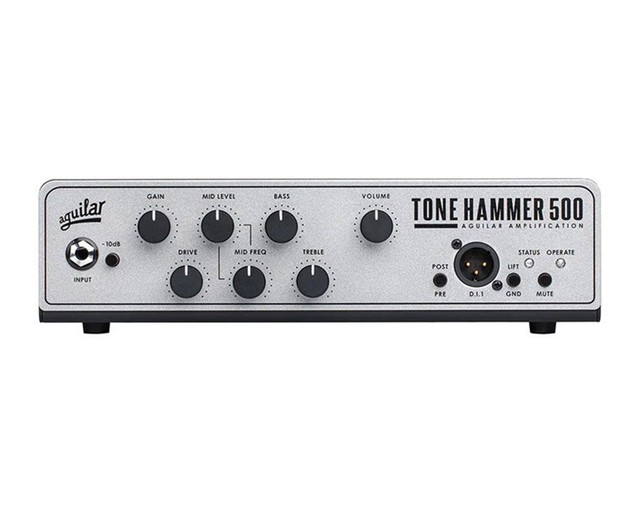
A modern, super-light head with a genuinely useful Deep switch and a simple 3-band EQ that’s easy to set dark without hunting through menus. It’s a punchier, more hi-fi-leaning amp than a vintage Ampeg by default, so getting the dub tone out of it means committing to rolling the treble off rather than relying on the amp’s natural voicing.
- 500W bass head in a super-light chassis
- 3-band EQ plus Bass Boost and Deep switches
- Built-in tuner-out, XLR DI, adjustable compressor
- Pairs with any 4 or 8-ohm cabinet
- Deep switch adds low end without needing a cabinet swap
- Very light for the power on tap, easy one-person setup
- Clean, low-noise DI for running to a PA
- Naturally more hi-fi/present-voiced than a vintage-style dub amp
- Head only, needs a cabinet
- Pricier than the Fender/Peavey combos on this list
Genzler Magellan 800
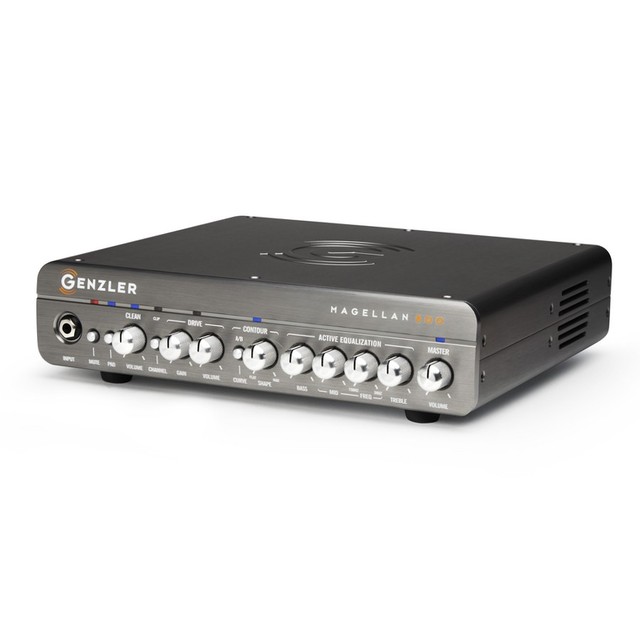
Built by an amp designer with a long amplifier career, and specifically noted by reviewers for a fat, warm bottom end suited to soul and dub playing — an unusually direct match for reggae among modern lightweight heads. The mid-frequency selector sweeps from 150Hz to 3kHz, useful for finding the exact low-mid pocket dub tone lives in.
- 800W @ 4 ohms / 400W @ 8 ohms
- Sweepable mid-frequency control (150Hz–3kHz) plus mid-depth knob
- Two-channel preamp (clean/drive)
- 6.25 lb chassis
- Reviewers specifically single out its warm bottom end for dub-style tone
- Sweepable mids make it easier to find a dub pocket than a fixed EQ
- Extremely light for an 800W head
- Head only, and pricier than the Fender/Peavey/Ashdown options here
- Smaller brand, so fewer used units and local service options
- Two-channel layout takes a little longer to learn than a simple EQ

Gallien-Krueger MB212-II
A combo built for players who need serious clean volume without a heavy old-school cabinet — two neodymium 12-inch speakers and a 500W digital power amp in 41 pounds. The horn has a defeat switch, which is exactly what you want here, and the contour control can scoop mids out if you need it, though reggae generally wants the opposite.
- 500W into 2×12 Neodymium speakers
- 4-band active EQ, contour and boost controls
- Horn defeat switch
- XLR out, headphone out, aux in, chainable output
- Genuine clean headroom in a lighter combo than a comparable head-plus-15 rig
- Horn defeat switch removes the top end cleanly
- 2×12 speaker area moves plenty of low-frequency air
- Most expensive combo on this list
- Contour control is voiced for a scooped, modern tone — leave it off for dub
- Heavier than the single-speaker Fender/Peavey combos

Ashdown Studio 15
A British amp brand built around a warmer, less aggressive voicing than most American solid-state combos, which is a genuine head start for reggae tone. The 5-band EQ gives more precise control over exactly where you’re cutting treble than a simpler 3-band amp, and 300 watts into a 15-inch speaker is enough for small-to-medium rooms.
- 300W into a single 15-inch driver
- 5-band EQ
- Effects loop
- British-voiced solid-state preamp
- Naturally warmer starting voicing than most budget American combos
- 5-band EQ makes fine treble cuts easier than a 3-band amp
- Reasonable weight and size for a 1×15
- 300W ceiling limits it to smaller rooms without a PA
- Less common in the US, so fewer local shops carry or service it
- No horn/tweeter to defeat means less flexibility if you ever want brightness back
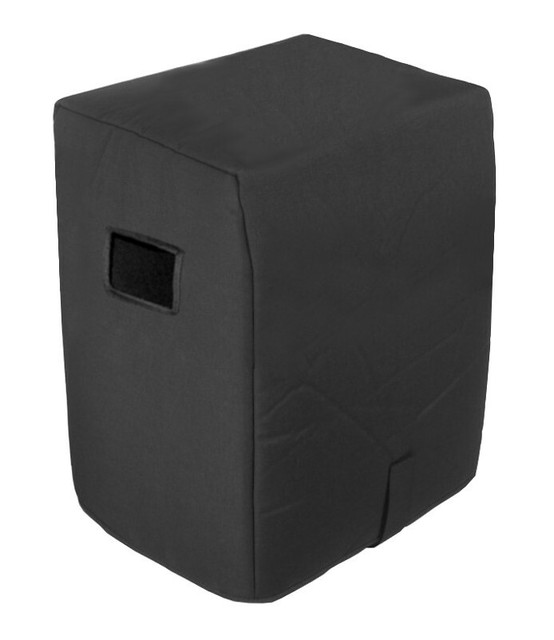
Acoustic BN3115
A genuinely inexpensive way to get a 15-inch neodymium speaker and a notch filter for taming boom, though it’s had spotty availability as Acoustic has scaled back its amp line — check current stock before counting on it. When it’s in stock, it’s regularly cited as loud for the money, with a 6-band EQ giving plenty of room to carve the tone dark.
- 300W Class-D into a 15-inch neodymium driver
- 6-band EQ, defeatable notch filter
- Drive and Clean channels
- Full-featured direct out with ground lift
- Very inexpensive for a 300W/15-inch combo when available
- Neodymium driver keeps the cabinet lighter than a comparable ceramic-magnet 15
- 6-band EQ gives fine control for a dark tone
- Availability is inconsistent — treated as a closeout item at some retailers
- Drive channel can turn harsh if pushed rather than used cleanly
- Smaller company presence means less consistent long-term parts/service support
Buying tips
- Roll your amp’s treble back to about 9 or 10 o’clock and let the bass knob carry the tone instead.
- Switch off any horn, tweeter, or bright feature before you touch the EQ — a lit horn undoes a rolled-off treble knob.
- Pair the amp with flatwound strings and play closer to the neck than the bridge for a rounder, less percussive attack.
- Favor a 15-inch speaker (or a pair of 12s) over 10s if the classic dub thump matters more than modern punch and clarity.
- Buy more clean headroom than you think you need — 300 to 500 watts into a 15-inch keeps low notes from breaking up at gig volume.
- Use a vintage or deep voicing switch where the amp has one; it usually gets you toward a dub tone faster than manual EQ.
- Don’t scoop the low-mids out completely — that produces boomy mush instead of the warm, present tone reggae actually wants.
- If buying a head and cabinet separately, match their wattage so the head isn’t straining to drive an underpowered speaker.
As an Amazon Associate and eBay Partner, toptenpick.com earns from qualifying purchases. Prices and availability are subject to change.