

As an Amazon Associate and eBay Partner, toptenpick.com earns from qualifying purchases. Prices and availability are subject to change.
Almost every LiPo battery is sold on its C-rating, and rock crawling is the one discipline where that number barely matters.
The C-rating tells you how much current a pack can deliver continuously — multiply it by the capacity and you get the amp figure. A 5,000 mAh pack at 50C claims 250 amps. That is an enormous number, and it exists because racing buggies and bashers genuinely pull big current in short violent bursts. A crawler does the opposite. It creeps up rocks at low throttle for an hour or more, drawing modest current continuously. The consensus in the crawling community is straightforward: a 20C pack is plenty for a brushless crawler and 30C is more than enough for a brushed one. Paying for 100C buys you nothing except a stiffer, heavier pack.
And weight is the second half of this, because on a Capra the battery is not just a power source. It is the single heaviest tuning component on the vehicle. A crawler’s ability to climb without tipping backwards depends on where its mass sits, and a battery is typically the largest concentrated mass you can move. Mounted low and forward it helps the front tyres bite on a steep climb; mounted high or rearward it makes the truck loop out. This is why shorty packs exist — physically shorter LiPos that fit into a lower, better-placed tray — and why a lot of experienced crawler builders deliberately choose a smaller-capacity pack in a better position over a big one in a bad one.
The Capra takes 2S or 3S depending on setup, and there is a genuine split in the community. 3S gives more speed and torque and lets the motor work less hard for the same result. 2S gives smoother, more controllable low-speed throttle, which is what crawling actually rewards. Check what your ESC is rated for before you decide — running 3S through a 2S-only ESC destroys it.
Ten picks below, and two of them are safety items you should not skip.
| # | Product | Price | Where to buy |
|---|---|---|---|
| 1 | 3S 5000 mAh 20C Hardcase LiPo | $35-$70 | Amazon |
| 2 | 3S Shorty LiPo Pack (2000-3000 mAh) | $30-$60 | Amazon · eBay |
| 3 | 2S 5000 mAh LiPo | $25-$50 | Amazon · eBay |
| 4 | LiHV (High-Voltage LiPo) Pack | $35-$75 | Amazon |
| 5 | NiMH Battery Pack | $25-$50 | Amazon · eBay |
| 6 | Balance Charger with LiPo, LiHV and NiMH Modes | $40-$130 | Amazon · eBay |
| 7 | Fire-Safe LiPo Charging and Storage Bag | $12-$35 | Amazon · eBay |
| 8 | Low-Voltage Alarm / Cell Checker | $5-$15 | Amazon · eBay |
| 9 | Connector Adapters and Replacement Plugs | $10-$25 | Amazon · eBay |
| 10 | Battery Tray, Foam and Hook-and-Loop Straps | $10-$35 | Amazon |
The picks, in detail
3S 5000 mAh 20C Hardcase LiPo
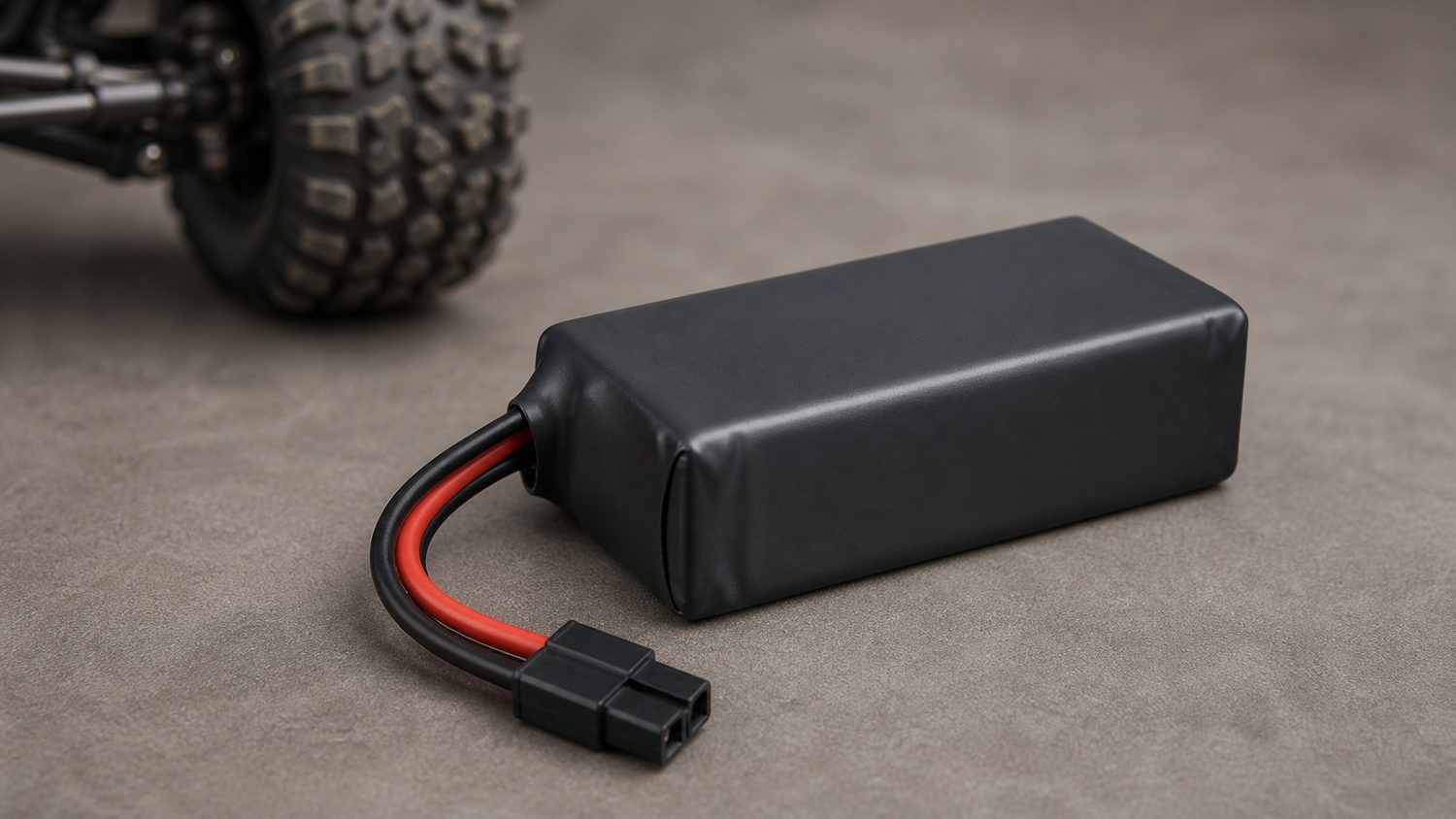
The run-time choice, and the one most Capra owners settle on. A 5,000 mAh 3S pack gives you two hours or more of crawling, which is realistically a whole day out, and 20C is ample for a crawler’s gentle current draw. The hard case matters here more than in most disciplines — a crawler gets dropped, rolled and dragged over rock, and a soft pack in an exposed tray will eventually get punctured. Check the physical dimensions against your tray before ordering.
- 3S 11.1 V, 5,000 mAh
- 20C continuous rating, ample for crawling
- Hard plastic case
- Two or more hours of crawling per charge
- All-day run time from one pack
- Hard case survives rolls and rock strikes
- 20C is genuinely sufficient — no need to pay more
- Heavy, and the weight sits wherever the tray puts it
- Large packs do not fit every tray

3S Shorty LiPo Pack (2000-3000 mAh)
The tuning choice, and the one that will make the truck climb better. A shorty is physically about two-thirds the length of a standard pack, which lets you mount it lower and further forward — and on a crawler, where the weight sits determines whether you top a climb or loop over backwards. You give up run time. A lot of experienced crawler builders make that trade deliberately, and carry two shorties rather than one long pack.
- Shortened case for low, forward mounting
- 2,000-3,000 mAh in 3S
- Hard case construction
- Standard connector options
- Lets you place the heaviest component where it helps
- Noticeably better climbing balance
- Two shorties weigh about the same as one long pack
- Roughly half the run time of a 5,000 mAh pack
- Shorty trays or foam packing may be needed

2S 5000 mAh LiPo
The controllability choice. On 2S the motor turns more slowly for a given throttle position, which means finer control at the crawling speeds that actually matter — and crawling is a precision discipline, not a fast one. It is also easier on the drivetrain: 3S through plastic gears and stock driveshafts is how people break things. If your Capra is on stock internals and you are learning, 2S is the more sensible starting point, and the pack is cheaper and lighter too.
- 2S 7.4 V, 5,000 mAh
- Lower voltage for finer throttle control
- Lighter than an equivalent 3S pack
- Hard case
- Much finer low-speed control
- Easier on stock gears and driveshafts
- Cheaper and lighter than 3S
- Noticeably less torque on steep climbs
- Lower top speed on trail sections
LiHV (High-Voltage LiPo) Pack
A LiHV charges to 4.35 V per cell rather than 4.20, which gives a little more usable energy and a slightly higher voltage under load from the same physical size. For a crawler the practical benefit is modest but real — a touch more punch at the top of a climb and a few more minutes of run time. The important caveat is that your charger must have a LiHV mode. Charging a LiHV as a standard LiPo simply undercharges it; charging a standard LiPo as LiHV is genuinely dangerous.
- Charges to 4.35 V per cell
- Slightly higher capacity for the same size
- Available in 2S and 3S, standard and shorty
- Requires a LiHV-capable charger
- More usable energy from the same physical pack
- Slightly stronger under load
- Available in the same shorty formats
- Needs a charger with a proper LiHV mode
- Charging a normal LiPo on LiHV is a fire risk

NiMH Battery Pack
Worth including honestly, because it is still the right answer for some people. NiMH is far more tolerant of abuse than LiPo — you can run it flat, store it charged and leave it in a cupboard without much drama, and it does not need a balance charger or a fire-safe bag. That makes it a sensible choice for a younger driver or anyone who does not want to manage battery chemistry. The cost is weight: NiMH is much heavier than LiPo for the same energy, and on a crawler weight is a tuning variable.
- 6- or 7-cell NiMH stick or hump packs
- Tolerant of over-discharge and rough handling
- No balance charging required
- No fire-safe storage needed
- Far more forgiving than LiPo chemistry
- No special charger or storage discipline
- Extra weight can occasionally help traction
- Much heavier than LiPo for the same energy
- Shorter run time and a slower voltage curve

Balance Charger with LiPo, LiHV and NiMH Modes
The one piece of equipment you should not economise on, because it is the component with a fire risk attached. A proper balance charger keeps every cell in the pack at the same voltage, which is what makes a LiPo last hundreds of cycles instead of dozens. Insist on three things: real balance leads, a storage-charge mode, and a LiHV mode if you might buy LiHV. A charger that just supplies current without balancing is not a LiPo charger, whatever the listing says.
- Per-cell balance charging
- LiPo, LiHV, NiMH and LiFe modes
- Storage charge function
- Adjustable charge current
- Balance charging is what makes packs last
- Storage mode is essential for pack longevity
- One charger covers every chemistry you might own
- Good chargers cost as much as a pack
- The interface takes some learning

Fire-Safe LiPo Charging and Storage Bag
Cheap, and the thing you will be glad you bought on the day nothing else matters. LiPo cells that are damaged, over-discharged or over-charged can vent and ignite, and a crawler pack takes physical impacts constantly — which is exactly the damage that causes it. A fire-resistant bag or ammo can contains that event instead of losing a room. Charge in it, store in it, and never charge a pack unattended or overnight. This is the one non-negotiable in LiPo ownership.
- Fire-resistant fibreglass or ceramic-coated fabric
- Sized for single or multiple packs
- Velcro or zip closure
- Metal ammo cans as a heavier alternative
- Contains a venting cell instead of losing a room
- Very cheap relative to what it protects
- Doubles as a tidy way to carry packs
- Bags are containment, not a guarantee
- Bulky in a small workspace
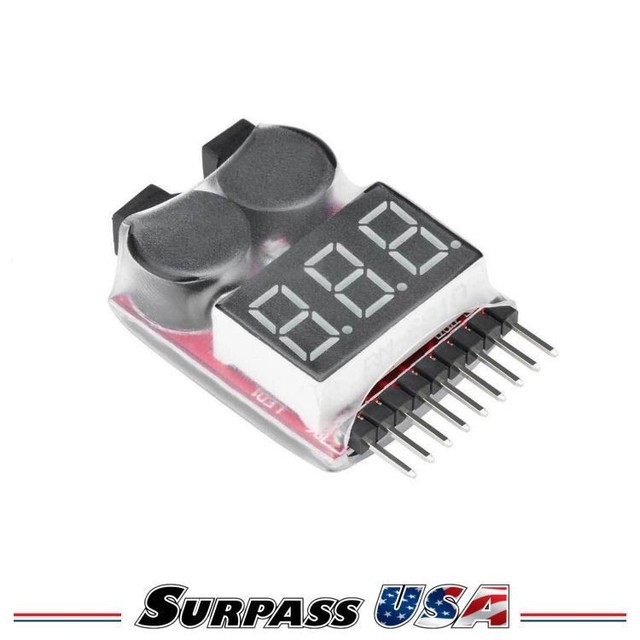
Low-Voltage Alarm / Cell Checker
A two-dollar item that prevents the most common way LiPos die. Running a LiPo below roughly 3.0 volts per cell damages it permanently, and on a crawler you are often out of earshot and at low throttle, where the truck gives you very little warning that the pack is nearly flat. An alarm that plugs into the balance lead beeps loudly before you get there. It also works as a quick cell checker so you can confirm a pack is balanced before you fit it.
- Plugs into the balance connector
- Loud audible alarm at an adjustable threshold
- Displays individual cell voltages
- Works on 2S to 8S
- Prevents the over-discharge that kills packs
- Doubles as a balance checker
- Costs almost nothing
- One more thing to remember to plug in
- Cheap ones are quiet outdoors in wind

Connector Adapters and Replacement Plugs
The unglamorous thing that makes a mixed battery collection usable. RC packs ship with Deans, XT60, EC3, Traxxas and TRX connectors depending on where they came from, and a truck with one type and packs with another is a permanent irritation. Standardise on one — XT60 is the sensible modern default — and either fit adapters or solder new plugs on. Adapters add resistance and bulk, so soldering is better if you can; just never short the pack while you do it.
- Adapter leads between common connector types
- Loose XT60, Deans and EC3 plugs for soldering
- Heat shrink included in most kits
- Gold-plated contacts
- Makes a mixed collection of packs usable
- Standardising removes a permanent annoyance
- Very cheap
- Adapters add resistance and bulk
- Soldering a live pack can short it — cut one wire at a time
Battery Tray, Foam and Hook-and-Loop Straps
The hardware that turns the intro’s weight argument into something you can actually act on. Foam blocks let a shorty pack sit securely in a tray sized for a longer one; a relocated or lowered tray puts the mass where you want it; and proper hook-and-loop straps stop it moving when the truck rolls. A battery that shifts during a climb changes the balance mid-attempt, which is one of those failures that feels like driver error and is not.
- Hook-and-loop battery straps in various lengths
- Closed-cell foam packing blocks
- Aftermarket low-mount trays for the Capra
- Mounting hardware included
- Lets you place the heaviest part where it helps
- Stops the pack shifting during a roll
- Very cheap tuning compared with anything else
- Aftermarket trays are model-specific
- Foam compresses and needs replacing
Buying tips
- Ignore high C-ratings. Crawlers draw modest current continuously, not huge bursts. 20C is plenty for a brushless crawler and 30C is more than enough for a brushed one. A 100C pack costs more, weighs more and does nothing for you here — that number exists for racing buggies with a completely different current profile.
- The battery is your biggest tuning component. It is the largest concentrated mass on the truck, and where it sits decides whether you top a steep climb or loop out backwards. Low and forward helps the front tyres bite. A shorty pack in a better position frequently beats a big pack in a bad one — which is exactly why shorty packs exist.
- Check your ESC’s cell count before buying 3S. Running 3S through a 2S-only speed controller destroys it, immediately and expensively. The rating is printed on the ESC or in its manual. This is the single most costly mistake available in this category and it takes thirty seconds to avoid.
- 2S is easier to drive and easier on the drivetrain. Lower voltage means the motor turns more slowly for a given throttle position, giving finer control at crawling speeds — which is the whole point of the discipline. It is also gentler on stock plastic gears and driveshafts. If you are learning, or the truck is stock, start on 2S.
- Never charge a LiPo unattended, and always in a fire-safe bag. Crawler packs take physical impacts constantly, and impact damage is exactly what causes a cell to vent and ignite. A bag or ammo can costs very little and contains an event that would otherwise take a room with it. No exceptions for overnight charging.
- Store LiPos at storage charge, not full or empty. A LiPo left fully charged for weeks degrades permanently, and one left flat can drop below recovery. Any decent charger has a storage mode that takes each cell to roughly 3.8 volts. Use it any time a pack will sit for more than a few days — this alone doubles the life of a pack.
- Fit a low-voltage alarm. Discharging below about 3.0 volts per cell damages a LiPo permanently, and at crawling throttle the truck gives you almost no warning before you get there. A balance-lead alarm costs a couple of dollars and beeps before the damage happens. It doubles as a quick way to check a pack is balanced before you use it.
- Retire a puffed pack immediately. A LiPo that has swollen is chemically damaged and will not recover — running it is a fire risk, not merely a performance loss. Crawler packs get dropped and squashed, so check the case shape every few sessions. Dispose of it properly at a hobby shop or a battery recycling point, never in household waste.
As an Amazon Associate and eBay Partner, toptenpick.com earns from qualifying purchases. Prices and availability are subject to change.