

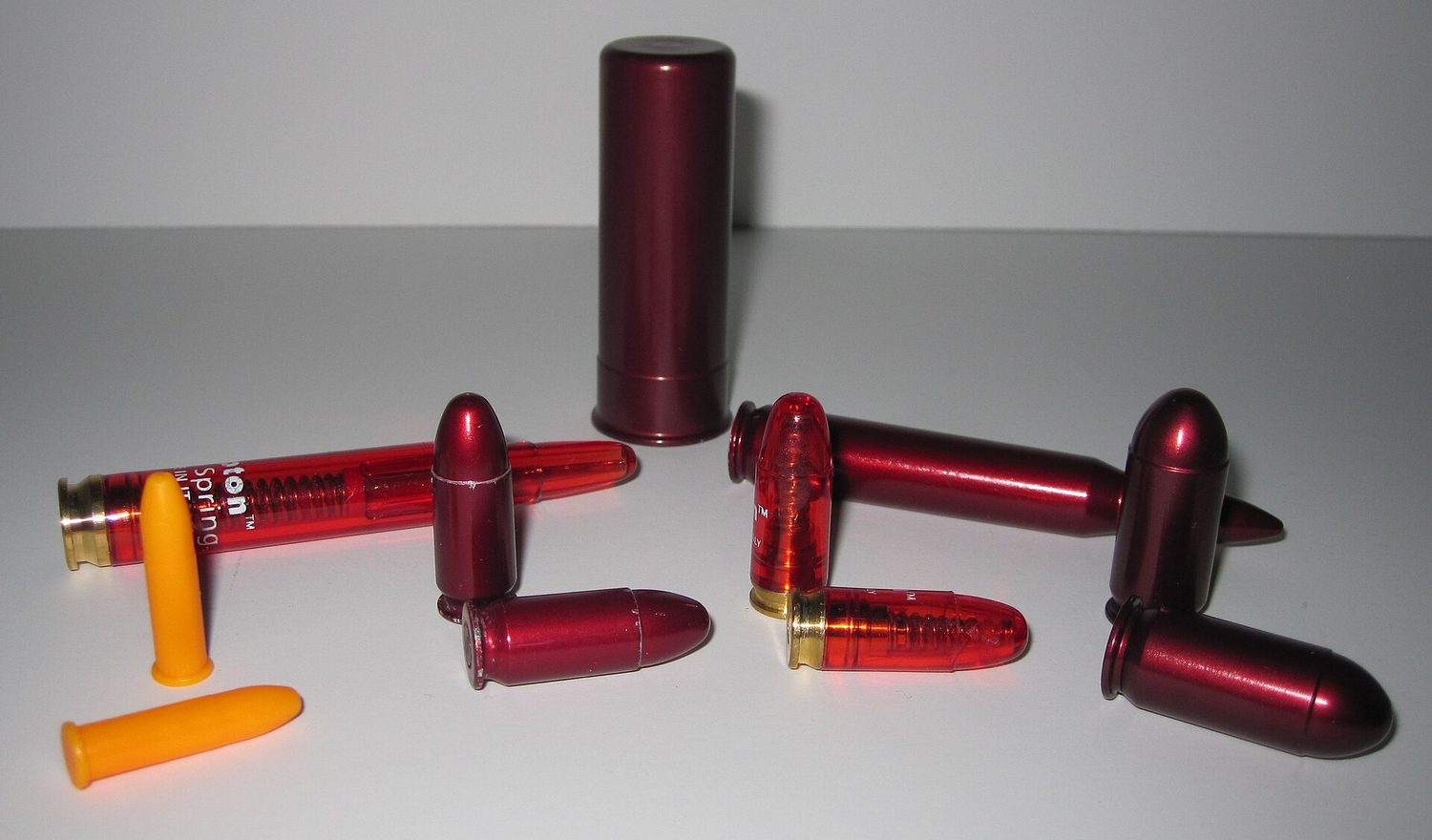
A .22 LR snap cap is a firearm accessory, so this guide does not recommend products or include shopping links. The useful question is not which dummy round looks most convincing: it is whether a particular rimfire firearm’s manual permits dry firing, and what the manufacturer says about protecting its firing pin and chamber. Rimfire systems are different from centerfire systems because the firing pin strikes at the edge of the cartridge. On some designs, letting it fall on an empty chamber can strike the chamber edge instead. That can damage the pin, peen the chamber, or both.
Start with the firearm manual
There is no safe universal rule for .22 LR pistols and rifles. Some modern rimfires tolerate occasional dry fire; some makers explicitly instruct owners not to dry fire; and older designs can be especially vulnerable. A manufacturer statement for a different model is not a substitute for the manual of the firearm in hand. Even within one brand, a striker-fired pistol, a hammer-fired revolver and a bolt-action rifle can have different firing-pin travel and chamber geometry. If the manual says not to dry fire, follow it. If it requires a particular training device, use that instruction rather than a generic internet rule.
What a training dummy is and is not
Snap caps and dummy rounds are inert training aids, not ammunition. They have no primer, powder or projectile. Their purpose is to make a chamber check, loading sequence or permitted dry-fire routine more repeatable without using a live cartridge. A rimfire accessory may use a resilient strike surface, but its design does not override the firearm maker’s limitation. A hard metal dummy round and a spring- or polymer-cushioned snap cap are not interchangeable just because both are .22 LR shaped. Read the maker’s description and, more importantly, the firearm manual before deciding that either is appropriate.
Compatibility is more than caliber
.22 LR markings identify cartridge dimensions, not automatic compatibility with every .22 LR action. Magazine geometry varies. Revolvers require a different handling check from box-magazine pistols. A semi-automatic may feed a particular dummy profile differently from live ammunition, and a manually operated rifle may have a chamber that makes extraction feel different. Do not force any training device into a chamber or magazine. If it does not insert and extract normally by hand with the action pointed in a safe direction and unloaded, stop and consult the firearm manufacturer or a qualified gunsmith.
Separate dry practice from live ammunition
The safest dry-practice routine begins before handling the firearm: remove all live ammunition from the room, not simply from the bench. Choose a safe direction and a backstop appropriate to the firearm. Physically and visually check the chamber, magazine well and any feed path; do not rely only on a safety lever, which is a mechanical control rather than a confirmation that the gun is unloaded. State the routine out loud if that helps maintain discipline. When the session is complete, put training devices away before live ammunition returns to the area.
Why bright marking matters
Inert training devices should be unmistakable during handling. Bright color, an obviously different material and separate storage all reduce confusion. A device that closely resembles a live cartridge may be useful for a narrowly supervised diagnostic task, but it raises the need for careful segregation. Never mix dummy rounds and live rounds in the same loose container. Label a dedicated case clearly and keep it separate from loaded magazines, range ammunition and cleaning supplies. If another person uses the same firearms, explain the storage system rather than assuming they will recognize it.
Inspect before every use
Training devices wear. Look for a damaged rim area, split body, loose insert, bent shape or debris that could interfere with chambering and extraction. Retire a worn dummy rather than treating it as harmless because it is inert. Also inspect the firearm’s chamber after any unexplained resistance. A chamber should never be pried or hammered around a stuck training device. If a dummy will not extract normally, keep the muzzle in a safe direction, unload according to the manual and get competent help if the problem persists.
Dry practice should stay simple
Safe dry practice is about repeatable handling, not speed contests. Use deliberate movements, maintain muzzle discipline and stop when attention fades. Avoid inventing malfunction drills or mixing live-fire and dry-fire phases without formal instruction; those transitions are where assumptions create risk. If you want structured skill training, seek an accredited instructor or a range program that can supervise the firearm and local rules. Laws governing firearm possession, transport and use differ by jurisdiction, and this page is general safety information rather than legal, technical or training advice.