

As an Amazon Associate and eBay Partner, toptenpick.com earns from qualifying purchases. Prices and availability are subject to change.
The real dividing line in 2-stroke oil for a Lambretta isn’t the brand on the bottle, it’s the base stock — fully synthetic, semi-synthetic, or mineral — and what that choice actually changes on an engine designed in the 1950s and 60s, long before synthetic oils existed. JASO’s FC and FD certifications (FD is the higher grade and supersedes FC) test specific, narrow things: lubricity, detergency, exhaust smoke, and deposit buildup. API TC, the other rating you’ll see on bottles, covers lubricity, detergency, ash content and pre-ignition resistance in a similar way. A higher rating is a real, measurable claim about cleanliness and smoke — it is not a verdict on which oil your specific engine should run.
Fully synthetic oils burn cleaner and leave fewer deposits than semi-synthetic or mineral oils, which is why most modern 2-stroke oil development has moved that direction. But a real number of Lambretta owners running older or heavily tuned engines deliberately stick with semi-synthetic or castor-blend oils like Castrol A747 instead, on the reasoning that the looser tolerances and higher operating temperatures of an old or tuned barrel benefit more from a thicker, higher-film-strength oil than from a synthetic’s cleanliness. It’s a genuine, debated tradeoff among Lambretta owners, not an outdated habit.
Premix and autolube are a second real fork. A Lambretta can run either a hand-mixed fuel/oil premix or the factory autolube (oil-injection) system, and not every oil sold as “2-stroke oil” is rated for both — some racing-focused premix oils explicitly exclude injector use on their own spec sheet. Check this before you buy, especially if you’re keeping the autolube pump rather than converting to premix, which some owners do deliberately to remove a failure point that can lean out the mix and seize the engine.
Mix ratio is the last piece, and it moves with the oil. Older mineral-oil-era manuals typically call for 4–5% oil (a 20:1 to 25:1 ratio); switch to a modern fully synthetic oil rated for 50:1 and mixing at the old ratio just wastes oil and smokes more than the oil is designed to. None of the ten oils below is the universal “best” — the right one depends on whether your engine is standard or tuned, whether you run premix or autolube, and how easily you can get UK/EU specialist brands shipped to you.
| # | Product | Price | Where to buy |
|---|---|---|---|
| 1 | Rock Oil PP2 | $18–$24 (1L) | Amazon · eBay |
| 2 | Putoline Classic Scooter | $14–$20 (1L) | Amazon |
| 3 | Castrol Power 1 Racing 2T | $12–$16 (1L) | Amazon |
| 4 | Castrol A747 | $35–$42 (1L) | Amazon |
| 5 | Motul 800 2T Factory Line | $85–$110 (4L) | Amazon · eBay |
| 6 | SIP Formula Race Plus | $14–$18 (1L) | Amazon |
| 7 | Silkolene Comp 2 Plus | $20–$28 (1L) | Amazon · eBay |
| 8 | Silkolene Pro 2 | $28–$36 (1L) | Amazon · eBay |
| 9 | Castrol Power 1 Scooter 2T | $14–$20 (1L) | Amazon · eBay |
| 10 | Bel-Ray SL2 Semi-Synthetic 2-Stroke Oil | $18–$24 (1L) | Amazon · eBay |
The picks, in detail

Rock Oil PP2
A UK-made semi-synthetic, low-ash 2-stroke oil sold specifically into the classic Lambretta and Vespa restoration scene, rated for both hand-mixed premix and factory autolube (oil injection) use at the manufacturer’s recommended ratio. It’s the house-brand oil that several UK Lambretta restoration workshops stock on their own shelves rather than a general motorcycle oil relabeled for scooters.
- Semi-synthetic, low-ash formulation
- Rated for premix or autolube (injector) systems
- Sold in 1-litre bottles
- Marketed specifically to classic scooter owners (Lambretta, Vespa, LML)
- Purpose-built for classic air-cooled scooter engines, not repurposed modern oil
- Low ash content reduces pre-ignition risk on older combustion chambers
- Widely stocked by UK Lambretta specialists
- Semi-synthetic, not fully synthetic — smokes and deposits more than the premium synthetics here
- Primarily a UK product; importing elsewhere adds cost and shipping time
Putoline Classic Scooter
A red-dyed 2-stroke oil marketed by Putoline specifically for classic scooter engines rather than repackaged as a general motorcycle oil, so the dye lets you visually confirm the fuel is actually mixed before you ride rather than trusting a label. Aimed at owners who want an oil built around an old air-cooled top end instead of a modern high-revving one, and sold both individually and by the case.
- Red dye for visual fuel-mix confirmation
- Formulated for classic Vespa/Lambretta-style engines
- Suitable for premix or autolube systems
- Sold in 1-litre bottles, also available by the case
- Purpose-marketed for classic scooters rather than general motorcycles
- Red tint makes an under- or un-mixed tank obvious at a glance
- Competitively priced when bought by the case
- Sits between mineral and full synthetic in formulation — check the current bottle’s own spec sheet
- Less widely available outside Europe
Castrol Power 1 Racing 2T
A fully synthetic 2-stroke oil rated for both oil-injection and hand-mixed premix use up to a 50:1 ratio, sold globally under the Power 1 Racing name after Castrol retired its long-running “TTS” branding. It’s a mainstream, easy-to-find synthetic for owners who’ve already moved their Lambretta to leaner, cleaner-burning mixes and don’t want to hunt down a specialist scooter-only brand.
- Fully synthetic formulation
- Rated for injector or premix use, up to 50:1
- Widely stocked at general motorcycle retailers
- Successor to the long-running Castrol TTS
- Fully synthetic — noticeably less smoke and deposit buildup than semi-synthetic options
- Easy to find outside specialist scooter shops
- Supports leaner mix ratios than older mineral oils
- Not marketed specifically for classic engines — no scooter-specific additive package
- Some owners of older, looser-tolerance barrels prefer a semi-synthetic or castor-blend oil instead
Castrol A747
A semi-synthetic, castor-and-synthetic-blend racing 2-stroke oil that’s been a fixture in the Lambretta tuning scene for decades, recommended by enthusiasts specifically for tuned, high-revving, alloy-barrel engines rather than mild standard ones. The castor content trades some cleanliness for the film strength that some tuners trust more under sustained heat and load than a pure synthetic provides.
- Semi-synthetic, castor/synthetic base blend
- Racing-oriented additive package for high load-bearing
- Sold in 1-litre bottles
- Long-standing use in tuned Lambretta and go-kart engines
- Strong reputation specifically among tuned/high-performance Lambretta owners
- High film strength under heat, useful on tightly-toleranced tuned engines
- Long real-world track record rather than a new formulation
- Castor-based oils leave more varnish and deposit than modern esters — needs more frequent decoking
- Priciest oil on this list per litre

Motul 800 2T Factory Line
A 100% synthetic ester 2-stroke oil built for off-road racing engines, sold in a red-tinted 4-litre jug rather than the single-litre bottles most scooter-specific oils on this list come in. It’s genuine overkill for a stock, unmodified Lambretta, but a real option for a heavily tuned engine that gets ridden hard and often enough to justify buying in bulk.
- 100% synthetic ester formulation
- Sold as a 4-litre jug, not single-litre bottles
- Red tint for fuel-mix visibility
- Designed for high-output off-road racing engines
- Ester-based synthetic gives strong film strength at high RPM and heat
- Buying in 4L works out cheaper per litre than most 1L specialist oils
- Well-proven in demanding two-stroke motocross and enduro use
- Not scooter-specific — no additive tuning for a low-revving, air-cooled Lambretta motor
- 4-litre minimum is far more than most owners need for a season of premix
SIP Formula Race Plus
A fully synthetic 2-stroke oil sold by SIP Scootershop, one of Europe’s largest classic Vespa and Lambretta parts retailers, formulated with additives aimed specifically at stopping the throttle slide from sticking in wet conditions — a known nuisance on old carburetted two-strokes that a generic synthetic oil isn’t necessarily built to address.
- Fully synthetic formulation
- Additives targeted at preventing throttle-slide sticking in wet weather
- Sold in 1000ml bottles
- Marketed specifically for geared classic scooters
- Full synthetic performance at closer to a semi-synthetic price point
- Formulated with Vespa/Lambretta carburetor issues specifically in mind
- Stocked by Europe’s largest classic scooter parts retailer
- Import shipping from Europe adds cost and time for non-EU buyers
- Less brand recognition than Castrol or Motul outside the scooter scene

Silkolene Comp 2 Plus
An ester-based synthetic-blend 2-stroke oil from a British lubricant brand with a long motorcycle-racing pedigree, positioned between Silkolene’s base Comp 2 and its fully synthetic Pro 2 below. It’s a reasonable middle ground for an owner who wants noticeably better protection than a basic semi-synthetic oil without paying full synthetic pricing on every tank.
- Ester-based synthetic-blend formulation
- Electrosyntec additive technology for wear protection
- Suitable for premix or injector systems
- Sold in 1L and 4L sizes
- Strong reputation in UK/European classic motorcycle and scooter circles
- Ester base gives better lubricity than straight mineral or basic semi-synthetic oils
- 4L option lowers the per-litre cost for regular riders
- Sold through fewer outlets than Castrol — mainly specialist bike/scooter shops and eBay
- Easy to mix up with plain “Comp 2” when ordering — check the label before buying

Silkolene Pro 2
Silkolene’s fully synthetic, premix-only competition 2-stroke oil, rated up to a 50:1 ratio for high-output racing engines rather than everyday commuting use. The premix-only restriction genuinely matters here: this is not an oil to pour into a Lambretta’s autolube tank if you’re still running the factory oil-injection pump rather than a hand-mixed fuel tank.
- Fully synthetic, ester-based
- Premix only — not rated for oil-injection/autolube systems
- Rated up to 50:1 mix ratio
- Competition-oriented additive package
- High-end synthetic protection for a tuned or heavily-ridden engine
- Supports very lean 50:1 mixing
- Established competition pedigree
- Premix only — autolube (oil-injection) owners need a different oil entirely
- Among the more expensive options here for a 1-litre bottle
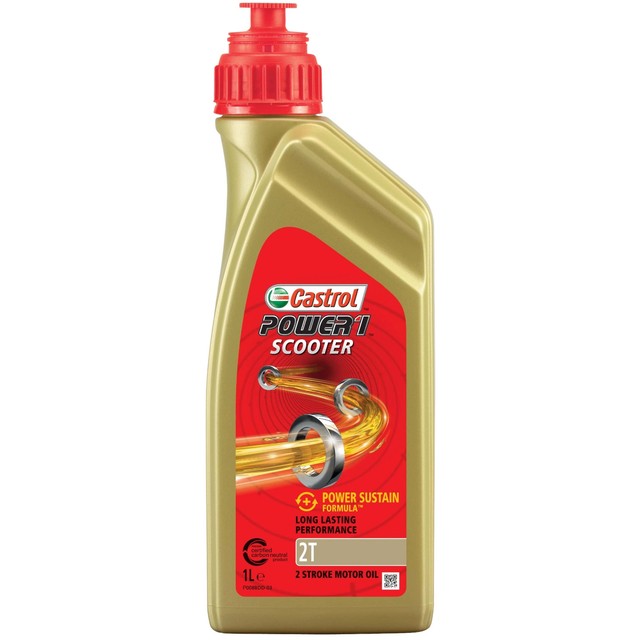
Castrol Power 1 Scooter 2T
A semi-synthetic, low-smoke oil aimed at modern stop-start scooter engines rather than classic ones, but widely used by budget-minded Lambretta owners simply because it’s cheap, reliable, and sold at nearly every motorcycle shop and auto parts counter. A reasonable choice for a mild, unmodified engine on a tight budget rather than a tuned one.
- Semi-synthetic, part-synthetic formulation
- Low-smoke, anti-deposit additive package
- Sold in 1L bottles at general motorcycle and auto retailers
- Marketed for modern stop-start scooter use
- Cheapest widely-available branded oil on this list
- Sold at general motorcycle shops, not just scooter specialists
- Reputable global brand with consistent quality control
- Formulated for modern scooter engines, not tuned to an old air-cooled Lambretta motor specifically
- Semi-synthetic — smokes more than the fully synthetic options here

Bel-Ray SL2 Semi-Synthetic 2-Stroke Oil
A widely available semi-synthetic 2-stroke oil from an American lubricant brand, sold directly through Amazon and major powersports retailers rather than niche scooter shops. It’s useful for owners outside the UK and EU, where the Rock Oil, Silkolene, and SIP options above are harder to source without paying import shipping on top of the oil itself.
- Semi-synthetic formulation
- Rated for premix or injector use
- Sold in 1-litre bottles
- Available directly through Amazon and major US powersports retailers
- Easiest option on this list to buy in North America without importing
- Established motorsports brand with broad two-stroke experience
- Competitively priced for a semi-synthetic
- Not marketed or tuned specifically for classic scooter engines
- Less of a track record in the Lambretta-specific enthusiast community than the UK brands above
Buying tips
- Check whether your Lambretta’s autolube (oil-injection) pump is still working before buying a premix-only oil like Silkolene Pro 2 — a premix-only oil through a working autolube system means blending it yourself, not trusting the pump.
- Match your mix ratio to the oil, not habit — older mineral-oil manuals often specify 4–5% (20:1 to 25:1), while modern fully synthetic oils are usually rated down to 2% (50:1); mixing synthetic at an old mineral ratio just wastes oil and smokes more than necessary.
- A JASO FD rating means better detergency and lower smoke than FC, not simply “more powerful” — don’t pay a premium for FD on a mildly-used, unmodified engine that rarely sees sustained full throttle.
- If your barrel is heavily tuned or revved hard and often, look at a castor-blend racing oil like Castrol A747 rather than a general synthetic — the tradeoff is more frequent decoking to clear the extra deposits.
- Buy oil that’s explicitly rated for autolube if you’re keeping the injection system — some racing-only premix oils exclude oil-injection use on their own spec sheet.
- Keep the dye color in mind when troubleshooting a rough-running engine — a colorless mix in the sight glass or fuel line is a fast way to catch an empty autolube reservoir before it seizes the motor.
- Store 2-stroke oil away from direct sunlight and keep the cap tight between uses — both synthetic esters and mineral oils oxidize faster once opened, and year-old opened oil undermines whichever formulation you paid for.
- If you’re switching from mineral to synthetic (or the reverse), do a full tank changeover rather than topping up — the two oil families don’t always blend predictably, and a partial switch muddies your mix-ratio math.
As an Amazon Associate and eBay Partner, toptenpick.com earns from qualifying purchases. Prices and availability are subject to change.