

As an Amazon Associate and eBay Partner, toptenpick.com earns from qualifying purchases. Prices and availability are subject to change.
Your iPhone is already rated IP68, and almost nothing sold as a “waterproof case” is. Apple rates the iPhone 16 to 6 metres for 30 minutes under laboratory conditions, which is more water resistance than the overwhelming majority of cases on the market provide. So the first honest question is not which case is best — it is whether you need one at all. For rain, a dropped phone in a sink, a spilled drink or a day at the pool, the phone already handles it and a case adds nothing but bulk.
Where a case genuinely earns its place is in the gap between what the phone survives and what Apple will pay for. Liquid damage is excluded from the standard warranty, and the phone’s own rating decreases over time as seals age and after any drop — Apple says so explicitly. So the case is not really about the first swim; it is about the phone two years from now, and about activities where an accident is likely rather than possible: kayaking, snorkelling, a boat, a building site.
The vocabulary on the box is where people get caught. There are two completely different products sharing the word. A sealed waterproof case — a rigid two-piece shell with a gasket and a screen membrane — is rated to a real depth and is what you want for diving or a boat. A water-resistant rugged case is a drop case with port covers, and it will not survive submersion; the rating on the box frequently refers to dust and drop testing rather than water. And a third category, the dry bag or pouch, is the cheapest and by some distance the most reliable thing you can buy, because a welded PVC pouch has no seams to fail.
Three things a sealed case costs you, none of which are on the box. Wireless and MagSafe charging is blocked or badly degraded by most of them. The microphones and speakers sit behind a membrane, so calls and video sound muffled and Face ID can misbehave through a screen protector layer. And every sealed case must be pressure-tested before each use — close it empty, submerge it, check for water — because a single hair or grain of sand across the gasket is all it takes.
The list runs from genuinely sealed cases through rugged cases to pouches.
| # | Product | Price | Where to buy |
|---|---|---|---|
| 1 | Catalyst Total Protection Case | $70–$100 | Amazon · eBay |
| 2 | Universal Waterproof Phone Pouch (IPX8 dry bag) | $10–$20 | Amazon · eBay |
| 3 | OtterBox Defender Series | $50–$70 | Amazon · eBay |
| 4 | Spigen Tough Armor MagFit | $20–$35 | Amazon · eBay |
| 5 | Hitcase or Diving-Rated Housing | $100–$250 | Amazon · eBay |
| 6 | Temdan or Similar Sealed Waterproof Case | $20–$40 | Amazon · eBay |
| 7 | Floating Waterproof Phone Case with Lanyard | $15–$30 | Amazon · eBay |
| 8 | Lifeproof FRE Series | $60–$90 | Amazon · eBay |
| 9 | Silica Gel Drying Sachets | $8–$18 | Amazon · eBay |
| 10 | MagSafe-Compatible Slim Case | $15–$45 | Amazon · eBay |
The picks, in detail

Catalyst Total Protection Case
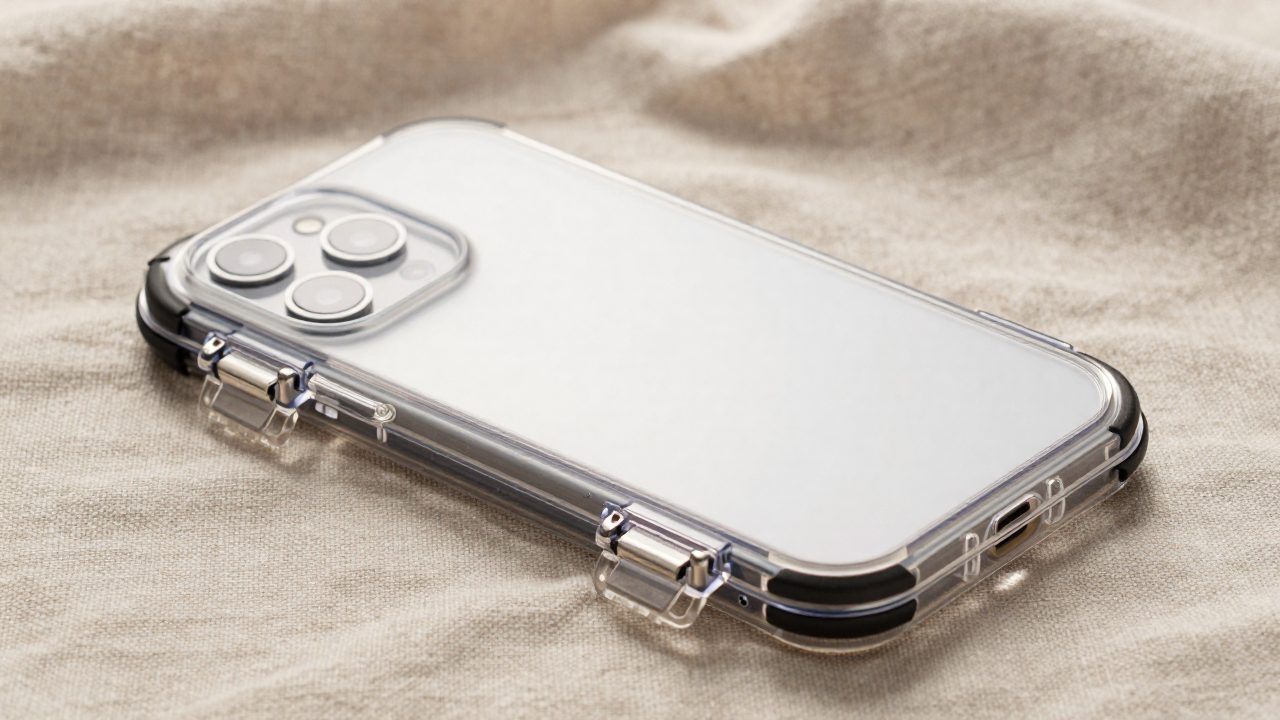
One of the few genuinely sealed cases with a credible depth rating and a long track record, using a rotating mute switch and sealed button membranes rather than rubber plugs that pull out. The screen membrane is thin enough that the touchscreen works properly, which is where cheaper sealed cases fail. Expensive, bulky, and the right choice if you are actually taking the phone underwater.
- Fully sealed two-piece construction
- Rated to a genuine submersion depth
- Sealed rotating mute switch
- Drop protection alongside the seal
- Genuinely sealed rather than water-resistant
- Touchscreen still usable through the membrane
- Established brand with real testing behind it
- Blocks or badly degrades MagSafe charging
- Muffles speakers and microphones noticeably
- Expensive and thick

Universal Waterproof Phone Pouch (IPX8 dry bag)
The unglamorous answer that outperforms most rigid cases: a welded PVC pouch with a clamp closure, for under fifteen dollars. It has no seams and no ports to fail, the touchscreen works through the window, and it floats or can be worn on a lanyard. If you want your phone to survive a kayak trip and you are not taking photos at depth, this is the sensible purchase and everything above it is overspending.
- Welded PVC with clamp closure
- IPX8 rated in most listings
- Fits any phone up to a stated size
- Lanyard and armband options
- Cheapest genuinely reliable option
- No ports or gaskets to fail
- Works with any phone, including your next one
- Photos through the window are noticeably softer
- Bulky and awkward to hold
- Clamp must be checked every single time
OtterBox Defender Series
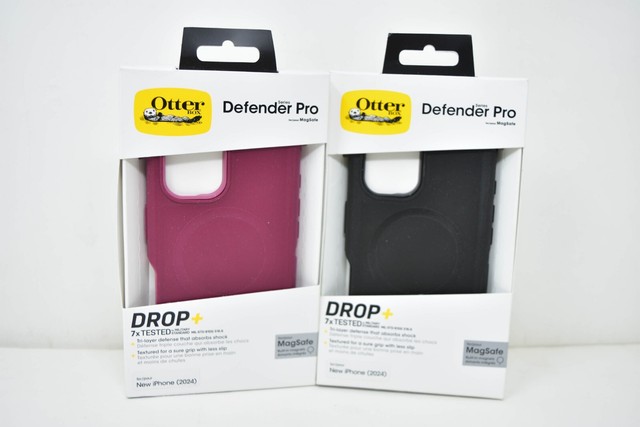
The archetypal rugged case, and listed with the distinction made clearly: it is a drop case, not a waterproof one. Multi-layer construction, port covers, and genuinely excellent protection against being dropped on concrete — which is statistically far more likely to kill a phone than water is. Do not submerge it. If your actual risk is a building site rather than a lake, this is the correct purchase.
- Multi-layer polycarbonate and rubber
- Port covers against dust and splashes
- Drop tested to military standards
- Holster option included on some versions
- Outstanding drop protection
- Port covers keep dust and grit out
- Huge availability and long support
- Not waterproof — port covers are not seals
- Very bulky and heavy
- Blocks MagSafe on most configurations
Spigen Tough Armor MagFit
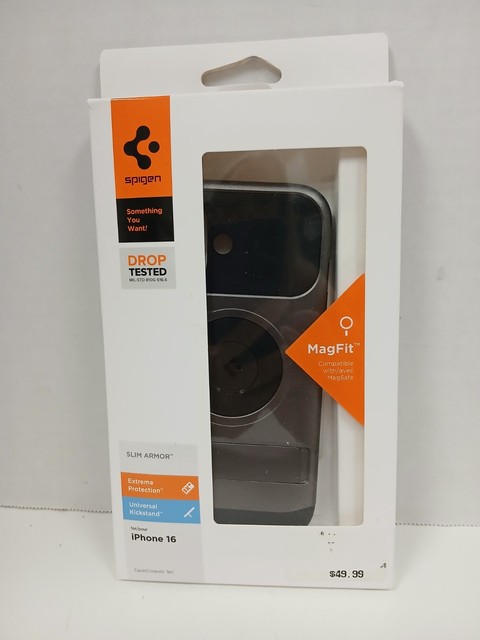
The value rugged case, and the one to buy if the honest answer is that you want drop protection and to keep MagSafe working. The MagFit versions have the magnet array built in, so charging and accessories behave normally — which is the single thing most rugged cases take away. It is splash-resistant only, and it does not claim otherwise, which is refreshing.
- Dual-layer with built-in kickstand on some models
- MagFit magnet array for MagSafe
- Military drop-test rating
- Raised screen and camera lips
- Keeps MagSafe working properly
- Much slimmer than a Defender
- Excellent value
- No water sealing at all
- Kickstand is a weak point over time
- Buttons are stiffer than the bare phone

Hitcase or Diving-Rated Housing
For actual diving rather than swimming. A proper underwater housing is rated to tens of metres, takes the pressure, and usually adds a lens port so photographs are not shot through a flat membrane. It is a specialist purchase at a specialist price and it is the only category on this list that genuinely belongs below a few metres of water.
- Rated to substantial depth
- Optical port rather than flat membrane
- Pressure-tested construction
- Often includes lanyard and mounting points
- The only genuinely dive-capable option here
- Photographs far better underwater than a pouch
- Built and tested for pressure
- Expensive and very bulky
- Touchscreen unusable at depth regardless of case
- Must be pressure-tested empty before each dive

Temdan or Similar Sealed Waterproof Case
The budget end of the sealed-case category, typically a two-piece shell with a built-in screen protector and a claimed IP68 rating. Some are genuinely decent and some leak, which is why the pressure test matters more here than anywhere else on the list. Buy one, test it empty in a sink for half an hour, and only then trust it with the phone.
- Two-piece sealed shell
- Built-in screen membrane
- Claimed IP68 rating
- Usually includes a lanyard
- Sealed construction at a fraction of Catalyst pricing
- Full-body protection including the screen
- Widely available
- Quality control varies enormously between units
- Screen membrane hurts touch sensitivity and Face ID
- Blocks wireless charging entirely
Floating Waterproof Phone Case with Lanyard
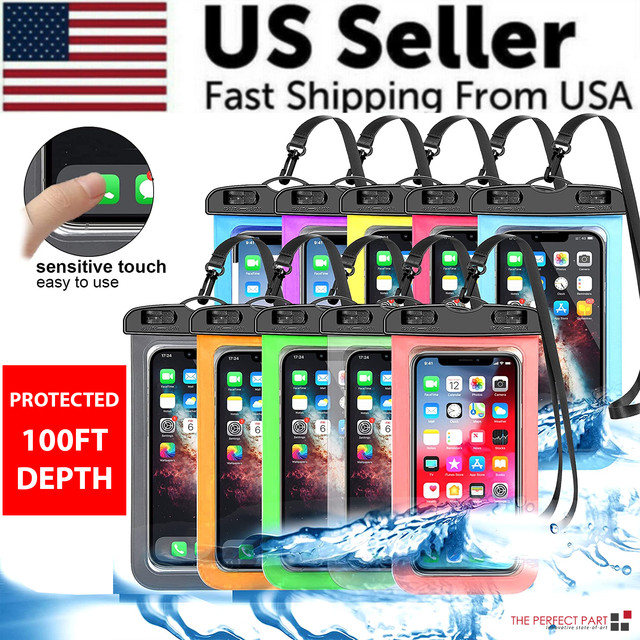
A pouch variant with a foam or air-filled section, and the detail that matters is in the name: it floats. On a boat or a paddleboard, a phone that goes over the side and stays on the surface is recoverable, and one that does not is gone regardless of how well it was sealed. For anyone on open water this feature is worth more than an extra ten metres of depth rating.
- Buoyant construction
- Welded seams with clamp closure
- Neck lanyard included
- Touchscreen-transparent window
- Floats, which is what actually saves the phone on water
- Cheap
- Fits any phone
- Bulkier than a plain pouch
- Buoyancy fades if the foam absorbs water over time
- Photo quality through the window is poor

Lifeproof FRE Series
A long-standing name in this category, notable for being one of the few mass-market cases that attempted a genuine water seal in a slim form. The trade-off has always been the same and is worth knowing: the built-in screen membrane affects touch feel and clarity, and the seals need checking and occasionally replacing. Confirm current iPhone 16 availability, as the range has narrowed in recent years.
- Sealed construction with built-in screen cover
- Claimed submersion rating
- Slimmer than most sealed cases
- Port plugs on the charging port
- Much slimmer than a rigid sealed case
- Sealed rather than merely splash-resistant
- Established design with a long history
- Screen membrane degrades touch feel
- Seals need periodic inspection and can fail
- Model availability for the newest iPhones is inconsistent

Silica Gel Drying Sachets
What you actually want in the drawer, and it costs almost nothing. If a phone does get wet, Apple’s own guidance is to dry it gently and not to charge it until it is dry — and explicitly not to put it in rice, which does nothing useful and pushes starch into the ports. A tub of silica gel and a sealed bag is the cheap, correct version of the thing everyone does wrong.
- Reusable silica gel desiccant
- Sold in sachets or bulk tubs
- Colour-indicating versions available
- Rechargeable in a low oven
- The correct alternative to the rice myth
- Costs almost nothing and lasts for years
- Useful for camera gear and documents too
- Does not repair damage already done
- Slower than people expect — allow a day or more
- Never a substitute for not getting the phone wet

MagSafe-Compatible Slim Case
The honest default for most readers, and it belongs on a waterproof-case list precisely because most people searching for one do not need one. The iPhone 16 already handles rain, spills and a drop in the sink. A slim MagSafe case protects against the thing that actually breaks phones — being dropped — while leaving wireless charging, sound quality and Face ID untouched.
- Slim profile with MagSafe magnet array
- Raised screen and camera lips
- Full button and port access
- Wide material and colour choice
- Keeps every phone feature working normally
- Protects against the most likely failure, a drop
- Cheap and pleasant to live with
- No water protection beyond the phone’s own rating
- Minimal protection in a serious fall
- Open ports let grit in
Buying tips
- Check whether you need one at all. The iPhone 16 is rated IP68 to 6 m for 30 minutes, which already covers rain, spills, the pool and a drop in the sink.
- Understand what the case is really insuring against: liquid damage is excluded from the standard warranty, and Apple states the phone’s own water resistance decreases over time and after drops.
- Learn the three categories. A sealed case has a gasket and a depth rating; a rugged case has port covers and will not survive submersion; a welded pouch has no seams and is the most reliable of the three.
- Pressure-test any sealed case empty before trusting it. Close it with a tissue inside, submerge it for twenty minutes, and look — one hair across the gasket is enough to sink it.
- Expect to lose MagSafe, and check before buying if you rely on it. Most sealed cases block or badly degrade wireless charging.
- Buy the floating version if you will be on open water. A phone that stays on the surface is recoverable; a perfectly sealed one on the bottom of a lake is not.
- Rinse a sealed case in fresh water after the sea and let it dry open. Salt crystals on a gasket are the most common cause of a case that worked last summer and leaks this one.
- Do not put a wet phone in rice. Apple’s guidance is to dry it gently and not charge until dry — silica gel does the job properly and rice pushes starch into the ports.
As an Amazon Associate and eBay Partner, toptenpick.com earns from qualifying purchases. Prices and availability are subject to change.