

As an Amazon Associate and eBay Partner, toptenpick.com earns from qualifying purchases. Prices and availability are subject to change.
Doll repainters do not use watercolor pencils the way a painter does. On a Monster High, Blythe, or BJD head, the pencil goes on dry, in thin layers over a matte sealant coat (most repainters use Mr. Super Clear, known as MSC), sometimes ground to loose pigment and worked in with a brush rather than drawn as a stroke — the water-solubility that defines the category on an art-store shelf barely comes into play. What predicts a good result here is pigment load and how readily the core grips a sealed vinyl or resin surface, not how the pencil blends wet on paper.
That changes which spec actually matters. A softer, more heavily pigmented core lays color down in fewer passes and powders more easily for brush blending, which suits broad areas like blush or eyeshadow. A harder core holds a finer point longer, useful for fine work like eyelashes or vein detail, but needs more layers, and more sealant between them, to build the same depth of color. Neither is better in the abstract; it depends on which part of the face you’re painting.
Lightfastness is the other spec that matters more here than it does on paper. A repainted doll usually lives on a display shelf under ordinary room light for years, not in a portfolio sleeve, so a pencil that fades or shifts hue after a couple of years of ambient light is a worse buy than one with a merely average blend rating but a strong lightfastness score — a factor most watercolor-pencil reviews barely mention because it doesn’t matter for a page kept in a folder.
One warning comes up constantly in repaint tutorials: a watercolor pencil is not the same thing as a regular wax- or oil-based colored pencil, even from the same brand. Sealant sprayed over an ordinary colored pencil doesn’t lock it in the way it does over a true watercolor pencil — it can smear or bleed instead of sealing cleanly, and the wax binder can stain some vinyl permanently. Checking that a specific line is labeled watercolor or aquarelle, not just “colored pencil,” matters more than the brand name on the box.
The ten pencils below are all genuine watercolor pencils from established art-supply makers. Several are specifically recommended by name in doll-repaint tutorials and forum threads; the rest meet the same pigment-load and lightfastness bar even where the community reference is thinner, and that gap is noted honestly in each pick.
| # | Product | Price | Where to buy |
|---|---|---|---|
| 1 | Faber-Castell Albrecht Dürer Artists’ Watercolour Pencils | $25–$45 (tin of 12–24) | Amazon · eBay |
| 2 | Derwent Watercolour Pencils | $15–$35 (tin of 12–24) | Amazon · eBay |
| 3 | Prismacolor Premier Watercolor Pencils | $20–$40 (set of 12–24) | Amazon · eBay |
| 4 | Caran d’Ache Museum Aquarelle | $40–$70 (set of 12) | Amazon · eBay |
| 5 | Caran d’Ache Supracolor Soft Aquarelle | $35–$60 (set of 10–12) | Amazon · eBay |
| 6 | Koh-I-Noor Mondeluz Aquarelle Watercolor Pencils | $12–$30 (set of 12–24) | Amazon · eBay |
| 7 | Staedtler Karat Aquarell Premium Watercolor Pencils | $20–$45 (set of 24) | Amazon · eBay |
| 8 | Cretacolor Aqua Monolith Woodless Watercolor Pencils | $20–$40 (set of 12–24) | Amazon · eBay |
| 9 | Arteza Professional Watercolor Pencils, Set of 120 | $25–$40 (set of 120) | Amazon · eBay |
| 10 | Winsor & Newton Studio Collection Watercolour Pencils | $20–$45 (set of 12–24) | Amazon · eBay |
The picks, in detail

Faber-Castell Albrecht Dürer Artists’ Watercolour Pencils
Faber-Castell’s Albrecht Dürer line is the pencil named most often in doll-repaint tutorials and forum threads, and the reason given is consistent: higher pigment concentration than the student-grade alternatives, which matters more on sealed vinyl than it does on paper. It’s sold in tins from 12 up to 120 colors, so you can start with a small set focused on skin and blush tones rather than buying the full range up front.
- available in tins of 12 up to 120 colors
- fully water-soluble core with high pigment concentration
- no wax binder, unlike standard colored pencils
- the brand most frequently named in doll-repaint tutorials and forums
- highest pigment load of the widely stocked mainstream brands
- large color range available even in small tins
- consistently the brand serious repainters cite as their first choice
- priced well above student-grade lines
- large sets get expensive fast if you only need doll-relevant skin and blush tones
- wood casing means paying for colors you may never touch

Derwent Watercolour Pencils
Derwent’s actual Watercolour line, not to be confused with its ink-based Inktense pencils, a different product entirely, is one of the two or three brands doll tutorials mention by name alongside Faber-Castell, and it costs noticeably less per pencil. The core is a step harder and less pigmented than Faber-Castell’s, so expect to build color in more passes, but for a first faceup kit it’s a reasonable place to start.
- water-soluble pigment core in a cedar casing, sold in tins of 12 to 72
- one of the brands most commonly named alongside Faber-Castell in repaint tutorials
- distinct from Derwent’s Inktense line, which is ink-based rather than a true watercolor pencil
- vibrant color reported across independent reviews
- cheaper per pencil than Faber-Castell or Caran d’Ache while still a repaint-community staple
- widely available at general art and craft retailers, not just specialty shops
- good entry point for a first faceup kit
- easy to grab the wrong Derwent line (Inktense or standard colored pencil) by mistake
- pigment load is a step below the premium artist-grade lines
- harder core than Faber-Castell’s, so it takes more passes to build the same color

Prismacolor Premier Watercolor Pencils
A doll-repaint forum thread singles these out by name as “gorgeous” for faceup work, distinct from Prismacolor’s regular wax-based colored pencils and Col-Erase line, which are not water-soluble and will stain vinyl if sealed over by mistake. The soft core lays down color quickly, which suits broad areas like blush, at the cost of needing more frequent sharpening than a harder pencil.
- water-soluble pigment core sold in sets of 12 to 36
- explicitly recommended on doll-repaint forums for faceup work
- part of Prismacolor’s product line, distinct from its non-watercolor Premier and Col-Erase pencils
- smooth, soft laydown reported by reviewers
- forum consensus specifically calls these excellent for doll work
- soft core builds color quickly, useful for blush and larger color areas
- widely available through general art retailers
- easy to accidentally buy Prismacolor’s regular wax-based colored pencils instead, which stain vinyl if sealed over
- softer core means more frequent sharpening and more pigment dust
- smaller color range in the entry-size sets than Faber-Castell’s
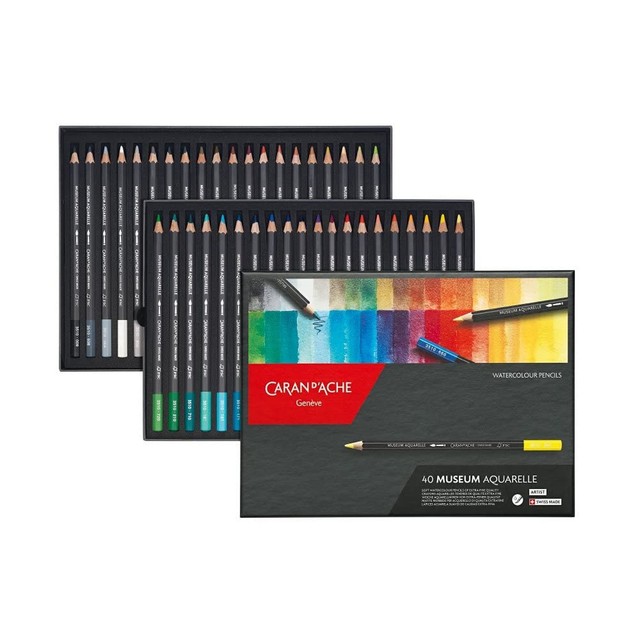
Caran d’Ache Museum Aquarelle
Caran d’Ache’s Museum Aquarelle is rated 5-star lightfast in most colors, good for roughly 100 years under normal light, which is the spec that actually matters for a doll that will sit on an open shelf for years rather than live in a portfolio sleeve. It’s also the most heavily pigmented pencil on this list and priced accordingly; doll-repaint sources don’t specifically discuss it, but the lightfastness and pigment numbers meet the same bar the community-favorite brands do.
- Caran d’Ache’s top-grade water-soluble pencil line
- most colors rated 5-star lightfast, roughly 100 years under normal light
- extra-fine, heavily pigmented core
- sold in sets from 12 colors up to larger artist tins
- best lightfastness rating of any pencil on this list
- very high pigment concentration for a strong result in few passes
- artist-grade consistency batch to batch
- the most expensive pencil on this list per unit
- small sets limit color range unless you buy up to a larger tin
- not specifically documented in doll-repaint community discussion the way Faber-Castell or Prismacolor are

Caran d’Ache Supracolor Soft Aquarelle
Supracolor Soft is Caran d’Ache’s mid-tier aquarelle line, a softer core than Museum Aquarelle that lays color down in fewer passes, at a somewhat lower price and a somewhat lower lightfastness rating within the brand’s own range. It’s a reasonable middle ground if Museum Aquarelle’s price is more than you want to spend but you still want Caran d’Ache’s pigment quality.
- softer, wax-free water-soluble core than Museum Aquarelle
- Caran d’Ache’s mid-tier aquarelle line, priced below Museum Aquarelle
- sold in sets from around 10 colors up to larger ranges
- same Swiss manufacturing as the Museum Aquarelle line
- Caran d’Ache pigment quality at a lower price than Museum Aquarelle
- soft core lays down color in fewer passes, good for larger areas
- larger set sizes available for a full skin-and-blush palette
- lower lightfastness rating than Museum Aquarelle in the same brand’s own lineup
- still pricier than Derwent or Prismacolor
- soft core wears down and needs sharpening faster
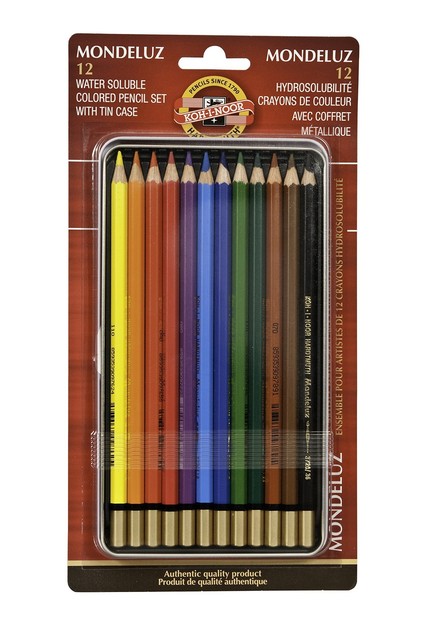
Koh-I-Noor Mondeluz Aquarelle Watercolor Pencils
Koh-I-Noor’s Mondeluz line is a soft, vibrant, water-soluble pencil sold in sets up to 72 colors at a price below the premium artist-grade brands, which makes it tempting for building a full skin-tone range cheaply. It isn’t specifically documented in doll-repaint tutorials the way Faber-Castell or Prismacolor are, so it’s worth testing on a scrap offcut before committing a finished faceup to it.
- soft, vibrant water-soluble core in a cedar casing
- sold in sets of 12, 24, 36, and 72 colors
- can be used dry or dipped in water for a denser stroke
- budget-tier price relative to the artist-grade brands above
- large color ranges available at a lower price than Faber-Castell or Caran d’Ache
- soft core lays down pigment easily, useful for broad areas
- widely available through general art suppliers
- not specifically documented in doll-repaint tutorials the way Faber-Castell, Derwent, and Prismacolor are
- pigment load reported below the premium tier
- quality control reportedly less consistent than the top-tier brands
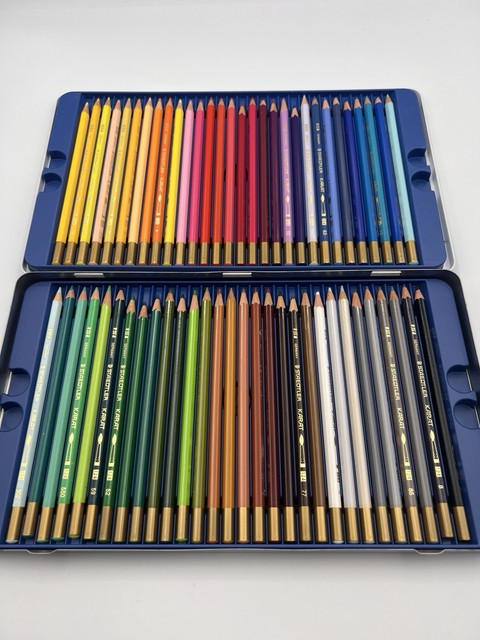
Staedtler Karat Aquarell Premium Watercolor Pencils
Staedtler’s Karat Aquarell is a consistent, mid-priced hexagonal-barrel watercolor pencil available in sets up to 60 colors, useful for building a broad skin-and-blush range without either the premium artist-tier price or the smaller sets budget lines usually come in. Like Koh-I-Noor, it isn’t a brand doll-repaint communities specifically discuss, so treat it as an untested-by-the-hobby option worth trying rather than a proven favorite.
- hexagonal-barrel water-soluble pencils, usable dry or blended with water
- sold in sets from 12 up to 60 colors
- mid-price positioning versus the premium artist tier
- consistent core hardness reported across reviews
- reliable, consistent core from a long-established manufacturer
- large 48–60 color sets available for a full range of skin and blush tones
- mid-range price between the budget and premium tiers
- not specifically documented in doll-repaint community sources, unlike Faber-Castell or Prismacolor
- hexagonal barrel is less comfortable than round for some grip styles
- fewer independent lightfastness reviews available than for Caran d’Ache or Faber-Castell
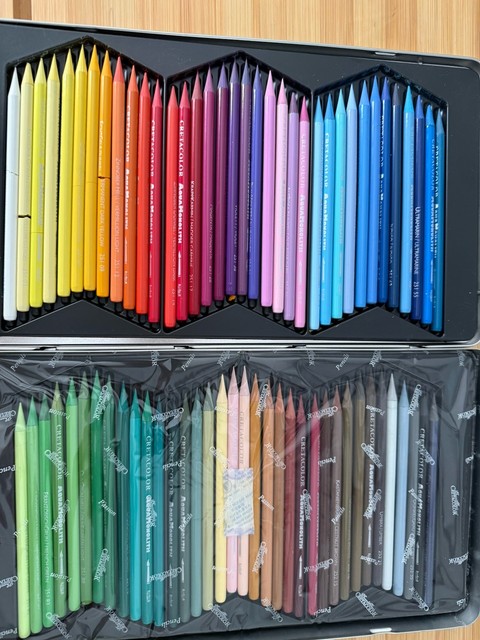
Cretacolor Aqua Monolith Woodless Watercolor Pencils
The Aqua Monolith is a woodless pencil, a 7mm core of pure pigment and binder under a thin lacquer coat with no wood casing at all, which makes it the easiest pencil on this list to reduce to loose powder for repainters who work with a brush rather than the pencil tip directly. The tradeoff is a brittle point when sharpened fine, so it wants a light hand.
- 7mm core of pure pigment and binder with no wood casing, just a thin lacquer coat
- water-soluble
- sold in sets of 12 to 24
- thick core is straightforward to grind to loose powder for brush application
- woodless design means proportionally more pigment for the price than a wood-cased pencil of the same diameter
- the most straightforward pencil on this list to reduce to powder for a grind-and-brush technique
- wide, chunky core resists snapping under normal pressure
- tip is reportedly brittle when sharpened to a fine point, needing a light hand
- no wood casing to grip, so it can’t be used sideways like a pastel stick
- smaller color range than the wood-cased lines above
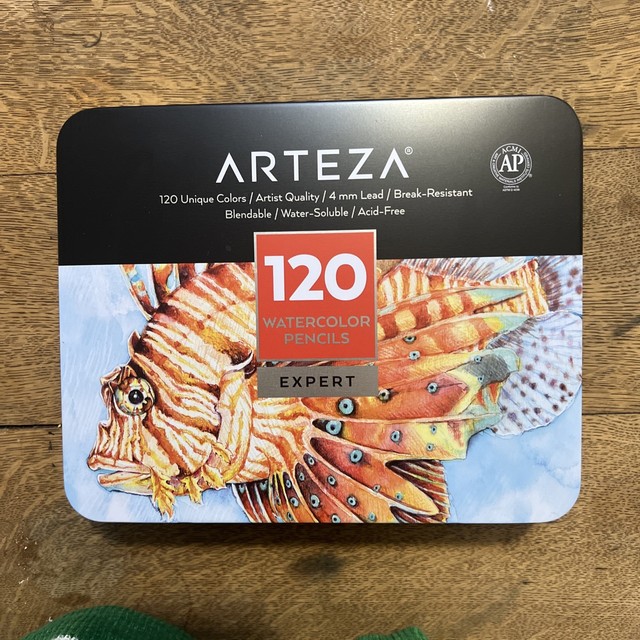
Arteza Professional Watercolor Pencils, Set of 120
Arteza’s 120-color set is the cheapest way on this list to get a full color range in one box, and reviewers describe the pigment laydown as bright and consistent for the price. It isn’t a brand doll-repaint tutorials reference, and colors aren’t sold individually, so running out of one shade means shopping a different brand rather than restocking the same tin.
- 120-color set, the largest single-box range on this list
- water-soluble core, usable wet or dry
- reviewers report strong, bright color laydown
- budget price for the number of colors included
- lowest cost per color of any set here, useful for a full skin-tone range without buying multiple tins
- reviewers describe pigment laydown as bright and consistent
- large range means less need to blend for an in-between skin tone
- colors aren’t sold individually, so a single used-up shade means replacing it from another brand entirely
- not established in doll-repaint community discussion the way the legacy art brands are
- quality control on a 120-piece budget set is reportedly less consistent pencil to pencil than a premium 12-24 tin

Winsor & Newton Studio Collection Watercolour Pencils
Winsor & Newton’s watercolour pencils come from one of the oldest names in fine art, sold dry-usable in tins from 12 to 72 colors, with the quality consistency a long-established manufacturer generally delivers. Doll-repaint tutorials don’t specifically call it out the way they do Faber-Castell or Prismacolor, and its pigment concentration sits in the middle of the pack rather than at the premium end, a safe, unremarkable choice more than a standout one.
- water-soluble pencils usable dry or blended with water using a brush
- sold in sets of 12 up to 72 colors
- from one of the oldest and best-established fine-art brands
- metal tin packaging in the larger sets
- long-established fine-art manufacturer with consistent quality control
- wide range of set sizes from a 12-pencil starter tin to a 72-color artist set
- reasonably priced for the brand’s reputation
- not specifically cited in doll-repaint tutorials the way Faber-Castell, Derwent, and Prismacolor are
- fewer community swatch comparisons exist for this line in the repaint hobby specifically
- mid-pack pigment concentration, not as strong as Caran d’Ache’s Museum Aquarelle
Buying tips
- Buy the “watercolor” or “aquarelle” line specifically — a regular colored pencil from the same brand uses a wax or oil binder that can stain vinyl permanently once sealed over.
- Apply pencil dry, in thin layers, over a matte sealant coat like MSC matte rather than painting wet — that’s how the pigment locks to a vinyl or resin doll surface.
- Build color in passes: sealant, sketch, more sealant, color layer, more sealant. Rushing straight to full color in one pass is the most common beginner mistake in repaint tutorials.
- For broad areas like blush or eyeshadow, a softer, more heavily pigmented pencil such as Faber-Castell or Prismacolor needs fewer passes than a harder one.
- For fine detail like eyelashes or veining, a harder core holds a point longer, even though it takes more layers to build the same depth of color.
- If you want to grind pencil to loose pigment for brush application, a woodless pencil like Cretacolor’s Aqua Monolith is easier to reduce to powder than a wood-cased one.
- Prioritize lightfastness over blend quality if the doll will sit on an open shelf — most watercolor-pencil reviews rank for painting on paper, not years under ambient light.
- Test a new pencil and sealant combination on a scrap vinyl or resin offcut before committing to a finished faceup, since how a pencil grips varies by doll material, not just by brand.
As an Amazon Associate and eBay Partner, toptenpick.com earns from qualifying purchases. Prices and availability are subject to change.