

As an Amazon Associate and eBay Partner, toptenpick.com earns from qualifying purchases. Prices and availability are subject to change.
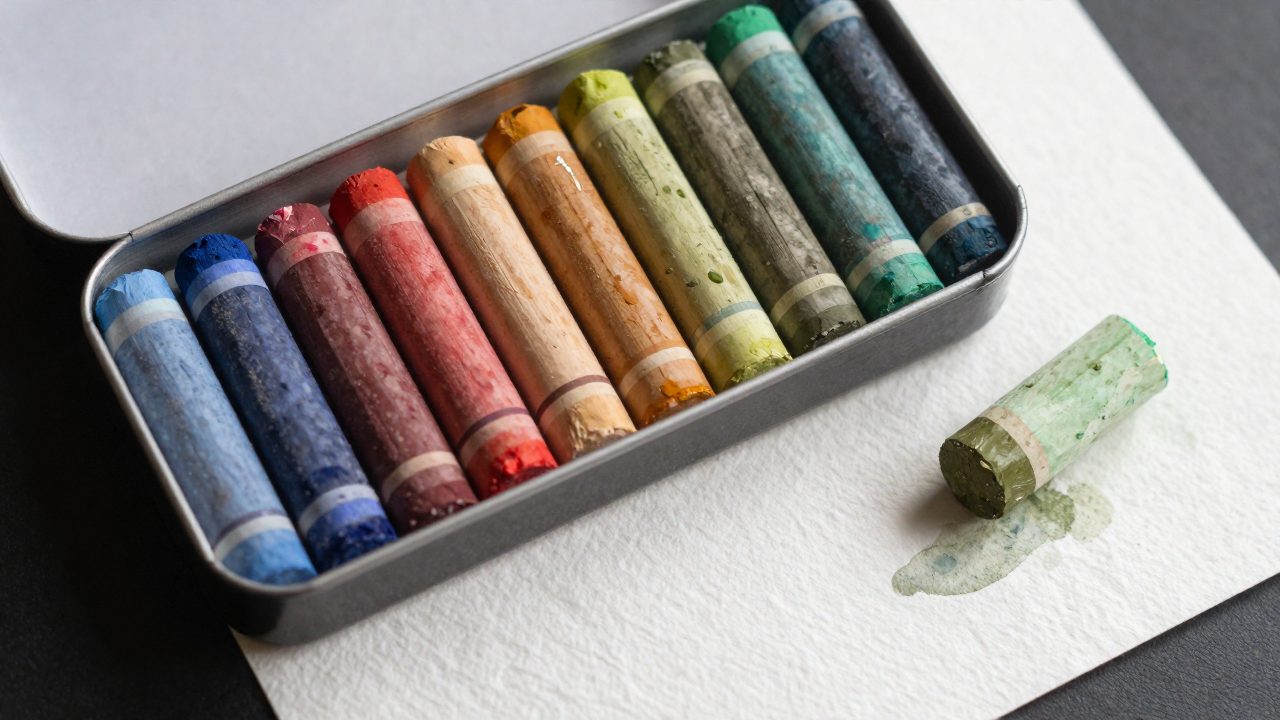
There are two completely different products sold under almost the same name, and buying the wrong one is the commonest disappointment in this category. A water-soluble wax pastel — Caran d’Ache Neocolor II is the archetype — dissolves when water touches it and turns into something very close to gouache: opaque, flowing, blendable with a brush. A water-soluble oil pastel does something quite different: it softens and emulsifies rather than dissolving, giving a creamy, slightly greasy wash that never becomes truly fluid. Both are labelled water-soluble. They behave nothing alike, and if you bought one expecting the other you will conclude the product is faulty.
The second thing to know is that the paper decides most of your result. These sticks lay down a heavy load of pigment and binder, and then you flood it with water. Ordinary cartridge or sketchbook paper buckles, pills and eventually tears under a wet brush. Watercolour paper — 300 gsm, cold pressed, and ideally cotton — is not a luxury here, it is the difference between the technique working and not. If a set has disappointed you, try it on proper paper before blaming the sticks.
The third is the one people find genuinely surprising: these are not only for wetting. Used dry they behave like a soft, intensely pigmented crayon and layer beautifully, and a great deal of the best work with them uses water only in selected areas. They also work on surfaces a watercolour pencil will not touch — fabric, wood, primed board, even glass — because the wax binder grips where a pencil’s harder core skates.
Lightfastness is the specification that separates the tiers. Student-grade sets use cheaper pigments that shift and fade in daylight, which is fine for sketchbooks and a problem for anything framed on a wall. Artist-grade ranges publish lightfastness ratings per colour, and the difference in price is largely the pigment. Decide honestly which you are making before paying for the better set.
One small practical thing that changes how much you enjoy them: buy a set with the sticks in a tin or tray rather than loose in a box. They are soft, they mark everything, and a loose stick rolling around a pencil case transfers colour onto every other stick in it.
| # | Product | Price | Where to buy |
|---|---|---|---|
| 1 | Caran d’Ache Neocolor II Artists’ Water-Soluble Pastels | $25–$180 | Amazon · eBay |
| 2 | Caran d’Ache Neocolor I (water-resistant — note the difference) | $20–$60 | Amazon · eBay |
| 3 | Faber-Castell Gelatos | $15–$40 | Amazon · eBay |
| 4 | Sennelier Oil Pastels, Water-Soluble Range | $25–$90 | Amazon · eBay |
| 5 | Stockmar Wax Crayon Blocks | $20–$50 | Amazon · eBay |
| 6 | Cold Pressed Watercolour Paper, 300 gsm | $18–$45 | Amazon · eBay |
| 7 | Water Brush Pen | $10–$22 | Amazon · eBay |
| 8 | Reeves or Similar Student Water-Soluble Wax Pastels | $10–$25 | Amazon · eBay |
| 9 | Masking Fluid | $10–$20 | Amazon · eBay |
| 10 | Watercolour Pencils (the adjacent alternative) | $20–$70 | Amazon · eBay |
The picks, in detail

Caran d’Ache Neocolor II Artists’ Water-Soluble Pastels
The reference product in this category and the one every other stick is compared against. Highly pigmented, genuinely water-soluble rather than merely water-reactive, and they dissolve into a flowing, opaque wash that behaves like gouache under a brush. Swiss-made with published lightfastness, they work dry as well as wet, and they take on fabric and wood as readily as on paper.
- Fully water-soluble wax binder
- High pigment load, opaque coverage
- Published lightfastness ratings
- Sets from 10 to 126 colours
- Dissolves properly into a gouache-like wash
- Works on fabric, wood and primed board as well as paper
- Excellent dry as well as wet
- Considerably more expensive than student brands
- Soft sticks wear quickly on textured paper
- Large sets are a serious outlay
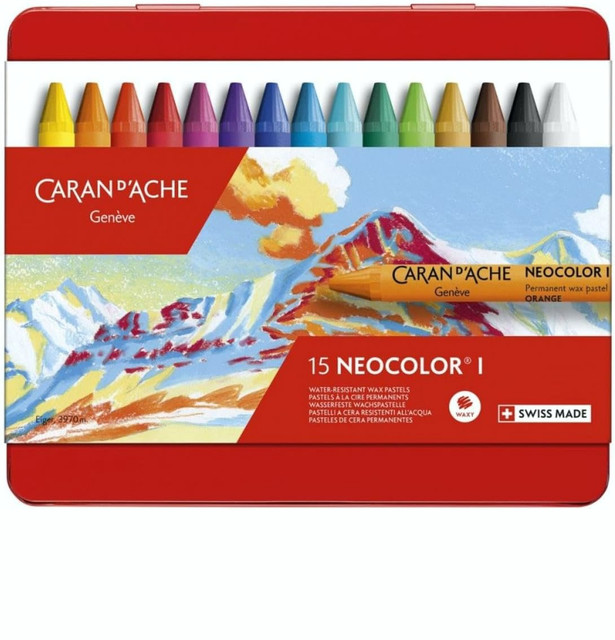
Caran d’Ache Neocolor I (water-resistant — note the difference)
The same family and the opposite behaviour, listed here because the numbering catches people out constantly. Neocolor I is wax-based and water-resistant: it does not dissolve, which makes it excellent for resist techniques where you want the wax to repel a watercolour wash laid over it. Buy it deliberately for that, and never by mistake when you wanted the II.
- Water-resistant wax pastel
- Same format and pigment quality as Neocolor II
- Ideal for wax-resist techniques
- Sets from 10 to 30 colours
- Excellent for deliberate wax-resist work
- Same build quality as the water-soluble version
- Holds a crisp mark under a wash
- Does not dissolve, which is the opposite of what most buyers want
- The I and II naming causes constant confusion
- Fewer colours in the range

Faber-Castell Gelatos
A softer, creamier take on the idea in a twist-up barrel rather than a bare stick, which keeps your fingers clean and makes them popular for mixed-media and journalling. They blend with a finger or a damp brush into a soft translucent wash — noticeably less opaque and less fluid than Neocolor II, and easier to work in large soft areas. Think of them as a different tool rather than a cheaper one.
- Twist-up barrel format
- Creamy, highly blendable texture
- Water-soluble to a soft translucent wash
- Sets grouped by colour family
- Clean to use thanks to the barrel
- Blends beautifully with a finger
- Good on mixed-media and journal pages
- Less opaque and less fluid than a true wax pastel
- Barrel means you cannot use the side of the stick
- Lower pigment load than artist-grade sticks
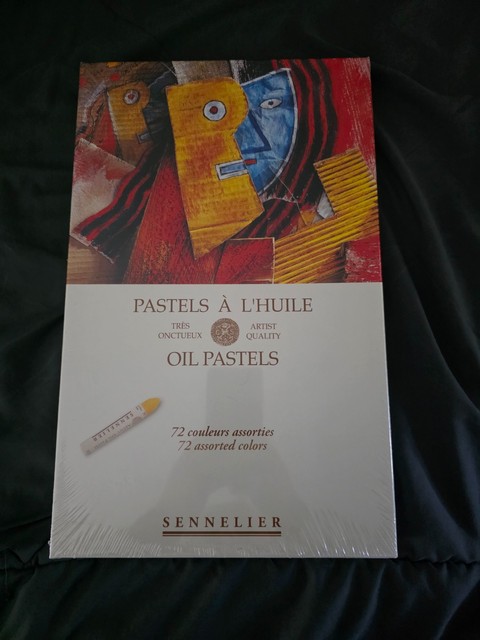
Sennelier Oil Pastels, Water-Soluble Range
Included to make the distinction concrete. Sennelier’s water-soluble oil pastels are buttery, intensely pigmented and beautiful, and they emulsify under water into a creamy, slightly greasy wash rather than dissolving into a fluid one. If you want soft painterly blending on board they are wonderful. If you wanted something that flows like watercolour, they are the wrong product.
- Oil-based binder, water-soluble formulation
- Very soft, buttery texture
- High pigment load
- Sold individually and in sets
- Superb for soft painterly blending
- Extremely rich colour
- Excellent on board and canvas
- Emulsifies rather than dissolving — will not flow like gouache
- Very soft, so sticks wear fast and smear
- Never fully dries in the way wax pastels do
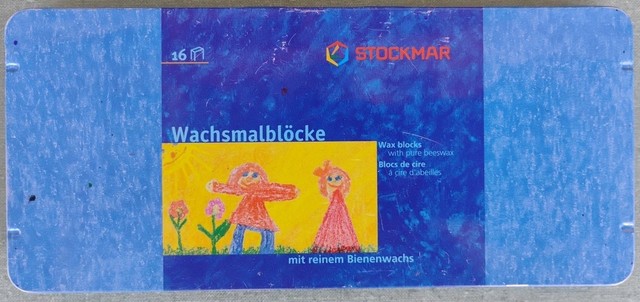
Stockmar Wax Crayon Blocks
A different shape for a different way of working: broad rectangular blocks rather than sticks, designed for laying large areas of colour with the flat side. Widely used in Waldorf schools and by illustrators who want broad soft passages. Check the specific line, as Stockmar make both water-soluble and standard beeswax crayons and the blocks come in both.
- Broad rectangular block format
- Beeswax-based
- Available in water-soluble and standard lines
- Non-toxic and made in Germany
- The flat face covers large areas quickly
- Very pleasant to use, with a genuine beeswax feel
- Robust — they do not snap like thin sticks
- Check which line you are buying — not all are water-soluble
- Blocks cannot produce fine detail
- Expensive for the number of colours

Cold Pressed Watercolour Paper, 300 gsm
The purchase that most often turns a disappointing set into a good one. These sticks put down a lot of material and then you flood it — ordinary sketchbook paper buckles, pills and tears under that. Three hundred gsm cold pressed takes the water without cockling, and the slight tooth grips the wax so you get more pigment off the stick in the first place. Cotton is better than wood pulp and costs accordingly.
- 300 gsm weight
- Cold pressed (NOT) surface texture
- Cotton or cellulose
- Blocks, pads and loose sheets
- Handles heavy water without buckling
- Tooth lifts more pigment from the stick
- Makes a cheap set perform better than an expensive one on bad paper
- Cotton paper is expensive per sheet
- Heavier paper does not suit every sketchbook workflow
- Cheap 300 gsm cellulose still cockles when very wet

Water Brush Pen
A brush with a squeezable water reservoir in the handle, and it changes how practical these sticks are away from a desk. Squeeze gently to feed water into the bristles, work the pigment, and you have a complete painting kit with no jar and no spills. It is the accessory that makes a pocket set of wax pastels genuinely usable on a train or a park bench.
- Refillable water reservoir in the handle
- Synthetic brush tip in several sizes
- Twist or squeeze water feed
- Caps for transport
- Removes the water jar entirely
- Makes a pocket set actually portable
- Fine control of how wet the brush is
- Reservoir needs refilling frequently on large washes
- Synthetic tips hold less water than a sable brush
- Can flood the paper if squeezed too hard

Reeves or Similar Student Water-Soluble Wax Pastels
The honest entry point. Student-grade sets use cheaper pigments and more filler, so colours are less intense, less opaque and less lightfast — but they dissolve properly, they behave the right way, and a 24-colour set costs less than six artist sticks. If you are finding out whether you like the medium at all, this is the sensible place to do it.
- Water-soluble wax formulation
- Student-grade pigments
- Sets of 12 to 48 colours
- Usually supplied in a plastic tray
- Very cheap way into the medium
- Behaves correctly even if the colour is weaker
- Large colour counts for little money
- Noticeably less pigment and opacity
- Poor lightfastness — unsuitable for framed work
- Colours vary between production batches

Masking Fluid
Directly useful with this medium for a reason specific to it: once you flood a wax pastel area with water it moves freely, so preserving a white or a hard edge afterwards is difficult. Masking fluid painted on first keeps those areas clean through as many washes as you like and rubs off at the end. Use an old brush or a ruling pen, never a good one.
- Latex or synthetic masking fluid
- Removable by rubbing once dry
- Tinted versions show where it is applied
- Bottle with a brush or applicator nib
- Preserves whites through repeated wet work
- Allows hard edges the medium otherwise makes difficult
- Tinted versions are much easier to see
- Ruins brushes — use an old one
- Latex versions degrade in the bottle within a year or two
- Can lift fibres from soft papers when removed
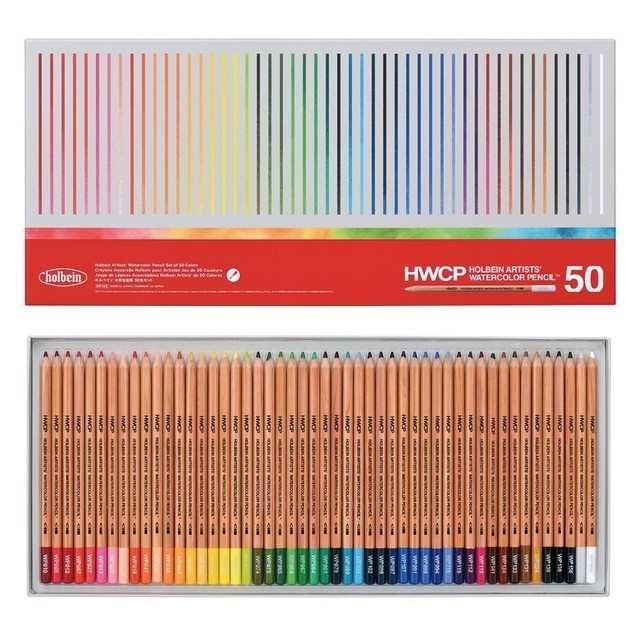
Watercolour Pencils (the adjacent alternative)
Worth naming because they are frequently what someone actually wants. A watercolour pencil gives fine control, detail and clean lines, and dissolves into a transparent wash — where a wax pastel is broad, opaque and fast. Pencils are better for botanical and detailed work; pastels are better for covering ground and for working on surfaces a pencil skates across. Many people end up owning both.
- Hard pigmented core in a wooden barrel
- Dissolves to a transparent wash
- Sharpen for fine detail
- Large colour ranges available
- Far better for fine detail and line work
- Transparent washes suit botanical and illustrative work
- Cleaner to carry and use
- Slow for covering large areas
- Skates on fabric, wood and glossy surfaces
- Less opaque, so no light-over-dark working
Buying tips
- Know which product you are buying. A water-soluble wax pastel dissolves into a flowing, opaque, gouache-like wash; a water-soluble oil pastel emulsifies into a creamy greasy one. Both are labelled water-soluble and they behave nothing alike.
- Watch the Neocolor I and II numbering. The I is water-resistant and the II is water-soluble, and buying the wrong one is the single most common mistake in this category.
- Use 300 gsm watercolour paper. These sticks lay down a lot of material and then you flood it — ordinary sketchbook paper buckles, pills and tears, and that is usually what people mistake for a bad set.
- Try them dry before you try them wet. They layer beautifully as intensely pigmented crayons, and a great deal of good work with them uses water only in selected areas.
- Use them on surfaces a pencil cannot touch. The wax binder grips fabric, wood, primed board and glass, where a harder watercolour pencil core simply skates.
- Check lightfastness ratings if the work is going on a wall. Student-grade pigments shift and fade in daylight; artist ranges publish a rating per colour and that is most of the price difference.
- Mask before you wet. Once a wax pastel area is flooded it moves freely, so whites and hard edges are far easier to preserve with masking fluid than to rescue afterwards.
- Buy a set in a tin or tray rather than loose. The sticks are soft and they transfer colour onto everything they roll against, including each other.
As an Amazon Associate and eBay Partner, toptenpick.com earns from qualifying purchases. Prices and availability are subject to change.