

As an Amazon Associate and eBay Partner, toptenpick.com earns from qualifying purchases. Prices and availability are subject to change.
For every other stroke a tech suit’s job is compression. For breaststroke it is very nearly the opposite, and the suit that drops a freestyler’s time can add to yours. Maximum-compression suits work by squeezing the body into a narrower, firmer shape and holding it there — excellent for a stroke where the legs stay long and the hips barely articulate. Breaststroke asks for deep hip and knee flexion on every single cycle, and the recovery phase of the kick is the moment a heavily compressive suit fights hardest. That is why manufacturers now build and market specific suits around range of motion rather than raw compression, and why the flagship sprint suit in a range is often the wrong purchase for a breaststroker.
The second thing to sort out before comparing fabrics is whether the suit is legal for your swimmer. World Aquatics — the body that used to be FINA — approves suits individually, by model, and publishes the approved list. Approval is tied to a specific product and production year, so a bargain from a clearance rack or a second-hand listing can be a suit that is no longer on the list. USA Swimming goes further and restricts tech suits altogether for 12-and-under athletes in most sanctioned competition, with its own published list of what those swimmers may wear. Check both lists against the exact model name before ordering, not after.
Third, and this is the expensive one: a tech suit is a consumable. The bonded seams and the compressive fibres degrade with use and with chlorine, and the working life of one is usually described in races rather than months — commonly somewhere around eight to ten. A suit worn to training sessions is a suit spent. Buy it for the meet that matters, put it on in the locker room, and take it off afterwards.
On fit, the standard advice to size down for compression needs qualifying here. Sprinters size down aggressively because the squeeze is the point. A breaststroker who does the same can reach a suit they cannot fully flex in, and the cost shows up precisely in the part of the stroke that generates propulsion. Aim for a suit that takes a genuine struggle to get on and still allows a full tuck of the knees when you are in it — try that movement in the changing room, not on the blocks.
One more practical distinction. Women choose between an open-back and a closed-back kneeskin; open backs give more shoulder freedom, closed backs more core compression. Men choose between a standard jammer and a high-waist jammer that sits nearer the navel, and the high waist is generally the breaststroke choice because it supports the core through the undulation without touching the legs at all.
| # | Product | Price | Where to buy |
|---|---|---|---|
| 1 | Speedo Fastskin LZR Pure Valor 2.0 | $380–$500 | Amazon · eBay |
| 2 | Arena Powerskin Carbon Glide | $350–$450 | Amazon · eBay |
| 3 | TYR Venzo Genesis | $300–$430 | Amazon · eBay |
| 4 | Mizuno GX Sonic 6 CR | $370–$540 | Amazon · eBay |
| 5 | Arena Powerskin Carbon Air 2 | $280–$400 | Amazon · eBay |
| 6 | Speedo Fastskin LZR Pure Intent 2.0 | $450–$560 | Amazon · eBay |
| 7 | TYR Avictor 2 | $280–$420 | Amazon · eBay |
| 8 | Arena Powerskin Carbon Core FX | $230–$340 | Amazon · eBay |
| 9 | Arena Powerskin Primo | $300–$460 | Amazon · eBay |
| 10 | FINIS Fuse | $120–$220 | Amazon · eBay |
The picks, in detail

Speedo Fastskin LZR Pure Valor 2.0
Speedo’s flexibility-first suit and the one their own marketing points breaststrokers and distance swimmers towards, as opposed to the Pure Intent which is the compression-first sprint suit. It is lighter and more permissive through the hips than the flagship, and it comes in both open-back and closed-back kneeskins and in standard and high-waist jammers, which means you can match the cut to the stroke rather than taking what the range offers.
- Flexibility-focused construction
- Open-back and closed-back kneeskins
- Standard and high-waist jammer versions
- World Aquatics approved
- Built around range of motion rather than raw squeeze
- Cut options let you match the suit to the stroke
- Lighter and easier to get on than the sprint suit
- Less core compression than the Pure Intent
- Premium price even by tech suit standards
- Sizing runs small and stock sells out early in the season

Arena Powerskin Carbon Glide
Arena’s carbon-fibre-banded construction aimed explicitly at increasing range of motion while keeping body position locked, which is the exact combination breaststroke needs. The carbon bands do the alignment work that fabric compression would otherwise have to do, so the suit can be less restrictive overall. It is the suit most often named alongside the Pure Valor when breaststroke specialists compare notes.
- Carbon fibre banding in the fabric
- Engineered for range of motion
- Kneeskin and jammer versions
- World Aquatics approved
- Carbon banding holds position without squeezing the legs
- Strong reputation among breaststroke swimmers
- Slightly cheaper than the Speedo flagship
- Carbon fabric is delicate and snags on rough pool edges
- Long time to put on correctly
- Arena sizing differs noticeably from Speedo’s

TYR Venzo Genesis
TYR’s answer to the same problem, built around a fabric designed to hold compression through the first half of its stretch and then release into elastic freedom — which is a neat description of what a breaststroke kick actually demands. Internal taping connects the hips to the upper body to stabilise the core without binding the legs. TYR’s construction is generally more robust than the carbon-fabric suits, which matters over a long meet.
- Compression through initial stretch, elasticity beyond it
- Internal taping linking hips to torso
- Dual-layer construction with hydrophobic treatment
- World Aquatics approved
- Core stability without restricting the kick
- More durable fabric than the carbon suits
- Frequently discounted below the Speedo and Arena flagships
- Heavier feel in the water than the Pure Valor
- Sizing charts are widely considered confusing
- Fewer cut options than Speedo offers

Mizuno GX Sonic 6 CR
Mizuno splits its range by purpose, and the CR designation is the one built for the strokes that need movement rather than maximum squeeze. It is a favourite among breaststrokers who have tried the European brands and found them restrictive through the hips. Japanese sizing runs distinctly smaller, so read the conversion chart carefully — this is the suit most often ordered in the wrong size.
- Purpose-split range with a movement-oriented version
- Water-repellent surface treatment
- Kneeskin and jammer cuts
- World Aquatics approved
- Genuinely built for strokes needing hip flexion
- Excellent surface treatment and glide
- Loyal following among breaststroke specialists
- Japanese sizing is much smaller than US or European
- Limited retail availability outside Japan
- Women’s versions are substantially more expensive
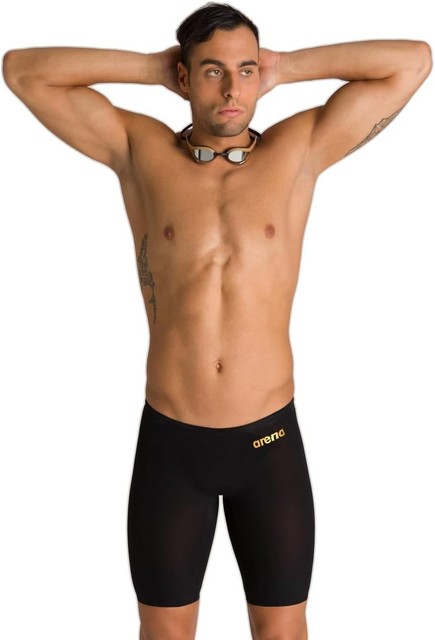
Arena Powerskin Carbon Air 2
The lightest suit in Arena’s carbon family and the most permissive of the lot, aimed at swimmers who want the carbon alignment benefit with minimal restriction. It is the sensible choice for a younger or lighter-framed breaststroker who finds a full compression suit genuinely hard to move in, and for anyone swimming multiple events in a session where getting in and out of the suit repeatedly matters.
- Lightest of Arena’s carbon suits
- Minimal-restriction construction
- Kneeskin and jammer versions
- World Aquatics approved
- Easiest carbon suit to move in
- Quick to get on between events
- Good option for smaller or younger swimmers
- Least compression in the Arena carbon range
- Lightweight fabric is the most fragile here
- Sprinters will find it underpowered
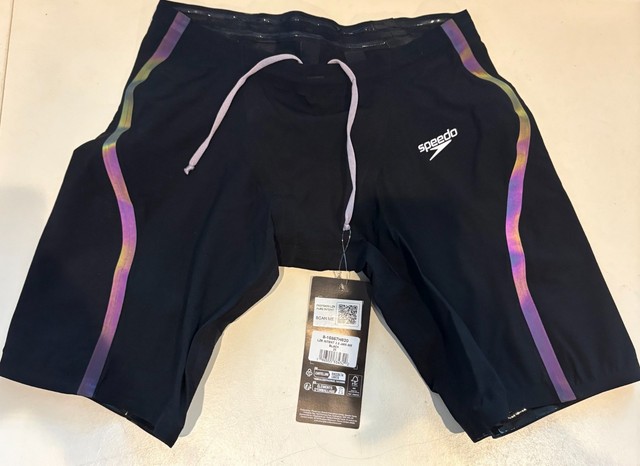
Speedo Fastskin LZR Pure Intent 2.0
Speedo’s maximum-compression flagship, listed here so the distinction is clear rather than as a default recommendation. It is superb for sprint freestyle and butterfly and it is deliberately restrictive, which is exactly what a breaststroker generally does not want. Some strong, heavily built breaststrokers do prefer it — the core lock suits their stroke — so it is worth trying if the flexible suits feel loose on you rather than freeing.
- Maximum compression construction
- Internal core stabilising panels
- Open and closed back kneeskins, high-waist jammers
- World Aquatics approved
- The strongest core lock available
- Excellent for swimmers who also sprint freestyle
- Best-in-class body position hold
- Restricts the breaststroke kick recovery for most swimmers
- The most expensive suit on this list
- Genuinely difficult and slow to put on
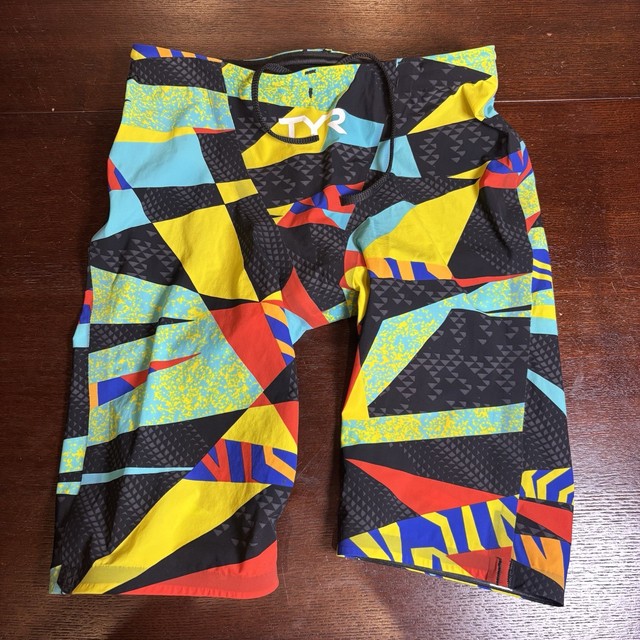
TYR Avictor 2
TYR’s high-compression suit with a reputation for buoyancy at the hips, which is worth considering for breaststroke for a non-obvious reason: the stroke loses more time to a dropping hip position during the recovery than almost any other, and a suit that holds the hips up can be worth more than one that frees the legs. Worth trying against the Venzo rather than assuming the more flexible suit wins.
- High compression with hip buoyancy emphasis
- Bonded seam construction
- Kneeskin and jammer versions
- World Aquatics approved
- Holds hip position through the recovery
- Durable construction for repeated meets
- Often discounted as newer models arrive
- More restrictive than the Venzo through the knees
- Buoyancy emphasis suits some body types and not others
- Long entry time

Arena Powerskin Carbon Core FX
The middle of Arena’s carbon range and the one most club swimmers actually buy: meaningful core compression, carbon banding for alignment, and a price that does not require a family discussion. For a developing breaststroker whose technique is still changing, this is a more rational purchase than a flagship suit that will be outgrown before its race life is used up.
- Carbon banding with moderate compression
- Full range of kneeskin and jammer cuts
- Water-repellent fabric treatment
- World Aquatics approved
- Sensible balance of compression and movement
- Widely stocked with good size availability
- Considerably cheaper than the flagships
- Neither the most flexible nor the most compressive option
- Carbon fabric still snags easily
- Elite swimmers will outgrow its capability

Arena Powerskin Primo
Arena’s compression-focused suit without the carbon banding, and a genuine option for a breaststroker who has found the carbon suits too rigid through the hip. The fabric does the work in a more conventional way, which makes it more forgiving of a body shape the carbon banding does not suit. Try it if a Carbon Glide felt like it was fighting your kick.
- Fabric compression without carbon banding
- Kneeskin and jammer versions
- Bonded seams
- World Aquatics approved
- More forgiving of body shape than the carbon suits
- Robust fabric that survives a season of meets
- Frequently discounted
- Less alignment support than the carbon range
- Heavier than the Carbon Air
- Premium pricing at full retail
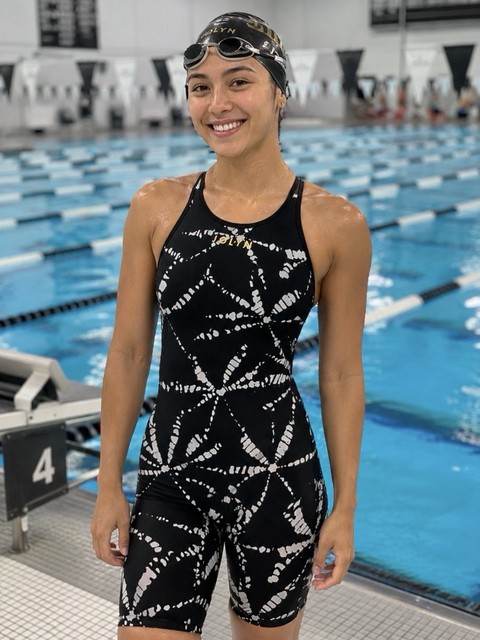
FINIS Fuse
The entry-level answer, and a reasonable one for a swimmer whose first tech suit this is. FINIS builds it around compression that supports muscle without limiting range of motion, and it costs a fraction of the flagships. Nobody is winning a national title in one, but for a swimmer’s first championship meet it delivers most of the psychological benefit and a real if smaller physical one.
- Flexible muscle compression construction
- Kneeskin and jammer versions
- Entry-level price point
- Check current approval listing before entering
- A fraction of the price of the flagship suits
- Genuinely easier to put on for a first-timer
- Good introduction to how a tech suit should feel
- Noticeably less compression than the premium suits
- Shorter working life
- Verify its listing on the current approved roster before a sanctioned meet
Buying tips
- Do not buy the flagship sprint suit. Maximum compression fights the breaststroke kick exactly where it generates propulsion, which is why manufacturers now build separate flexibility-oriented models.
- Check the World Aquatics approved list against the exact model name and year before ordering, and check USA Swimming’s separate 12-and-under list if the swimmer is young. Clearance stock and second-hand suits are the usual way an illegal suit turns up on deck.
- Treat the suit as a consumable with roughly eight to ten races in it. Wearing it to training is spending races you bought for the meet.
- Test the tuck before you buy. Get the suit on in the changing room and pull both knees up into a full breaststroke recovery — if the suit stops the movement, size or model is wrong, however good it feels standing still.
- Men should look at the high-waist jammer rather than the standard cut. It supports the core through the undulation without putting any fabric across the legs.
- Women should weigh open back against closed back honestly. Open backs free the shoulders through the recovery, closed backs give more core compression — breaststroke usually favours the shoulder freedom.
- Allow twenty to thirty minutes to get into it the first time, and keep your nails short. Torn fabric from a fingernail is the single most common way a first tech suit dies before its first race.
- Rinse in cold fresh water immediately after every swim, then hang to dry out of the sun. Never wring it, never use a washing machine, and never leave it rolled in a wet bag — chlorine sitting in the fabric is what kills the compression.
As an Amazon Associate and eBay Partner, toptenpick.com earns from qualifying purchases. Prices and availability are subject to change.