

As an Amazon Associate and eBay Partner, toptenpick.com earns from qualifying purchases. Prices and availability are subject to change.
Before the list, the honest part, because you deserve it before you spend anything: tai chi is not a weight-loss exercise, and the evidence that it is one is thin.
What tai chi has real, repeatedly measured evidence for is balance and falls prevention in older adults, and rather good evidence for blood pressure, joint pain and the general business of staying mobile. Those are genuinely valuable things. Burning a lot of energy is not among them. A tai chi session sits at roughly the intensity of a slow walk, and you cannot out-exercise a calorie surplus at that intensity — nobody can, with any activity.
So why is this page here, and why might one of these still be the right purchase? Because the exercise people actually do beats the exercise they should do, every time. The single biggest predictor of whether an activity changes anything over a year is whether you are still doing it in month six, and tai chi is unusually good at that — low impact, no equipment, no gym, no soreness, possible in a small room, and workable at almost any age or fitness level. If a DVD gets you moving daily for a year when running shoes got you moving for three weeks, tai chi will have done more for your weight than running did.
What that means practically is that the DVD you can follow matters more than the one with the best claims on the cover. Look for a programme where you follow along rather than memorise a form, because memorising a 108-movement sequence is where most beginners quit. Several of the bestselling series below are built on exactly that principle and say so plainly.
And if weight is genuinely the goal, pair it with something that moves the needle. Walking more, and eating slightly less, is the unglamorous answer. The last two entries here are honest about that rather than pretending a DVD does it alone.
Nothing here is medical advice, and a doctor should hear about any new exercise programme if you have a heart, joint or balance condition.
| # | Product | Price | Where to buy |
|---|---|---|---|
| 1 | Tai Chi Fit: Over 50 — David-Dorian Ross (YMAA) | $15–$28 | Amazon · eBay |
| 2 | Tai Chi Fit Over 50 3-DVD Set — David-Dorian Ross (YMAA) | $30–$50 | Amazon · eBay |
| 3 | Tai Chi Fit OVER 60: Live Longer, Feel Younger — David-Dorian Ross (YMAA) | $15–$28 | Amazon · eBay |
| 4 | Tai Chi Fit: To Go — David-Dorian Ross (YMAA) | $15–$25 | Amazon · eBay |
| 5 | Tai Chi for Beginners — Dr Paul Lam | $20–$35 | Amazon · eBay |
| 6 | Tai Chi for Arthritis — Dr Paul Lam | $20–$35 | Amazon · eBay |
| 7 | Tai Chi for Energy — Dr Paul Lam | $20–$35 | Amazon · eBay |
| 8 | Element: Tai Chi for Beginners | $8–$18 | Amazon · eBay |
| 9 | Fitness Tracker or Pedometer | $25–$120 | Amazon · eBay |
| 10 | Kitchen Food Scale | $12–$30 | Amazon · eBay |
The picks, in detail

Tai Chi Fit: Over 50 — David-Dorian Ross (YMAA)
The worldwide bestseller in this category, and the one most people should start with. Its whole design principle is that there is nothing to memorise — you follow along, and the movements repeat until they are familiar rather than being taught as a form to learn. That is the specific thing that stops beginners quitting, and it is why this one sells the way it does.
- Follow-along format with nothing to memorise
- Aimed at beginners and the over-50s, but suitable at any age
- Published by YMAA Publication Center
- Around an hour of material
- Genuinely easy to start on day one
- The follow-along approach removes the usual quitting point
- Very widely available and inexpensive
- Low intensity — this is not a calorie-burning workout
- Not a traditional form, so it will not prepare you for a classical class
- The over-50 framing puts some younger buyers off unnecessarily

Tai Chi Fit Over 50 3-DVD Set — David-Dorian Ross (YMAA)
The same approach across three discs, including standing, seated and balance routines. The seated material is the reason to choose the set: if mobility, injury or a bad day means standing practice is out, having a seated routine to switch to is what keeps a daily habit unbroken — and habit is the entire argument for tai chi in this context.
- Three DVDs — standing, seated and balance routines
- Chair-based exercises included
- Follow-along format throughout
- YMAA Publication Center
- Seated option keeps the habit going on bad days
- Better value per minute than single discs
- Balance work is where tai chi’s evidence is strongest
- Costs noticeably more than one disc
- Some overlap between the three programmes
- Still low intensity

Tai Chi Fit OVER 60: Live Longer, Feel Younger — David-Dorian Ross (YMAA)
The gentler entry in the same family, built around longevity and mobility rather than intensity. Worth choosing over the Over 50 disc if standing balance is already a concern, because the pacing is slower and the transitions are simpler. The honest framing here is joint health and staying steady, which is what tai chi is genuinely good for.
- Slower pacing and simpler transitions than the Over 50 programme
- Focus on longevity, mobility and balance
- Follow-along format
- YMAA Publication Center
- Appropriate pace if balance is already a concern
- Targets what tai chi actually has evidence for
- Same nothing-to-memorise approach
- Too gentle for a fit beginner
- Lowest energy expenditure on this list
- Age framing again narrows the audience unnecessarily

Tai Chi Fit: To Go — David-Dorian Ross (YMAA)
Three short routines rather than one long one, and the most useful format on this list for building a daily habit. A fifteen-minute session you actually do beats a fifty-minute session you keep postponing, and the research on exercise adherence is fairly blunt about which of those wins over a year.
- Three short follow-along workouts
- Designed for time-limited practice
- Beginner-appropriate throughout
- YMAA Publication Center
- Short sessions are much easier to sustain daily
- Good for travel or a cramped space
- Same accessible teaching style
- Less total content than the longer programmes
- Short sessions mean even less energy expenditure
- You may outgrow it quickly

Tai Chi for Beginners — Dr Paul Lam
Dr Paul Lam is a physician as well as a tai chi teacher, and his programmes are built around clinical accessibility — his material is used in falls-prevention and arthritis programmes internationally. The teaching is more structured and more traditional than the follow-along series, which suits you better if you want to actually learn tai chi rather than simply move along with it.
- Taught by a physician and tai chi instructor
- Structured, progressive teaching of a simplified form
- Used in clinical and community falls-prevention programmes
- Long-established and widely distributed
- Teaches the form properly rather than only a follow-along routine
- Clinically credible background
- Prepares you for a real class if you later join one
- Requires memorising movements — the usual quitting point
- Slower to feel like a workout
- Production values are dated

Tai Chi for Arthritis — Dr Paul Lam
The programme with the strongest institutional backing of anything on this page — it has been adopted by arthritis and health organisations in several countries for community classes. If joint pain is part of why higher-impact exercise has not worked for you, this addresses that directly rather than treating it as an obstacle to work around.
- Designed specifically for joint pain and limited mobility
- Adopted by health organisations for community programmes
- Progressive, structured teaching
- Widely available
- The best-supported programme here for a specific health need
- Gentle enough to do on a painful day
- Strong clinical pedigree
- Very low intensity, even by tai chi standards
- Not aimed at weight at all
- Dated presentation
Tai Chi for Energy — Dr Paul Lam
The more vigorous end of Dr Lam’s catalogue, combining Chen and Sun styles, and the closest thing here to something that will raise your heart rate meaningfully. Chen-style tai chi includes faster movements and low stances that are genuinely demanding. If the complaint about tai chi is that it is too slow to feel like exercise, this is the answer to it.
- Combines Chen and Sun styles
- More dynamic movement than the standard beginner programmes
- Structured teaching with progression
- Suitable once basic tai chi is familiar
- The most physically demanding programme on this list
- Genuinely raises heart rate more than slow forms
- Good progression once a beginner disc is exhausted
- Not a true beginner programme
- Low stances are hard on unprepared knees
- Still well below the intensity of brisk walking

Element: Tai Chi for Beginners
The mass-market option, filmed outdoors with high production values and sold at supermarket prices. It is less rigorous than the specialist programmes and it is pleasant to do, which for a first purchase is not nothing. A reasonable way to find out whether you enjoy tai chi at all before committing to a proper teaching series.
- Mass-market fitness DVD with outdoor filming
- Beginner-level routines
- Low price point
- Widely available in general retailers
- Cheapest way to find out whether you like tai chi
- Pleasant to watch and follow
- Easy to find
- Least rigorous teaching here
- Will not prepare you for a class
- Marketed on fitness claims the format cannot support

Fitness Tracker or Pedometer
The honest adjunct, and the cheapest thing on this page that will actually affect your weight. Walking more is the intervention with the best ratio of effect to effort for most people, and the single reliable finding about trackers is that people who wear one walk further. Pair it with the tai chi rather than choosing between them.
- Step counting with a daily target
- Most models include heart rate
- Battery life from days to weeks depending on model
- Wide price range
- Targets the thing that genuinely moves the needle
- Cheap, and the effect is well documented
- Complements rather than replaces the tai chi
- The novelty wears off for a lot of people
- Calorie estimates on these devices are not accurate
- Not a substitute for changing what you eat
Kitchen Food Scale
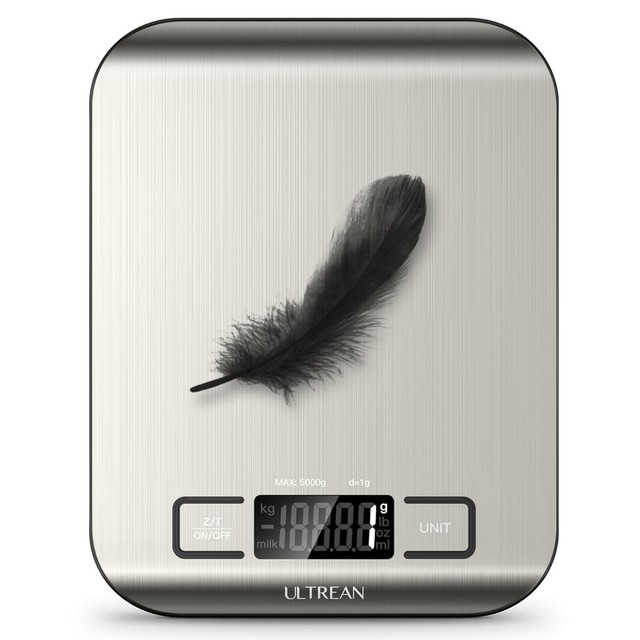
The least glamorous item on any page of this site, and the most effective one here. Portion estimation is where almost all calorie tracking goes wrong, and a scale removes the guesswork for about fifteen dollars. If weight is genuinely the goal rather than mobility, this will do more than every DVD above put together — and that is worth saying plainly even on a page selling the DVDs.
- Digital readout in grams and ounces
- Tare function for weighing into a bowl
- Compact and inexpensive
- Battery powered
- The highest-impact purchase on this page for weight specifically
- Cheap and lasts for years
- Removes the biggest source of error in food tracking
- Weighing food is tedious and many people stop
- Not appropriate for anyone with a history of disordered eating
- Does nothing for fitness, mobility or balance
Buying tips
- Tai chi is not a weight-loss exercise. Its measured benefits are balance, falls prevention, blood pressure and joint pain — all valuable, none of them calorie burn.
- Buy the programme you will still be doing in month six. Sustainability beats intensity over a year, and that is the real case for tai chi.
- Prefer follow-along over memorise-the-form if you are starting out. Having to memorise a long sequence is where most beginners give up.
- Chen-style material is the more demanding end if you want your heart rate up. Sun and Yang styles are gentler.
- Short daily sessions beat long weekly ones. Fifteen minutes most days is a habit; fifty minutes on Sunday is an intention.
- Pair it with walking if weight is the goal. The two are complementary and only one of them moves energy expenditure.
- Check whether the disc is region-locked before buying from overseas, and whether you still own a player at all.
- Tell your doctor about any new exercise programme if you have a heart, joint or balance condition.
As an Amazon Associate and eBay Partner, toptenpick.com earns from qualifying purchases. Prices and availability are subject to change.