

As an Amazon Associate and eBay Partner, toptenpick.com earns from qualifying purchases. Prices and availability are subject to change.
There is exactly one thing that matters here, and it is not the brand: polarized lenses black out a heads-up display. A car’s HUD reflects polarized light off the windscreen into your eyes, and a polarized lens is a filter designed to reject light at one orientation — so the two fight each other. Depending on the angle the display goes dim, blotchy, rainbow-streaked, or vanishes entirely, and tilting your head makes it flicker back. Nothing is broken; the physics are simply working against you. So the shopping rule is short: buy non-polarized. That is harder than it sounds, because polarization is the headline feature nearly every sunglass brand markets, and some ranges are polarized-only — goodr polarizes every pair it sells, which rules out an otherwise excellent driving sunglass if your car has a HUD. The good news is that non-polarized does not mean worse. A dark tint still cuts brightness, and lens technologies like Oakley’s Prizm or Serengeti’s contrast tints do their real work by filtering particular wavelengths rather than by polarizing, so you keep the contrast and keep the display. The eleven below are either non-polarized by default or sold in a clearly labelled non-polarized version — plus one genuine exception, a polarized lens engineered specifically to stay readable on screens.
| # | Product | Price | Where to buy |
|---|---|---|---|
| 1 | Ray-Ban Aviator (Non-Polarized) | $120–$200 | Amazon · eBay |
| 2 | Ray-Ban Wayfarer Classic (Non-Polarized) | $110–$180 | Amazon · eBay |
| 3 | Serengeti Velocity / Drivers | $180–$300 | Amazon · eBay |
| 4 | Oakley Holbrook (Non-Polarized Prizm) | $130–$200 | Amazon · eBay |
| 5 | Oakley Gascan (Non-Polarized Prizm) | $110–$170 | Amazon · eBay |
| 6 | GatorZ Wraptor OPz | $200–$350 | Amazon |
| 7 | Tifosi Shwae (Non-Polarized) | $30–$45 | Amazon · eBay |
| 8 | Knockaround Premiums (Non-Polarized) | $20–$35 | Amazon · eBay |
| 9 | Duco Non-Polarized Driving Sunglasses | $20–$35 | Amazon · eBay |
| 10 | Burberry Navigator (Non-Polarized) | $200–$350 | Amazon · eBay |
| 11 | Photochromic Non-Polarized Driving Glasses | $25–$60 | Amazon · eBay |
The picks, in detail

Ray-Ban Aviator (Non-Polarized)
The safe default, and the pair most often reported working fine with a HUD. Ray-Ban sells the Aviator in both polarized and non-polarized versions of the same frame, so the only job is reading the lens code before you buy. The classic G-15 green lens is a genuinely good driving tint — dark enough for glare, neutral enough that traffic lights stay the colour they actually are.
- Sold in clearly labelled non-polarized versions
- G-15 green lens keeps traffic-light colour close to true
- Metal frame with adjustable nose pads
- The widest availability of anything here
- Easy to find non-polarized stock
- Neutral tint keeps signals and brake lights readable
- Replacement lenses and repairs are simple to source
- Thin metal frame bends out of shape easily
- Aviator shape leaves gaps at the temples

Ray-Ban Wayfarer Classic (Non-Polarized)
The same reasoning in a frame that survives a glovebox better. Acetate rather than thin wire, wider temple arms so less light leaks in from the side, and again available non-polarized in G-15 or brown gradient. The alternative if the Aviator has always sat loose on your face.
- Acetate frame, tougher than a wire aviator
- Non-polarized G-15 and brown gradient options
- Wider temple arms cut side glare
- Several frame sizes
- Stands up to daily car use
- Better side coverage than an aviator
- Non-polarized versions are standard stock, not special order
- No nose pads, so fit depends on the bridge suiting your face
- Flat lens does less against low sun from below

Serengeti Velocity / Drivers
Serengeti built its reputation on driving glasses specifically, and its signature lenses combine a photochromic tint with a contrast-boosting mineral formula rather than relying on polarization. The lens darkens as the light changes, which suits a drive that starts in shade and ends in low sun.
- Photochromic lenses that adapt to changing light
- Contrast enhancement by spectral filtering, not polarization
- Driver-specific tints within the range
- Mineral glass options for scratch resistance
- Adapts through tunnels, tree cover and dusk
- Contrast boost that leaves the HUD alone
- Designed around driving from the start
- Check the model — Serengeti also sells polarized versions
- Glass lenses add noticeable weight

Oakley Holbrook (Non-Polarized Prizm)
Prizm is a spectral filter — it lifts contrast by boosting particular wavelengths — and it works whether or not the lens is polarized. Buying plain Prizm rather than Prizm Polarized keeps the contrast benefit and leaves the display intact. Prizm Road is the tint aimed at exactly this light.
- Prizm lens tuning available without polarization
- Prizm Road tint built for driving light
- O Matter frame with Unobtainium grip pads
- Impact-rated lenses
- Real contrast gain that does not depend on polarization
- Grip pads hold position over rough surfaces
- Huge catalogue of replacement lenses
- Prizm and Prizm Polarized look nearly identical in listings — read carefully
- Squared styling does not suit every face

Oakley Gascan (Non-Polarized Prizm)
The wrap-fit alternative from the same family, and the better pick if you want the frame close to your face to block low side sun. Same Prizm-without-polarization logic; the difference is coverage, not optics. Popular with people who wear a cap while driving, because the wrap stops light coming in underneath.
- Wrap fit with more coverage than the Holbrook
- Available in non-polarized Prizm tints
- Interchangeable lens system
- Lightweight O Matter frame
- Blocks low-angle sun from the side and below
- Stays put on rough road surfaces
- Shares the wider Oakley lens catalogue
- Wrap curvature causes edge distortion for some wearers
- Narrow fit is uncomfortable on wider faces
GatorZ Wraptor OPz
The exception that proves the rule. OPz is a polarized lens engineered specifically to stay readable on digital displays and HUDs, so it is the one route to keeping polarization’s glare rejection without losing the display. Aluminium frames that bend to fit rather than being replaced.
- OPz polarized lens tuned for digital display readability
- Adjustable aluminium frame — bend it to fit
- Ballistic-rated lens options
- Wrap coverage
- The only pick here that keeps polarized glare rejection
- Frame adjusts to your face instead of the other way round
- Genuinely durable construction
- Expensive against a plain non-polarized lens
- Confirm you are ordering OPz specifically, not GatorZ’s ordinary polarized lens

Tifosi Shwae (Non-Polarized)
The value pick that does not feel like one. Tifosi sells the Shwae with a plain non-polarized lens at around $35, and the brand’s driving performance has tested well against far more expensive glasses. Cheap enough to leave a pair permanently in the car, which is the single most useful thing you can do with driving sunglasses.
- Non-polarized lens option at around $35
- Lightweight Grilamid TR-90 frame
- Hydrophilic rubber nose and temple pads
- Vented lenses to reduce fogging
- Strong optics for the money
- Light enough to forget you are wearing them
- Cheap enough for a dedicated car pair
- Sporty styling looks out of place with smart clothes
- Much of Tifosi’s range is polarized — pick the non-polarized version

Knockaround Premiums (Non-Polarized)
Knockaround’s standard Premiums ship non-polarized by default, which flips the usual problem on its head — here you opt in to polarization rather than hunting for a way out of it. Around $25, in a large range of frame and lens colour combinations.
- Non-polarized as the standard configuration
- Wide choice of frame and lens colours
- Impact-resistant polycarbonate lenses
- Around $25 a pair
- The default option is the one you actually want
- Cheap enough to buy several
- Full UV400 protection despite the price
- Optical quality is fine rather than premium
- Light frames can feel flimsy

Duco Non-Polarized Driving Sunglasses
The budget category on Amazon is full of these and Duco is the most established name in it. Sold explicitly as non-polarized driving glasses, usually with a yellow or brown contrast tint. Worth a look precisely because the listing states the one thing you are checking for.
- Marketed explicitly as non-polarized
- Contrast-enhancing tint options
- Lightweight TR90 frames
- Usually supplied with a case and cloth
- The non-polarized claim is in the listing, not buried in a lens code
- Very low price
- Contrast tints help on overcast days
- Optical consistency varies between production runs
- Yellow tints shift colour perception — a trade, not a free gain

Burberry Navigator (Non-Polarized)
For the case where the glasses have to work in the car and then look right at the other end of the journey. Most designer houses default to non-polarized lenses, which quietly makes the whole fashion category HUD-friendly — Burberry’s navigator shape is simply a well-made example with decent coverage.
- Non-polarized lenses as standard on most models
- Navigator shape with generous lens coverage
- Acetate and metal frame combinations
- Full UV protection
- Designer frames are usually non-polarized by default
- Coverage suits driving better than small fashion shapes
- Looks right away from the car
- You are paying for the frame, not the optics
- No contrast-enhancing lens technology
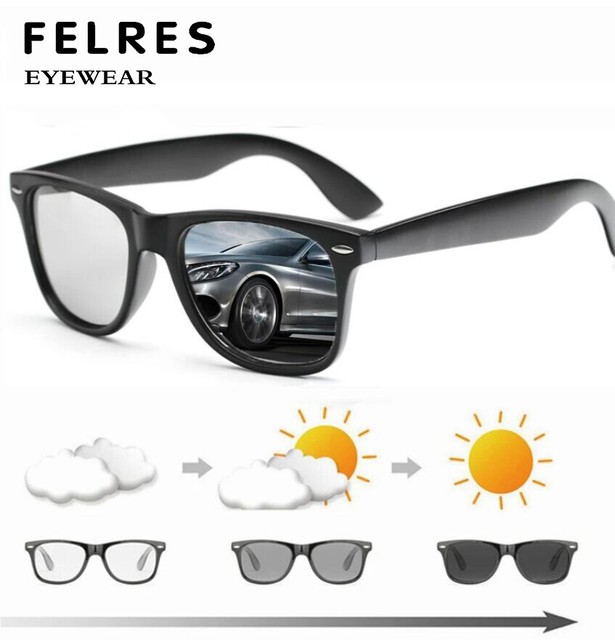
Photochromic Non-Polarized Driving Glasses
The all-day answer if you drive at dawn, at dusk, or through long tunnels. A photochromic lens darkens in bright light and clears when it fades, and plenty of budget photochromic driving glasses are non-polarized — an all-conditions lens that leaves the HUD alone. Check the listing says non-polarized, because some add polarization on top.
- Lens darkens and clears with ambient light
- Non-polarized versions widely available
- Light-transmission range usually quoted in the listing
- Often sold with a driving-specific tint
- One pair covers bright afternoon and dim evening
- No swapping glasses at a tunnel mouth
- Inexpensive for what it does
- Photochromic lenses react less behind a windscreen, which blocks the UV that triggers them
- Some models are polarized as well — read before buying
Buying tips
- Test before you commit. Put the glasses on, start the car, and tilt your head side to side. A polarized lens makes the HUD dim, patchy or rainbow-streaked as the angle changes; a non-polarized one looks the same at every angle. Ten seconds settles it better than any product description.
- Polarization is a lens option, not a brand. Ray-Ban, Oakley, Serengeti and Tifosi all sell the same frames both ways. Read the specific lens code rather than trusting the model name — the difference is often a single letter.
- Some ranges are polarized-only. goodr polarizes every pair it sells, which rules the brand out entirely for a HUD car. Check a brand’s whole policy before shortlisting a model from it.
- Non-polarized does not mean more glare in general. Polarization mainly kills reflections off horizontal surfaces — wet tarmac, a car bonnet. A dark tint still cuts overall brightness, and lens tech like Prizm adds contrast by filtering wavelengths instead.
- Windscreens block most UV, which is why photochromic lenses react poorly inside a car. If you want one, look for a model that specifically states it activates behind glass.
- Mind the tint colour, not just the darkness. Strong yellow, amber and rose lenses change how traffic lights and brake lights read. Neutral grey and Ray-Ban’s G-15 green stay closest to true.
- Keep a dedicated pair in the car. The usual reason people drive in the wrong glasses is simply having grabbed the other pair on the way out, and a $30 non-polarized set living in the door pocket ends that permanently.
As an Amazon Associate and eBay Partner, toptenpick.com earns from qualifying purchases. Prices and availability are subject to change.